
This And That
A Prequel, or Grant vs. Grant
By Gould Hagler · Originally published January 2022 · pp. 16–17
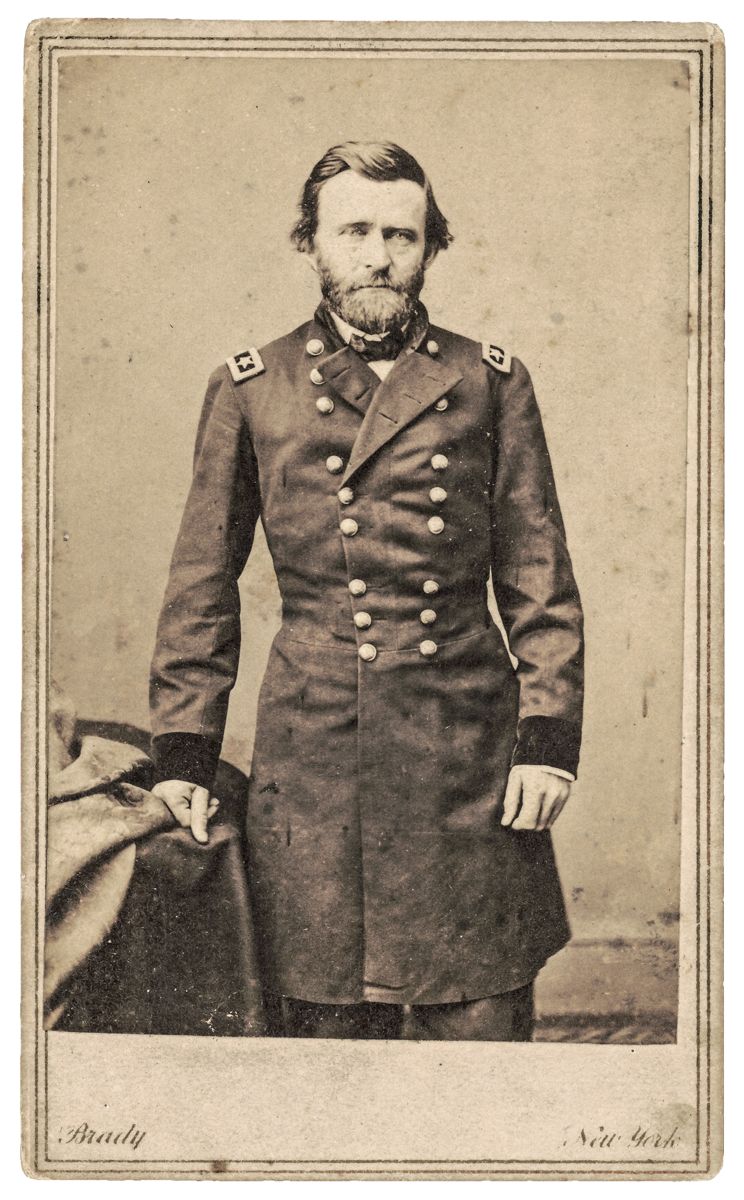
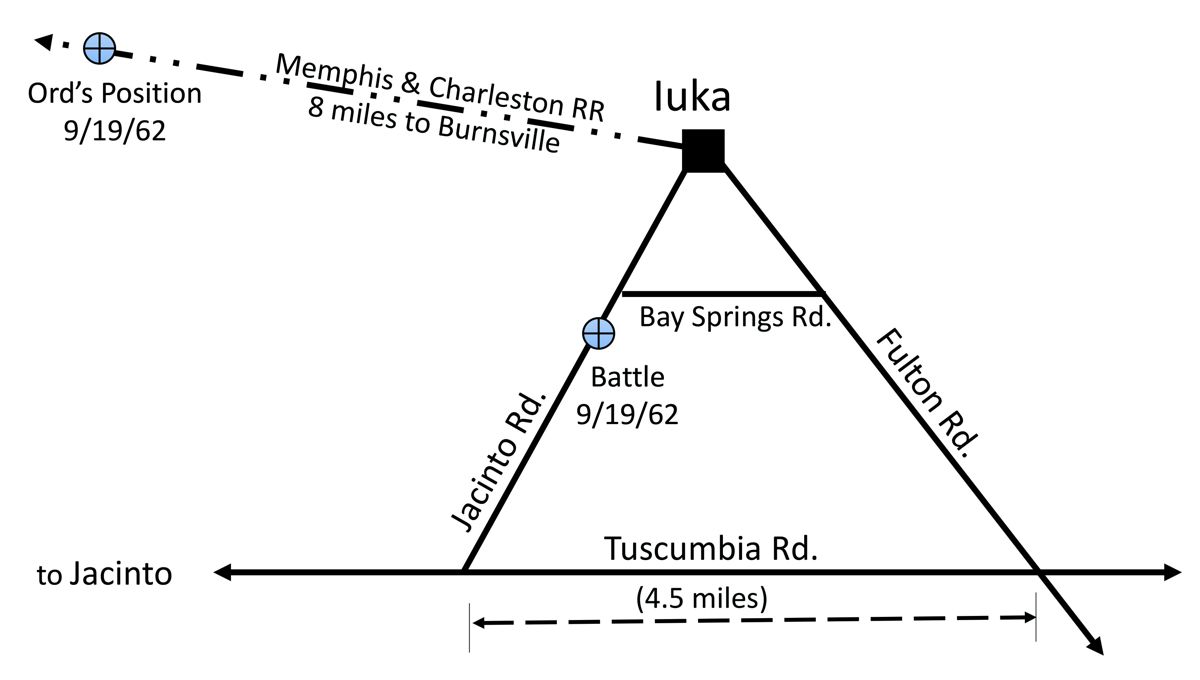
A Prequel, or Grant vs. Grant In 2019 I wrote a column in Civil War News about the October 1862 Battle of Corinth. My focus was on Maj. Gen. Ulysses S. Grant and the statements he made in his after-action report and his memoirs regarding the battle and its aftermath, when Federal forces under Brig. Gen. William S. Rosecrans pursued the retreating Confederates. Grant’s 1862 report was mildly critical of Rosecrans for not mounting his pursuit promptly, but otherwise found no fault on Rosecrans’s part. Grant’s memoirs, however, were utterly condemnatory, and much of what he wrote is demonstrably untrue. The Battle of Iuka was fought two weeks before Corinth. There are some interesting parallels between these two battles and the controversies they spawned. In both cases it is interesting to read the relevant portions of Grant’s memoirs and compare what Grant wrote just before his death in 1885 with his own 1862 reports and other primary sources. In this column I will discuss two controversial issues related to Iuka, as a prequel to the 2019 column on Corinth; but first a summary of the battle. In the summer of 1862 Grant commanded the District of West Tennessee, with forces spread in various locations in northern Mississippi and western Tennessee. Grant’s troops and the Confederate forces in the area moved about, watching each other and clashing occasionally in small engagements. Grant’s aims were to protect his territory, with Corinth and its railroad junction being of special importance, and prevent the Confederates from reinforcing Gen. Braxton Bragg, who was embarking on his Kentucky Campaign. Grant had about 50,000 men after sending reinforcements to Maj. Gen. Don Carlos Buell, whose army was moving to intercept Bragg. There were two major Confederate forces in the area, one under Maj. Gen. Earl Van Dorn and the other under Maj. Gen. Sterling Price. In September Grant determined to attack Price at Iuka. One column, under Maj. Gen. Edward O.C. Ord, was to approach Iuka from the west along the Memphis and Charleston Railroad. Rosecrans was to march on a parallel line further to the south, then swing north into Iuka, covering two roads that converged near the town. If successful, this pincer movement would defeat Price and bag his entire force. The initial plan was for Ord to open the attack, with Rosecrans moving in after hearing the sound of Ord’s guns. That was the plan. As events unfolded, however, only Rosecrans’s men were heavily engaged. In a meeting engagement south of Iuka on the Jacinto Road, they fought a brief but fierce battle late in the afternoon of Sept. 19. In the meanwhile, Ord remained a few miles west of Iuka and was not engaged. Darkness ended the battle. During the night Price evacuated Iuka using the Fulton Road. This road lay east of the Jacinto Road, was not covered by Rosecrans as initially planned. The first issue to be examined is this: why did Rosecrans not cover the Fulton Road? In 1885 the answer to this question was, in Grant’s view, a simple one. In his memoirs Grant wrote that “Rosecrans… had put no troops upon the Fulton road, and the enemy had taken advantage of this neglect and retreated by that road during the night.” There is no discussion beyond this concise accusation of “neglect.” Two decades earlier Grant’s opinion was different. His October 1862 report stated that he was riding east to Iuka from Burnsville, eight miles to the west, the morning of Sept. 20 when he learned that Price was gone and Rosecrans had entered the abandoned town. On his arrival he learned that the Fulton Road, Price’s only means of escape, was left open. However, Grant’s report contains this explanatory comment: “A partial examination of the country afterward convinced me… that troops moving in separate columns by the routes suggested could not support each other until they arrived near Iuka.” It is odd, perhaps, that Rosecrans’s own 1862 report does not include this explanation. However, he went into some detail when testifying to the Joint Committee on the Conduct of the War in April 1865. Rosecrans stated that when he arrived at the point where one division was to turn north from the Tuscumbia Road onto the Jacinto Road, the Tuscumbia Road’s intersection with the Fulton Road was four and a half miles further east. The roads were not parallel but diverged as they led south from Iuka. Rosecrans explained that “there were no cross-roads between [the two roads] by which columns advancing on them separately could certainly and safely communicate with each other….” He deemed it “unsafe” to divide his command “into two columns, not within supporting distance of each other….” He further stated that he sent a message to Grant “advising him of this my determination, with the reasons therefor.” There is no dispatch in the Official Records in which Rosecrans notifies Grant of this decision to march toward Iuka on a single road. As stated above, Grant wrote that he was unaware of the fact until he entered Iuka the next morning. The fact that Rosecrans gave this explanation in 1865 but did not mention it in his report would be cause for some suspicion if not for the fact that Grant clearly made reference to Rosecrans’s determination in his own report. He wrote explicitly that he was “convinced” of the soundness of Rosecrans’s decision. The second controversy to explore is the pursuit of the Confederate force after it retreated to the southeast. Let’s
CivilWarNews.com start with Grant’s memoirs. “Word was soon brought to me that our troops were in Iuka,” Grant wrote. “I immediately rode into town and found that the enemy was not being pursued even by the cavalry. I ordered pursuit by the whole of Rosecrans’ command and went with him a few miles in person. He followed only a few miles after I left him, and then went into camp, and the pursuit was continued no further.” So, per Grant in 1885, Rosecrans negligently left open the Confederates’ only avenue of escape and had not moved in pursuit by time the boss showed up. Grant himself ordered the pursuit. Rosecrans kept it up only as long as Grant watched over him, then went into camp. Not a very flattering portrait. Contemporary records paint a different picture. At 9:45 a.m. on the 20th, after arriving in Iuka, Rosecrans sent a dispatch to Grant. “Stanley follows [the retreating Confederates] directly and Hamilton endeavors to cut them off from the Bay Springs Road” (Brig. Gen. David S. Stanley and Brig. Gen. Charles Hamilton commanded Rosecran’s two divisions). In his report to Grant written nine days later, Rosecrans wrote that “Taking possession of the town and the stores left there General Stanley’s column pushed on in pursuit. The cavalry advanced by the intermediate road between the Fulton and Jacinto roads.
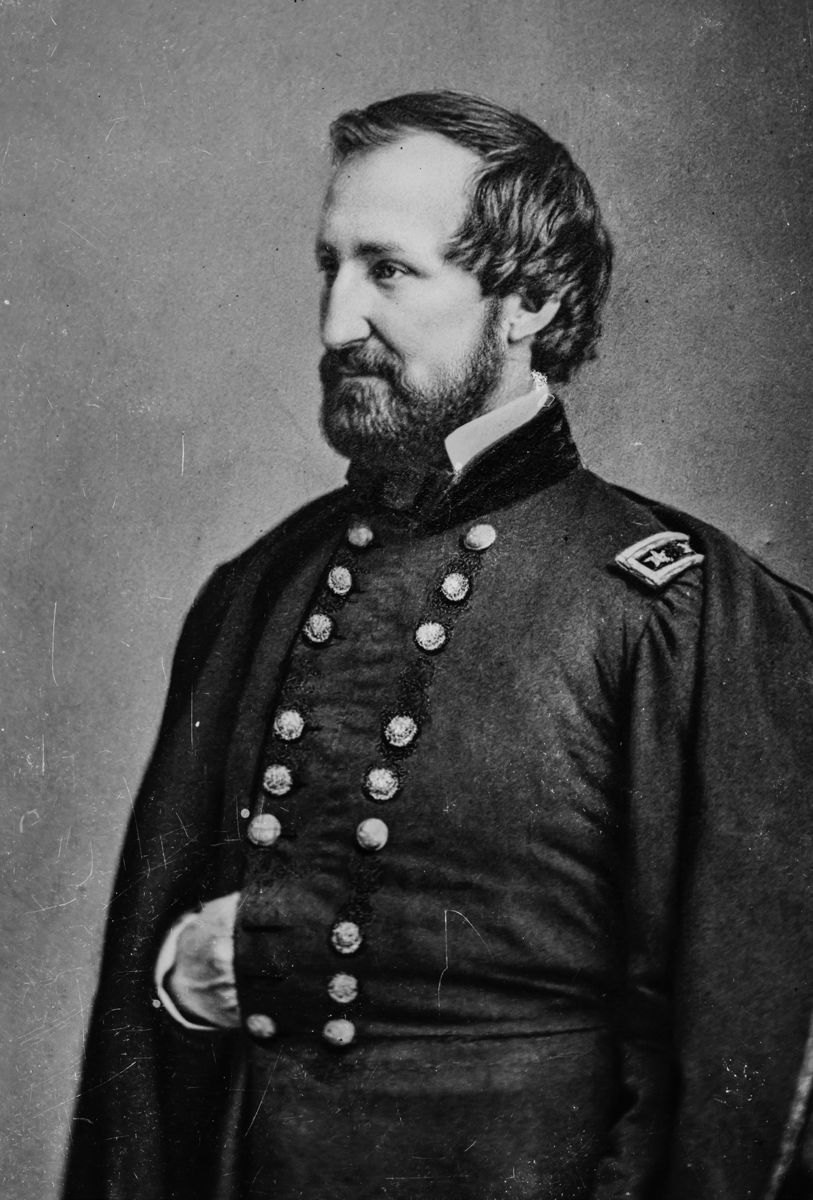
Hamilton’s division faced about and marched by Barnett’s, following the enemy until night….” The reports of Stanley and one of his brigade commanders, Col. John Fuller, stated that they pursued the Confederates; Hamilton’s report is silent on this question. Stanley and Fuller did not indicate with precision how prompt their pursuit was, but the reports do read as if Federal troops entered the town and then started the pursuit, with no indication of a delay until Grant arrived on the scene. For information on that point, we can rely on Grant himself, whose report stated that when he arrived in Iuka “Generals Stanley and Hamilton were in pursuit.” In accounts of both controversies, the open Fulton Road and the pursuit of Price, we find stark contrasts between the 1885 version written by the terminally ill former president and the report penned by the general two decades earlier. Other primary sources agree with the general, not the dying president. Iuka was not a large-scale battle by Civil War standards. Only about 7,500 men on both sides fought that afternoon. Casualties were high for the numbers engaged, perhaps 2,000 on both sides, but the losses pale in comparison with Antietam, Gettysburg, Chickamauga, and other major battles. Still, the campaign in northern Mississippi and the contest to control its
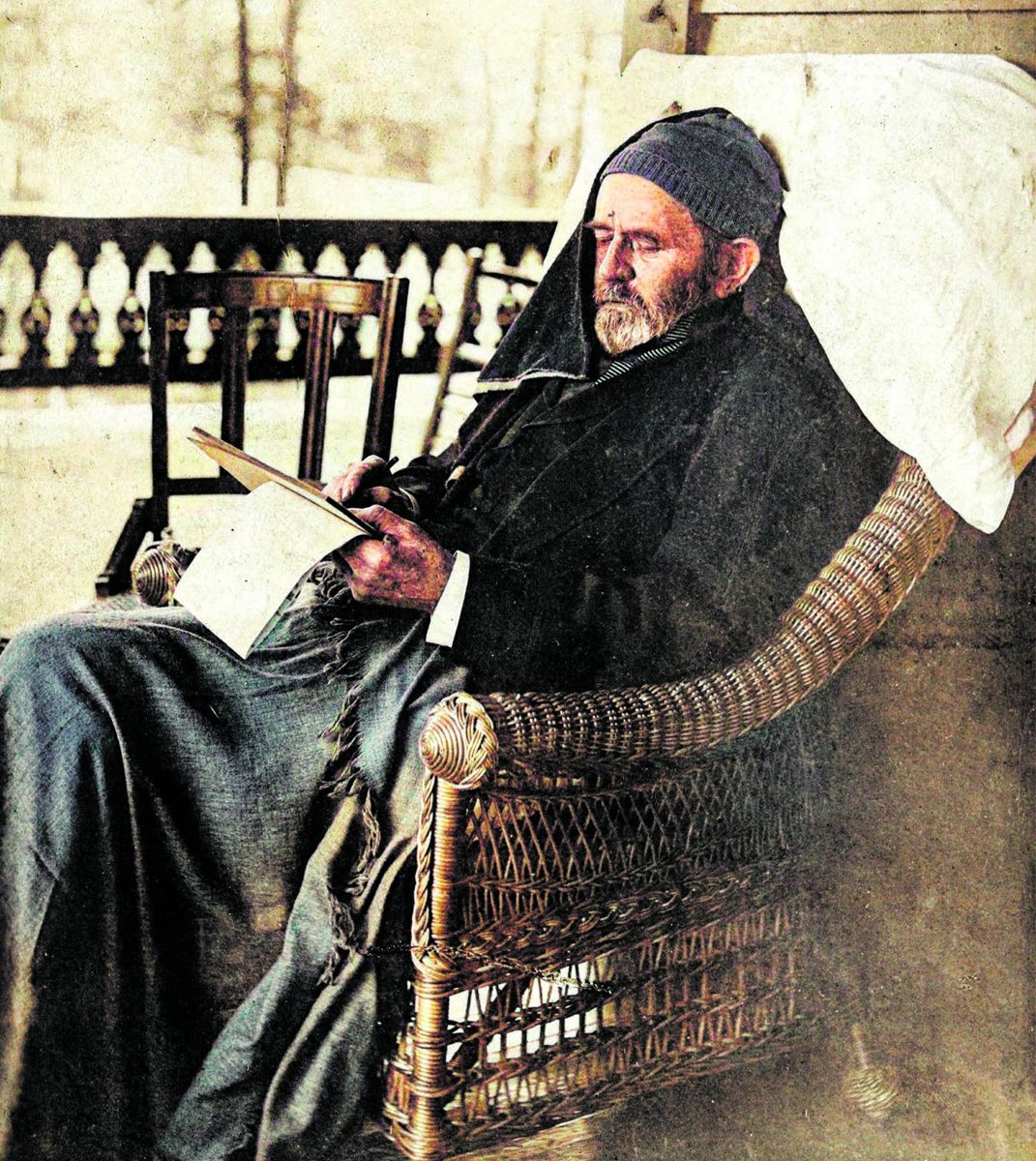
Grant writing his memoirs, 1885. myheritage.com. (Library of Congress) railroads had a significant effect on the course of the war, and Iuka was a major part of that contest. The two controversies discussed in this column are not the only ones associated with this battle, and the detective work to dissect discrepancies in the various accounts pays off in a better understanding of the war and the commanders who fought it. Future columns may examine some other controversies related to Iuka. There are several more. – GH
Further reading: The reports and dispatches referenced—and much else that is relevant to the topic—are in the Official Records, Series I, Vol. XVII, Parts I and II. Rosecrans’s testimony on the battle is found on pages 18-20 of “Rosecrans’s Campaigns” in Joint Committee on the Conduct of the War at the Second Session Thirty-Eighth Congress. Personal Memoirs of U.S. Grant was first published in 1885. There are two biographies of Rosecrans: The Edge of Glory: A Biography of General William S. Rosecrans, U.S.A. by William M. Lamers (Louisiana University Press, 1999) and William S. Rosecrans and the Union Victory: A Civil War Biography by David G. Moore, (McFarland & Company, 2014). General Grant and the Rewriting of History, by Frank P. Varney (Savas Beatie, 2013) was reviewed in the February 2019 issue of Civil War News. Gould Hagler is a retired lobbyist living in Dunwoody, Ga. He is a past president of the Atlanta Civil War Round Table and the author of Georgia’s Confederate Monuments: In Honor of a Fallen Nation, published by Mercer University Press in 2014. Hagler speaks frequently on this topic and others related to different aspects of the Civil War and has been a regular contributor to CWN since 2016. He can be reached at [email protected]. Hagler is a distant cousin of General Grant’s (sixth cousin five generations removed).