Through The Lens
Two Mules For Valverde
By Stephanie Hagiwara · Originally published February 2022 · pp. 14–15
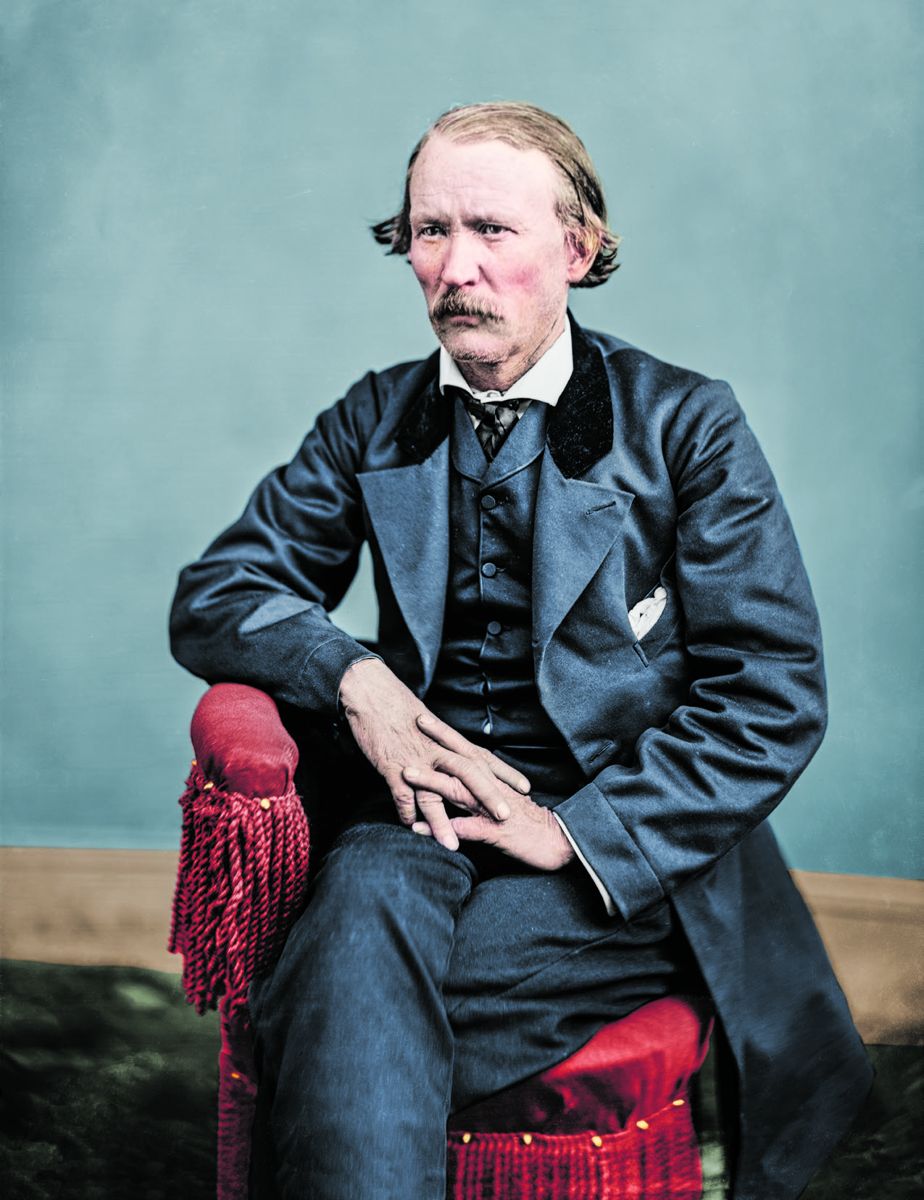
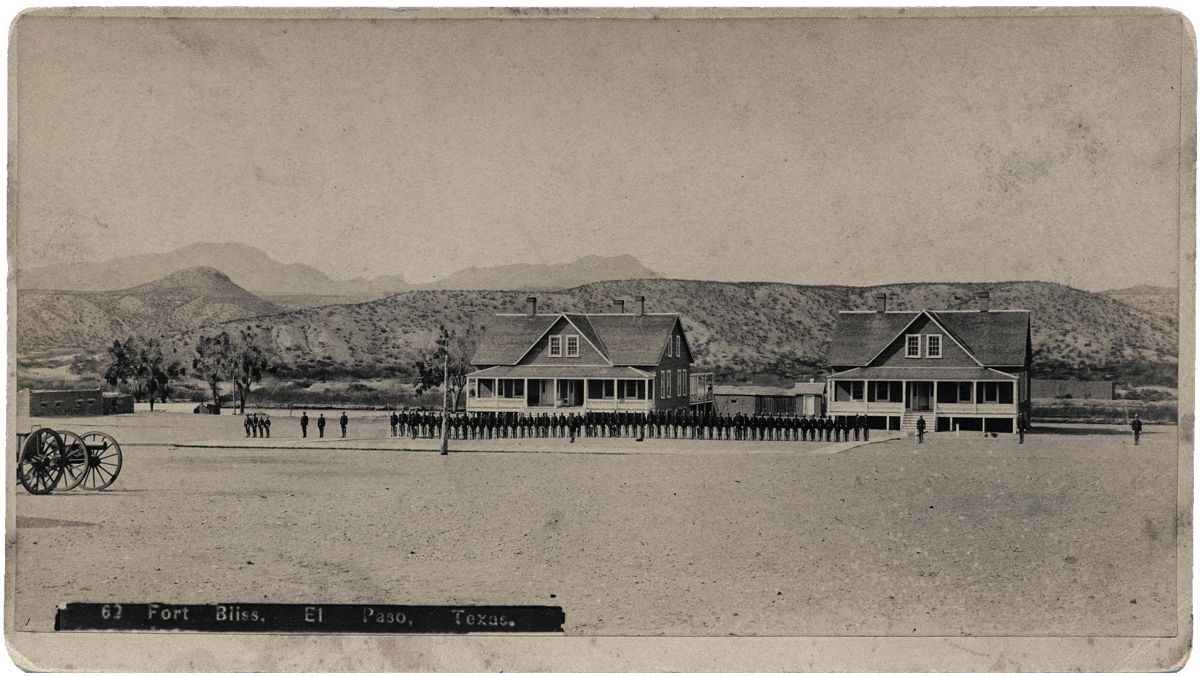
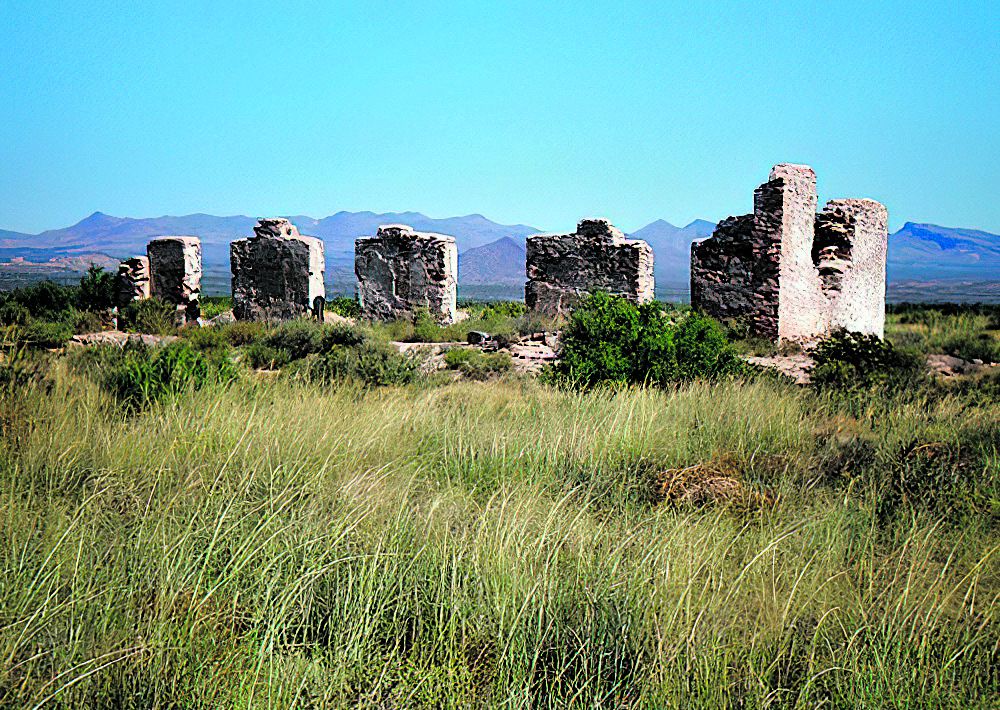
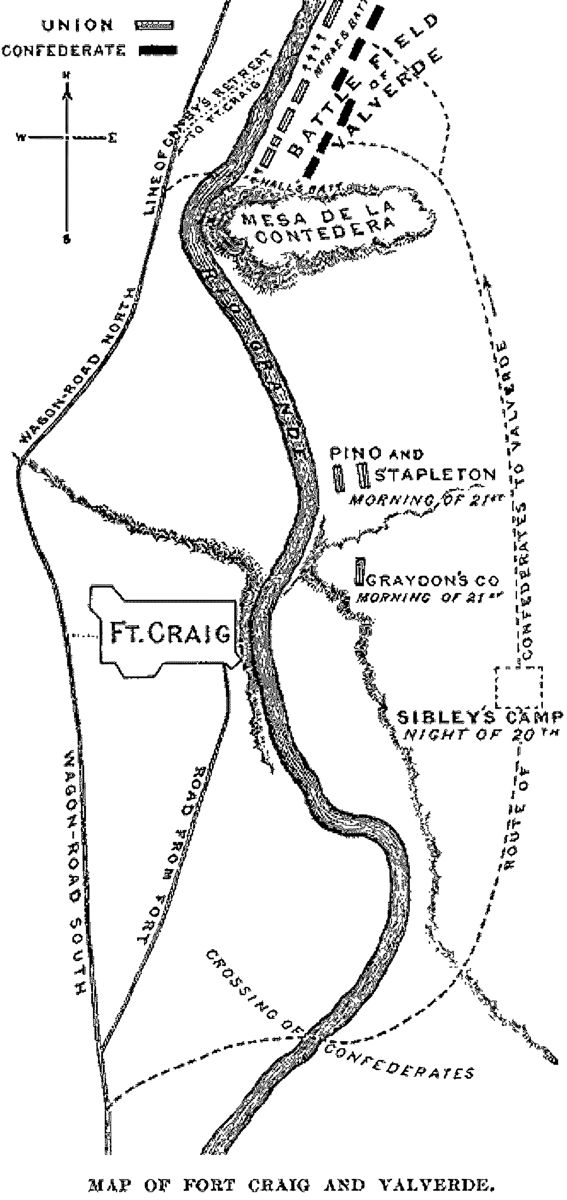
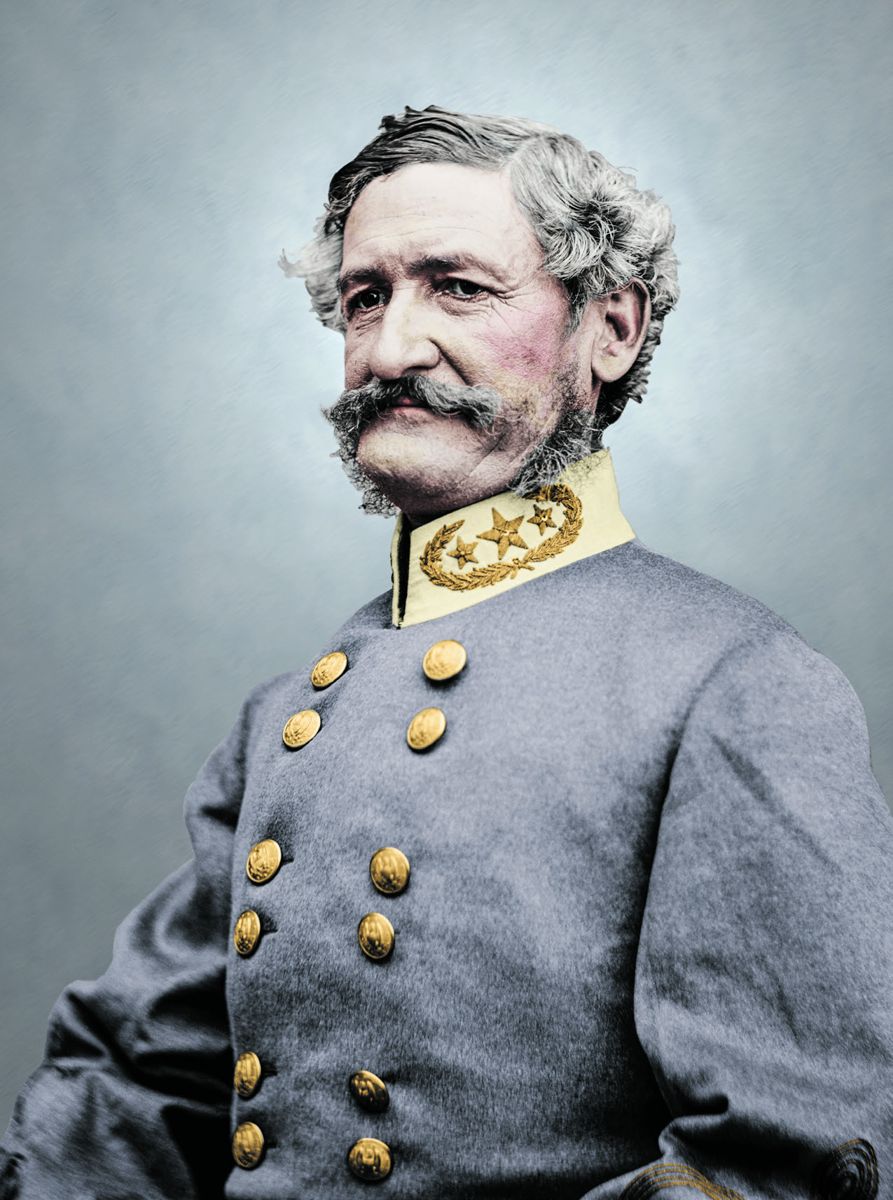
Two Mules For Valverde Battle of Valverde, N.M. – Part I “If you are not good, I’ll give you to the Téjanos, who are coming back.” – Mothers, New Mexico Territory The residents of New Mexico Territory had fought off Texans during the 1841 Texas Santa Fe Expedition to expand Texas’s borders and became United States citizens after the 1846–1848 Mexican-American War. The Confederacy also believed its Manifest Destiny was to stretch her borders from sea to shining sea. In June 1861, C.S. Gen. Henry Hopkins Sibley convinced President Jefferson Davis that he could capture New Mexico Territory, seize Federal supplies, and move on to California with an army of Texans. West Point graduate Sibley was a good organizer, inventor of the Sibley stove and tent, and a dreamer who would prefer “to let tomorrow take care of itself.” Described as “a walking whiskey keg,” Sibley either “drank because he was ill or was ill because he drank.” Sibley was also able to recruit some of the best volunteers for his “Army of New Mexico.” From his base in San Antonio, he recruited 3,200 troops to fill the Fourth, Fifth, and Seventh Texas Mounted Volunteers and acquired fifteen pieces of artillery. In the 1840s, Christopher “Kit” Carson became nationally famous by guiding John C. Fremont during his expeditions exploring California, Oregon, and the Great Basin; the reports written to help pioneers navigate the Oregon Trail increased his fame. In 1861, Carson was living in the tiny village of Taos, New Mexico, with his third wife. Carson stepped onto the Civil War stage after Southern sympathizers quietly removed the U.S. flag flying over the Taos Plaza. The entire village was enraged. Carson and a group of men cut down a young cottonwood tree and brought it back to town. A new flag was nailed to the pole and raised back in the plaza. Carson ordered the flag to fly night and day and dared anyone to tear down his country’s flag. Two men were stationed at the Bent-St. Vrain store to keep an eye on it. No one touched it. The flag still flies night and day under the approval of Congress. The 300-mile journey between San Antonio to Fort Bliss in El Paso, Texas, was the longest march the Confederate army had yet made in the War. Regiments departed in staggered groups due to the uncertainty of finding sufficient water on the route. Sibley operated under the assumption that residents would join his Texans to fight the Federal government and donate food and animals to the cause. In December 1861, Sibley sent a message from Fort Bliss proclaiming that he was coming to the New Mexico Territory to “liberate them from the yoke of military despotism erected by usurpers upon the ruins of the former free institutions of the United States.” New Mexico Governor Henry Connelly issued a call for volunteers: “… your Territory has been invaded, the integrity of your soil has been attacked, the property of peaceful and industrious citizens has been destroyed or converted to the use of the invaders, and the enemy is already at your doors.” Some four thousand volunteers came forward including Carson. Carson, who could neither read nor write, but was fluent Spanish. He raised a regiment of men who mostly could not read, write, or speak English. As Carson lacked formal military training, he focused on enhancing the skill sets his men already had. Sibley’s men had a month’s rest at the abandoned Federal outpost Fort Thorne, N.M. Spirits were high despite the loss of about 400 men due to outbreaks of measles, smallpox, pneumonia, and desertion. Again, the regiments staggered their advance towards the Federal supplies held at Fort Craig, New Mexico. CivilWarNews.com in the Territory had been sent east and Sibley had to capture supplies to feed his men. At Fort Craig, only 1,200 of Canby’s 3,800 men were seasoned troops. Between the language barrier and the volunteers’ inexperience,
U.S. Col. Edward R.S. Canby had been monitoring Sibley’s advance from Fort Craig. Before the War, the pair had served together in Utah and New Mexico. Both men knew that most Federal troops once stationed
Christopher “Kit” Carson. Colorization © 2021 Canby’s best bet would be to keep his men in the fort and lure the Confederates to him. He positioned Capt. Alexander McRae’s six-gun battery of 6-pdr. and 12-pdr. smoothbore cannon outside the walls. Sibley wanted to fight in the broad plain before the fort. He positioned his artillery on higher ground where the shells would not be able to reach the fort but could bombard the Federals when they ventured onto the plain. Dismounted cavalry flanked the artillery and the cavalry were on the far left. Flags waving, the excited Texans were ordered to advance. After months of marches and bad weather the ball was about to begin! The Federals “… ran up their flag on the mast within the fort and cheered like they were trying to split their throats.” The Texans “waved our flag and gave them a round yell” back. U.S. Captains James “Paddy” Graydon and Rafael Chacón galloped their companies near the Confederates as the Texans silently watched. “Gee whilikens captain, I ain’t half as mad at them fellows as I was before they showed up so many men,” Pvt. William Lott Davidson, 5th Texas cried out. “Let’s go home to mother!” The Texans roared with laughter. Graydon continued to parade on his grey horse, “turning and wheeling like a circus man” to draw the Confederates out. “Canby sat erect on his horse, Old Chas, with an unlit cigar clamped in his teeth.” For two hours the maneuvers continued. “It looked to me,” said Davidson, “like two boys in my school days, daring each other to knock the chip off the other’s shoulder and each afraid to do so.” Dusk ended the encounter. “We thought the ball was about to open,” Davidson grumbled. Sibley knew the only way to lure Canby out of the fort would be to find somewhere else to fight. Canby worked to keep the Confederates thirsty by blocking their access to high ground and the river. Near Valverde, N.M., Sibley found his spot. Graydon came up with a plan to decimate the Confederates without a battle. He acquired two old mules and lashed wooden panniers packed with about a dozen 24-pdr. shells with cut fuses on their backs. In the late evening Graydon and a few men approached the Confederate camp. He hoped the braying of the thirsty Confederate animals would mask their approach. After one last check of the packs, Grayson fired the fuses and the men yelling and waving their hats drove the mules towards the camp. The mules for whatever reason decided “to bear those ills they knew than to flee to others that they knew not of,” turned back and chased after Graydon. It became a race between the mules and the Federals’ ability to leap on their horses and gallop away. The Federals escaped. The mules exploded. The commotion inspired about 150 Texas horses, mules, and cattle to stampede towards the river. After the animals drank their fill, the Federal pickets rounded them up and brought them to Fort Craig. The Texans knew that when the sun rose, it would be critical for them to win the February 20, 1862, Battle of Valverde, just to survive. Stephanie Hagiwara is the editor for Civil War in Color.com and Civil War in 3D.com. She also writes a column for History in Full Color.com that covers stories of photographs of historical interest from the 1850’s to the present. Her articles can be found on Facebook, Tumblr and Pinterest.