
This And That
More on Iuka: Why Did Rosecrans Fight Alone?
By Gould Hagler · Originally published February 2022 · pp. 16–18
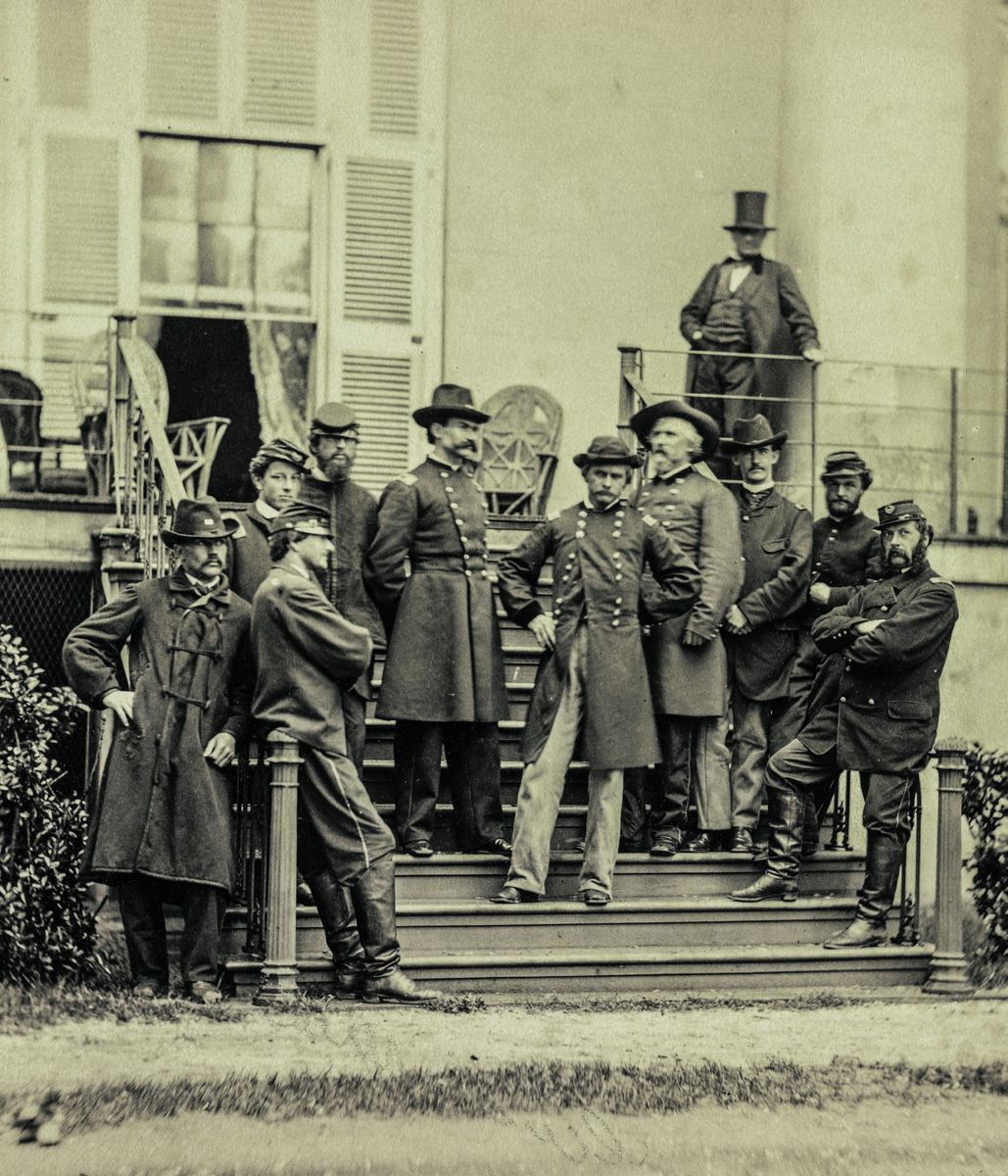
In last month’s column we reviewed some interesting aspects of the Battle of Iuka. We analyzed specifically Grant’s false charges that Brig. Gen. William S. Rosecrans, (1) was negligent in not covering the road by which the Confederates retreated and, (2) failed to pursue the Confederates until Grant appeared on the scene and issued the order himself. This time we will have a go at some other interesting aspects of the battle.
On Sept. 16, 1862, Grant ordered an attack on Confederate Maj. Gen. Sterling Price’s force in Iuka. Maj. Gen. Edward O.C. Ord led one column, with about 8,000 men, toward Iuka from the west, along the Memphis and Charleston Railroad. Rosecrans’s column, numbering roughly 4,500, swung around and approached Iuka from the south. Ord’s force rode by train to Burnsville, seven or eight miles from Iuka, but then advanced only a short distance and did virtually no fighting. Rosecrans’s two divisions, after marching well over 20 miles, met a Confederate force two miles south of Iuka. Rosecrans’s men did all the fighting, suffered significant casualties, inflicted serious losses on the Confederates, and forced Price to retreat. Let’s turn first to the news of the cataclysmic, war-ending defeat suffered by Lee’s army in Maryland on September 16 and 17. A cataclysmic defeat? No. Only news of a cataclysmic defeat. Where did this news come from, and how did Grant’s reaction to it affect the fighting in Mississippi?
Sometime before midnight on Sept. 18, Grant, headquartered in Burnsville, received a message sent earlier that evening by J.C. Van Duzer, the superintendent of military telegraphs in Cairo. Van Duzer, relaying news from Washington, told of a great Union victory. Gen. Joseph Hooker had “gained position, flanked the rebels, and threw them into disorder.” As a result, “Longstreet and his entire division prisoners. General Hill killed. Entire rebel army of Virginia destroyed…. Latest advices say entire rebel army must be captured or killed, as Potomac is rising and our forces pressing the enemy continually.” Crediting this report, Grant determined to call upon Price to surrender and avoid the further shedding of blood in his doomed cause. Grant forwarded the report to Ord, who conveyed the news through the lines to Price, along with Grant’s surrender demand. The Confederate general proved less credulous than Grant. Not believing that the fighting in Maryland had effectively ended the war, Price said no. Sometime on the 19th Grant received Price’s refusal. Grant advised Rosecrans of the news in a message received by Rosecrans at 1:30 a.m. on the 19th. The message to Rosecrans did not, however, mention the surrender demand. Frank Varney, in General Grant and the Rewriting of History, described the situation this way: “Grant seems to have seized upon [the telegram from Cairo] as a reason to suspend operations. He halted Ord in place and offered Price a chance to surrender. Price refused. But the delay cost time that might have been more profitably spend pushing Ord into position.” The surrender demand is probably one answer to our question, but there are additional factors to be considered. Let’s turn next to Grant’s order changing the original battle plan that called for Ord to attack first from the west. After hearing the sound of battle, Rosecrans was to move in from the south and hit Price in the flank and rear. Sometime in the very early hours of September 19, Grant received a message from Rosecrans, sent sometime late on the 18th. Rosecrans advised Grant that one of his divisions had been delayed and was still twenty miles from Iuka. Rosecrans said his troops would move “as early as practicable, say 4:30 a.m.,” but did not anticipate arriving at Iuka “before 1 or 2 o’clock.” In his October 22 report Grant described his reaction to this dispatch. “Receiving this dispatch as I did, late at night, and when I expected the troops were far on their way toward Iuka and had made plans accordingly, it caused some disappointment. I immediately dispatched to General Ord, giving him the substance of [the dispatch from Rosecrans] and the directions not to move on the enemy until Rosecrans arrived or until he should hear firing to the south of Iuka. Of this change General Rosecrans was promptly informed by dispatch sent with his return messenger.” Rosecrans denied receiving any notice from Grant regarding this change of plan. While the dispatch Grant claimed he sent is not in the Official Records, it is possible that the message was sent and never delivered. Varney, in his detailed analysis, wrote that “it looks more and more likely that [the dispatch] was never sent.” From Ord’s report we can learn what he and his troops were doing on the 19th while Rosecrans’s men were marching to Iuka. This report also sheds some light on Grant’s order changing the plan of attack. On that morning Ord placed two of his three divisions within six miles of Iuka, “to hold the enemy’s advance guards and skirmishers in check.” Ord’s third division remained in Burnsville, as ordered by Grant. Intelligence had been received that “the enemy were making demonstrations upon Corinth from the south and west….” Grant therefore wanted “to be ready to return to Corinth by rail at a moment’s notice.” Ord himself “conducted a reconnaissance of the enemy’s front toward Corinth.” This occupied Ord from 9 a.m. until 3 p.m. While he was away, Ord received a dispatch signed by Grant’s aide Col. Clark Lagow advising that Rosecrans’s march to Iuka had been delayed. It is important to note that the dispatch did not include anything about changing the plan of attack. Back in Burnsville at 4 p.m.,
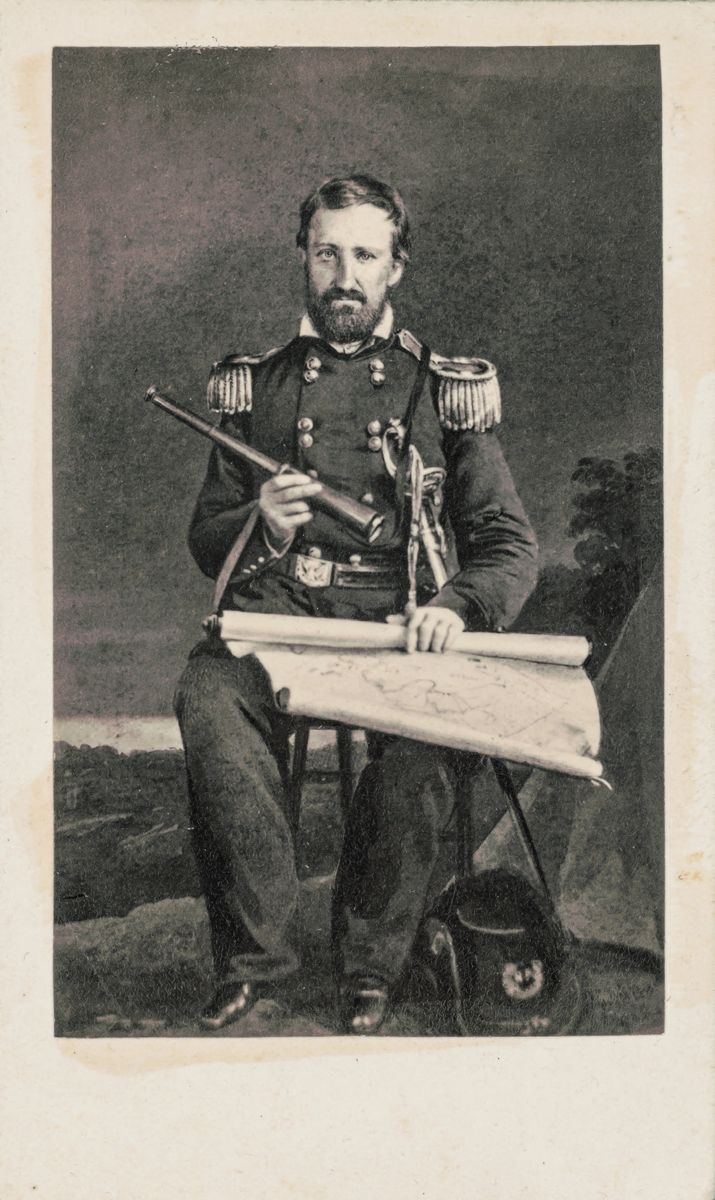
Ord spoke with Grant. It seems that Ord first learned of the change of plan at this time, not late the previous night as Grant stated. Ord wrote that he agreed with Grant’s assessment that “Rosecrans was from last accounts from him too far from Iuka for us to attack on our front until further information was received as to his whereabouts.” Grant directed Ord to move his entire force “to within four miles of Iuka and there await sounds of an engagement between Rosecrans and the enemy before engaging the latter.” At 6 p.m. Ord received a message from Gen. L.F. Ross, commanding one of the divisions nearest to Iuka, indicating that he had observed “dense smoke arising from the direction of Iuka.” Ross sent the message at
4 p.m. and he had concluded that “the enemy are evacuating and destroying the stores.” Rosecrans was much closer to the Confederates in Iuka than Grant and Ord believed. The smoke observed by Ross was from the battle, already underway when Ross sent the dispatch, and over by the time Ord received it. At 8 a.m. the following morning Ord heard guns and, finding that the Confederate works were evacuated, marched into Iuka. There he learned of the battle fought the previous afternoon. In his report Ord wrote: “The wind, freshly blowing from us in the direction of Iuka during the whole of the 19th, prevented our hearing the guns and co-operating with General Rosecrans.” When the battle began Ord was with Grant in Burnsville. Two of his divisions were between there and Iuka. I calculate that, as the crow flies, these two divisions were about 4.5 miles from the battle. Grant and Ord, in Burnsville, were about 8 miles away. It may seem odd that they did not hear the noise, but acoustic shadows are a wellknown phenomenon. While there is evidence that some Federals in some places heard sounds of battle, it is unlikely that Grant and Ord would have ignored the noise if they had heard it or received reports of it. There are two other oddities that are more difficult to understand. One, why did Ord personally undertake the reconnaissance toward Corinth? Three divisions under his command were about to engage in a complex pincer movement against their Confederate target. At the time he left he had orders to lead the attack. Only when he returned was he directed to wait, and open his attack after hearing Rosecrans’s guns, yet he was away for seven hours. The other oddity is Ross’s lack of curiosity. He saw dense smoke. He concluded that the Confederates were firing their stores as they evacuated. Why? Did he not consider the other possibility? Did he not investigate? It is also odd that Ord readily accepted Ross’s conclusion. Moreover, even if the conclusion had been correct, and if the Confederates were retreating, wouldn’t that be a sound reason to move in? A final aspect of the battle to explore is the visit two of Grant’s aides made to Rosecrans’s position. Col. Lagow and Col. Theophilus Dickey left Burnsville at some time on the 19th to follow Rosecrans, arriving soon after noon. They were with Rosecrans before the fighting broke out and for a time afterwards. In his report Grant wrote that the colonels “had gone around to where General Rosecrans was and were with him during the early part of the battle.” In The Edge of Glory, Rosecrans’s biographer William Lamers drew attention to Grant’s phraseology. Grant wrote that Lagow and Dickey went there, but not that he sent them. It seems they went of their own accord. They bore no message or orders from Grant; they were unaware of their commander’s intentions; and they had no clear purpose for their excursion. In his 1865 testimony to the Joint Committee on the Conduct of the War, Rosecrans spoke of the colonels’ visit. When his divisions were about seven miles from Iuka, at 1 p.m., he told the aides that they “ought to be hearing the guns from the other column” [emphasis in original]. Rosecrans stated that Lagow “suggested that perhaps General Grant expected me to attack first.” Lagow offered a suggestion; he did not say Grant had issued an order. Rosecrans objected to this suggestion. He told Lagow “that such was not the understanding,” and explained further that “it would be very bad policy to allow the enemy’s attention to be first attracted towards his line of communication, to seize and secure which was the object of my movement.”
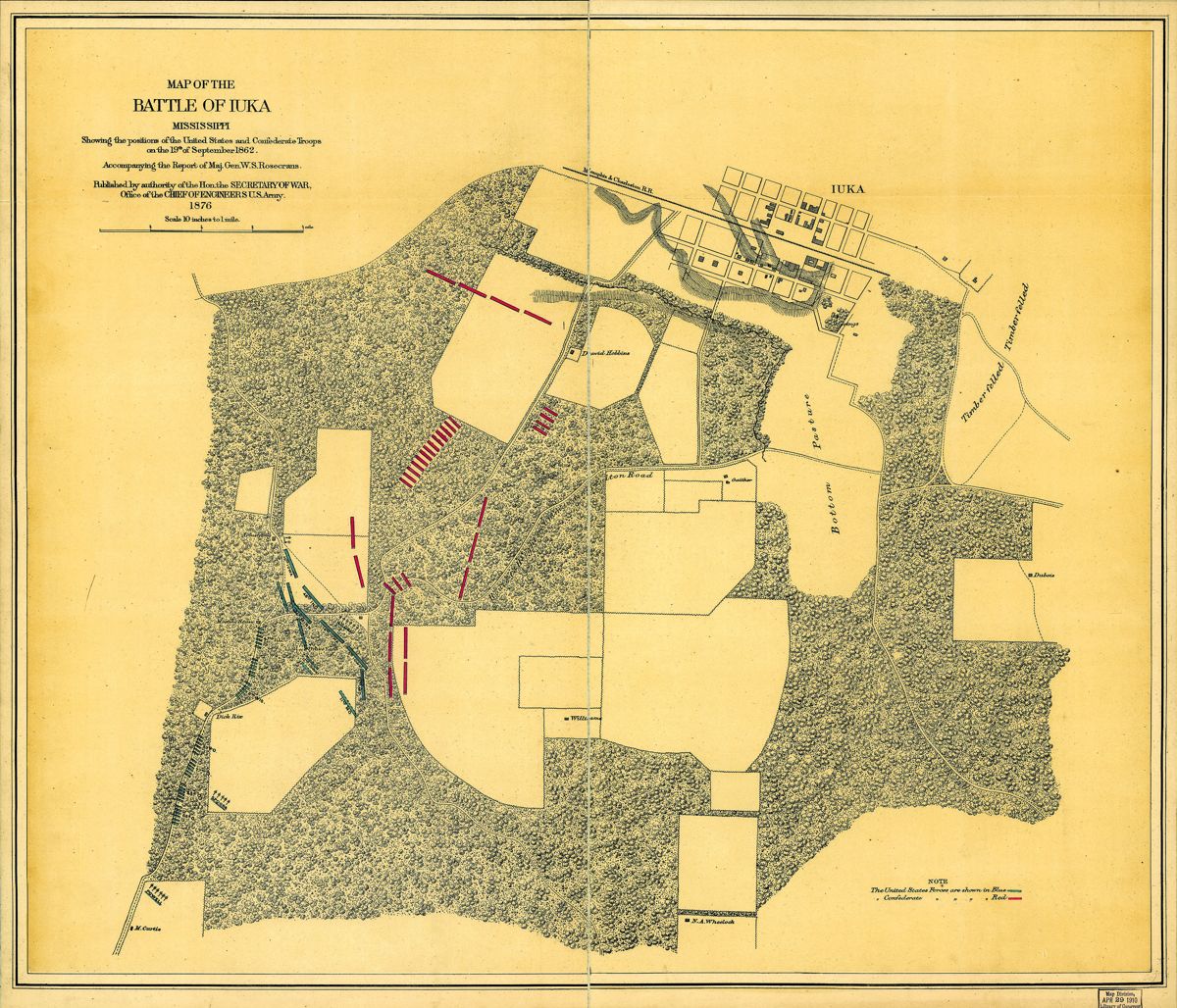
Events, however, had interceded. It no longer mattered whether the plan was altered or not, whether Lagow’s suggestion was right or not, whether Rosecrans was ready or not, whether Ord was moving in from the west or not; Rosecrans’s force had met the Confederates on the road. The battle was joined. In his testimony Rosecrans said that the Confederates “opened on us in a few minutes with grape and canister. From that time till nightfall the battle raged furiously.” Most significantly, Rosecrans stated that the enemy “could be seen moving across the fields from the railroad near the Iuka and Burnsville Road. Nothing in that quarter appeared to attract their attention.” In the absence of an immediate threat from Ord, Price was able to move troops south of town to stop Rosecrans. That night the Confederates withdrew to the southeast on their only avenue of retreat. Why was there no movement from the west and why did Rosecrans’s divisions fight alone? The record reveals some answers but none that Rosecrans considered remotely satisfactory. He testified that on the 20th, after he had entered Iuka, he “was startled by the sound of music, and looking, beheld the head of General Grant’s column entering the place. No explanation was then or subsequently made of the cause which prevented that column from attacking the enemy in front the day before, save that they did not hear our guns.” Even if Rosecrans’s delay on the march and his decision not to cover the road by which Price escaped were blameworthy, it does seem peculiar that mistakes by some other officers were overlooked. Grant was harshly—and unfairly—critical of Rosecrans in his October 22, 1862, report and even more so in his memoirs. Why did Rosecrans get all the blame, especially as he did all the fighting? Some reports that appeared in the Cincinnati newspapers soon after the battle may be a factor. These articles were highly critical of Grant, and the criticisms included charges that he was drunk at the time of the battle. Grant probably blamed Rosecrans for planting these stories. Whether that is the answer or not, there is no doubt that Iuka was the start of a neverending feud between the two men. And Grant’s version of events affects history’s view of Rosecrans still. Further reading: The reports and dispatches referenced are in the Official Records, Series I, Vol. XVII, Parts I and II. Rosecrans’s testimony on the battle is found on pages 18-20 of “Rosecrans’s Campaigns” in Joint Committee on the Conduct of the War at the Second Session Thirty-Eighth Congress. Personal Memoirs of U.S. Grant was first published in 1885. There are two biographies of Rosecrans: The Edge of Glory: A Biography of General William S. Rosecrans, U.S.A. by William M. Lamers (Louisiana University Press, 1999) and William S. Rosecrans and the Union Victory: A Civil War Biography by David G. Moore, (McFarland & Company, 2014). General Grant and the Rewriting of History by Frank P. Varney (Savas Beatie, 2013) was reviewed in the February 2019 issue of Civil War News. The Darkest Days of the War by Peter Cozzens (The University of North Carolina Press, 1997) covers the battles of Iuka and Corinth.
Gould Hagler is a retired lobbyist living in Dunwoody, Ga. He is a past president of the Atlanta Civil War Round Table and the author of Georgia’s Confederate Monuments: In Honor of a Fallen Nation, published by Mercer University Press in 2014. Hagler speaks frequently on this topic and others related to different aspects of the Civil War and has been a regular contributor to CWN since 2016. He can be reached at [email protected]. Hagler is a distant cousin of General Grant’s (sixth cousin five generations removed).