In Their Footsteps
By Frank Niederwerfer · Originally published February 2022 · pp. 23–26
In 1891 and 1892 veterans of the 14th Connecticut Volunteer Infantry returned to a quiet place on the Rapidan River in Virginia, called Struan. Their objective was to visit their old campground on Stony Point and the battleground of Morton’s Ford where so much Connecticut blood was spilled. One hundred fifty-seven years ago on February 6, 1864, The Battle of Morton’s Ford was fought along the Rapidan. The battle was part of a broad reconnaissance in force by parts
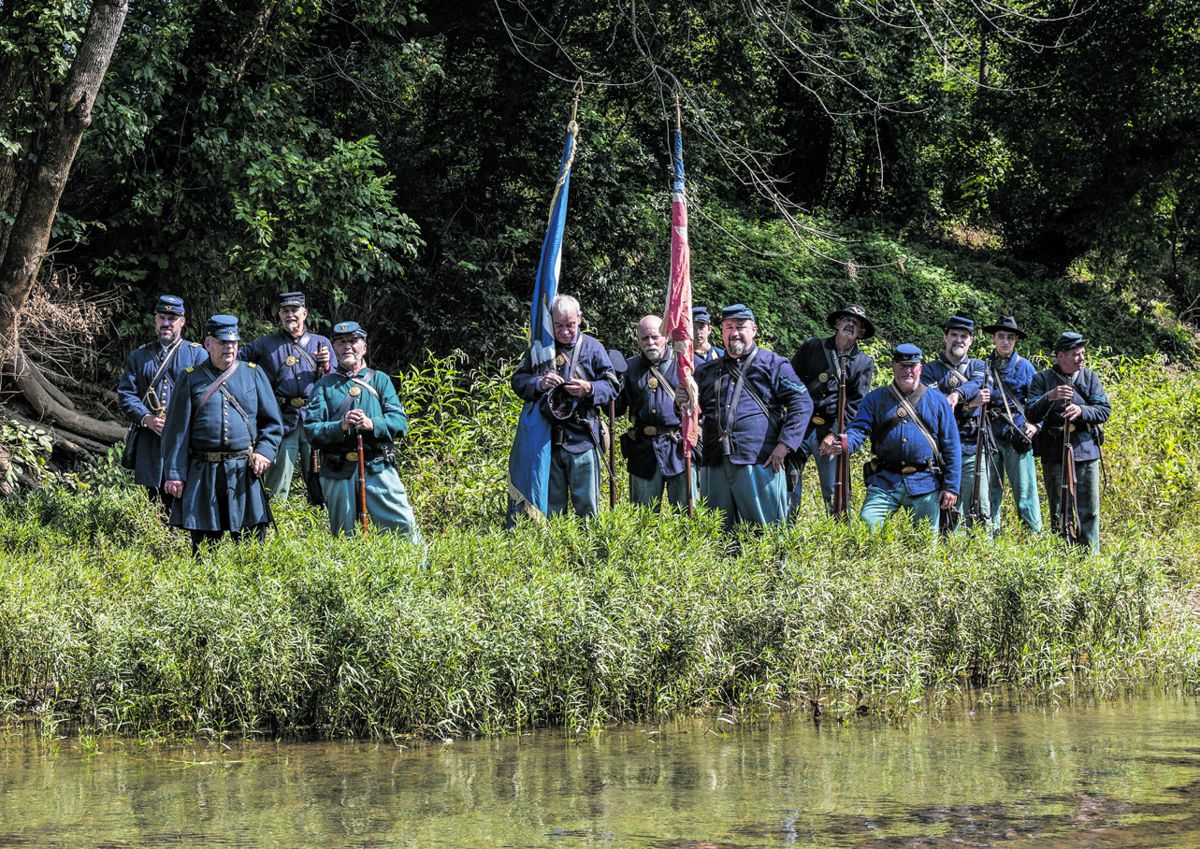
Roll Call. All photos by Tad Sattler.
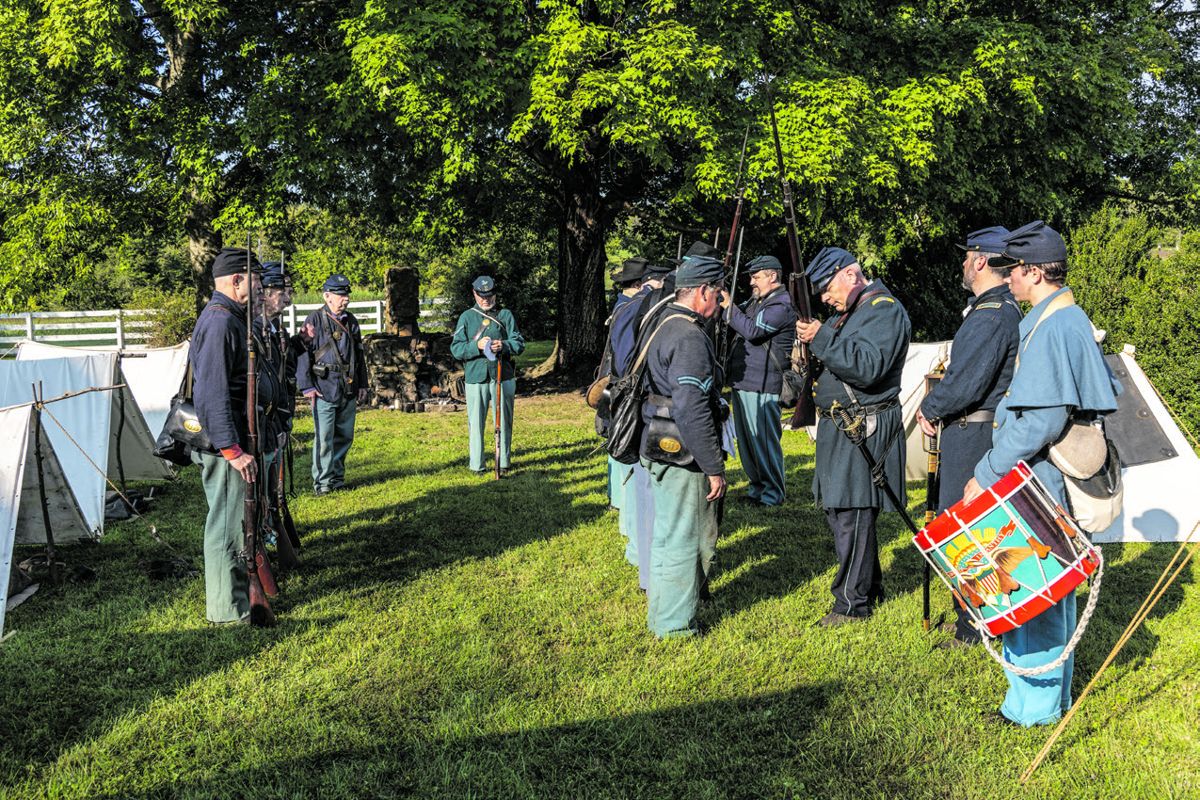
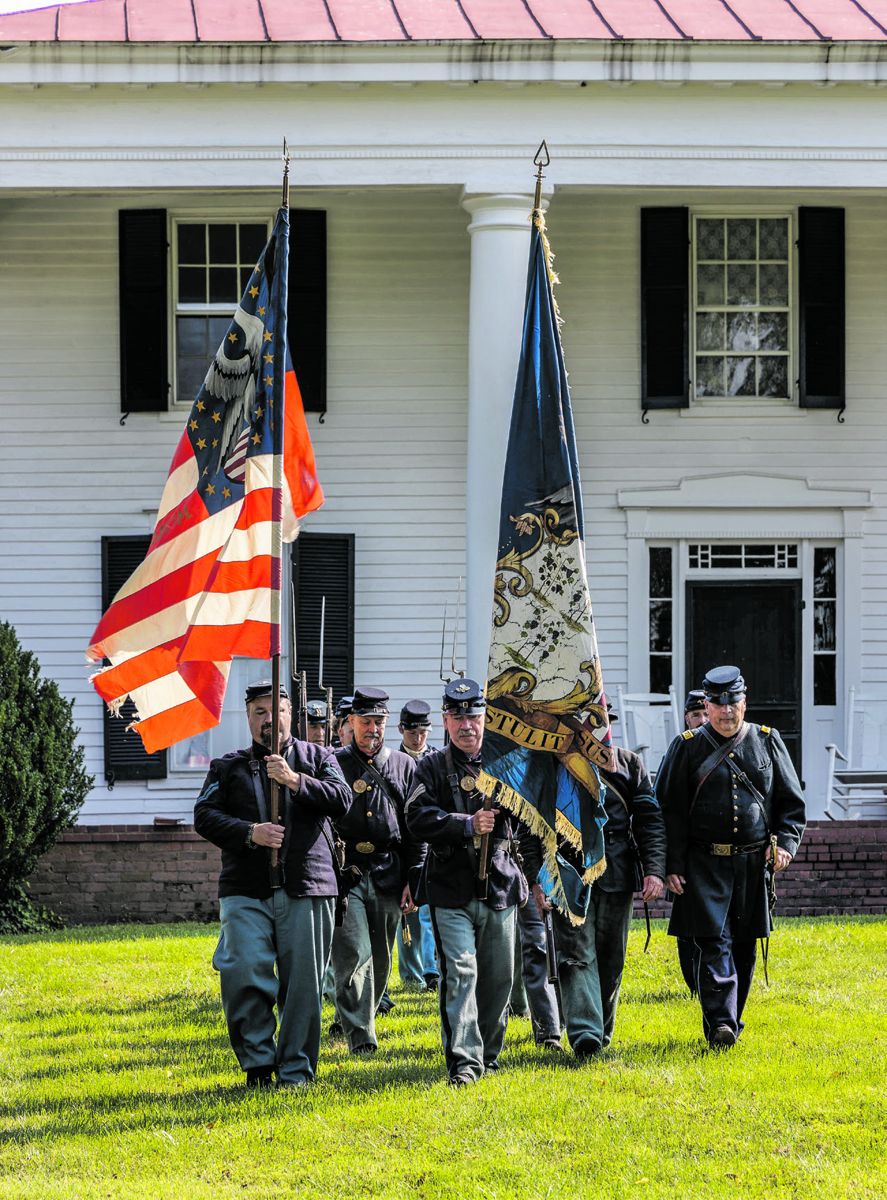
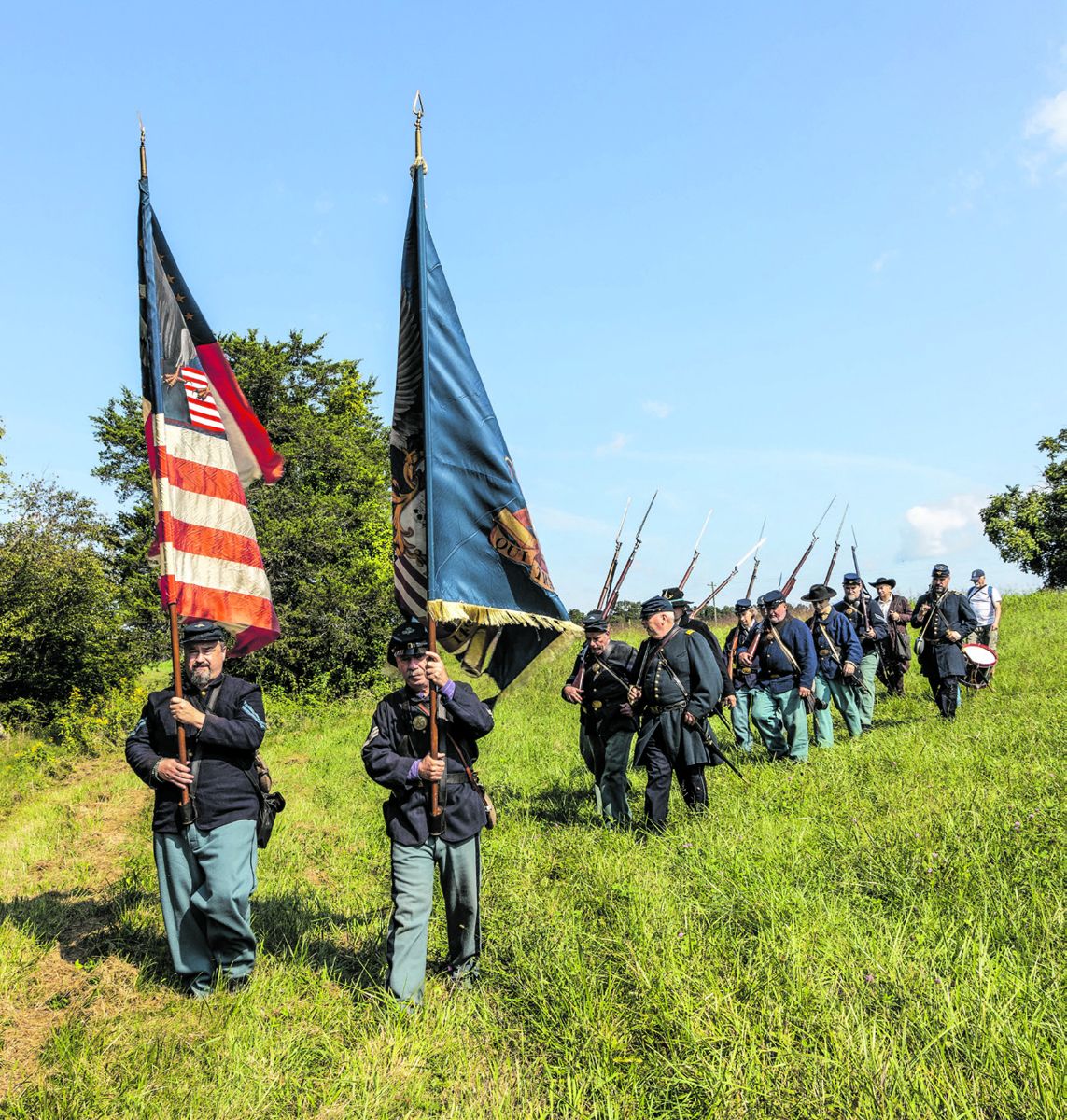
In Their Footsteps of The Army of The Potomac. The II Corps left their camps in the early morning hours of Feb. 6, and advanced toward Morton’s Ford. The 3rd Division, including the 14th Connecticut, marched under General Alexander Hays. They crossed the ford around noon advancing toward Confederate positions. After engaging the enemy in all-day skirmishing, most heavy fighting happened in the night. The 14th suffered almost half the Federal casualties in an engagement many came to consider a useless military endeavor. The 14th’s 115 casualties were the most they suffered in any one engagement of the war. Sixteen Connecticut living historians from the 14th and 8th Connecticut reenactment units and a few friends traveled to Morton’s Ford 129 years after those veterans last visited the area. Our objective was to march the 14th Connecticut’s battle route, bring attention to battlefield preservation, and honor those brave Connecticut soldiers. Local preservationist and historian Clark Bud Hall provided this opportunity by obtaining access to the privately owned land. We arrived at Struan, the Powhatan Robertson family farm, on Friday Sept. 10, and set up camp at the Robinson House, which had served as the picket headquarters for the 14th Conn. The fire pit was dug, flags posted, and evening meals prepared. The evening was spent discussing plans for tomorrow around the campfire. Gettysburg licensed battlefield guide Chris Army, who would assist Bud Hall throughout the weekend, joined us that night. Late into the night the camp quieted down, and the sounds of wildlife resonated across the battlefield as sleep overcame all of us. As the sun rose Saturday morning the camp came alive with the smell of coffee brewing over the fire just as it did 157 years ago. Bud Hall gave the first of many presentations covering the history of the Robinson House, Culpeper County, and the early days of Island Ford. After roll call, the Connecticut boys formed up and pictures were taken on the steps of the house to commemorate the event. Clint Schemmer and Emily Jennings of the Culpeper Star Exponent conducted interviews. Also joining us was Chuck Laudner of The American Battlefield Trust. Chuck would also join us crossing the ford later in the day. We had a number of members who had ancestors at the Stony Point camp that winter. Most notable were Norman Grahman and Kierran Broatch, whose great-great grandfathers were wounded in the battle of Morton’s Ford. Bud followed with another presentation covering the winter encampment of the Army of the Potomac during 1863-64 in the Culpeper area, including the 14th Connecticut at Stony Point. At this point our regiment fell in, shouldered arms, and unfurled the flags before setting out along the Ford Road just as the 14th boys did on that fateful day. After reaching the ford, we made our way down the steep embankment to the small island that marks the crossing point. Here we conducted a ceremony honoring the 14th Connecticut
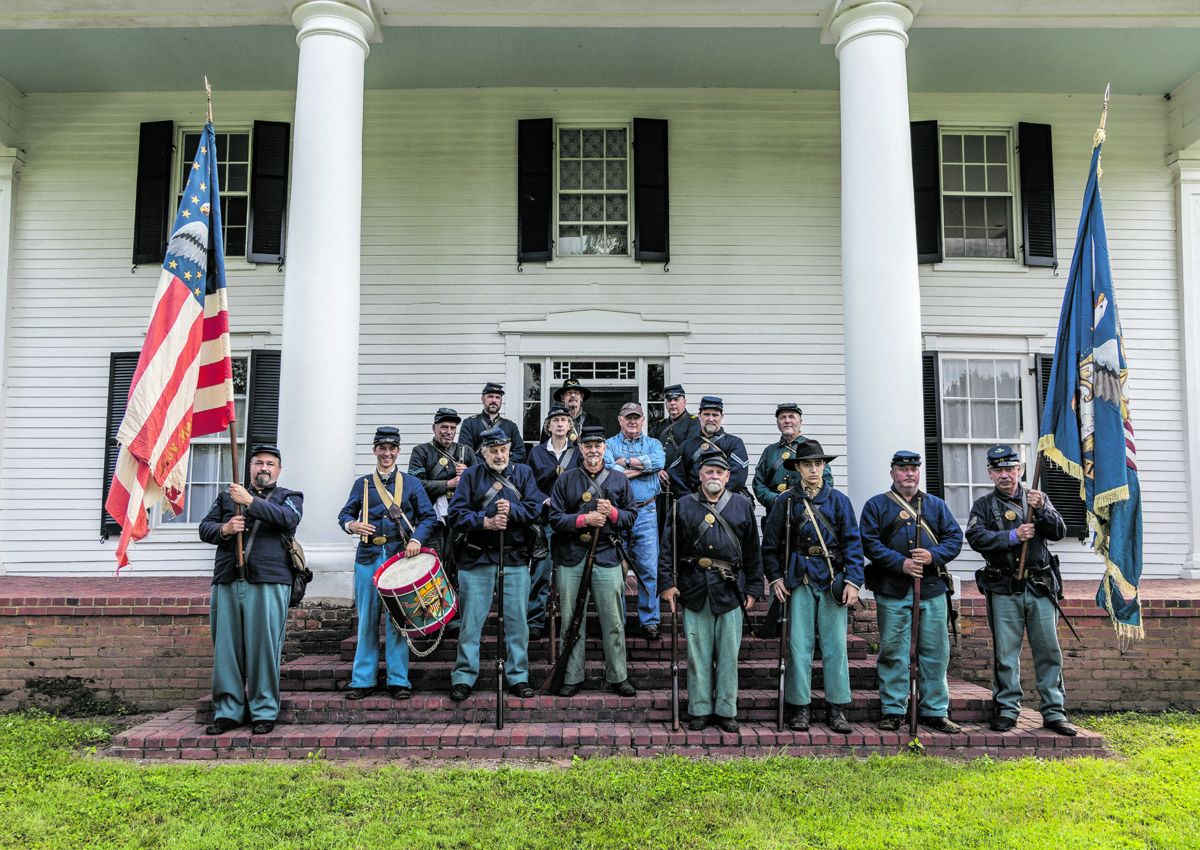
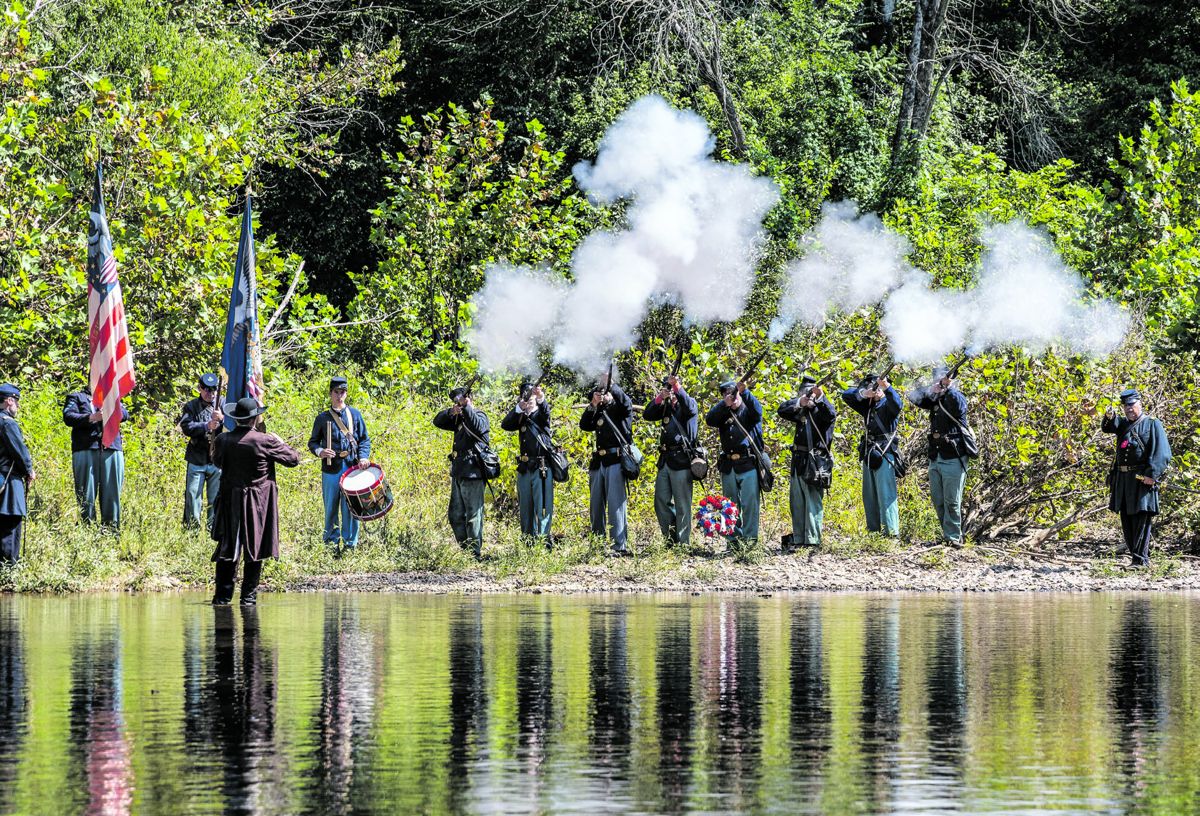
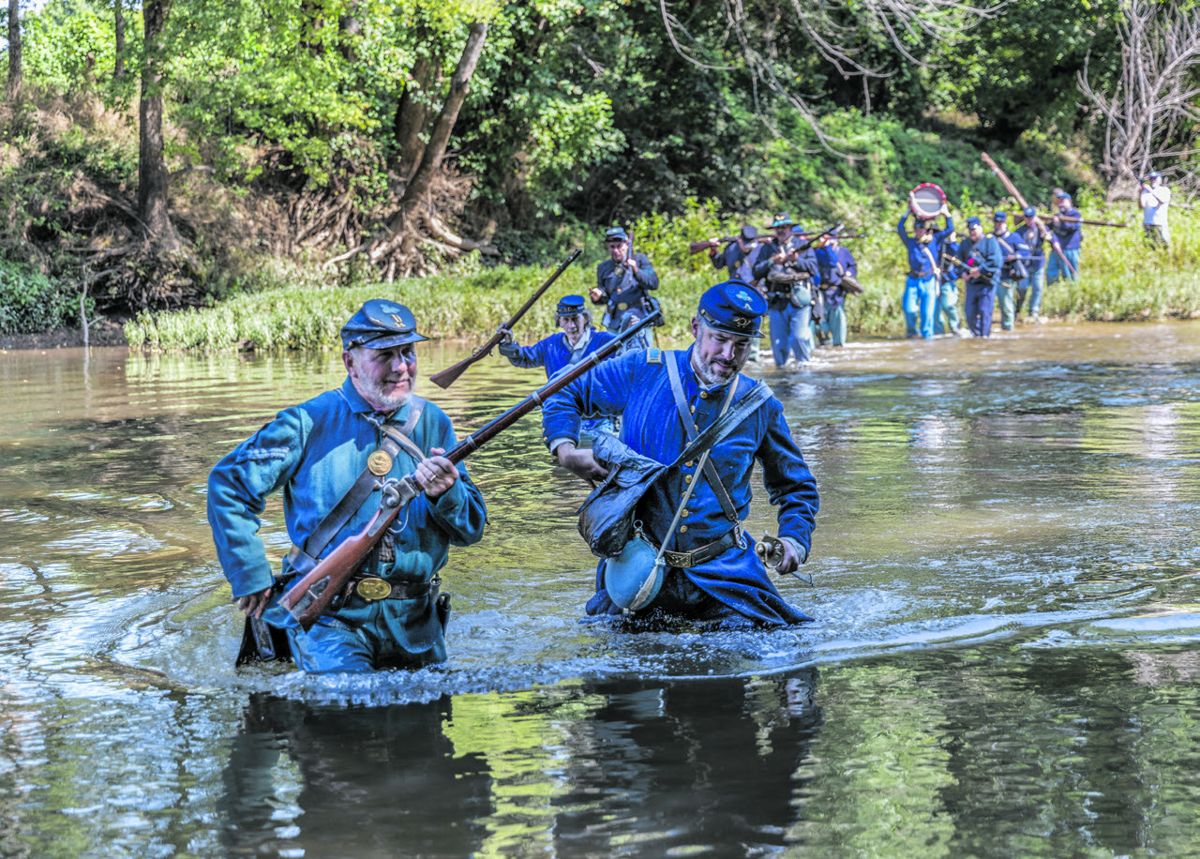
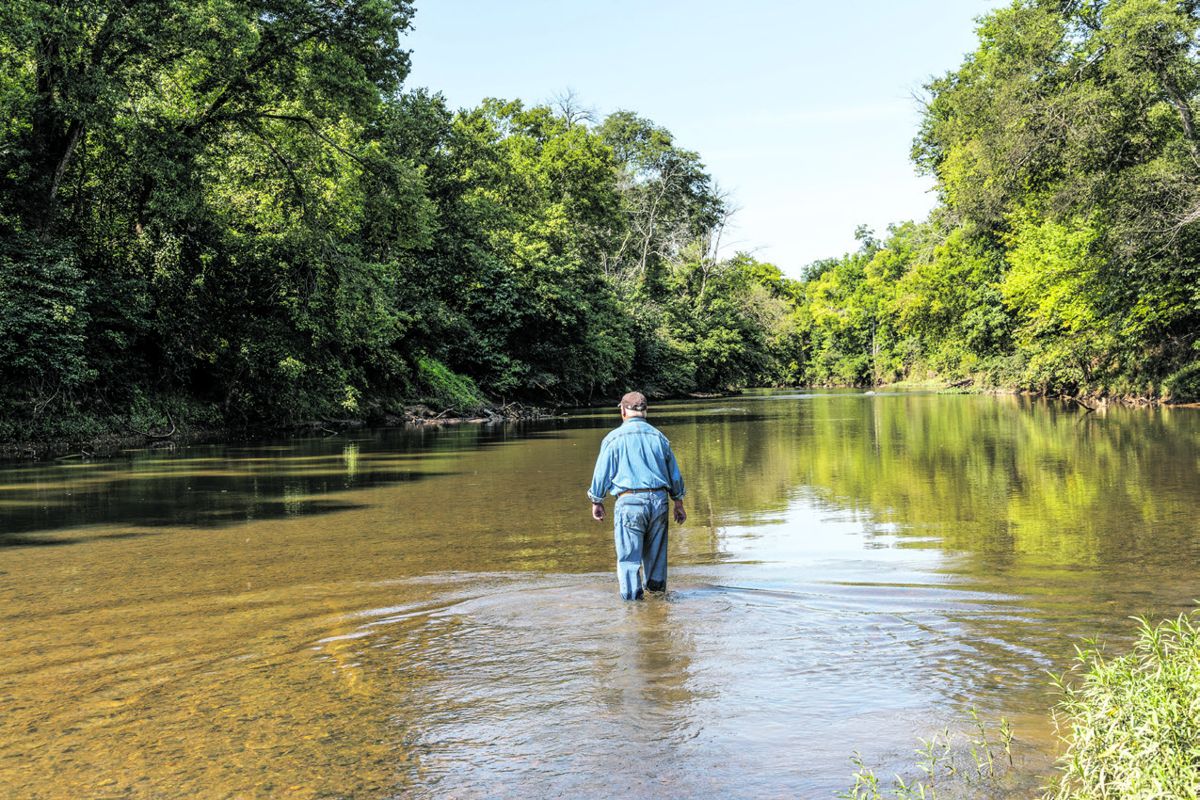
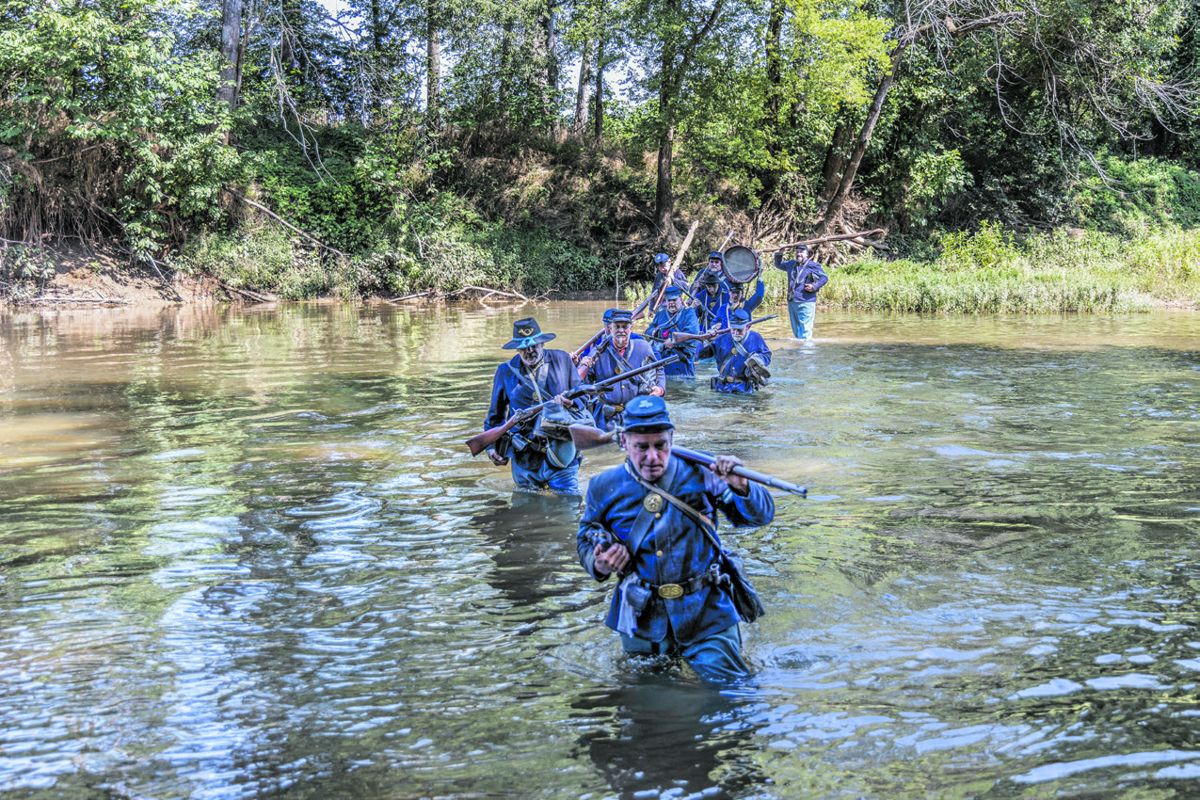
Regiment, a wreath was laid, names of the Connecticut dead who fell at Morton’s Ford were called out, a prayer was said, and a volley fired. The march continued by crossing the waist deep ford and scaling of the same steep embankments they encountered on that winter day. Continuing away from the Rapidan River we followed in the footsteps of the 14th Connecticut toward the site of The Buckner House, through the swale where the Fourteenth found temporary cover from the intense enemy fire, and ending at the Morton House site where the regiment endured their heaviest fighting and greatest casualties. Along the way, Bud Hall gave numerous presentations covering the battle’s action giving the participants a personalized intimacy with the battlefield and its history. At the Morton House site Kierran Broatch and his dad Jim had the opportunity to stand where their relative had been wounded in action. The house is long gone; only a mound of rubble and the family cemetery in a nearby group of trees remains of the original farm. The rest of the afternoon saw our return to camp for a fine meal prepared over an open fire by Don Hamel and Dan Hayden. The camp remained awake late into the night with a festive atmosphere fueled by discussion
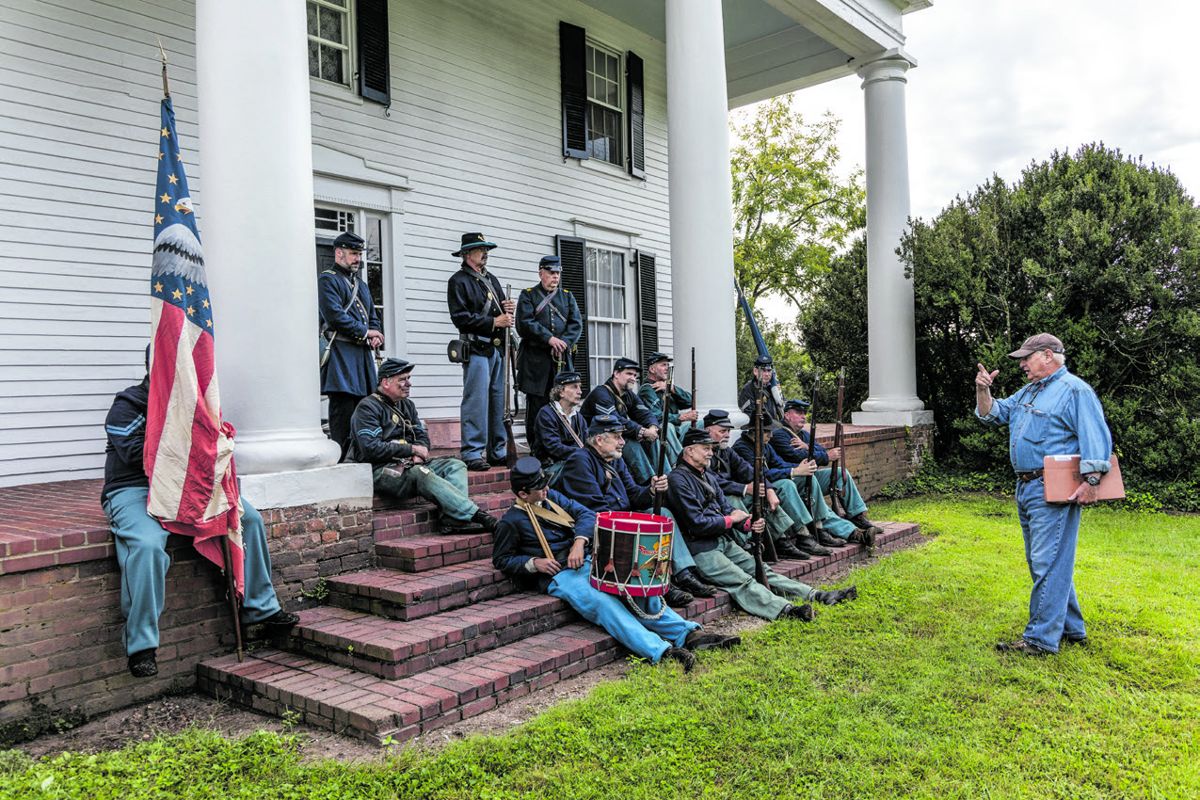
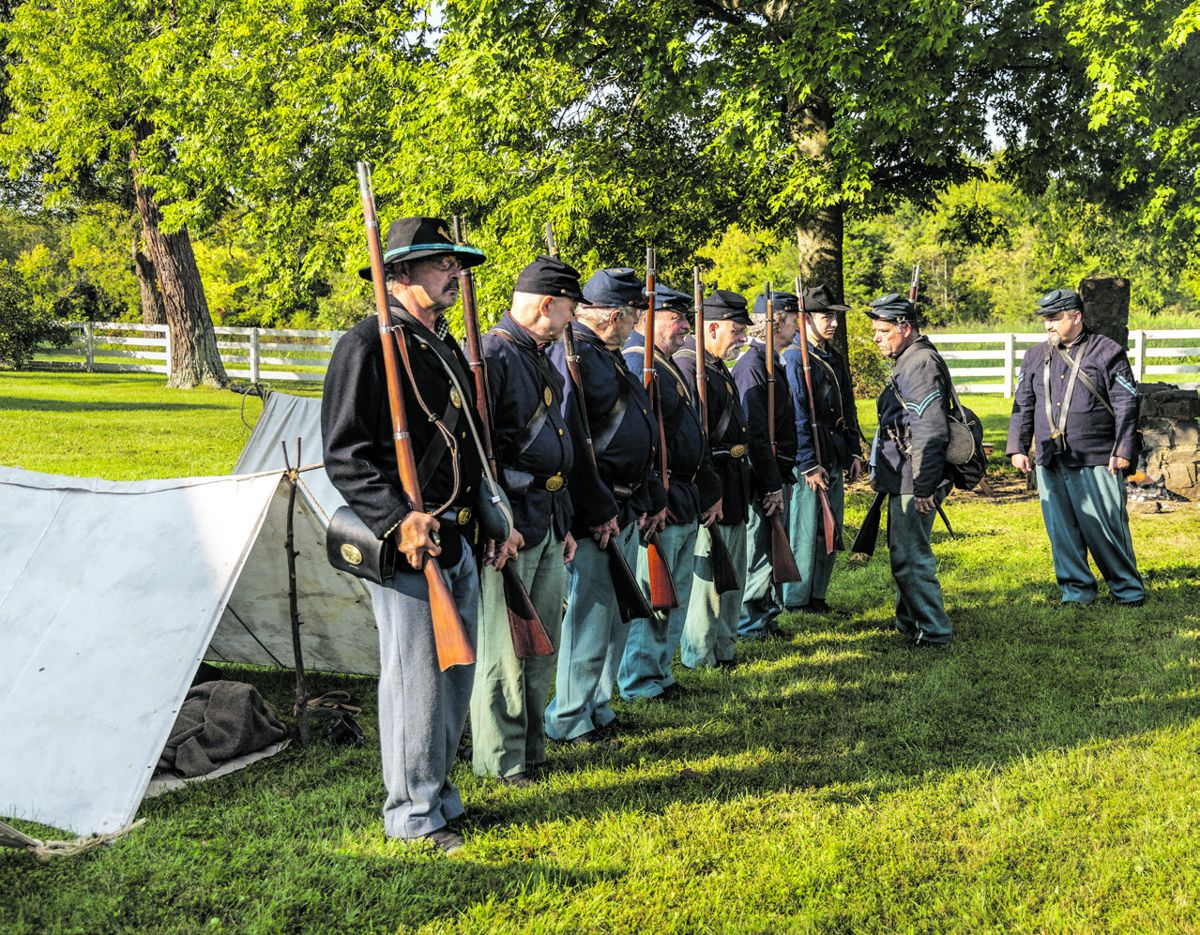
Weapons inspection. of Bud’s great tour. As our camp on the 14th Connecticut picket line quieted down it provided a perfect setting for a great day. The next day we took a short drive to visit the site of Thompson’s Federal Battery where Norman Grahman’s great great grandfather was wounded. After Bud described the action, Norman gave a short talk about his relative. To complete the rest of our trip, Bud took us to the Brandy Station Battlefield where he gave us a great tour across the fields from Buford’s Knoll to Fleetwood Hill. Bud’s description of the swirling battle action was breathtaking. As mid afternoon approached it was time to start heading north. Goodbyes were said and talk of a return trip was already being discussed. There was not one Connecticut visitor who could thank Bud Hall and Chris Army enough for their help making it possible for us to follow in the footsteps of the 14th
Connecticut. We followed their actions in the battle, studied the terrain, and were privileged to cross the ford 157 years after they did on that cold winter day. For many of us with kin who served in the 14th, including my own four in Company D, or other war time units, this was a very emotional trip. It provided the opportunity to step back in time, touch the ground they walked, and connect to a small degree emotionally and physically with these soldiers. These types of experiences let us further our understanding of the hardships the common soldier experienced as they helped forge our national identity. This unique insight gives us ample reason why places like Morton’s Ford need to be preserved so future generations also have the chance to walk in their footsteps and make their own connections. Frank H. Niederwerfer is a retired secondary school teacher living in South Windsor, CT. He is a long time living historian with the 14th Connecticut Volunteer Infantry Company G and member of The Sons of Union Veterans. Presently Frank serves as Connecticut Department Commander of The Sons of Union Veterans and President of The 14th Connecticut. Frank also serves on The South Windsor Land Preservation Committee. Color Bearers Frank Durinick and Charles Brooks of the 14th and 8th Conn. cross the waist deep water of Morton’s Ford on the Rapidan River. They are followed by Jim Broatch, great grandson of Captain John Broatch.
Right: Jim Broatch and his son Kierran Broatch in the swale where the 14th Conn. crossed enroute to the Morton House. Their ancestor was wounded leading the regiment through that swale against troops at the Morton House.
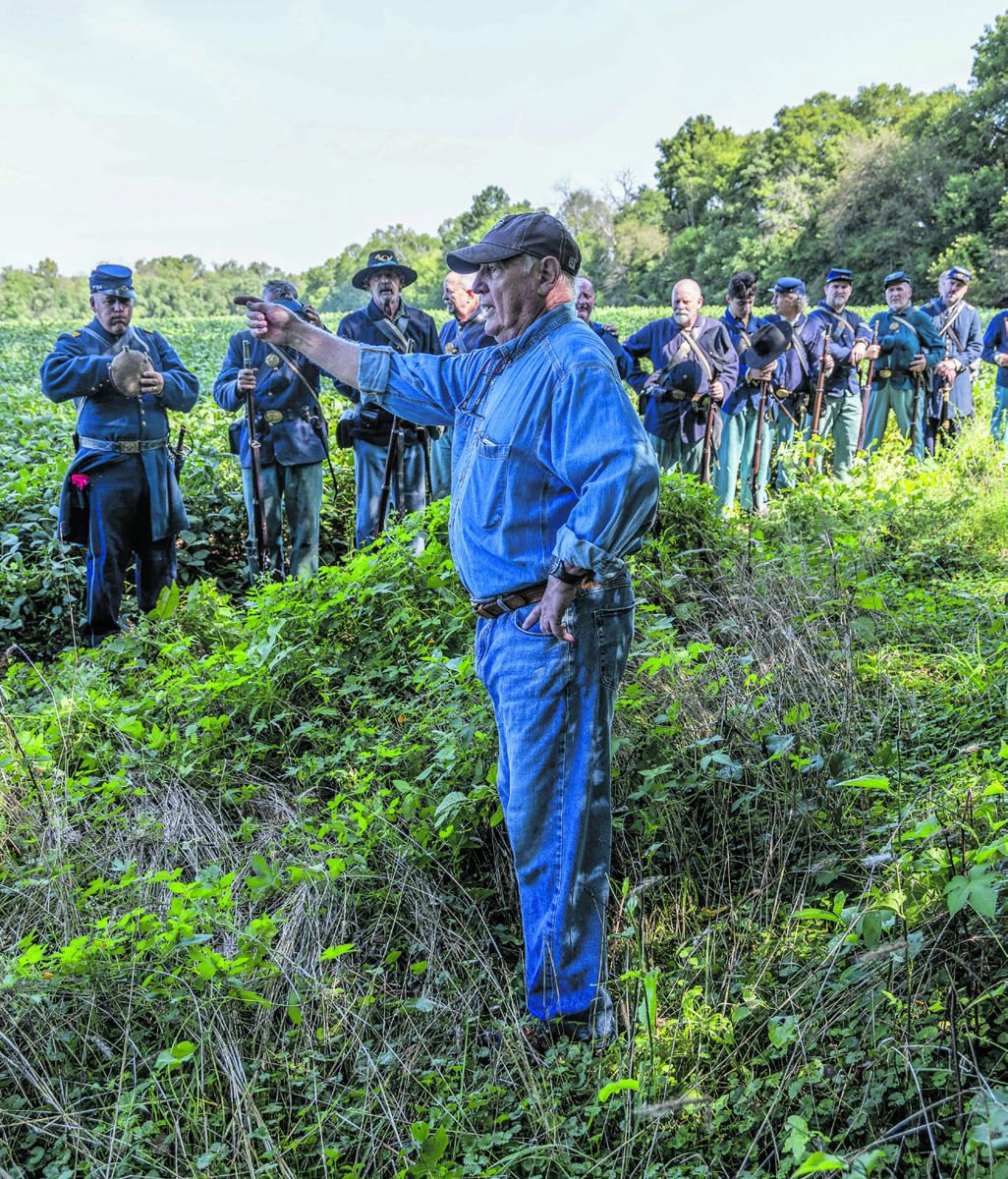
Bud Hall explains the action that took place at the Morton House on February 6, 1864. The single tree in the background was the location of the Morton House.
Right: Swale through which the 14th Conn. passed in February 1864 on way to the Morton House.
Sketch of Morton’s Ford. Union troop locations are in blue and Confederate locations are in red. The Rapidan River is highlighted in blue.
Left: Approach to the Morton House over which the 14th Conn. passed in February 1864.