
American Battlefield Trust
American Battlefield Trust — February 2022
Originally published February 2022 · pp. 12–13
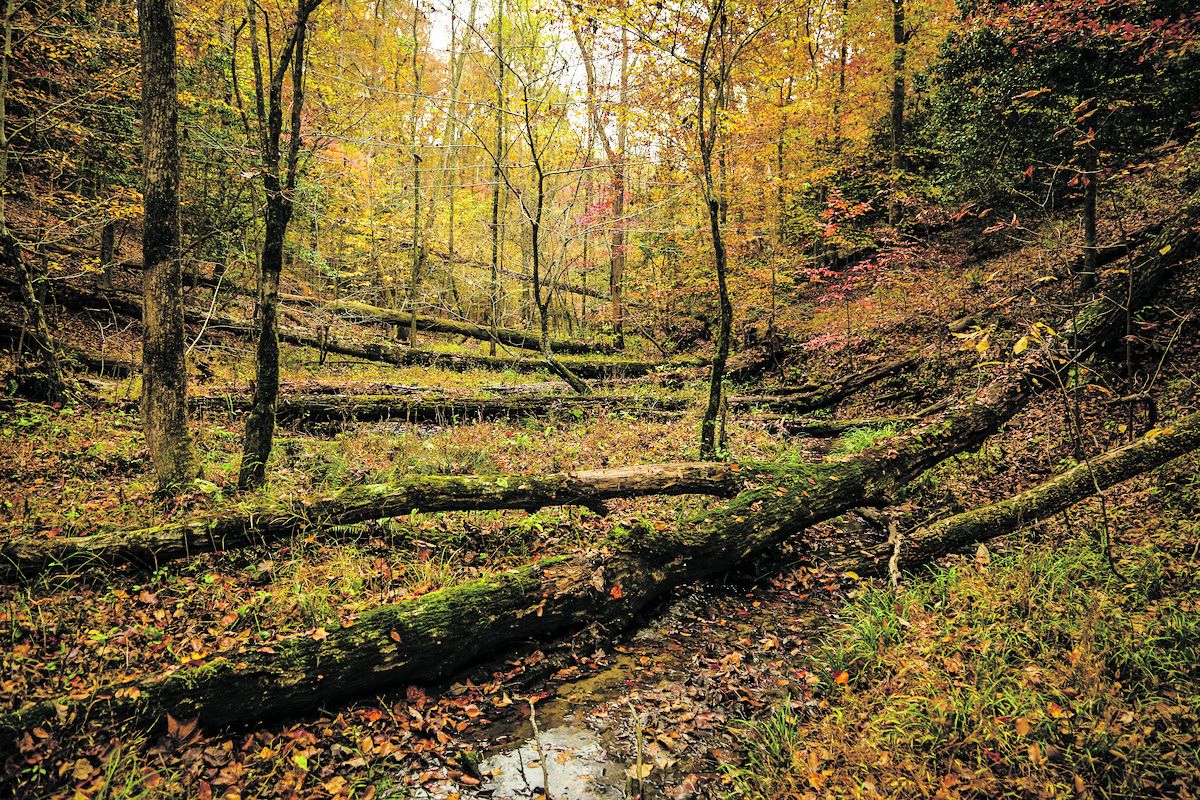
Help the Trust Save 48 Acres at Two Virginia Battlefields The American Battlefield Trust is currently working to preserve 48 acres at two Civil War battlefields in the Commonwealth of Virginia, three acres at the Cedar Creek Battlefield in the Shenandoah Valley and 45 acres at the Cedar Mountain Battlefield in the Virginia Piedmont. Due to massive growth and development in these areas, threats to these hallowed grounds have grown exponentially. The 48 acres of hallowed ground have a joint transaction value of $939,153, but through a combination of state and federal matching grants and major gifts, we’re left to raise just $32,200 through private donations. To bring the preservation project across the finish line, the Trust looks to donors, with the promise of a $29-to-$1 match. It is a prime opportunity to save such valuable pieces of history. On August 9, 1862, Confederate Gen. Stonewall Jackson seized the opportunity to attack a portion of Union Gen. John Pope’s newly constituted Federal Army of Virginia. The Battle of Cedar Mountain pitted Jackson’s forces against Union Gen. Nathaniel P. Banks. Ultimately, a Confederate counterattack led by Gen. A.P. Hill repulsed the Federals and won the day. With nearly 25,000 troops engaged, the battle resulted in 3,691 casualties and created a Confederate strategic initiative that led directly to the Second Battle of Manassas. More than two years later, the Battle of Cedar Creek unfolded on October 19, 1864. Following one of the riskiest approach marches they attempted, the Confederate Army of the Valley launched a surprise attack in the early hours of the morning against the left flank of the Union Army of the Shenandoah, driving the Federals from their camps. The retreating Union army crossed our three-acre target tract at Cedar Creek. While the situation appeared grim, the course of battle was altered when Union Gen. Philip Sheridan rode onto the field, ordered a counterattack that turned the Confederate flank, and crushed Confederate hopes in the Shenandoah Valley for good. The battle saw more than 50,000 soldiers engaged, with 9,000 casualties tallied. With a January deadline, you can help the Trust save these critical sites by visiting www.battlefields.org/save48. North Carolina Embraces Its Hallowed History
Landmark Grant Enables Major Effort at the Williamsburg Battlefield is a major milestone in securing a sizeable portion of a battlefield long-considered virtually lost. Plantation operations dating to the 1690s guarantee rich archaeological resources, including the well preserved 1861 Confederate earthwork known as Redoubt Number 11. In 1862, Union forces moved to threaten the Confederate capital of Richmond, with the Battle of Williamsburg as the first pitched battle of this offensive. On May 5, 1862, members of the local enslaved population, who had built the works, notified the Union army that two Confederate redoubts were unoccupied, allowing Brig. Gen. Winfield Scott Hancock to outflank Confederate forces. Despite being pushed back by an attack that swept across this property, Hancock’s forces reestablished their line around Redoubt 11, repulsing the Confederates and earning the commander his sobriquet “Hancock the Superb.” Following the battle, the Union army used the nearby Custis farm buildings as a field hospital. Look for details regarding the remaining fundraising need from private donations in early 2022 at www.battlefields.org.
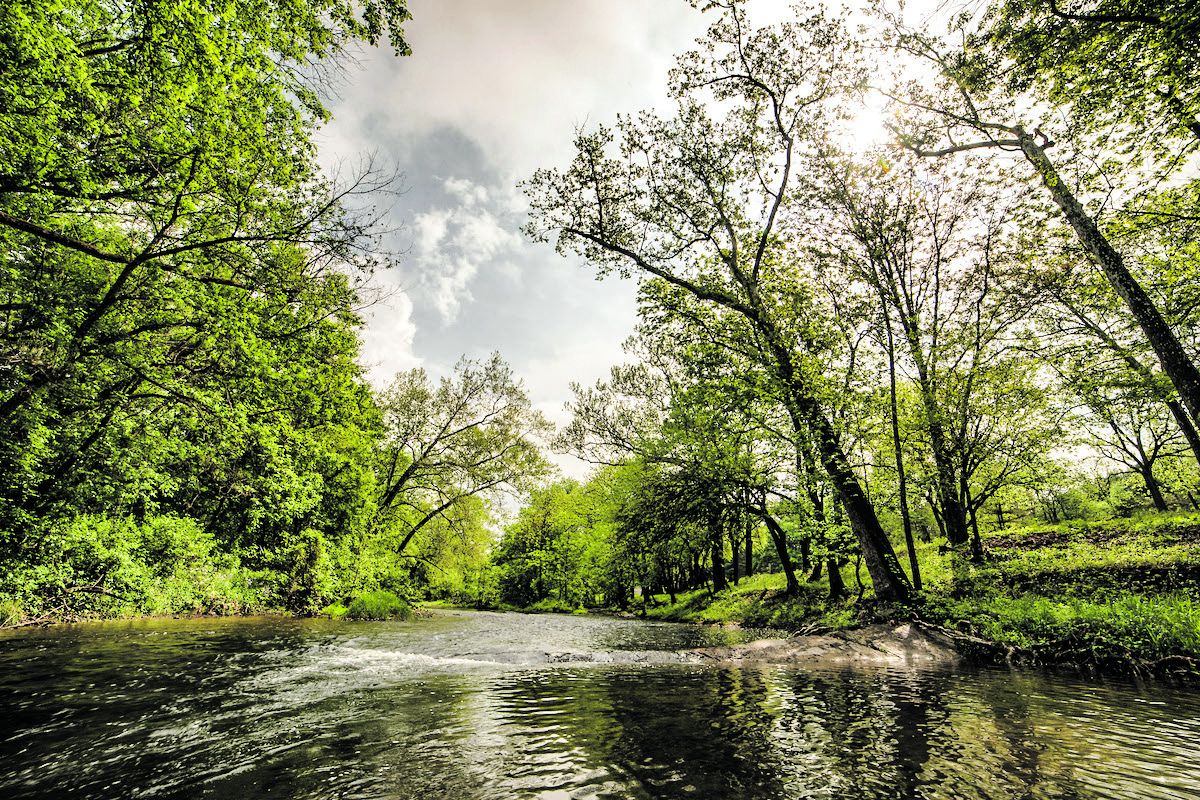
Before Thanksgiving, the Trust announced that it had secured a contract to purchase 250 acres, known historically as the James Custis Farm, on the Williamsburg Battlefield in York County, Va. Commensurate with its size, location, and development potential, the tract’s massive $9.2 million price had long posed a challenge. Buoyed by a landmark $4.6 million grant from the federal American Battlefield Protection Program, generous contributions from the Commonwealth of Virginia, and a substantial landowner donation, the Trust is confident that its preservation is on the horizon. Although much work remains before an ultimate victory, this When Gov. Roy Cooper’s signature was affixed to the North Carolina budget on November 18, the future of the Tarheel State’s hallowed ground became brighter. The bipartisan budget appropriated $1.6 million to preserve and restore North Carolina’s battlefield land and will help pave the way for a meaningful 250th anniversary commemoration. The measure is much needed at present, as the state is experiencing rapid growth that carries the possibility of encroachment upon battlefield land. Recognizing the preservation that this measure enables, the Trust applauded the General Assembly and all those involved in this effort. “Investing in our national heritage opens doors for meaningful impact,” said American Battlefield Trust President David Duncan. “Whether it be sought-after, open green spaces; outdoor classrooms for current and future generations; or identity builders for towns seeking to showcase their profound past, North
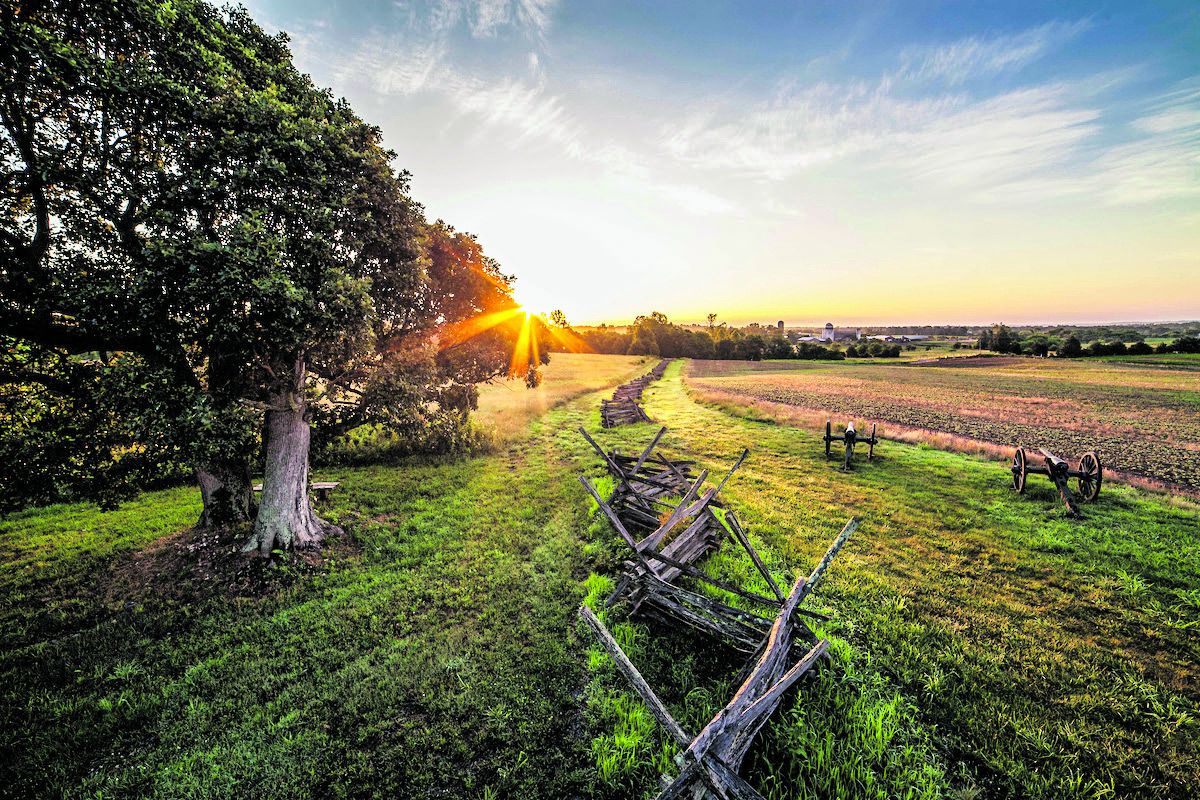
Carolina’s battlefields can serve their communities in multiple ways.” The $1.6 million dollar appropriation, the largest-ever in North Carolina battlefield preservation history, allows for the protection of nine tracts across the Bentonville, Averasboro, and Wyse Fork Battlefields. The Trust will build upon these financial resources by leveraging them against federal matching grants and private donations to finance the transactions’ roughly $3.2 million value. The budget also includes $50,000 to establish a North Carolina Road to Freedom program. First introduced in the Commonwealth of Virginia, the Road to Freedom project, undertaken alongside heritage tourism experts at Civil War Trails, Inc., highlights the under-told stories of the African American experience during a state’s Civil War-era by linking together historic sites with map guides and free GPS-enabled apps.
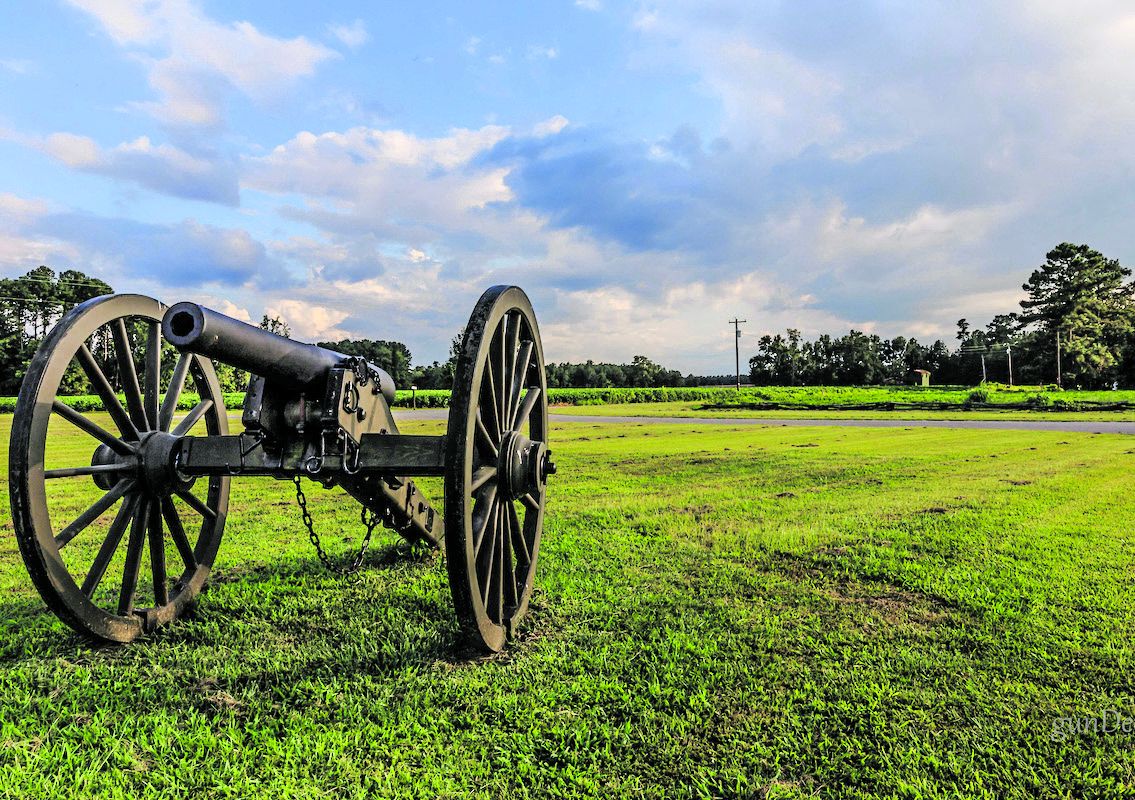
Celebrating a Pivotal Moment in the Trust’s Preservation Journey At the conclusion of 2021, the Trust was able to announce two important milestones in its preservation journey, crossing thresholds in terms of acres protected and sites impacted. Since its founding in 1987, the Trust has preserved more than 54,000 acres of hallowed ground, places where ordinary Americans struggled, sacrificed, and persevered, at 150 sites across the nation. Our 150th site is both historically significant and symbolic: Great Bridge, an important Revolutionary

CivilWarNews.com War site in Virginia, the state whose intense development pressure spurred the creation of our predecessor organization nearly 35 years ago. Today, the Chesapeake site is surrounded by development threats, the .66-acre tract even sported “for lease” signs before the Trust stepped in! The declaration of victory on this parcel means more than that the Trust has taken ownership of the land; it means that the purchase is fully paid for, including all anticipated grant funds. This purchase was made possible with support from the American Battlefield Protection Program, the Virginia Battlefield Preservation Fund, the City of Chesapeake, and the Great Bridge Battlefield and Waterways Foundation, as well as Trust donors. After a conservation easement is placed, this land will be transferred to the City of Chesapeake and incorporated into the battlefield at large, giving visitors the chance to walk in the footsteps of revolutionary Patriots. On December 9, 1775, this land saw Virginia Patriots change the course of American history when they responded to colonial governor Lord Dunmore’s forces, including his “Ethiopian Regiment,” made up of enslaved men who had been promised their freedom in exchange for service. The battle ended in less than 30 minutes with a Patriot victory that led to Lord Dunmore’s departure from Virginia in 1776.