
This And That
More on J.C. Van Duzer
By Gould Hagler · Originally published December 2022 · pp. 26–27
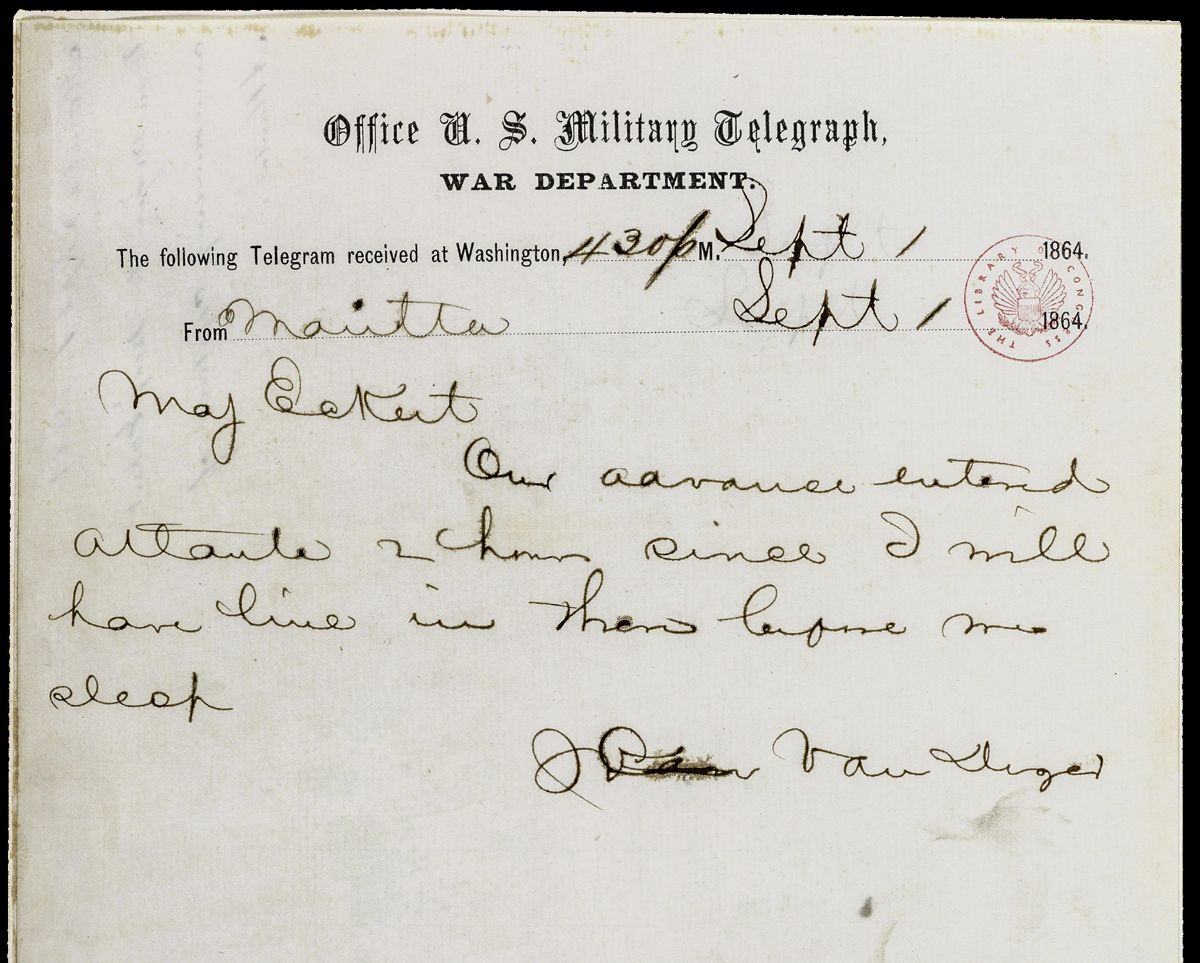
More on J.C. Van Duzer Last month’s column told the story of J.C. Van Duzer, the telegraph superintendent who got crosswise with Grant during the Mississippi Central Campaign in November 1862. This month we follow Van Duzer, still with the United States Military Telegraph, but now working in the Army of the Cumberland under Maj. Gen. William Rosecrans. As we study the war’s battles and campaigns, we frequently read dispatches sent by telegraph. Federal and Confederate officers in all theaters of war communicated with officials in their two capitals and other distant places. Officers within a field army also telegraphed each other, even as they marched from place to place during a campaign and even in the midst of battle. The work to build and maintain this telegraphic infrastructure was difficult and often dangerous. The dispatches sent by and to Van Duzer after his transfer open a window through which we can observe the operations of this vital service. We left Van Duzer in December
1862, sitting in St. Louis and lamenting his exile from Grant’s Department of the Tennessee. He next appears in the Official Records on April 2, 1863, as Rosecrans methodically prepared for his advance from Murfreesboro. Van Duzer, in Nashville, sent a message to Rosecrans reporting trouble. “Rebels captured a labor train, 4 miles north of Franklin, Ky.” The rail was blocked and the telegraph line cut, “object supposed to be capture of freight train from north.” This railroad supplied Rosecrans’s army, so whatever was on that freight train probably never reached Murfreesboro. This minor attack caused only a slight interruption. Still, the railroads and telegraph lines were a regular target, and such attacks added to Van Duzer’s work. As Rosecrans moved from Murfreesboro in late June, the telegraph lines moved with him. Van Duzer reported that he opened an office at the general’s headquarters in Tullahoma just three hours after headquarters were established. Lines were continuously extended and offices opened in numerous Tennessee and northern Alabama locations.
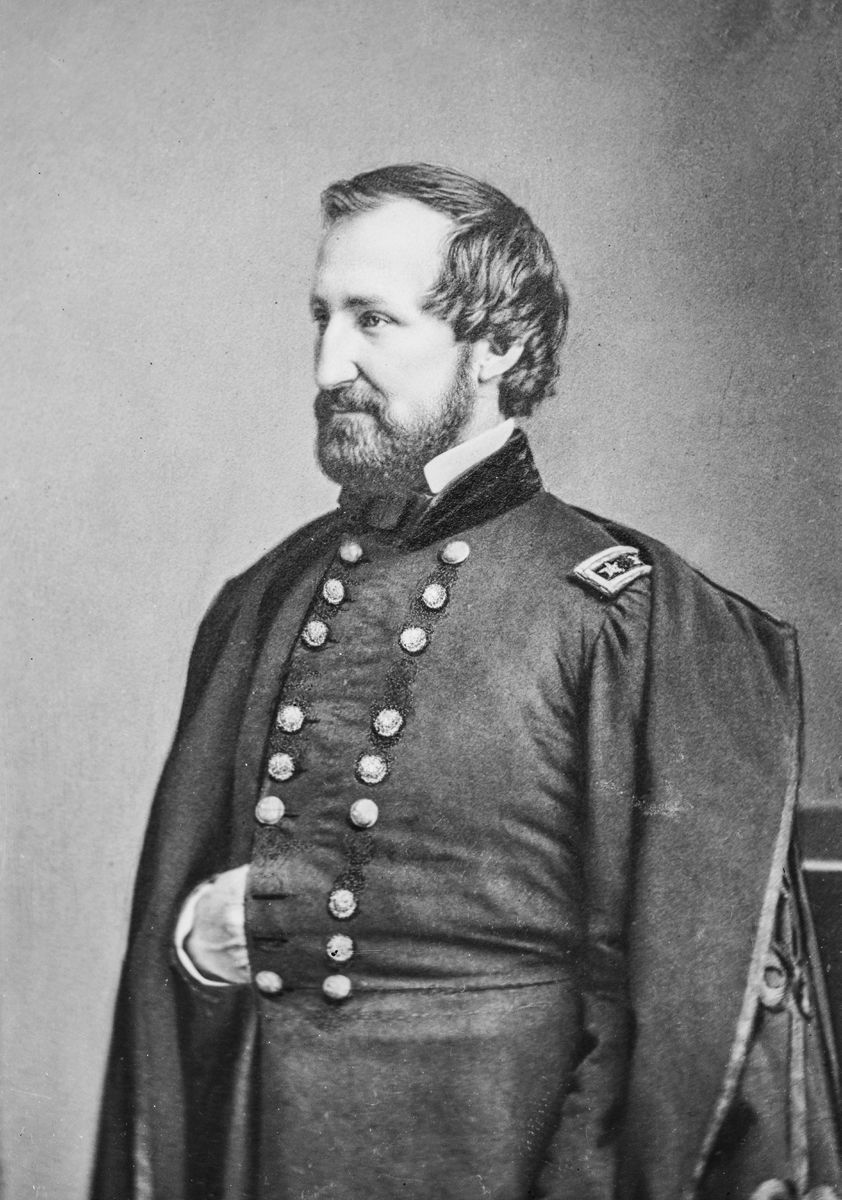
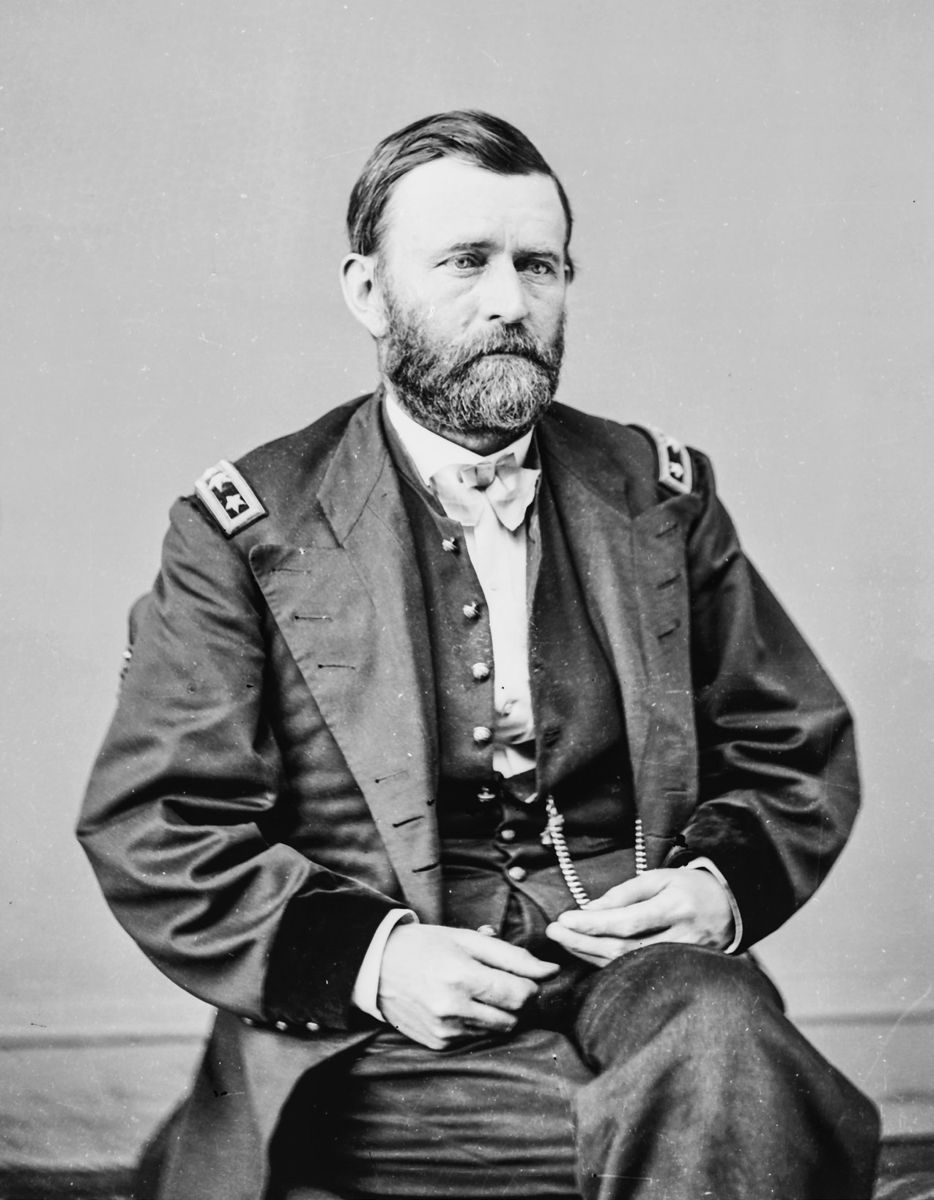
The army stayed connected to bases of supply and to higher commands; the army’s individual commands were connected to each other. To conduct this work Van Duzer employed some 40 men. In August Van Duzer reported to Rosecrans that two men were captured at Fort Henry by “a dozen rebel guerrillas” aided by local sympathizers. A week earlier a repairer had been killed. Van Duzer, who signed the message “Capt. and Asst. Supt. U.S. Military Telegraph,” wrote: “I can’t keep the lines up unless I am allowed to retaliate, and furnished the force necessary.” In September, as Rosecrans maneuvered Bragg out of Chattanooga and pursued him into Georgia, Van Duzer kept up. His frequent dispatches reported on extensions of the lines, the opening of offices, and the disruptions caused by Confederate attacks. The dangers and disruptions were about to become more severe. Van Duzer reported that during the two days of the Battle of Chickamauga his men were often under fire, as they built and repaired lines. On the 20th, operators were driven from their location at the widow Glenn’s house and swept up in the chaos that followed the Confederate breakthrough. On the night of September 21-22, after the retreat to Chattanooga, Van Duzer’s men helped prepare for the siege by running trip-wires outside the Federal works. Afterwards Van Duzer headed up the effort to connect Rosecrans’s army to the outside world by stringing a line to Bridgeport, 40 miles to the southwest. Confederate sharpshooters fired on the workers from the south bank of the river. One expert rifleman, Van Duzer wrote, “killed everything he shot at, man, horse or mule; he killed 3 men and wounded 2, and killed about a dozen mules.” Darkness provided some protection, but as the telegraph builders labored at night so did the sharpshooters, who fired in the direction of the noise. On October 18 General Rosecrans sent his last message to Van Duzer, ordering him to “open communication with the cavalry division near Flint River.” That was the day Grant took command of the newly formed Military
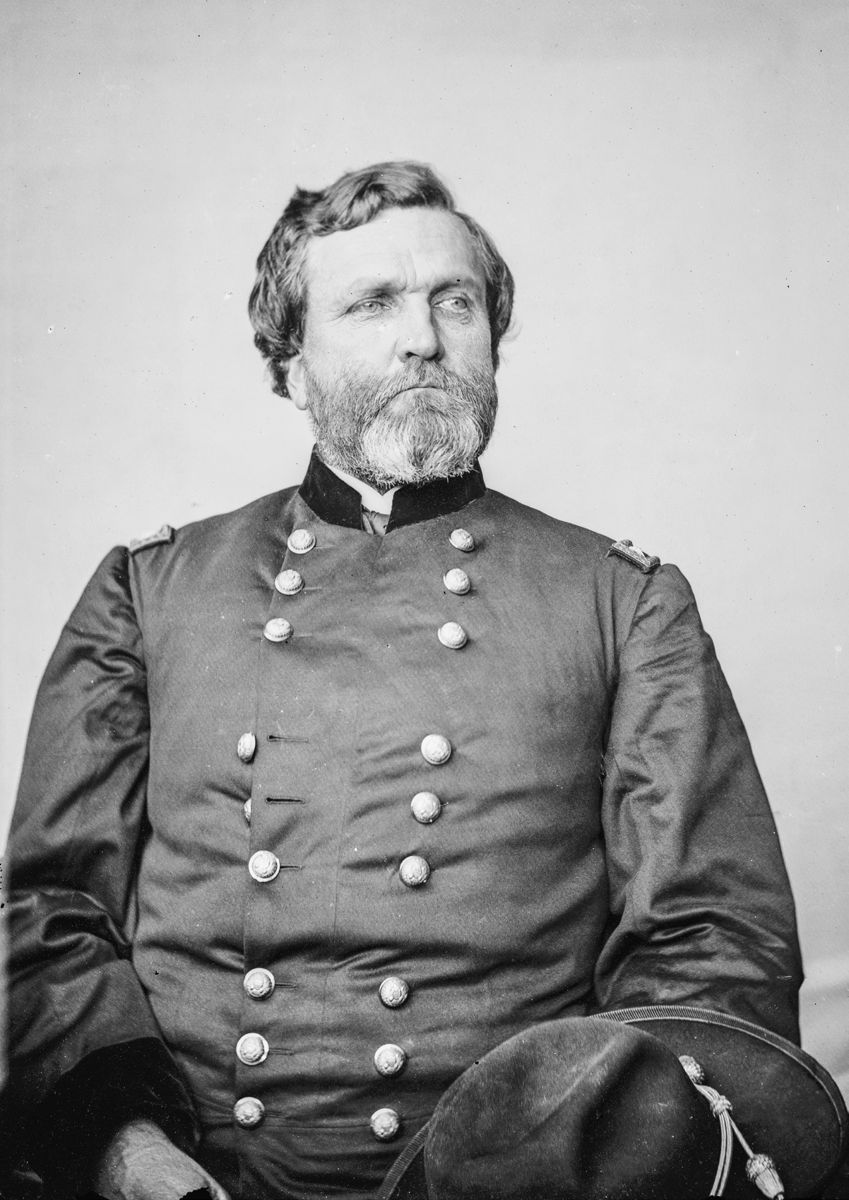
Division of the Mississippi. He immediately fired Rosecrans and replaced him with Maj. Gen. George Thomas. In November the reinforced army in Chattanooga broke the siege in the Battle of Missionary Ridge. The Confederates retreated into Georgia. The Federal forces, soon enlarged to three armies under Gen. William T. Sherman, prepared for the Atlanta Campaign against the Army of Tennessee and its new commander, Gen. Joseph Johnston. In January 1864 the telegraph line was extended from Chattanooga to the Federals’ forward position in Ringgold, Ga. Redundancy strengthened connections to the Federal rear, as both Nashville and Louisville were linked to Chattanooga by three separate routes. As Sherman’s force moved south, Van Duzer and his team went along, keeping the commander’s headquarters wired to his rear and with his subordinate commanders. As one would expect, much of what Van Duzer wrote in his dispatches to Washington pertained directly to the telegraph system. However, much did not. In addition to reports on equipment and personnel, the work to extend and repair the lines, and Confederate efforts to tear up what he had built, Van Duzer sent updates on the military action. Fighting was the business of the generals, not telegraphers, but it seems that the telegraph men liked to share the buzz with each other. Most dispatches went to Maj. Thomas Eckert. One of Van Duzer’s operators informed Eckert on May 15 that Sherman was “confident of bagging all the rebels in Resaca.” The next day Van Duzer reported that Johnston’s (unbagged) force had evacuated to the south. Other dispatches tell of Confederates deserting at Adairsville; inquire about Grant’s progress in Virginia; report on “marauding parties” in the Federal rear; and describe the Confederate works at Kennesaw Mountain. The buzz between the telegraph men traveled fast, often faster than reports from the generals to their higherups. On June 14 Van Duzer told Eckert that Federal signal men had read Confederate flag signals and learned that Gen. Leonidas Polk was killed. The chief of staff, Gen. Henry Halleck, got the same news from Sherman the next day. Sometimes the buzz was accurate, sometimes not. A June 22 dispatch included this news: “Prisoners taken today say Johnston called to command Army of Virginia. Lee made general-in-chief, vice Bragg. Ewell in command in our front.” A few hours after the fighting at Kennesaw Mountain, Van Duzer advised Eckert of Federal casualties. On July 11 he reported that “Rebels last night withdrew entirely from west bank of Chattahoochee, and burned bridge.”
On the 19th, at 11:30 p.m., from his camp on Peachtree Creek, Van Duzer telegraphed some important news: “Johnston is relieved by Hood.” Sherman sent the news to Halleck late on the 20th; Halleck received it at 12:45 p.m. on the 21st. July 20 was the day new places, sometimes with the army as it progressed through north Georgia, sometimes in the rear at Chattanooga. After the capture of Atlanta, he began to operate in Nashville. Thomas took his army to Nashville after Sherman began his March to the Sea. Grant was growing impatient with Thomas as he prepared to assault Hood’s army entrenched just south of the city. Grant was on the verge of firing Thomas when, on December 15, he received a message reporting on Thomas’s successful attack that day. The message came from J.C. Van Duzer, the man Grant had arrested two years earlier. Thomas kept his command. I first met John C. Van Duzer back in Mississippi when he was arrested and wrote about that episode in November. This month we have seen that after that trouble Van Duzer worked with success, first with Rosecrans and later with Thomas and Sherman, from early 1863 until the end of 1864. In his report of January 20, 1865, Thomas gave Van Duzer high marks for his performance. In March 1865 Van Duzer was army commander Gen. John Bell Hood attacked at Peachtree Creek. That night Van Duzer told Eckert that “Enemy has assaulted several times today and has been severely repulsed each time.” The message was received at 11 a.m. the next day. Sherman sent news of Peachtree Creek to Halleck at 8:30 p.m. on the 21st. Halleck received the message soon before lunchtime on the 22nd, an hour or two before Hood’s second attack began east of Atlanta. As every reader knows, the efforts to drive the Federals back failed. After the August 31 fighting at Jonesboro, Hood was compelled to evacuate Atlanta, and did so the following day and through the night of September 1-2. Van Duzer conveyed the news to Eckert on the afternoon of September 2. Sherman wired the news to Halleck at 6 a.m. on the 3rd. Many of Van Duzer’s telegraphs during the Atlanta Campaign, and after the fall of the city as well, reported on disruptions to the telegraph lines and efforts to repair the damage. An October 30 message indicated that he would soon have no concern with the lines between Atlanta and Chattanooga. “I am informed, by order of General Sherman, that Atlanta will not be occupied a week hence, and I prepare to withdraw to Chattanooga.” During all this time Van Duzer was located in a variety of promoted to the superintendency of telegraphs for the Division of the Mississippi. He continued his work until May 1866, when he was mustered out as a Brevet Lieutenant Colonel. He died in 1898 and is buried in Lakeview Cemetery in Escanaba, Michigan. Sources: Most of the dispatches discussed in this column are in the Official Records, volumes 30 and 38 of series 1. Some documents not in the OR are contained in Military Telegraph during the Civil War in the United States, by William R. Plum, Jansen, McLung & Co., 1882. Gould Hagler is a retired lobbyist living in Dunwoody, Ga. He is a past president of the Atlanta Civil War Round Table and the author of Georgia’s Confederate Monuments: In Honor of a Fallen Nation, published by Mercer University Press in 2014. Hagler speaks frequently on this topic and others related to different aspects of the Civil War and has been a regular contributor to CWN since 2016. His email is [email protected].