The Unfinished Fight
Cornbread
By Craig L. Barry · Originally published December 2022 · pp. 16–17
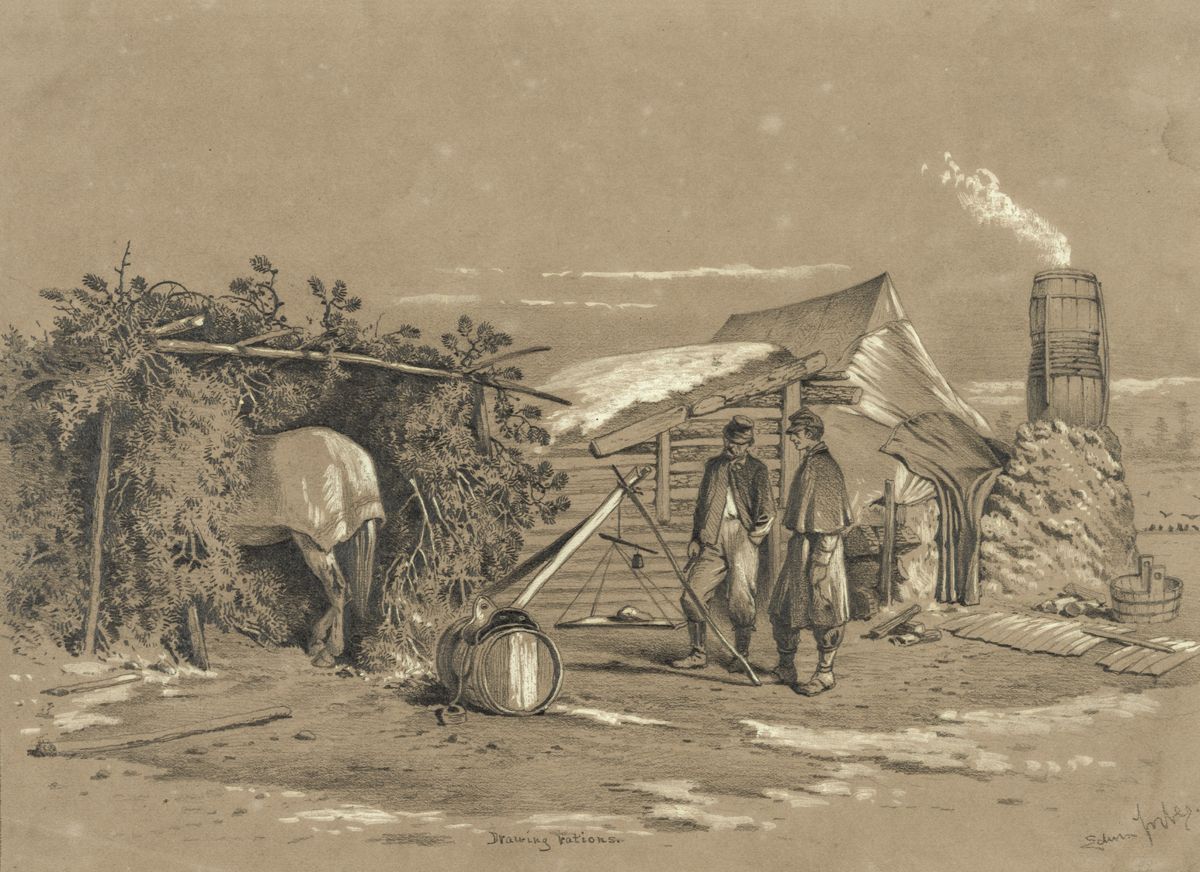
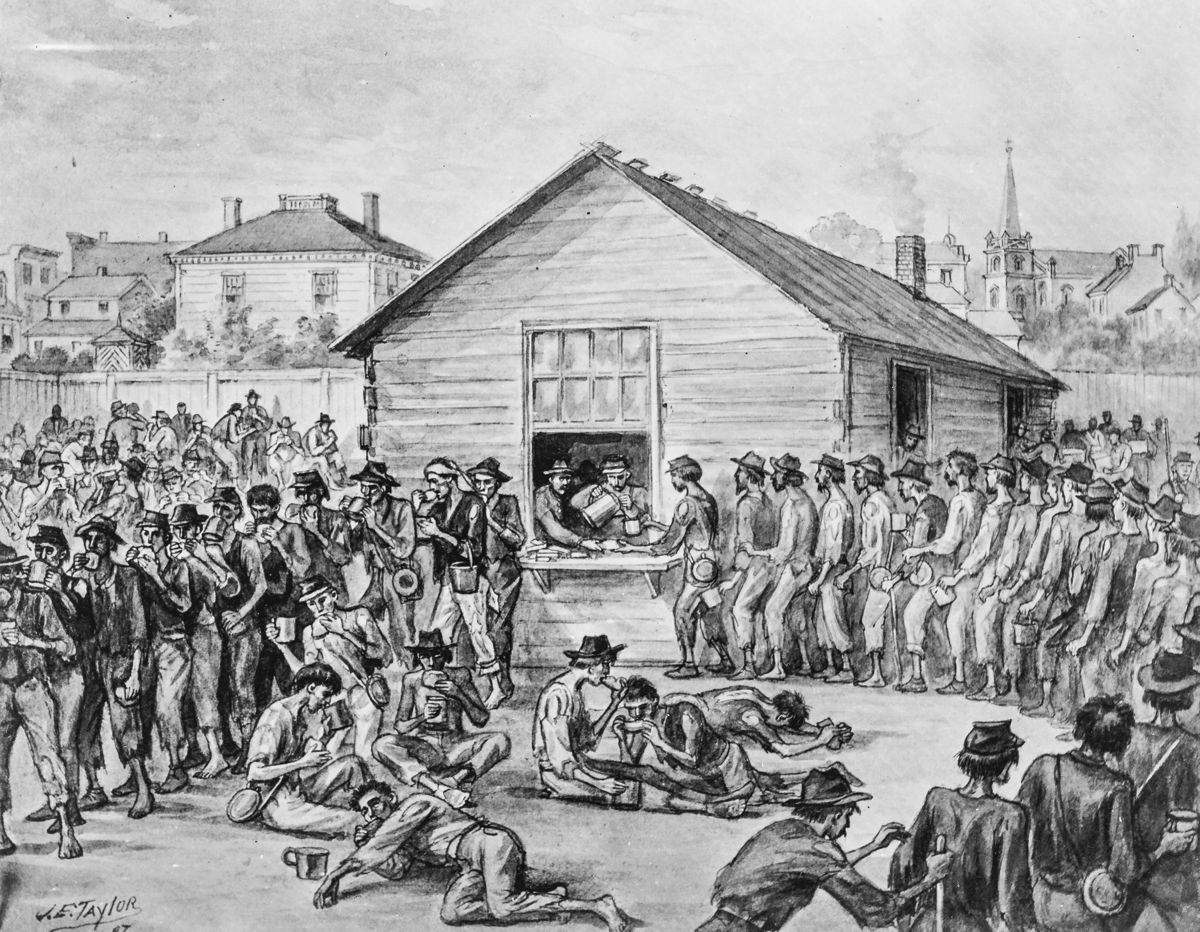
Cornbread “The food we get on the road is sufficient, and good enough to sustain life; it consists of pork or bacon and bread made from Indian corn.” – Lt. Col. Arthur Fremantle, Coldstream Guards Corn, or maize, was grown in almost every state in America during the 1860s. One reason was because of its higher yield in terms of bushels produced per acre of crop. If an acre of corn yielded, on average, 25 bushels, the same acre would produce only about 15 bushels of wheat, according to “The Farmers Revolt” (www.digitalhistory.uh.edu). This rate of yield remained true from colonial times until the 1940s when crop production per acre dramatically increased. During the Civil War-era these same acreage yield figures would have been the norm. While a portion of the crop went for animal feed, human consumption of corn was still the most prevalent use. Corn was easier to grow than other grains and it grew in a wide array of conditions. Regional varieties reflected local growing seasons and soil conditions. Southern white cornmeal was made from hominy, a staple of traditional Deep South recipes and a staple of Confederate Civil War rations. So, what exactly was hominy? Hominy is produced by drying the corn on the cob, then stripping and soaking the kernels in a weak alkaline solution, such as water mixed with limestone or wood ash, to remove the hulls. The bloated kernels are hominy, which is then used as is or ground. If coarsely ground it is called samp; more finely ground hominy is called grits. When ground even more finely like flour, it is cornmeal. Recipes using grits and cornmeal are familiar all throughout the South, but how was samp used? It was traditionally mixed with water to make a cereal known as porridge. As the old saying goes, an army marches on its stomach and this was never truer than during the Civil War. Food, including cornmeal, was usually issued through the commissary as part of daily rations. By definition, a ration is the amount of food authorized for one soldier for one day. The Confederate government adopted the official U.S. Army ration at the start of the war and by the spring of 1862 was forced to reduce it. The marching ration consisted of 1 lb. of hard bread, ¾ lb. of salt pork or 1¼ lb. of fresh meat, plus sugar, coffee/tea and salt. Cornmeal was a substitute for hard bread. Bread, flour, hard bread, and cornmeal were used interchangeably in rations. Cornmeal was common in the South because corn was common in the South. While cornmeal was far from unknown in the Union army, it was an absolute staple of the Confederate soldier’s diet. A soldier quoted in Patricia Mitchell’s Confederate Camp Cooking wrote: “Rations were light, provisions of all sorts scarce, luxuries unknown, and clothing without suspicion of style or fashion…. Only cornbread, peas, and sorghum were plentiful.” One problem was not with the ration so much as what soldiers did with it. Few soldiers knew much about cooking. The men pooled their resources and delegated cooking responsibilities to those most able to cook. However, there was not much material to work with. The soldier’s issued equipment did not include any cooking utensils beyond camp kettles and mess pans for company use in camp or in garrison. While on campaign there was not much available besides a campfire, the same monotonous ration, and a frying pan. While foraging could produce additional ingredients, specifically eggs and milk, these foods were not widely available on a daily basis. The campfire cornbread referred to by the soldier above is most likely corn pone or jonnycake. Sometimes spelled “johnnycake;” the term is not an oblique reference to “Johnny Reb,” the Northern slang for a Confederate soldier. Rather it refers to a panfried unleavened cornbread. The earliest recorded use of the word dates back to colonial times. It may have its origins in the similar term describing the traditional Virginia and Carolina version called “journeycake.” Jonnycake was made in a skillet or frying pan using the grease from rendering bacon or salt pork. Water and cornmeal were mixed to the approximate consistency of a thick batter and fried in the hot grease like a pancake. M.S. Schroyer in History of Company G & Civil War Diary about the 147th Pennsylvania Regiment, wrote: “We had pans with handles 12 or 15 inches long. We often came across flour or corn meal; sometimes bought it, sometimes otherwise. We would stir this up, make a batter of it, grease the pan well, hold it over the fire, keep shaking the pan to keep the slapjacks from burning fast. When we thought it time to turn the cake, with a slight twist of the wrist the cake would be thrown into the air, turn a somersault and be caught again in the pan. Sometimes half of it would hang out over the edge of the pan. Sometimes it wouldn’t hang at all, but drop in the ashes. Then we would always make the best of it.” Corn pone is another similar type of campfire cornbread. It is made from thicker batter the consistency of mashed potatoes, shaped into small 2- to 3-inch ovals and pan fried. As a frame of reference, if you were to add buttermilk to this recipe and deep fry it, you would have hushpuppies.
CivilWarNews.com Civil War soldiers universally complained about inedible hardtack, but it traveled better than corn pone which easily crumbled, mildewed, or otherwise deteriorated in the haversack. Corn pone and jonnycakes made correctly will turn rancid and buggy as fast as shredded cheese. When the corn pone soured, Confederate soldiers used it to make a stew they called “cush.” A Second South Carolina, Kershaw’s Brigade, infantryman quoted in Lee Rainey’s “Corn Meal” Vol. 9, No. 4 Watchdog article, wrote his recipe down as follows: “Chip up bacon and fry to a crisp. Fill the oven [pan] one-third or one-half full of branch water then take the stale cornbread … rub it into fine crumbs and bring the whole to a boil, gently stirring with a forked stick … when cool eat with fingers.” Civil War period cornpone and jonnycake are quite different from what we commonly associate with cornbread. The widely served accompaniment in most barbeque lodges and restaurants countrywide is the yellow caketype cornbread. The first clue is that it is distinctly yellow, not white, and not fried. This would have been referred to as “Yankee cornbread,” a combination of wheat and corn flour, plus eggs, baking powder, baking soda, buttermilk, sugar, salt, and butter. The so-called Yankee cornbread is absolutely nothing like authentic corn pone or jonnycakes. Real fried Southern cornbread is bland, gritty, and much denser. Craig L. Barry was born in Charlottesville, Va. He holds his BA and Masters degrees from UNC (Charlotte). Craig served The Watchdog Civil War Quarterly as Associate Editor and Editor from 2003–2017. The Watchdog published books and columns on 19th-century material and donated all funds from publications to battlefield preservation. He is the author of several books including The Civil War Musket: A Handbook for Historical Accuracy (2006, 2011), The Unfinished Fight: Essays on Confederate Material Culture Vol. I and II (2012, 2013). He has also published four books in the Suppliers to the Confederacy series on English Arms & Accoutrements, Quartermaster stores and other European imports.