
Weather Hot, Competition Hotter
By Bruce W. Miller · Originally published August 2022 · pp. 1–11
WINCHESTER, Va.—While temperatures soared into the 90’s, the North-South Skirmish Association (N-SSA) held its 145th National Competition May 18 through 22, 2022. Member units competed in livefire matches with original or authentic reproduction Civil War period muskets, carbines, breechloading rifles, revolvers, mortars, and cannons. It is the largest Civil War event of its kind in the country. The first two days of competition are individual matches. Members pre-order targets for seven different firearm matches. As an example, one match combines 50-yard musket, 100-yard musket, and the aggregate of the two targets. They can order only one target per match so there are no second chances. The next three days are for seven team matches where 480 teams participated; 79 teams participated in the cannon and mortar matches. Keeping track of all the scores is the responsibility of the skirmish staff statistics office under the watchful eye of the National Statistics Officer, Jeff Knauss, and his deputies. Jeff, a retired engineer from Verizon, has served in this position for over 30 years and literally wrote the book on N-SSA scoring management. At a typical national, scoring requires approximately 45 target scorers and an oversight staff of 10. At this spring national, almost 2,000 individual targets were scored. Competitors are classified based on skill level, and this year 332 medals were awarded. For the 480 team matches, also classified by skill level, 812 medals were awarded. Scoring, checking, handling protests, and getting medals in the right hands takes a great deal of skill and effort and under Knuass’ leadership it looks a lot easier than it really is. After two days of individual competition, the seven team matches were held over the threeday weekend. The Shenandoah Valley was hot, pushing into the 90’s. Sunday’s Rifle-Musket Team match, the N-SSA signature event, was particularly exciting. The clay pigeons, ceramic tiles, and pot silhouettes were blasted
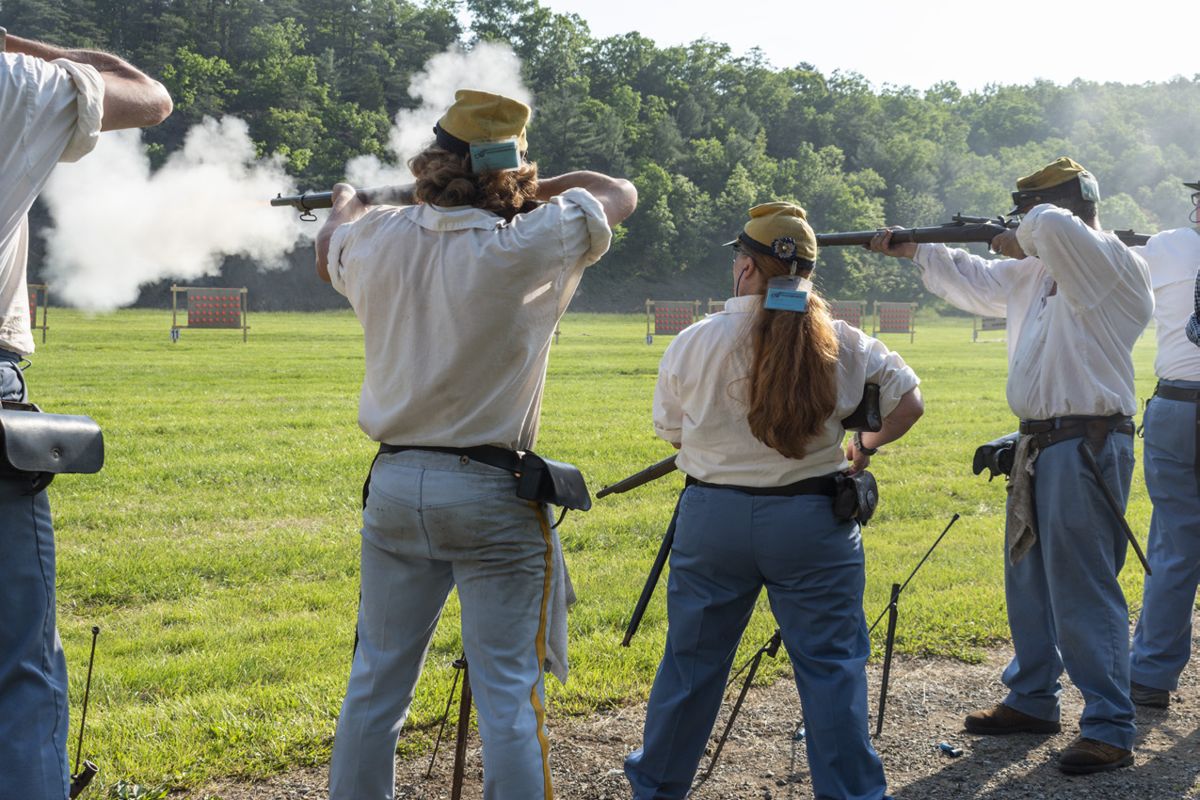
This uniformly-garbed team fires at the pigeon board through the hazy, warm morning air. Temperatures at the 145th National pushed into the 90s, setting a heat record for this May event. (Lis Cole)
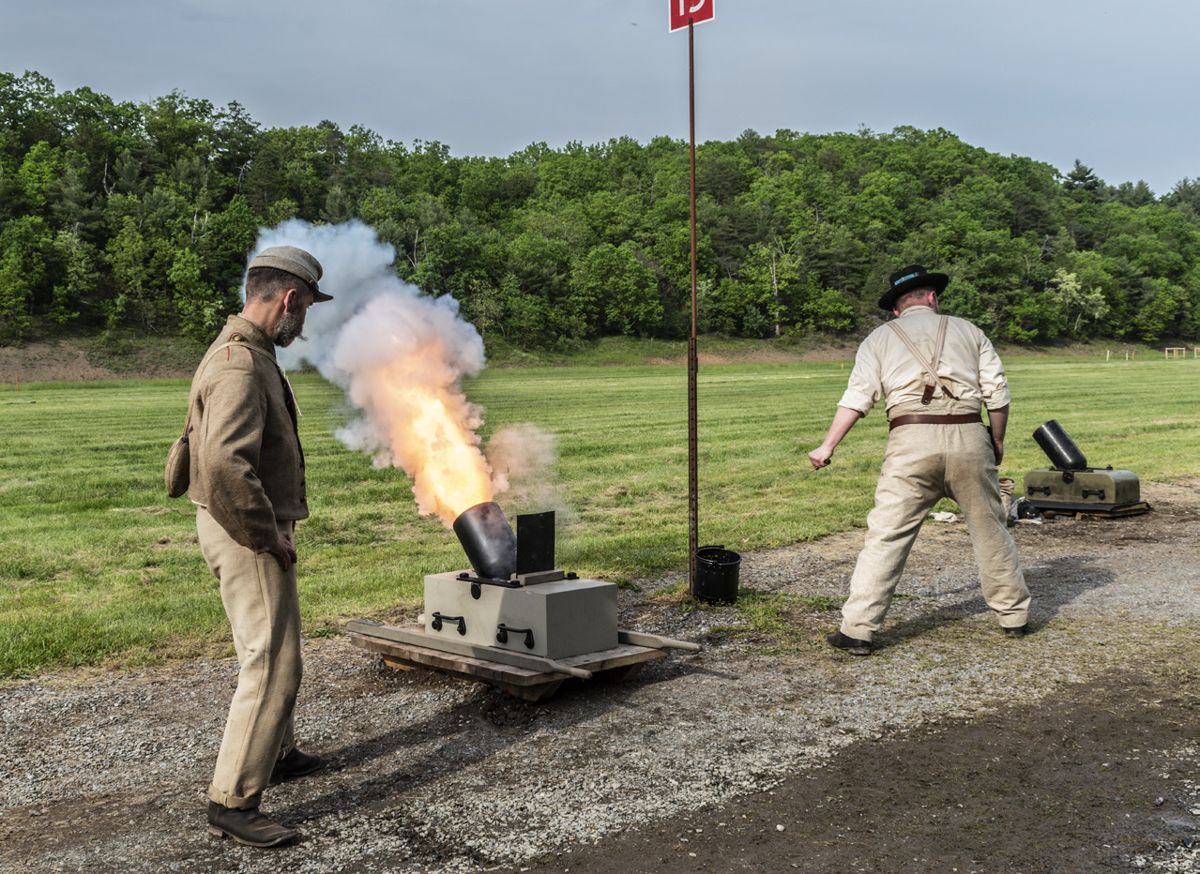
by Minié balls at ranges of 50 and 100 yards. The nearly unbeatable 110th Ohio Volunteer Infantry (OVI) dominated the match once again. They won the team musket match with an excellent time of 443.5 seconds for the five-event program, finishing ahead of the next closest unit by almost two minutes. This win marks an amazing 27 rifle-musket championships since the year 2000. Two OVI shooters, Mike Rouch and Jerry Smith, have been on all 27 winning teams. A total of 138 eight-member teams participated in this classic competition. The 110th also won Saturday’s Carbine Team match with a time of 455.4 seconds edging the 8th Virginia Infantry by a narrow 5.2 seconds. One hundred fourteen teams participated in this match of speed and accuracy. Smith carbines are a favorite in this match and many are valuable originals. Skirmishers are also fond of Sharps’ carbines and you will often see Burnside’s, Maynard’s, and even muzzleloading carbines and musketoons on the firing line. Friday morning dawned overcast and humid as 55 teams squared off in the Revolver Team match. The four-member teams on a cardboard backer; eight hanging 6-inch x 6-inch ceramic tiles; eight hanging clay pigeons, and eight hanging 4-inch x 4-inch ceramic tiles. The Nansemond Guards finished first and claimed their gold medals with a time of 197.7 seconds. Remington and Rogers & Spencer revolvers are the primary hand gun of choice, but the classic Colt 1860 Army is also seen on occasion. Harlan’s Light Cavalry won the gold in the Smoothbore Musket Team match, besting 119 other units to finish first with a solid total time of 178.5 seconds. This match is a really great test of skill. Competitors participate with many different firearms, including the Model 1842; Confederate Macon arsenal conversions of the Model 1842; the Hewes & Philips conversion of the Model 1816 (which features a rear sight), and the occasional European Potsdam in .72 caliber. The smoothbore match consisted of four events, including the extra challenging silhouette of a tiny clay pot at 25 yards and 6-inch x 6-inch ceramic tiles at 50 yards. Three additional shoulder arm team matches were held. In the Single-Shot Rifle Team match, the 149th Pennsylvania Infantry finished first. In the Breech-Loading Rifle Team Virginia Infantry by a miniscule 1.8 seconds to capture gold; in the Spencer Team match, the 1st Maryland Cavalry took the firstplace medals. Forty-five units participated in the Mortar Team match. Each mortar team fires seven shots at a stake 100 yards down range. Officials then carefully measure the distance and tally how far the best five shots were from the stake for score. The overall winner was the 1st Maryland Cavalry with a terrific five shot aggregate score of 28 feet-6 inches; only nine inches less than 1st Pennsylvania Artillery. The Artillery Team matches are a spectator favorite; 42 guns participated in a variety of classes. The range is reconfigured so cannon fire perpendicular to the small arms firing line. The guns are classified by type: smoothbore, rifled, howitzer, and rifled howitzer. Target frames with paper targets mounted on drywall backers are set at a range of 200 yards for both rifled and smoothbore guns and 100 yards for howitzers. Rifled and smoothbore guns fire 12 solid projectiles, with a maximum of seven shots allowed on two targets: a bull’s eye and a silhouette of a cannon facing them that represents counter battery fire. The best five shots on each target count for a maximum of 25 points per target; a perfect score is 50-5V. Howitzers each fire a maximum of 12 projectiles at their single bullseye target, with the 10 best shots counted; a rare perfect score is 50-10V. In the Smoothbore class, the 1st Virginia Cavalry (gun #1) was the winner with 50-2V. The 3rd U.S. Infantry won the Rifled class with a perfect score of 505V. In the Howitzer class, the Rowan Artillery, won, shooting an impressive 50-5V. The 15th Independent Battery, Ohio Light Artillery, took the Rifled Howitzer competition, scoring 33-2V. Civil War cannon are quite accurate and N-SSA gun crews work hard to get the most out of them. The N-SSA is the country’s oldest and largest Civil War shooting sports organization with 3,000 individuals making up some 200 member units. Each team represents a particular unit or regiment and proudly wears the uniform they wore over 150 years ago. At the 145th National, fifteen competitors were recognized for 50 years of membership; quite an accomplishment. The NRA award for the top Young Skirmisher (under 19 years of age) went to Jacob Walters, 1st Michigan score of 128-0X; the Senior Skirmisher (over 65) award went to Gary Bowling, Nansemond Guards with a 182-0X.
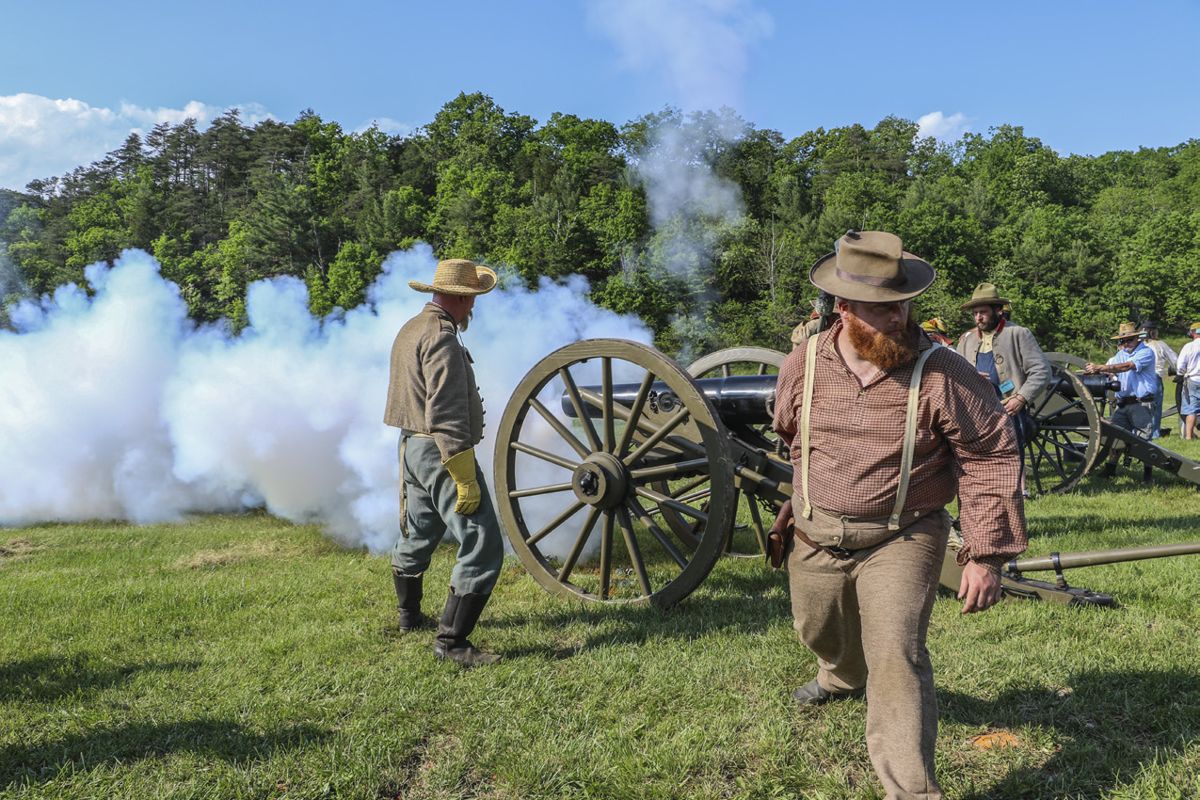
2022, at Fort Shenandoah, just north of Winchester, Va. For more information about the N-SSA visit the web site www.n-ssa.org. A total of 42 guns competed in the Saturday afternoon artillery match, including rifled cannons, smoothbores, and howitzers. (Niki Bethke)
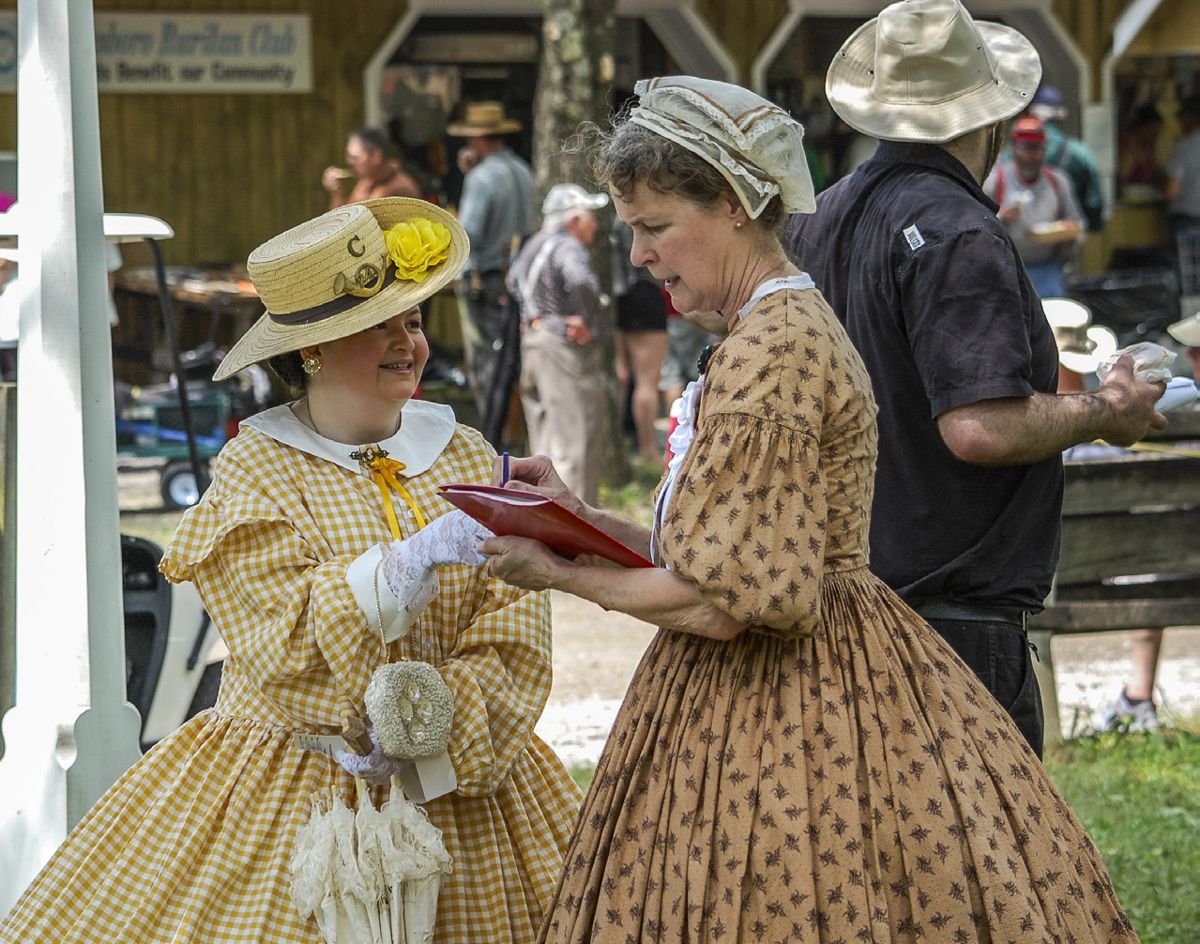
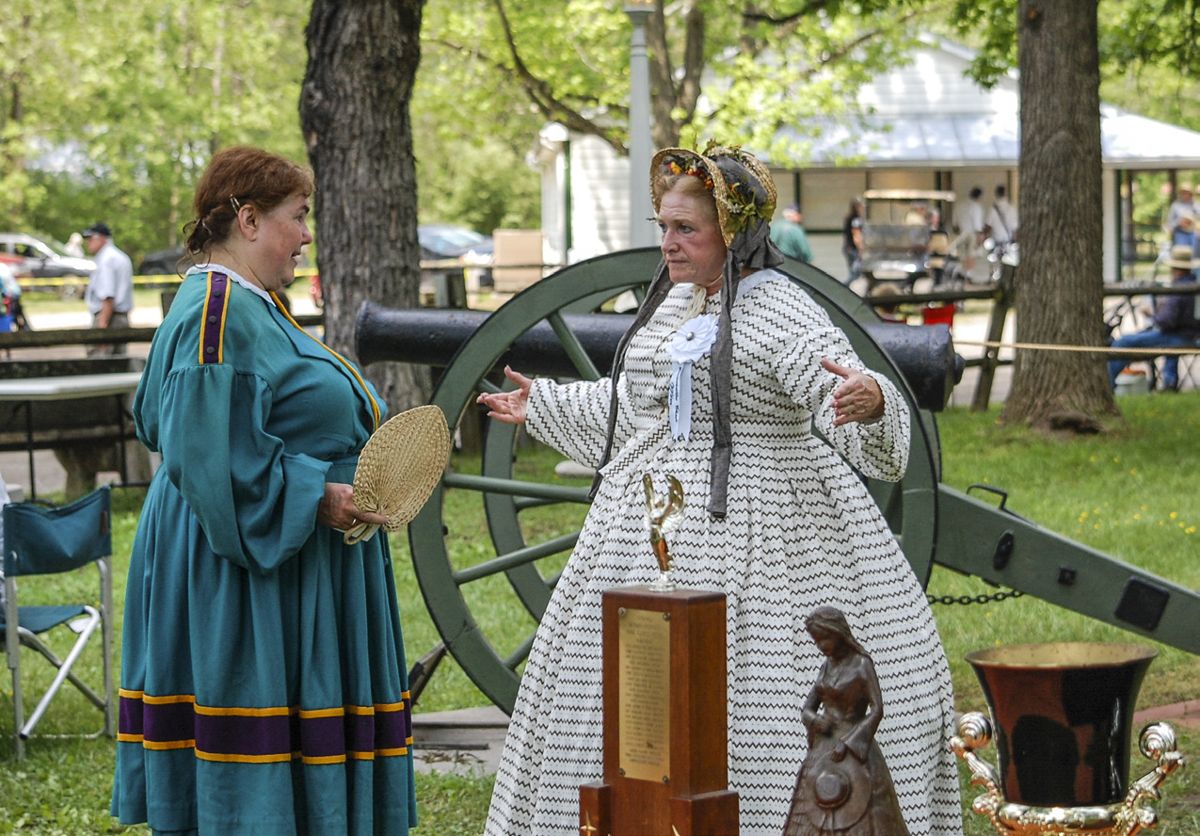
Left: Juanita Leisch and Sharleen West discuss their projects at the 145th National. The Costume Committee holds several events and competitions and conducts workshops teaching proper construction of mid-nineteenth century clothing. (Brittany Cole)
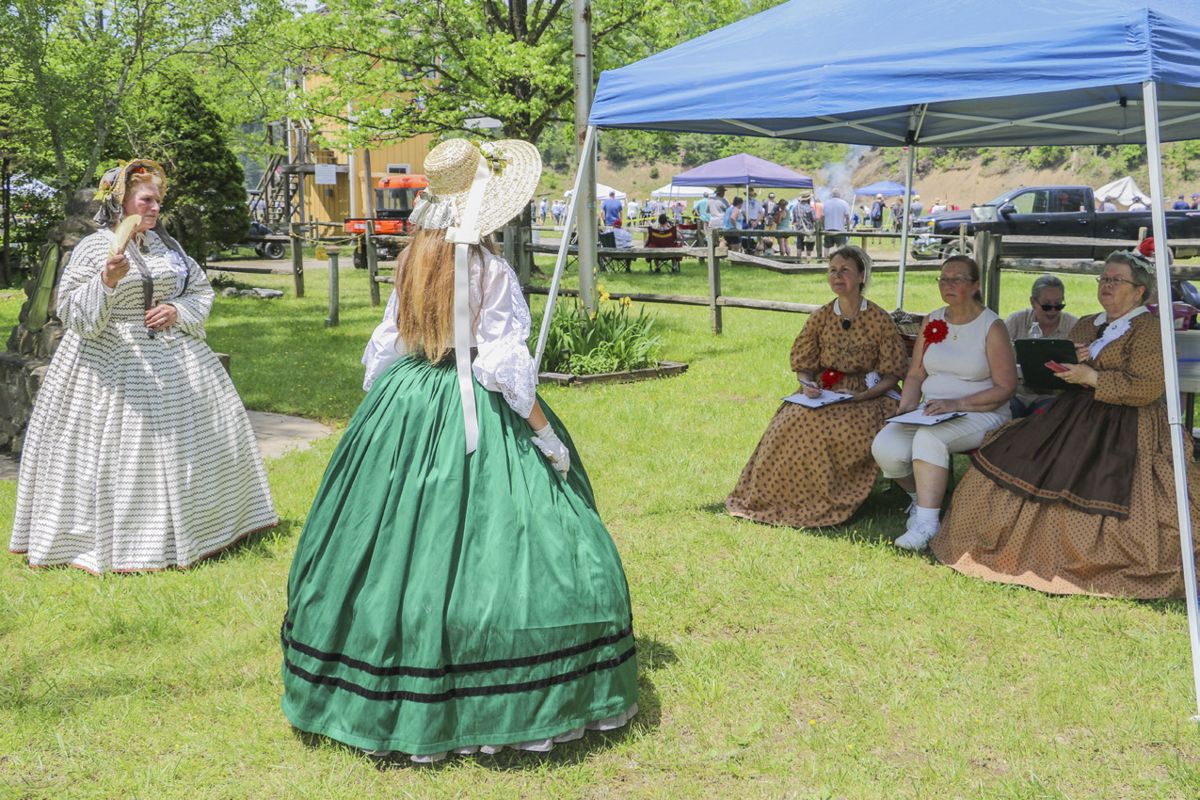
Left: Shooting isn’t the only competition in the N-SSA. Here, judges review Emily Laskas’ project, which won first place in the Young Ladies Informal Visual category. Members of the Costume Committee judge the authenticity and accuracy of the competitors’ projects. (Niki Bethke)
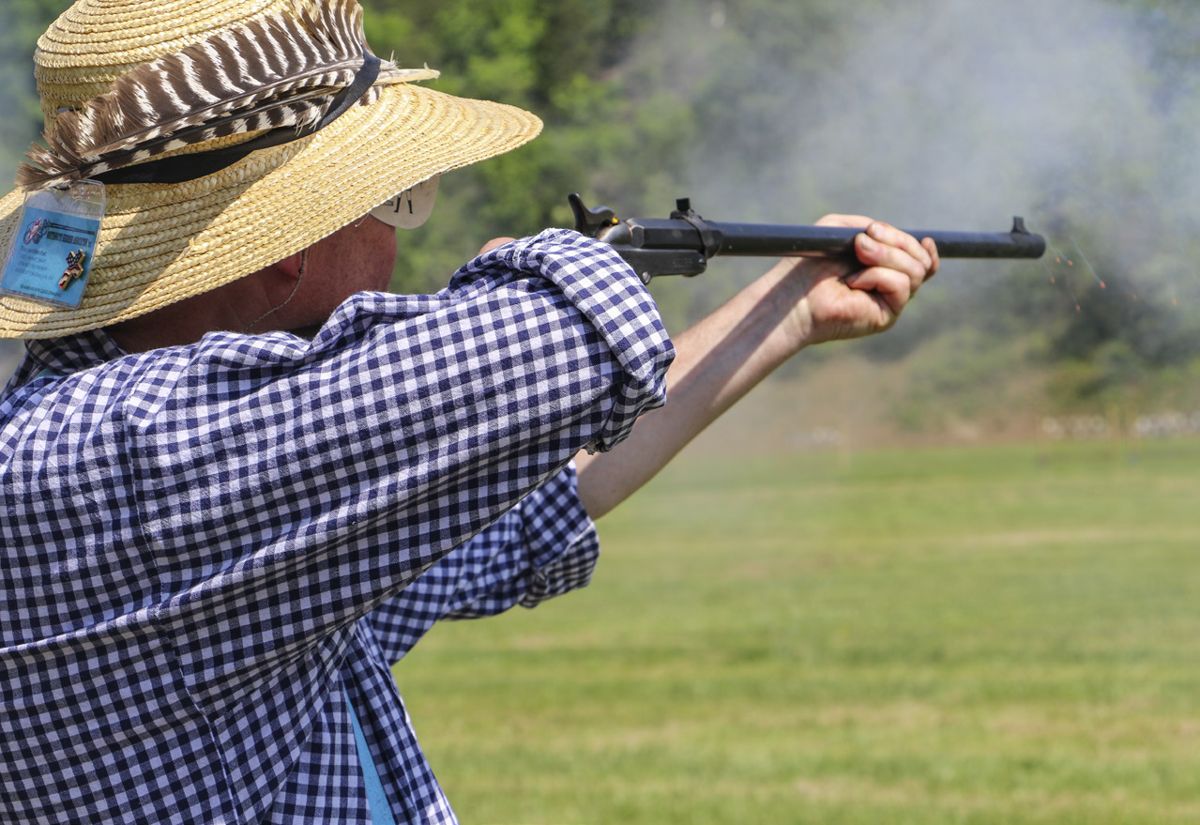
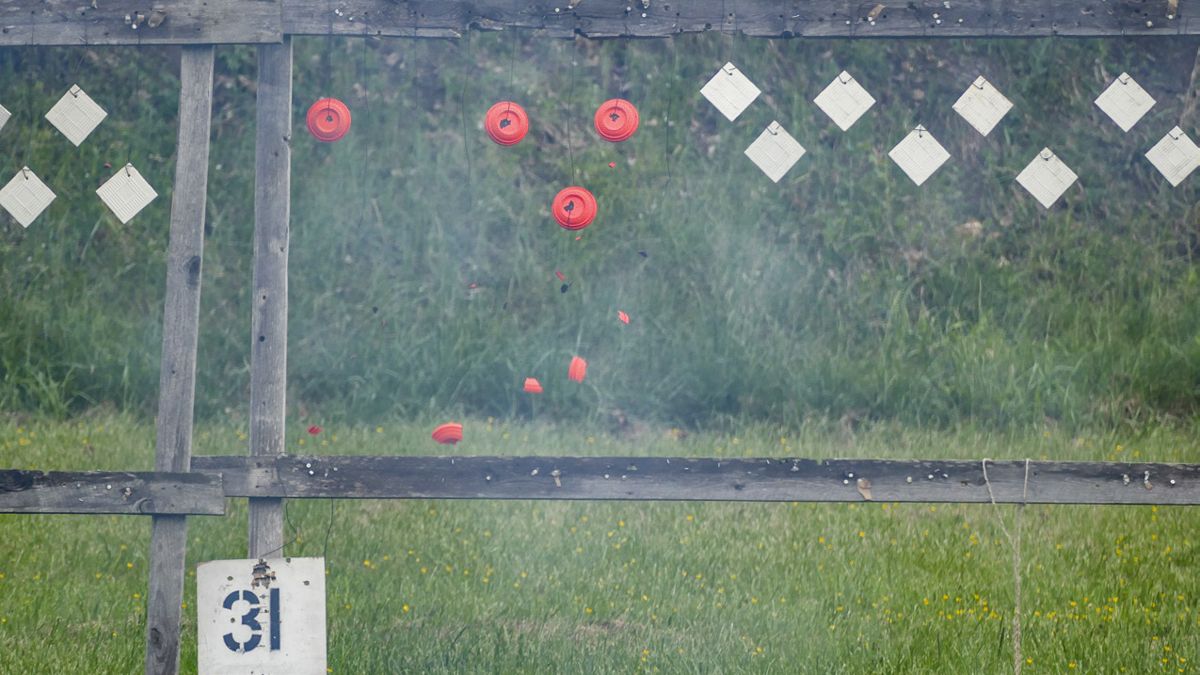
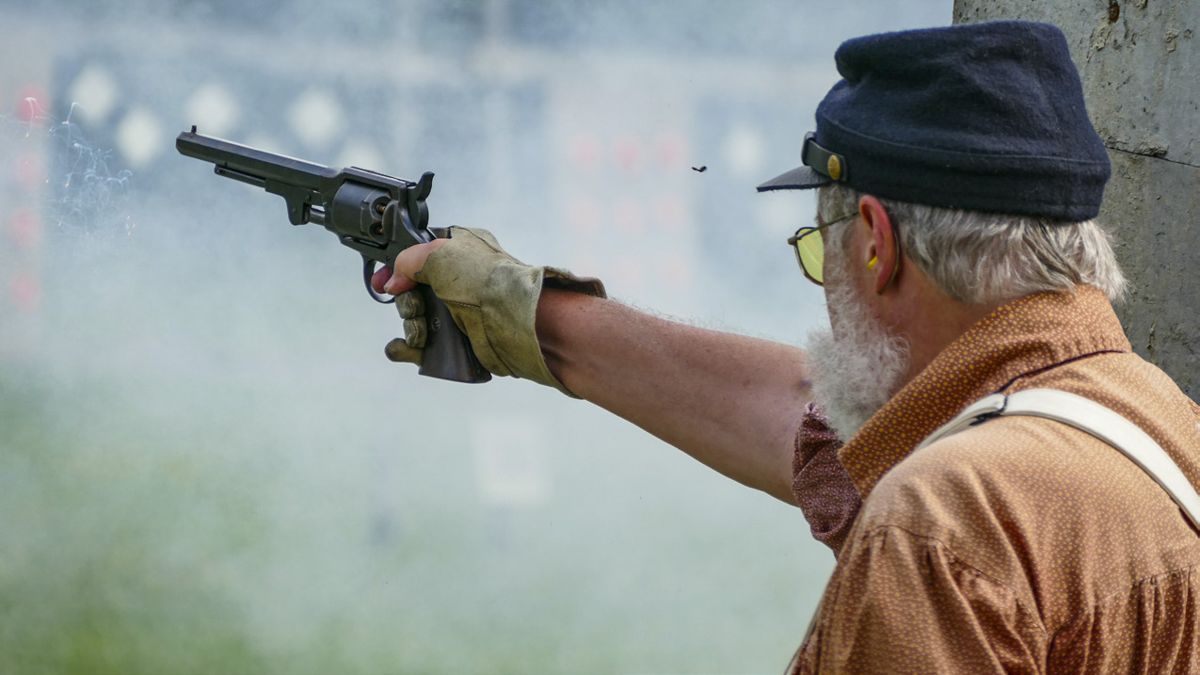
Right: What remains of a percussion cap flies away as this competitor fires his Rogers & Spencer revolver. Safety is a priority, and skirmishers wear proper eye and hearing protection when participating in all N-SSA matches. (Lis Cole)
Right: Competitors aim through a cloud of black powder smoke that hangs in the warm, humid, morning air, which compounds the amount of skill needed to accurately shoot a Civil War era revolver. (Niki Bethke)
N-SSA Gallery In this photo, Katie and Tim Scanlan stand with their son Colin to shoot clay pigeons on a cardboard backer at the start of the musket competition. (Ericka Hoffmann Curley)
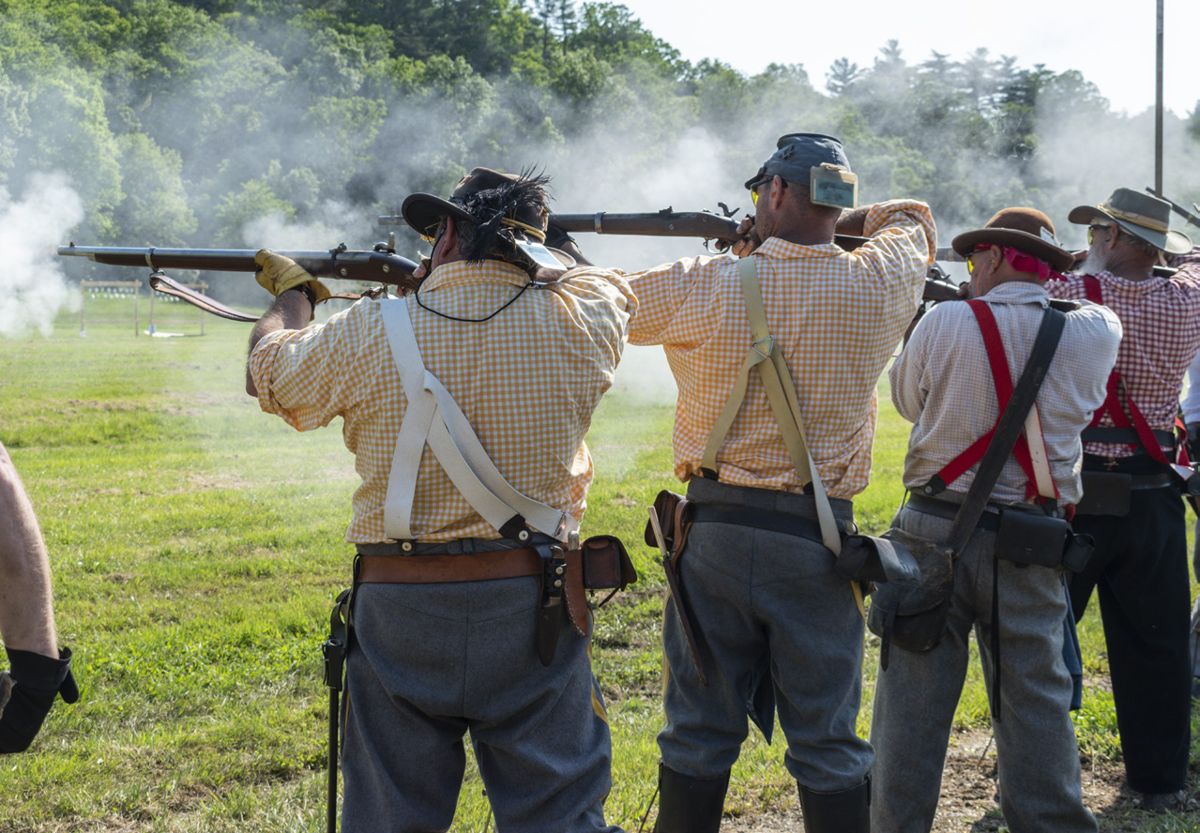
A Confederate unit loads, aims, and fires at 16 hanging clay pigeons at 50 yards. Skirmishing brings members of all ages, genders, ideologies, professions, and walks of life together through a common love of history and this unique shooting sport. (Ericka Hoffmann Curley)
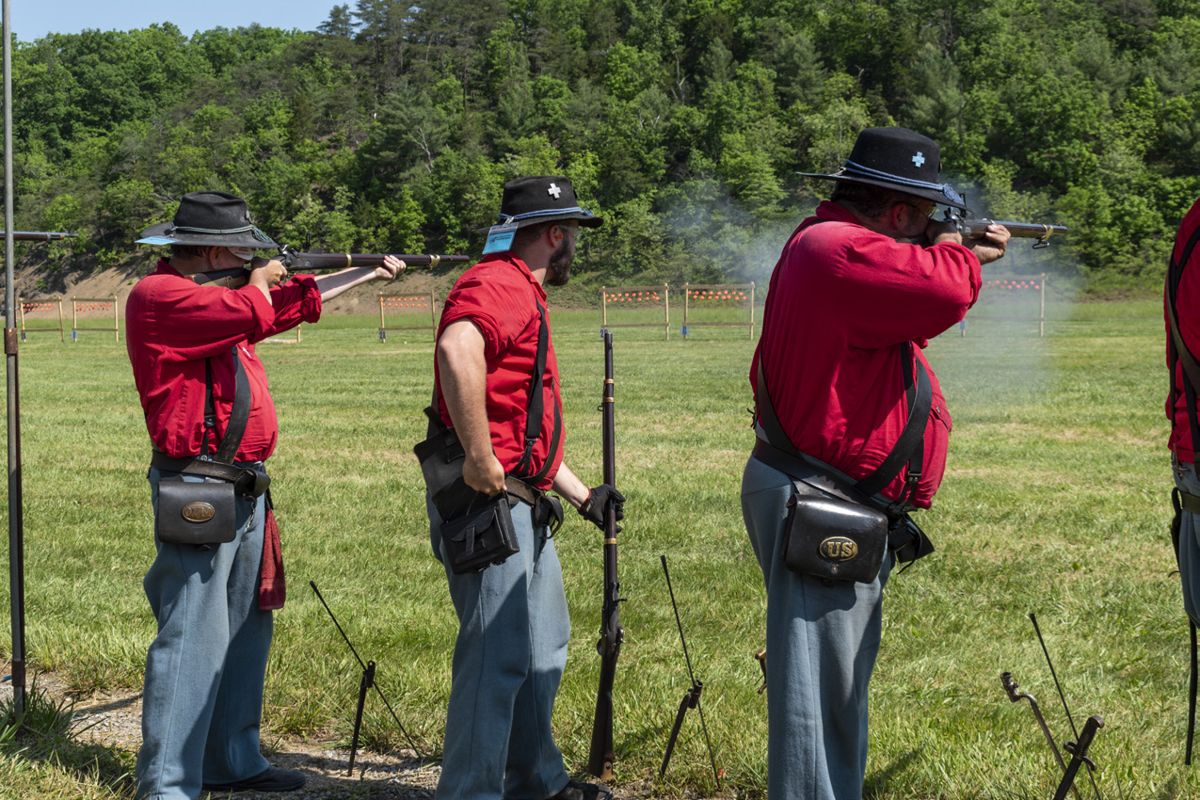
The 110th Ohio Volunteer Infantry (OVI) consistently wins first place in the N-SSA National Skirmish musket match with their skill, practice, and ability to clear targets quickly. Once again, they took first place at the 145th National, finishing nearly two minutes faster than the closest competitor. (Ericka Hoffmann Curley)
Left: This team fires down range at six-inch hanging tiles placed at 100 yards from the firing line–the final event in the N-SSA National musket competition. National Skirmish targets consist of all breakable targets, hanging or mounted on a cardboard backer. (Niki Bethke)
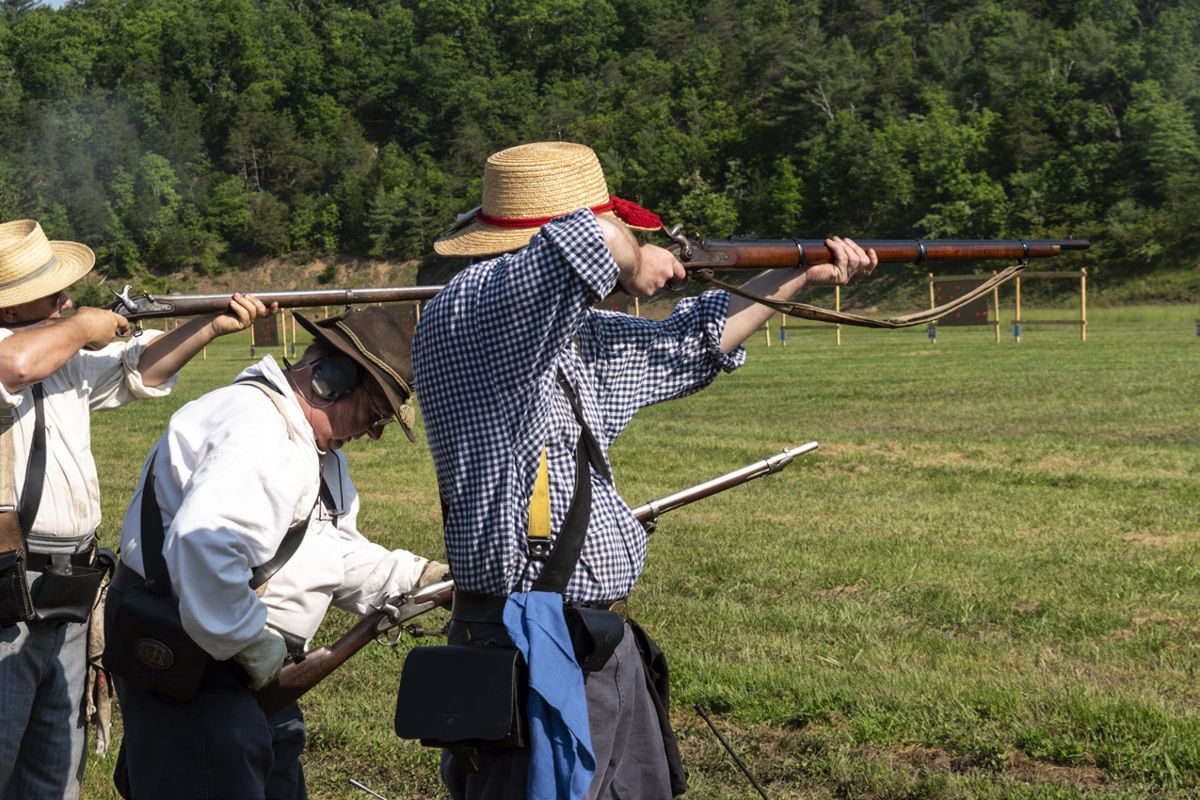
Left: Breech-loader competing team members start each relay with a full magazine. Skirmishers in this match shoot mostly Henry rifles, and can empty their 16-shot magazines very quickly. But after participants empty that first full magazine, they must single load for the rest of the relay. (Ericka Hoffmann Curley)
Right: N-SSA members pre-order targets for seven different firearm matches. Almost 2,000 individual match targets were scored at the 145th National. Ties are broken by the shortest total distance of the shots from the center of the bullseye. (Ericka Hoffmann Curley)
Right: The First Florida Cavalry competes in the Single Shot Rifle match. Skirmishers shoot breechloaders, and Sharps and Ballard rifles are the most popular. (Niki Bethke)
At every National skirmish, one of the host teams oversees the artillery competition. At the 145th National, 3rd Maryland Artillery had that responsibility and scored a total of 76 targets from the Saturday artillery match. (Ericka Hoffmann Curley)
N-SSA Gallery At a typical National skirmish, the scoring staff requires approximately 45 target scorers and an oversight staff of 10, along with the National Statistics Officer and nine deputies. (Ericka Hoffmann Curley)