
The Fredericksburg National Cemetery
By Terry Rensel · Originally published August 2022 · p. 37
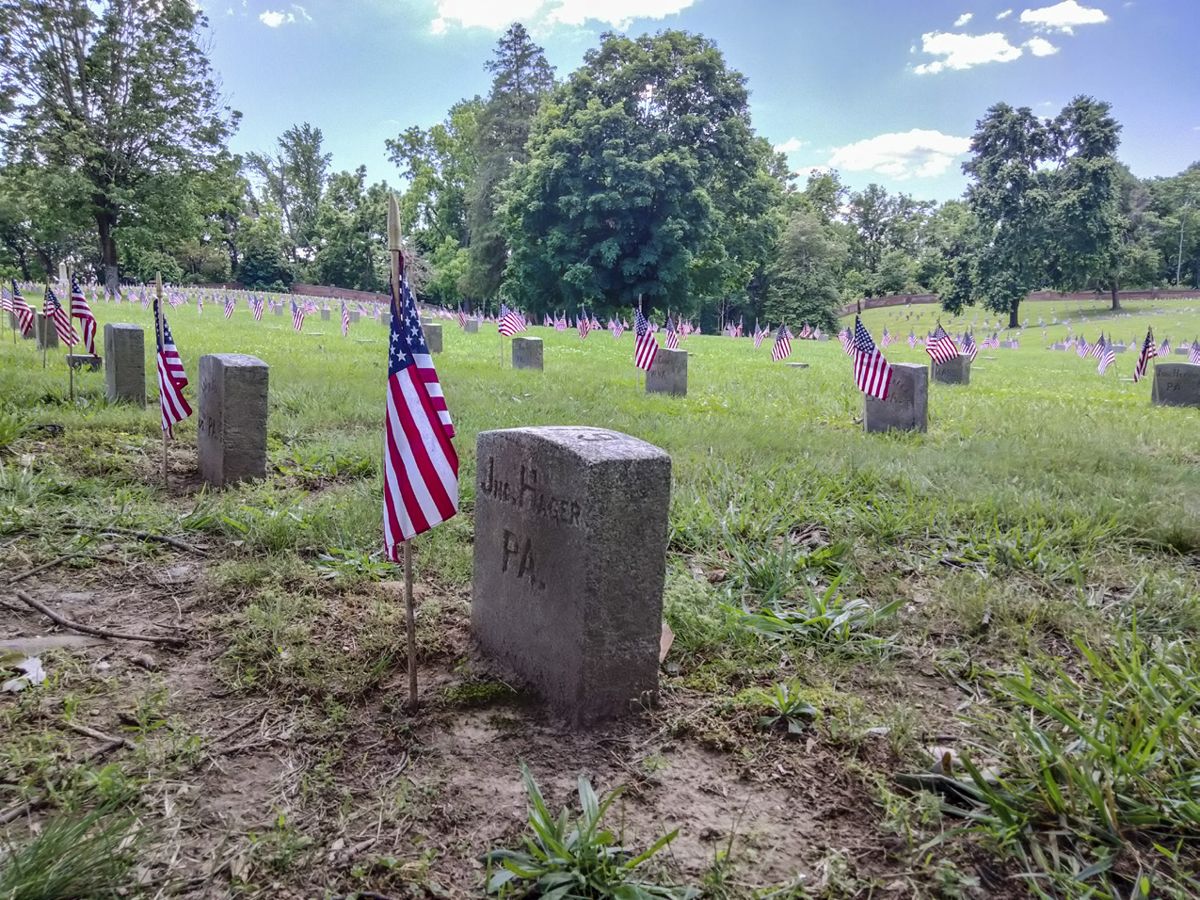
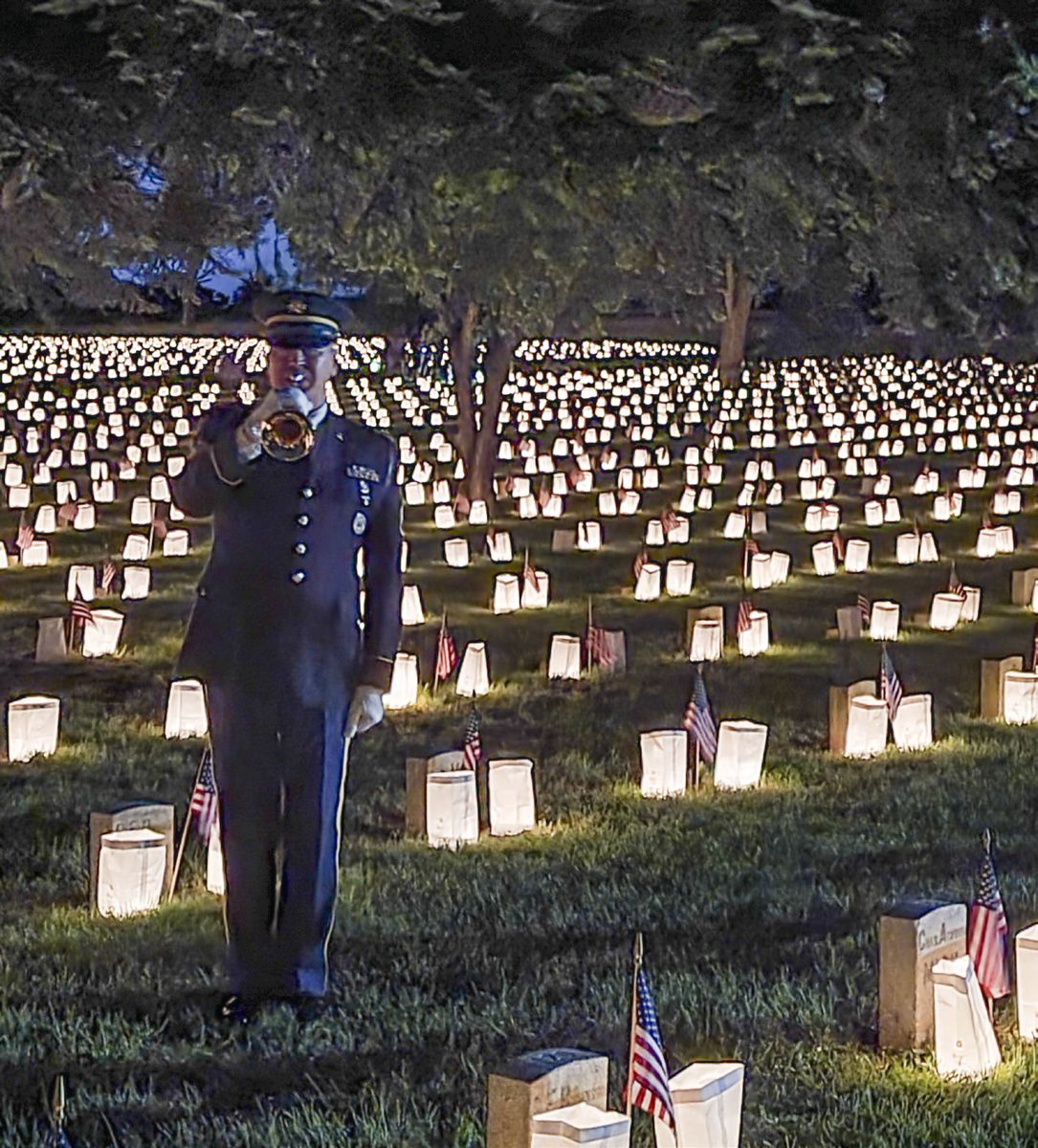
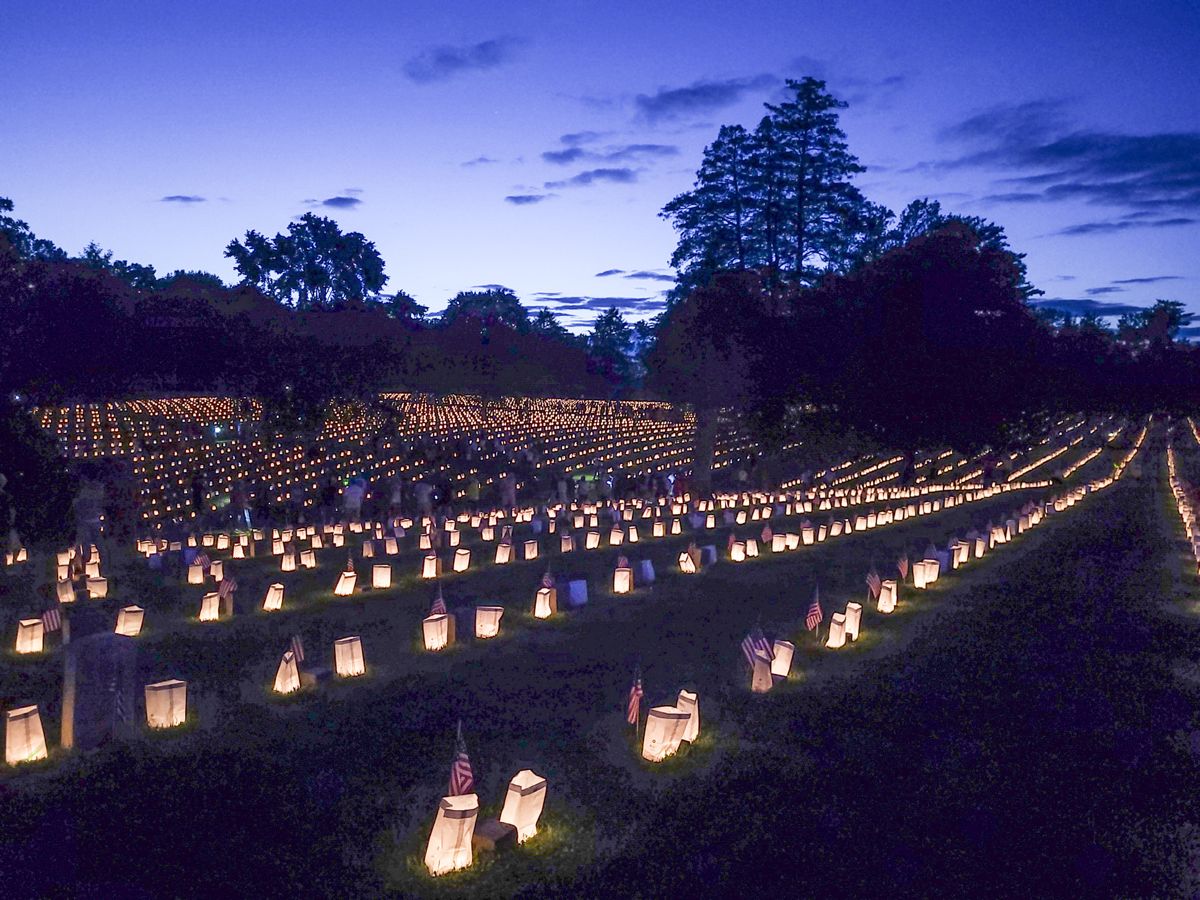
CivilWarNews.com remains began on the northern end of the battlefield on June 12, and then they worked their way south. The first cemetery was constructed near the western edge of Saunders Field, on the south side of the Orange Turnpike. The work continued June 14 along the Orange Plank Road. A second cemetery was constructed just east of the Confederate earthworks where fighting had been heaviest, about a half mile west of the Brock Road intersection. On June 19, the men started work at Spotsylvania Court House. There were fewer unburied remains there because many of the dead had already been buried. Due to the condition of unburied corpses, many were covered over in place. In May 1866 work began on creating a national cemetery in Fredericksburg. Land on Marye’s Heights, overlooking the Sunken Road, was selected and engineers began preparing the site. Bodies were originally gathered and reburied by members of the Eleventh U.S. Infantry, but laborers were soon hired to do the job. Called the Burial Corps, they were made up of formerly enslaved men, former Confederates, and Irish immigrants. The Eleventh U.S. Infantry, and then the Burial Corps, started by relocating bodies buried on the Fredericksburg battlefield. These were mostly found on the old fairgrounds, and in front of the Sunken Road. As work continued, the Burial Corps not only moved remains that had been previously buried in the Wilderness and Spotsylvania Court House cemeteries; they also began going further afield. They recovered remains from six battlefields: Fredericksburg; Chancellorsville; Wilderness; Spotsylvania Court House; Mine Run; and North Anna. Remains from the Stafford County Union camps, as well as from other camp grounds throughout the region were gathered and moved to Fredericksburg National Cemetery. By the time the work was concluded in 1868, the remains of over 15,000 soldiers were interned. In 1997 the National Park Service started hosting a Luminaria on Memorial Day Weekend. The luminaria honors those who made the ultimate sacrifice in service to our country. Local Scouts light the 15,300 candles, one for each grave in the cemetery. Throughout the evening a bugler plays Taps every 30 minutes. Fredericksburg and Spotsylvania National Military Park staff located throughout the cemetery share stories of some of the soldiers buried there. On May 28 the Luminaria returned to the Fredericksburg National Cemetery for the first time since 2019. In 2019 it was cut short due to severe weather, and in 2020 and 2021 it was cancelled due to COVID. At the end of the night, about five minutes before the final playing of Taps, the bugler played Tattoo. The weather was perfect this year and over 4,000 people attended. If you have never attended one of these events, it is a very somber and moving experience. The Central Virginia Battlefields Trust’s first land preserved was the tract between the National Cemetery and Brompton on Marye’s Heights, known as
The Fredericksburg National Cemetery by Terry Rensel In the eighteen months between December 1862 and May 1864, four major battles, Fredericksburg; Chancellorsville; Wilderness; and Spotsylvania Court House, were fought in and near Fredericksburg, as well as the Mine Run campaign. Combined Union deaths from these five actions exceed 8,200 men, most of whom were buried on the various battlefields. Men who were killed in action were usually buried on the battlefield. Fredericksburg, burials were done on the battlefield’s southern end on December 15, 1862; burials on the northern end took two days, December 16 and 17, 1862. Both burials were done during truces agreed upon for that very reason. In June 1865 the government decided they would make an effort to inter unburied Union dead in the Wilderness and Spotsylvania, as well as the surrounding area. Brevet Major James M. Moore was put in charge of doing so, and the First U.S. Veteran Volunteer Regiment was assigned to help. The work of collecting the
Willis Hill, in 1997. More about the history of the Fredericksburg National Cemetery can be found in Where Valor Proudly Sleeps: A History of Fredericksburg National Cemetery, 1866–1933 by Donald C. Pfanz. Terry Rensel is the Executive Director of the Central Virginia
Battlefields Trust. The mission of the Central Virginia Battlefields Trust is to preserve land associated with the four major campaigns: Fredericksburg, Chancellorsville, the Wilderness, and Spotsylvania. To learn more about this grassroots preservation non-profit, please visit: www.cvbt.org.