The Unfinished Fight
The Bayonet as a Weapon
By Craig L. Barry · Originally published August 2022 · pp. 14–15
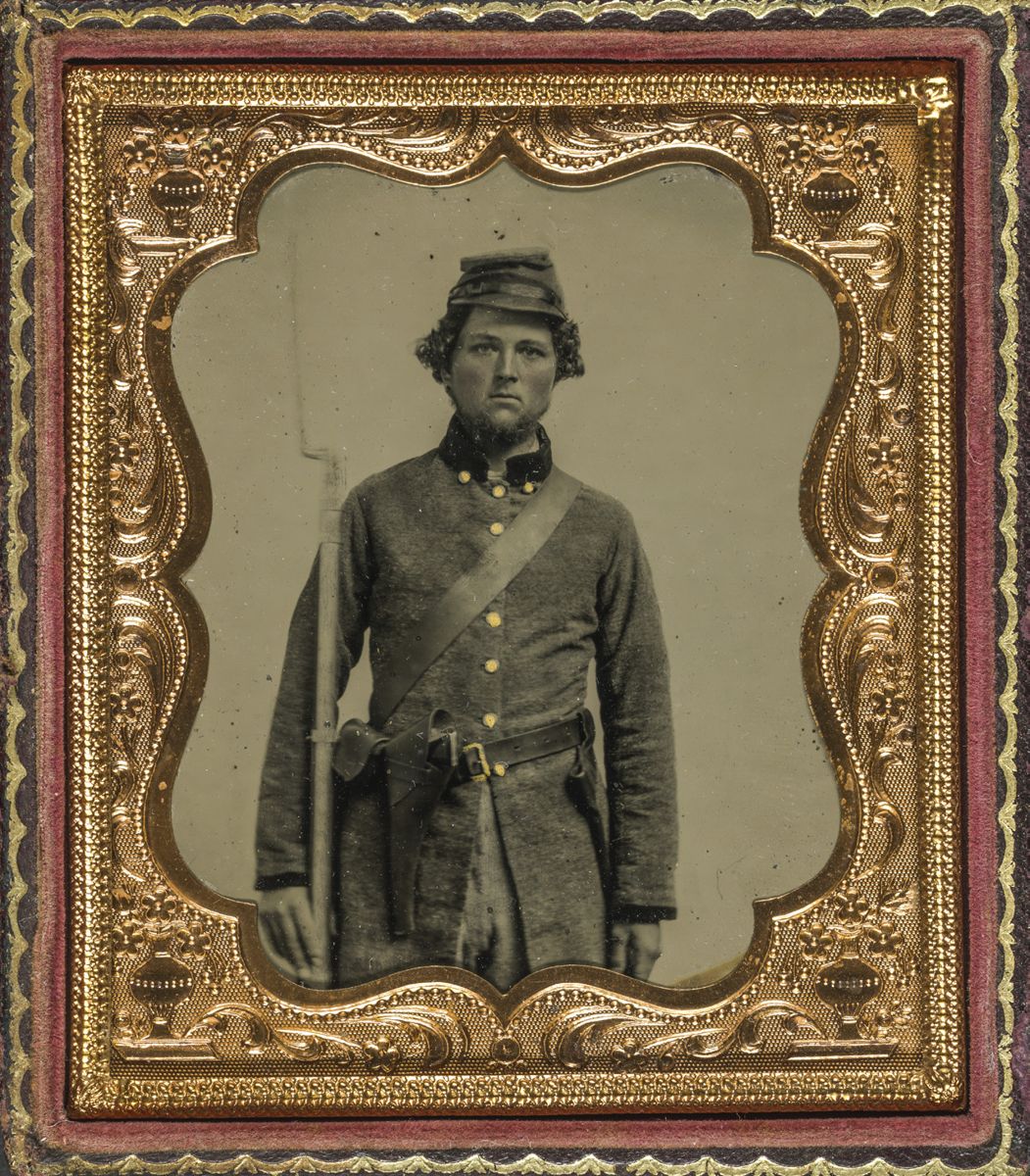
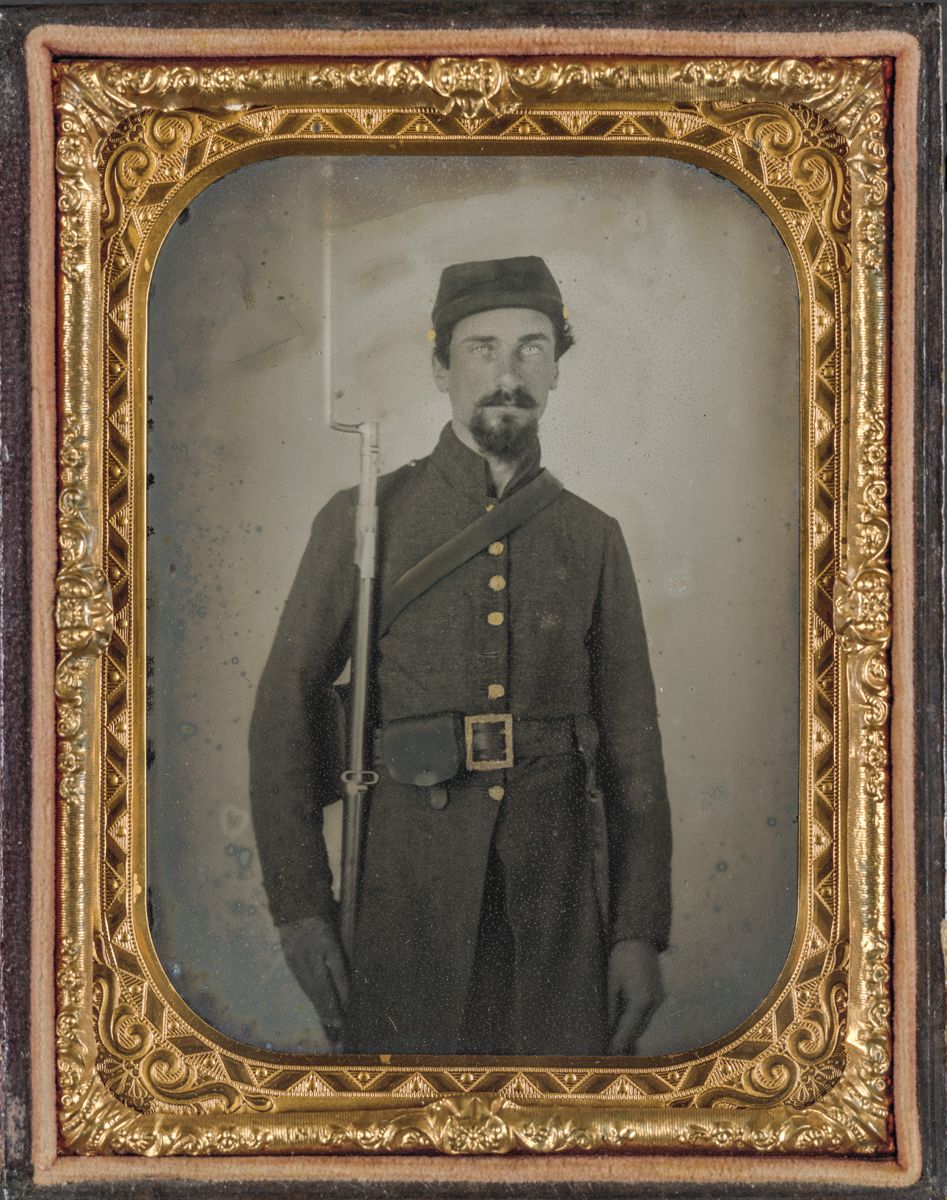
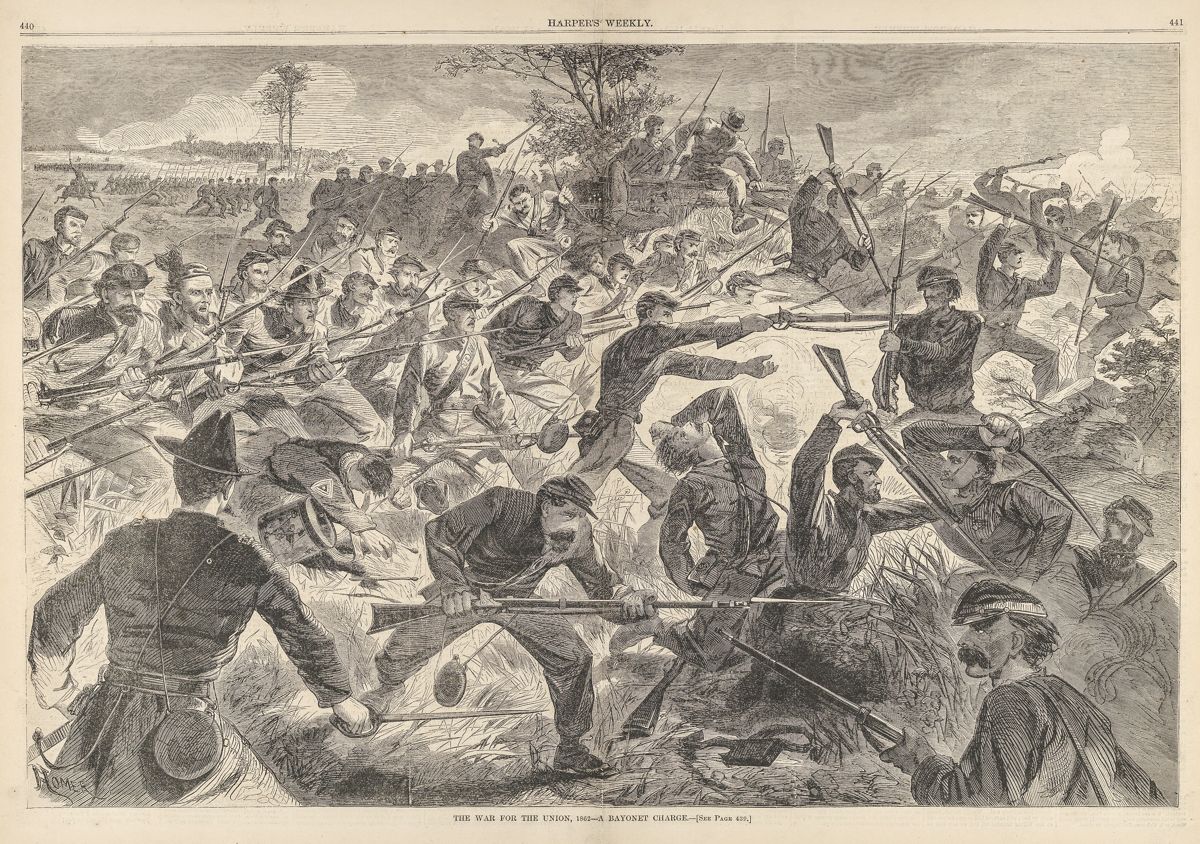
The Bayonet as a Weapon “On the Civil War battlefield, the bayonet turned out to be a relic, responsible for few battlefield wounds. Though there were many mass charges in Civil War battles, there were few hand-to-hand bayonet fights, and those were usually of short duration. Although infantry soldiers were issued bayonets and received bayonet drill, they found the weapon most useful for other purposes. Bayonets made excellent tent stakes and candle holders, and when a charge petered out they were useful for digging a hole to hide in.”(Kevin Eisert, civilwar.bluegrass.net) Unlike the knife, which was often carried for defensive purposes by civilians and soldiers alike, the bayonet as a weapon has always been strictly military in nature. Civilian rifles typically have no provision for a bayonet. In fact, the U.S. Model 1841 percussion rifle was the exception to the general rule for military arms taking bayonets. To the martial mind of the 19th century, the bayonet was seen as a fourth form of fencing, along with foil, epee’ (dueling sword), and dueling saber. It was, according to General George McClellan, “the brave man’s weapon.” The first official training bayonets were issued in 1858. Soldiers learned to affix and remove it on command and how to guard against cavalry and infantry using the rifle mounted with bayonet as a pike. They also drilled the motions of bayonet fighting as a group drill using the actual blades. When it came time to practice bayonet fighting, soldiers would wear a plastron, or jacket, mask, and fencing gloves. The blades were mounted to old service rifles, rather than risk damage to newer long arms. How often and how exactly were bayonets used? Postbellum there was a tendency to downplay the role of the bayonet in closequarter fighting. The 1870 Surgeon General’s Medical and Surgical History of the War of Rebellion (1861–1865) contained a table that listed the type(s) of wounds treated in Federal hospitals. Fewer than 1,000 bayonet wounds were noted there. Connecting the dots, historians concluded that the bayonet was little but an impediment to soldiers who were issued them and that not all soldiers were issued bayonets, that were used primarily as candlestick holders or cooking implements as noted somewhat erroneously in the heading. This is not necessarily a conclusion that can be drawn. The Surgeon General’s information can be interpreted another way: only the wounded were treated in hospitals and the casualties from bayonet wounds were primarily dead on the battlefield. There is some weight to the argument since the weapon was primarily used in hand-to-hand fighting. Close-quarter fighting provides a ratio of mortal bayonet wounds to recoverable injuries that is, expectedly, very high indeed. Some period accounts state that few bayoneted soldiers survived the trauma due to the heavy loss of blood that resulted in such a short time. Perhaps if there were cause of death or autopsy reports from burial details we would have a different perspective of the damage done by the bayonet, but none are known. There are first-person accounts of soldiers discarding their bayonets as excess weight while on the march; but soldiers also discarded other essential pieces of equipment including their canteens and blankets which they later regretted. There are estimates of up to 50 percent of the equipment issued to soldiers as discarded on the march. However, when one lends weight to the letters and diary entries that mention use of the bayonet in battle, a clearer picture emerges. Sam Watkins wrote in Company Aytch, “We gave one long, loud cheer, and commenced the charge. As we approached their lines… Officers with drawn swords meet officers with drawn swords, and man to man meets man to man with bayonets and loaded guns.” Jonathan Newcomb in the 3rd Maine Infantry noted during the Peninsula campaign, “We rose up and fired a volley, then pitched into them with bayonets and clubbed muskets and drove them back for nearly a mile.” Perhaps most famously, Joshua Chamberlain at Little Round Top carried the day and perhaps saved the Army of the Potomac by ordering that famous bayonet charge at Gettysburg. He noted in his report the following: “My ammunition was soon exhausted. My men were firing
CivilWarNews.com their last shot and getting ready to “club” their muskets. It was imperative to strike before we were struck by this overwhelming force in a hand-to-hand fight, which we could not probably have withstood or survived. At that crisis, I ordered the bayonet. The word was enough. It ran like fire along the line, from man to man, and rose into a shout, with which they sprang forward upon the enemy, now not 30 yards away. The effect was surprising; many of the enemy’s first line threw down their arms and surrendered. … we made an extended ‘right wheel,’ before which the enemy’s second line broke and fell back, fighting from tree to tree, many being captured, until we had swept the valley and cleared the front of nearly our entire brigade.” The day of the bayonet was far from over. One must also consider the well-documented effect on morale of a phalanx of gleaming bayonets advancing steadily on defenders. The British Army command for fixing bayonets features a movement where the blade is held overhead for an instant, to communicate the threat which it represents. It was especially effective to control civil unrest as well, often dissipating a crowd of rioters without firing a shot. Rather than concluding that the bayonet was obsolete by the time of the Civil War, it is fairer to say that the tactic of charging an entrenched position with bayonets alone should have ended with the Civil War; yet it did not. Because of its usefulness in hand-to-hand fighting no matter how infrequent or impractical, the bayonet remained a valuable part of the infantry soldier’s equipment well into the twentieth century. Craig L. Barry was born in Charlottesville, Va. He holds his BA and Masters degrees from UNC (Charlotte). Craig served The Watchdog Civil War Quarterly as Associate Editor and Editor from 2003–2017. The Watchdog published books and columns on 19th-century material and donated all funds from publications to battlefield preservation. He is the author of several books including The Civil War Musket: A Handbook for Historical Accuracy (2006, 2011), The Unfinished Fight: Essays on Confederate Material Culture Vol. I and II (2012, 2013). He has also published four books in the Suppliers to the Confederacy series on English Arms & Accoutrements, Quartermaster stores and other European imports.
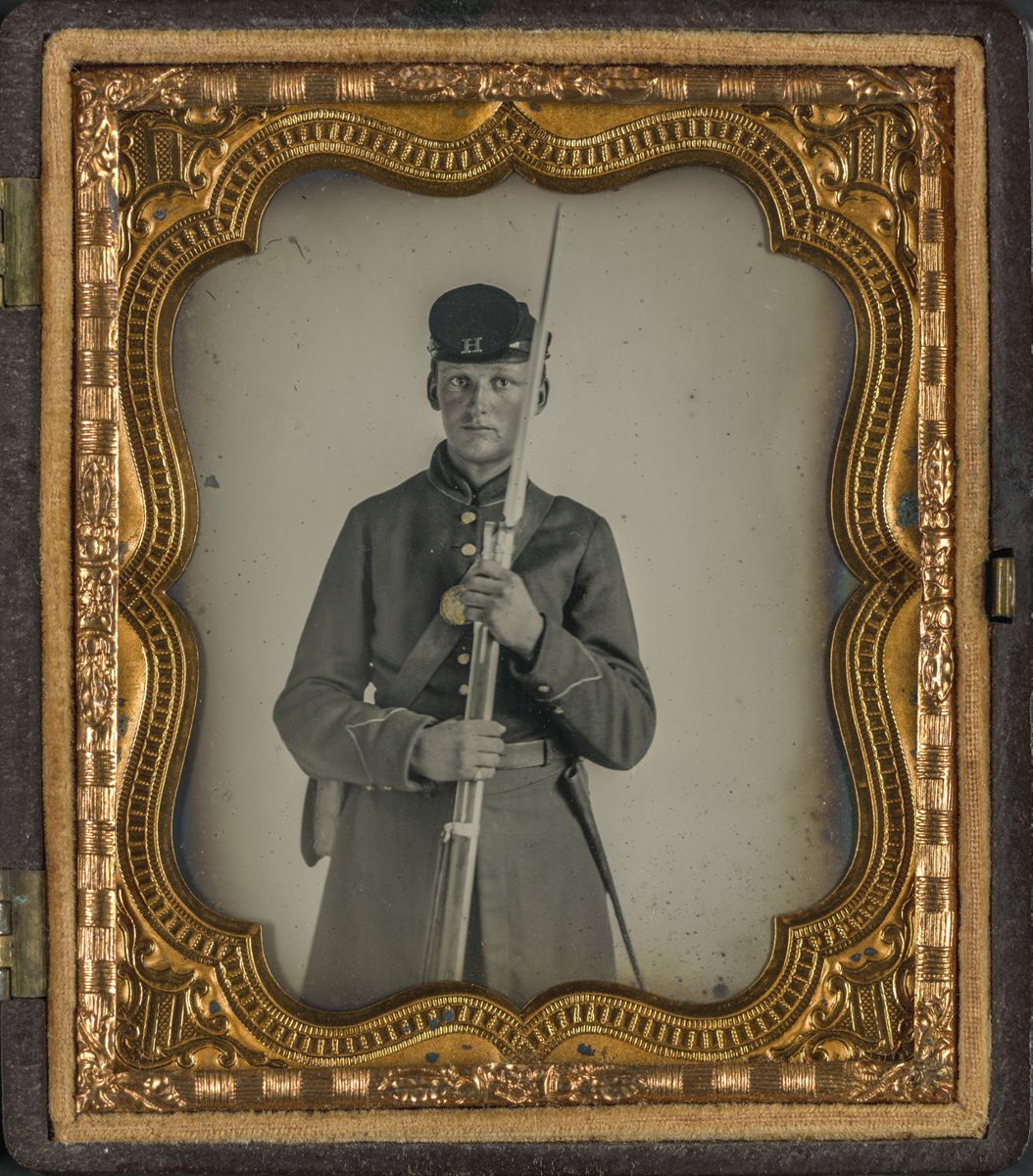
Civil War triangular socket bayonet.