
Sarah Emma Edmonds Was a Self-Made Man
By Bob Ruegsegger · Originally published August 2022 · pp. 42–43
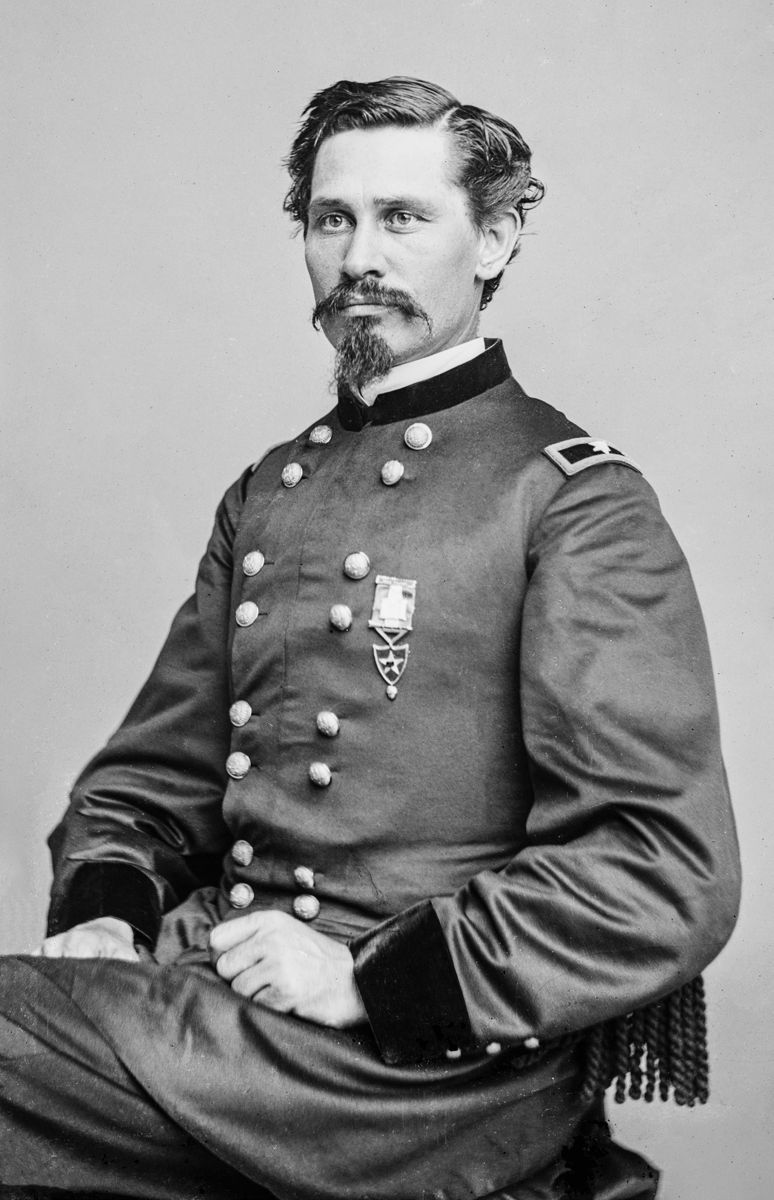
When Sarah Emma Edmonds was seventeen years old, she ran away from her Fredericton home in New Brunswick, Canada. Emma’s father had wanted to marry her off to a recently widowed elderly neighbor. At first she tentatively agreed to the arrangement, but soon reconsidered the proposal and decided that “matrimony was not a safe investment” for her.
Sarah Emma Edmonds. In a New Brunswick periodical, Emma saw an advertisement that offered book agents “fair compensation” to solicit for the subscription publishing industry. Emma saw the offer as a great opportunity. It would allow her to travel with frequency. It would require no investment of capital, and it would present her with the potential to make more money than she had ever imagined. The only problem was that traveling book salesmen had to be men, which Sarah Emma Edmonds was not. Emma Edmonds wrote the subscription publisher in Hartford under the assumed name of Franklin Thompson. While Emma was awaiting the arrival of materials from the publishing company, she began preparing a disguise that would embrace her new identity as a book salesman. Emma initially prospered as Frank Thompson. After a disastrous setback, Thompson traveled to Hartford, the subscription publishing capital of America, and soon found employment with W. S. Williams & Company. When news of the fall of Fort Sumter reached the North, Thompson was in Flint, Mich., waiting to take a train back to Hartford for additional book samples. Thompson watched friends in the Flint Union Grays, Co. F, 2nd Michigan, leave for Detroit and the war. “It was while witnessing the anguish of that first parting that I became convinced that I, too, had a duty to perform,” observed Emma. While she had no thirst for battle, Emma realized that she would not be content to serve from the periphery. She decided to enlist in the Flint Grays under her assumed identity feeling that she could “best serve the interest of the Union cause in male attire.” Emma successfully enlisted. Two weeks after Franklin Thompson reported for duty at Fort Wayne, the 2nd Michigan was ordered to Washington. After three days of travel via steamer and train, the 2nd Michigan Volunteers marched through Baltimore and boarded cars to Washington. When typhoid fever broke out in the 2nd Michigan camp, as well as in the camps of other regiments, Franklin spent all his off duty time going from tent to tent “ministering to the wants of those delirious, helpless men.” His unsuspecting superiors noticed the interest in nursing and immediately assigned Thompson to permanent hospital detail.
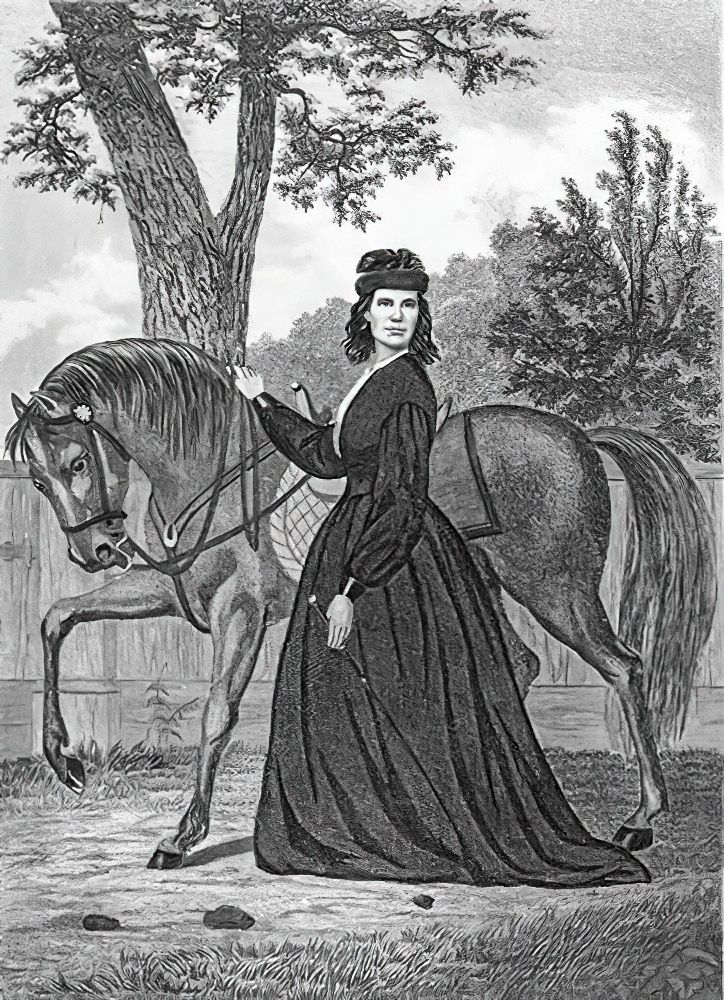
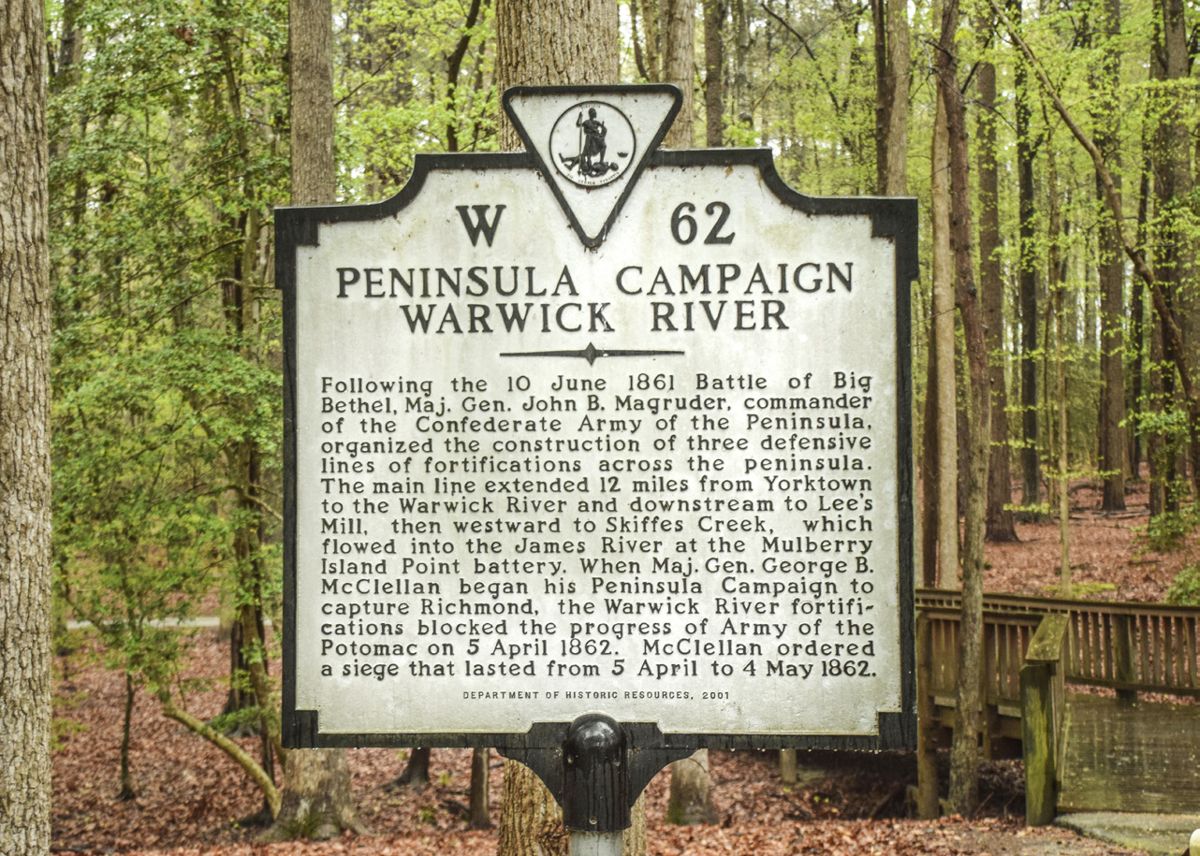
Marching orders came quickly. McDowell’s army marched toward Manassas. Emma’s brigade was kept in reserve at Centreville guarding a crossing to prevent Confederates from attacking the Union rear. The 2nd Michigan was finally called into action to cover the fleeing Union army. That night, the 2nd Michigan stood fast while the rest of McDowell’s forces moved expeditiously toward Washington. When wounded soldiers began arriving in Centreville during the battle, Thompson volunteered to assist surgeons at a field hospital that had been established several days before in a stone church on the Warrenton Pike. While Franklin was used to caring for the sick, he was quite unprepared for his first confrontation with the frightful consequences of war. The army surgeons performed at a rapid pace; dead bodies, legs, and arms piled up. Thompson spent all day and night cleaning bandages, providing water, and offering dying men any comfort he could. “Oh, there was suffering there that no pen can CivilWarNews.com ever describe,” he recalled. Surgeons and nurses at the stone church hospital had been so occupied with caring for wounded and dying men that they were oblivious to their brigade’s departure. Thompson spent an hour trying to locate his regiment; the unit had marched off without him. When the regimental chaplain left, Thompson was unwilling to abandon dying soldiers. He put water within reach of the wounded and reluctantly followed the debris strewn track left by retreating Union army back to Washington. The following morning, in the rain, Thompson found his “lost” regiment camped on the heights above Washington on the Arlington farm of General Robert E. Lee. After serving for several months at the Mansion House Hospital in Alexandria, Private Thompson was eager to be relieved of his permanent assignment to nursing duties. Colonel Orlando Poe, who assumed command of the 2nd Michigan, selected Thompson to serve as a mail courier because Poe thought that Thompson, as a soldier, was “effeminate looking,” and he wished to avoid removing an “efficient soldier from the ranks.” Franklin was delighted with the change in duties. As a private, he had an extraordinary amount of freedom. He was issued his own horse and could travel from camp to camp throughout the Washington area without question as long as the mail was delivered on schedule. Early the next year, the 2nd Michigan, along with a host of other units, was ordered to board the steamer Vanderbilt bound for Fort Monroe located at the very tip of the Virginia Peninsula. McClellan’s plan, the Peninsula Campaign, was to gather a massive army at Fort Monroe and move up the Peninsula toward Richmond using the York River to supply his army. McClellan’s strategy allowed his army to avoid confronting steadily strengthening Confederate forces between Richmond and Washington, but the massive movement of troops, supplies, artillery, wagons, horses, and cattle was a logistical nightmare. After weeks assembling troops and supplies at Fort Monroe, McClellan moved to secure the York River by forcing Confederate troops from their formidable defenses at Yorktown, some 25 miles from Fort Monroe. While awaiting heavy siege artillery to be moved into place before Yorktown, McClellan attempted to gather intelligence on the number of enemy troops and artillery the Confederates had behind their Yorktown defenses,
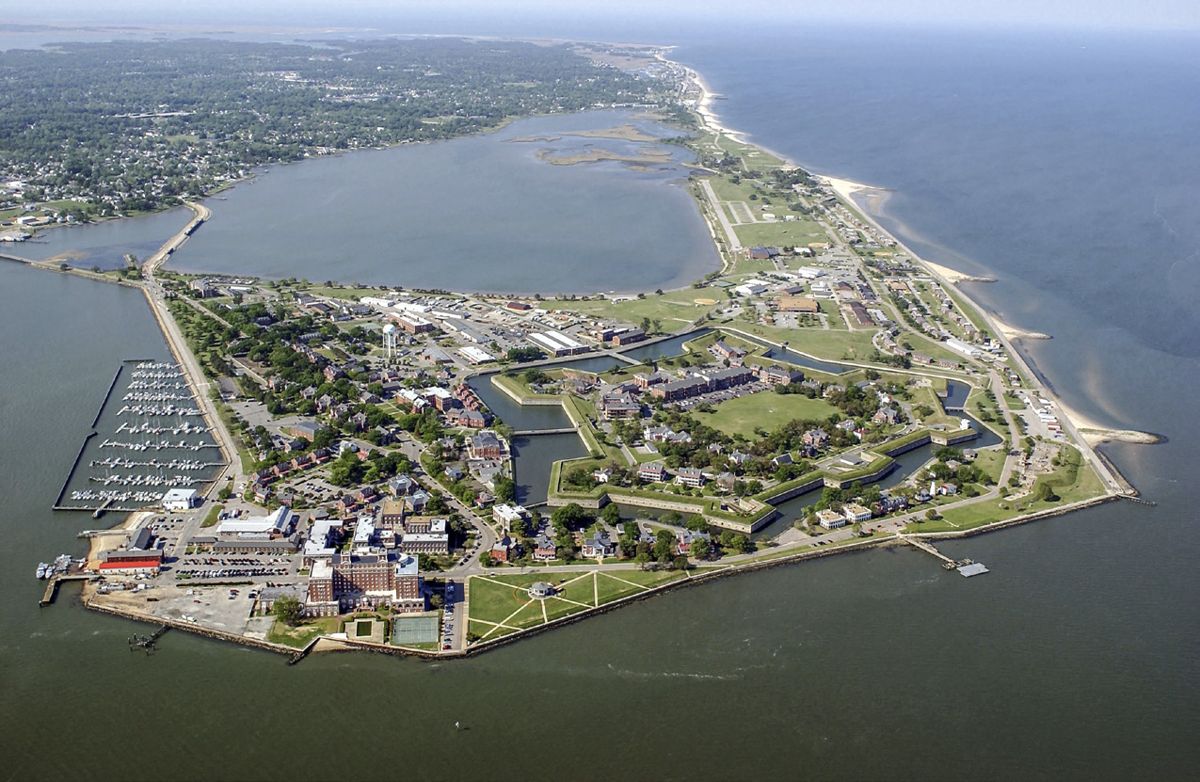
Sarah Emma Evelyn Edmonds executed along with his associates. Thompson, still serving as a mail carrier, volunteered to slip behind Confederate lines and gather intelligence for the Army of the Potomac. It was a dangerous mission, but Thompson willingly accepted the risk. Donning a disguise was nothing new to Franklin. He disguised himself in the clothing of a male slave, rubbed silver nitrate on his skin to darken it, and borrowed a wig from the quartermaster. By nine-thirty in the evening Thompson had passed through the Fort Monroe. (U.S. Army photo) Federal picket line. At midnight he was within the Confederate lines. Not one sentinel had challenged him. Franklin stayed hidden until morning and then joined a party of slaves returning after delivering breakfast to Rebel soldiers at the picket line. Franklin joined the small band and returned with them to camp. Inside the Confederate camp, Franklin and the slaves were directed to build fortifications. He was furnished a pickaxe, shovel, and a wheelbarrow. The work was laborious. By evening, his hands, from fingers to wrists, were raw and bleeding. By night Franklin, going about as a slave named Ned, had freedom to walk the fort Peninsula Campaign Marker. and make a diagram of the type in part, using hot air observation and positions of the Confederate balloons. The weather was so artillery. She listened attentively inclement that the air intelligence for the plans of the Rebel army. effort was unsuccessful. After three days of spying, Although McClellan’s Franklin slipped through the forces outnumbered General Confederate defenses at night and Magruder’s troops nearly four to returned safely back to the Union one. Magruder, using smoke and camp. She dutifully reported mirrors, fooled McClellan into the intelligence to his superiors. believing that the Rebels were Franklin proved to be very good equal in number to the Union in the “secret service” of the forces by repeatedly marching his Union army. Several months later men back and forth to exaggerate Thompson went back to spying in their strength. Quaker guns lined the role of an Irish peddler called Confederate earthworks in an Bridget O’Shea. Bridget sold impressive display of cannon. merchandise to Rebel soldiers McClellan was reluctant to and listened for any details about move without knowing what their upcoming battle plans to lay before his mega-army. He pass along to the Union army. needed intelligence. Timothy Eventually Private Franklin Webster, a Pinkerton agent and Thompson slipped behind General John Bankhead Union spy, had been seized by the Confederate lines eleven times. Magruder. Confederates and sentenced to be Generally, his espionage went undetected but there were some incredibly close calls. Spying was a risky business. Once disguised as a black laundress, with a darkened face and heavy accent, Franklin found official papers in an officer’s coat pocket and hid in the basement of an old dwelling as a battle broke out. She fell to the floor and miraculously escaped the hail of bullets that riddled the house. Franklin returned to the Union army and serve as a mail courier through the Peninsula Campaign and the Seven Days Battles. By December 1862, she had become an aide-de-camp for Colonel
Poe at Fredericksburg. Poe’s Brigade was assigned to guard a pontoon bridge that spanned the Rappahannock River in front of Fredericksburg. Throughout the bloody battle Thompson was “fully occupied in the responsible duties” he had “volunteered to perform.” He was so constantly employed delivering messages and carrying orders that he was “not out of the saddle but once in twelve hours,” and that only to assist an officer suffering from cramps and spasms. Thompson had developed a reputation for bravery. As Frank, Emma became a hero although no one suspected her true identity. Emma continued to serve undetected until the 2nd Michigan was ordered to Lebanon, Ky., as part of the Army of the Cumberland. Contracting malaria, Edmonds was certain that treatment in a military hospital would reveal her gender, and force her from the army. Emma requested a medical furlough, but the request was denied. Emma left her regiment, going AWOL, sometime between April 1 and 12, 1864. By April 19, Frank Thompson was officially listed as a deserter on the regiment’s muster rolls. Emma sought treatment in a civilian hospital in Illinois and planned to return to the army after she recovered but never returned to the army. Facing charges of desertion, Emma decided that it would be best to allow Frank Thompson to disappear, permanently. Emma returned to civilian life as a female nurse. She volunteered as Emma Edmonds at a hospital operated by the U.S. Sanitary Commission in Harpers Ferry. During her free time, Emma wrote a book, Nurse and Spy in the Union Army, about her experiences during her two years of service. She called it a memoir. It was historical fiction, a mixture of fact, a little fiction, and a dash of imagination. Emma camouflaged her identity and that of her unit. She discreetly referenced individuals by initials or by an alias. Initially published in 1864, Emma donated the proceeds from her published book to soldiers’ aid organizations. In 1867, Sarah Emma Edmonds married Linus Seelye, an acquaintance from New Brunswick. They had three surviving children and two adopted sons. Emma attended a reunion of the 2nd Michigan Volunteers in 1876 and was well received by her former comrades who supported her application for a veteran’s pension and advocated that the accusation of desertion
Title page from Emma’s book, Nurse and Spy in the Union Army. be purged from the service record of Franklin Thompson. After an eight-year battle with the War Department and an Act of Congress, the charge of desertion was erased and a soldier’s pension was awarded. Sarah Emma Edmonds Seelye has been accorded the distinction of being the only woman known to have been admitted as a member to the Grand Army of the Republic. She was honored as a GAR member in 1897. Emma was buried with military honors in Washington Cemetery in Houston, Texas. Note: Sarah Emma Edmonds’ Nurse and Spy in the Union Army was published by W. S. Williams and Company, the subscription bookseller in Hartford. Sarah Emma Edmonds Seelye eventually died of lingering complications from the malaria that she contracted during her military service. Bob Ruegsegger is an American by birth and a Virginian. His assignments frequently take him to historic sites throughout Virginia, the Mid-Atlantic, and the Southeast. His favorite haunts include sites within Virginia’s Historic Triangle— Jamestown, Yorktown, and Williamsburg. Bob served briefly in the U.S. Navy. He is a retired educator and has been an active newspaper journalist for the last twenty years.