
Through The Lens
Not On The 4th of July John Hunt Morgan’s 1863 Raid – Part I
By Stephanie Hagiwara · Originally published August 2022 · pp. 20–21
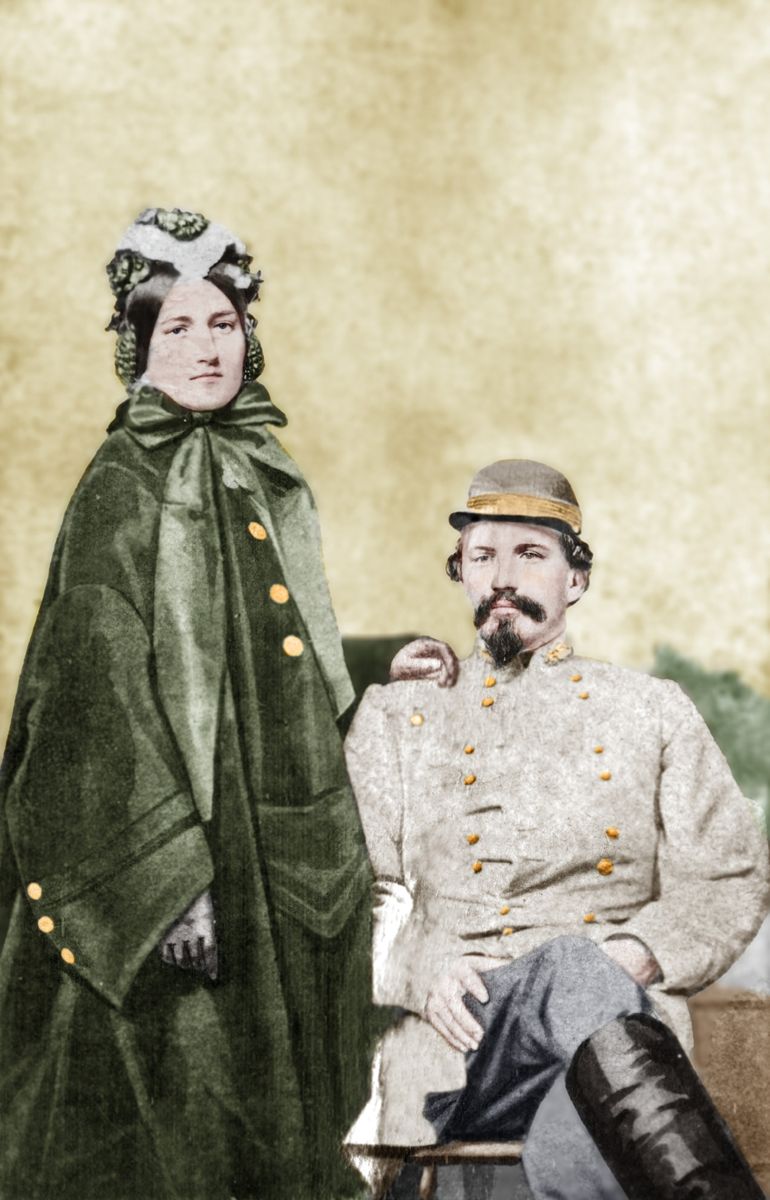
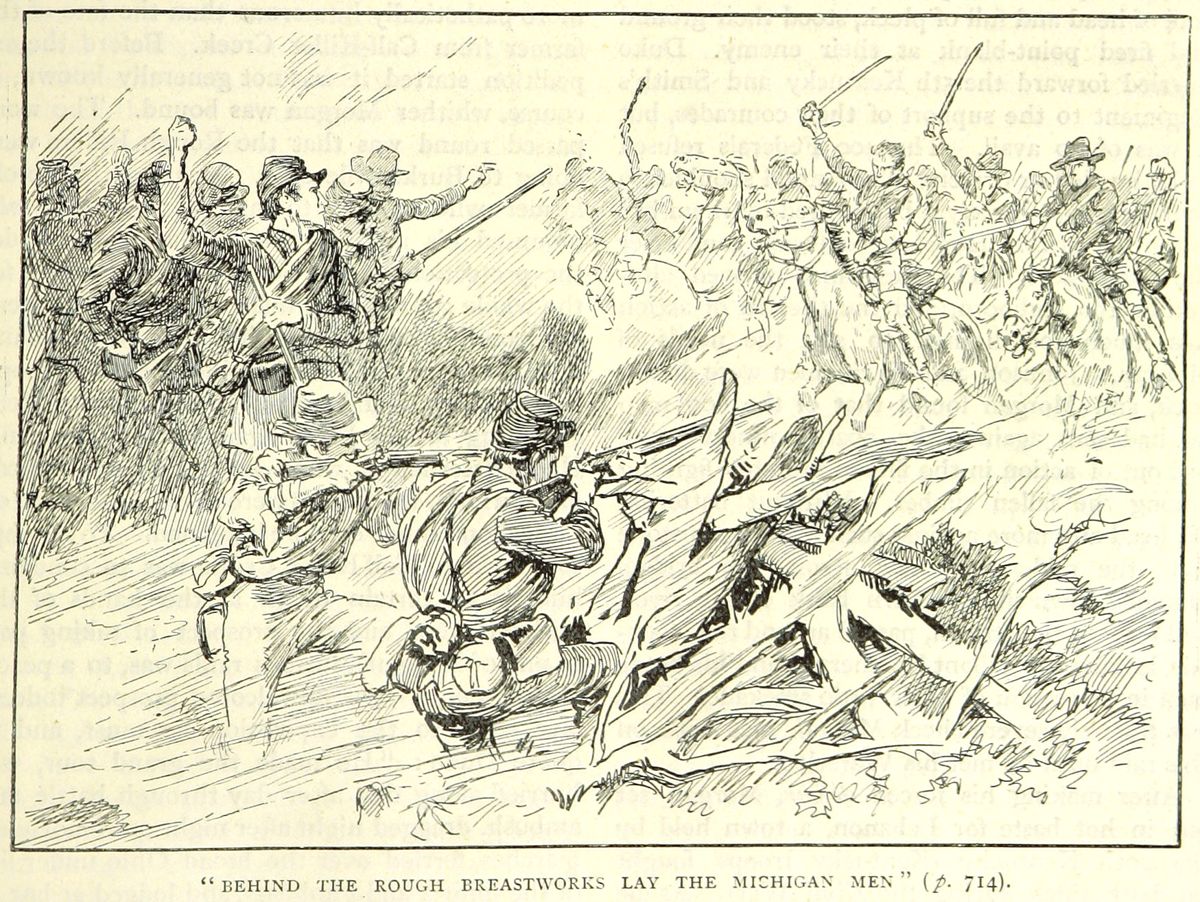
Not On The 4th of July John Hunt Morgan’s 1863 Raid – Part I “It seemed as if so small a band as ours had been stationed there [Tebb’s Bend, Ky.] as a bait … If Col. Moore could be captured there, it would seem to satisfy his superior officers, who would then be rid of him for a time.” – U.S. Lt. Benjamin F. Travis, 25th Michigan Infantry On December 14, 1862, C.S. Gen. John Hunt Morgan married his second wife, 21-yearold Martha Ready. Episcopal Bishop, General Leonidas Polk performed the ceremony and generals, Braxton Bragg, William Hardee, Benjamin Cheatham, and John Breckinridge were among the guests. Morgan and the 2nd Kentucky Cavalry Regiment were famous for the 1862 Kentucky and Christmas Raids. In the spring of 1863, Morgan approached Bragg, Commanding, Army of Tennessee, with the idea of a raid into Kentucky to destroy Federal supplies and then cross into Indiana and Ohio to incite “scare and clamor” in those states. Bragg sanctioned Morgan to go “wherever he pleased” in Kentucky and perhaps “attempt the capture of Louisville” to create chaos in the streets and telegraph messages sent to Washington. Bragg disapproved of crossing the Ohio River. Bragg needed Morgan to keep the Federals distracted by action in Kentucky, because the raid would ease pressure on his move to Chattanooga, Tenn. On June 10, Morgan launched the “Ohio Raid” from his Alexandria, Tenn., headquarters. Morgan was sporting a new uniform with the gold braid of a general; horses had been rested, supplies were on hand, and two cannon were available, stockpiled from his Christmas Raid. On June 11, Bragg diverted Morgan to intercept a Federal raiding party in East Tennessee. Morgan spent three weeks wearing out horses, men, and supplies on bad roads, in pouring rain searching for Federals who had already left the area. On July 2, Morgan resumed the original raid by crossing the Cumberland River into Kentucky by using canoes to ferry 2,460 men, supplies, and dismantled wagons while the horses swam. The Federals considered the rain swollen river a natural barrier and hadn’t posted scouts. Soon, they were chasing after Morgan and skirmishing. U.S. Gen. Jeremiah Boyle, District of Ky., commanded Louisville, Kentucky’s largest city, on the Ohio River across from Indiana, and some 200 miles from the front lines in Tennessee. On April 5, U.S. Col. Orlando Moore, 25th Mich., returned to Louisville to take charge of a military prison holding Confederate prisoners as well as patrol for straggling soldiers. Moore was also appointed provost marshal of the city. Moore, 36 years old, had received his commission in 1856 and had served on the Pacific coast until he requested a transfer east. He was appointed colonel to the newly formed 25th Michigan on August 18, 1862. General John Hunt Morgan and Martha Ready. Colorization © 2022 civilwarincolor.com, courtesy civilwarincolor.com/cwn. (University of Kentucky Libraries Special Collections and Research Center) As provost marshal, Moore “ordered a slave auctioneer to sell no slaves at a sale then advertised. He also directed a city paper to cease its attack upon the [Federal] administration.” Boyle knew meddling with the legal ownership of slaves would strain the delicate mission of keeping Kentucky in the Union and replaced Moore as the city’s provost Marshall. Moore protested his removal with a note in the Louisville Journal. Boyle’s solution was to order Moore to guard the Columbia Turnpike Bridge over the Green River at Tebb’s Bend between Lebanon and Columbia which was a vital supply line. The bridge had already been rebuilt twice, after being burned by Morgan during his Christmas Raid, and damaged by a flood on June 28, 1863. On June 11, Moore departed Louisville. On June 29, hearing rumors of Morgan’s approach, Moore began to prepare for the inevitable attack. He erected a fortified position with an abatis on top of a knoll, inside the bowl-shaped bend in the river. The bridge was at the tip of the bowl. The riverbanks were steep and covered with a thick wood. Moore’s men dug a trench about 125 feet long across the lower field. On July 4, 1863, the Battle of Tebb’s Bend began at 4:35 a.m. when Confederate fire drove in Moore’s pickets. After C.S. Capt. Edward Byrne fired a Parrott rifle 600 yards into the rifle pit, Morgan sent men under the flag of truce to demand an unconditional surrender. Moore had to have considered that the battle was the first for his 174 men, armed with English imported Pattern 1853 Enfield rifled muskets, a few pistols, and swords. He knew he was outnumbered and outgunned. Moore told C.S. Col. Robert Alston, “As it was on the Fourth of July, he could not entertain the proposition … I have a duty to perform to my country, and the presence of this day supports me in my decision.” The men shook hands and “the rebel officer said, ‘Goodbye, Col. Moore, God only knows who may fall first.’ They then turned their horses and galloped away.” The fighting resumed. About 7:30 a.m. Byrne’s two 3-inch Parrott rifles and two 12-pounder howitzers opened fire on the trench line. Moore’s sharpshooters mowed down the artillerymen from their position on the knoll. About 9:30 a.m. Morgan dismounted Col. David Chenault’s 11th Ky. and Col. John Huffman’s 7th Ky. in an attack on the trench; the rebel yell filled the air. The 75 Federals fled through the woods. Morgan and Col. Adam Rankin “Stovepipe” Johnson entered the rifle pit to view the Federal defense. Johnson, “begged the general not to attempt it.” C.S. Col. Basil Duke considered Moore’s defenses “the strongest natural position, I ever saw, and had fortified it with a skill equal to his judgment in the selection.” Morgan did not want Moore left in his rear and ordered the men to attack the fortification without artillery support. At the double-quick across the field, the Confederates charged forward until reaching the abatis. “The bullets flew from all sides,” wrote U.S. Pvt. Dirk Van Raalte. “Sometimes we and the Rebs were only six or eight feet from each other.” The attackers retreated into the woods. Morgan ordered Chenault to make a flank attack. Up the slope on foot went the 5th, 6th, and 7th Kentucky. Duke reported, “The first rush carried the men close to the work, but they were stopped by the fallen timber, and dropped fast under the close fire of the enemy. Colonel Chenault was killed in the midst of the abattis [sic]—his brains blown out as he was firing his pistol into the earthwork and calling on his men to follow. … [The men] would give way, rally in the thick woods, try it again, but unsuccessfully.” Thwarted, the Rebels retreated as Moore, serving as his own bugler, sound an advance and the false cry of reinforcements was shouted along the Federal line. At 10 a.m. the Confederates attacked at the bridge and were unhorsed by the defenders. Morgan accepted that he would have to cross the Green River elsewhere. At 10:30 a.m. Morgan sent a flag of truce to attend to the wounded and dead. In less than 30 minutes of total combat, Morgan’s loss was 36 killed, 45 wounded including some twenty experienced officers; 32 were captured. Moore’s loss was six killed and 23 wounded. After his first battle, U.S. Lt. Benjamin Travis, 25th Mich. noted, “The completion of the work at this time of the day made it only a before breakfast duty, although that meal was deferred to a later hour, as the cook became a little excited and let the coffee boil over; but it was ready about mid-forenoon.”
Sources: • Travis, B.F., The Story of the Twenty-fifth Michigan:
•
•
Kalamazoo Publishing Company, 1897 Duke, Basil W., History of Morgan’s Cavalry: Miami Printing and Publishing Company, 1867 Mowery, David L., Morgan’s Great Raid: The Remarkable Expedition from Kentucky to Ohio: Arcadia Publishing 2011
Stephanie Hagiwara is the editor for Civil War in Color.com and Civil War in 3D.com. She also writes a weekly column for History in Full Color.com that covers stories of photographs of historical interest from the 1850’s to the present. Her articles can be found on Facebook, Tumblr and Pinterest.