
The Graphic War
Wilmer McLean’s Civil War
By Salvatore Cilella · Originally published April 2022 · pp. 32–33
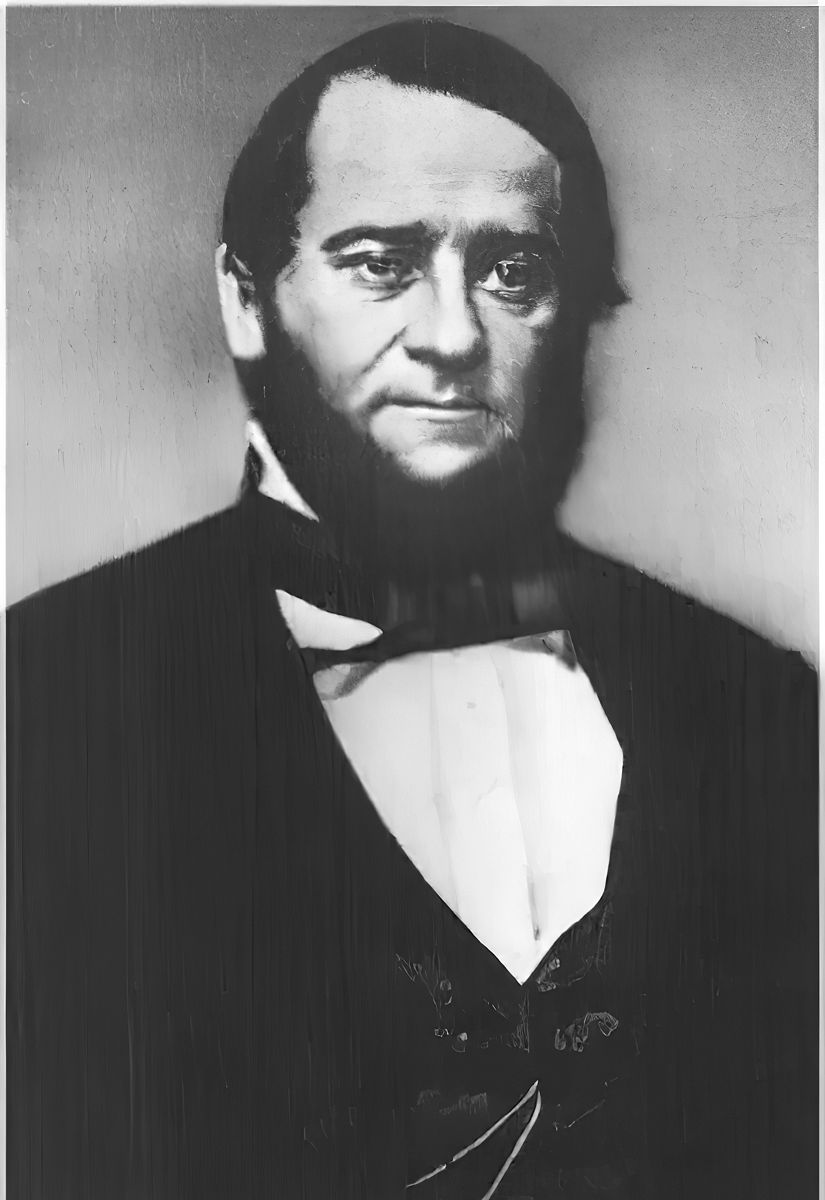
The Graphic War highlights prints and printmakers from the Civil War discussing their meaning and the print maker or artist’s goals. The McLean family’s home in Virginia was commodious and comfortable. Wilmer McLean had married well; Virginia Hooe Mason was the widow of a physician. Their sprawling plantation in Manassas, Yorkshire Plantation, covering more than 1,200 acres, was a legacy from Virginia’s family. The parents and five children settled into the county in 1854 where Wilmer continued his trade as a wholesale grocer. Seven years later, their world changed forever. On July 18, 1861, the Civil War came to their doorstep. The preliminary movements to what eventually became the First Battle of Bull Run, or Manassas, occurred at Blackburn’s Ford, a minor skirmish. Union commander General Erwin McDowell sent out probes to determine the Confederate strength facing him. The brief engagement with casualties convinced him to use an alternate course. During the skirmish, a cannonball hit McLean’s home which was then being used by General P.G.T. Beauregard as his headquarters. After the battle it was used as a hospital and prison for Union prisoners of war. At an undetermined time, McLean decided to move his family away from what appeared to be the center of action. McLean’s relative, Edward Porter Alexander, Beauregard’s chief signal officer, explained the move. McLean wanted “a secluded spot where he could hope never to see a soldier…It was certainly a very remarkable coincidence. The first hostile shot I ever saw strike, went through his kitchen. The last gun was fired on his land and the surrender took place in his parlor; nearly four years of time & 200 miles of space intervening.”1
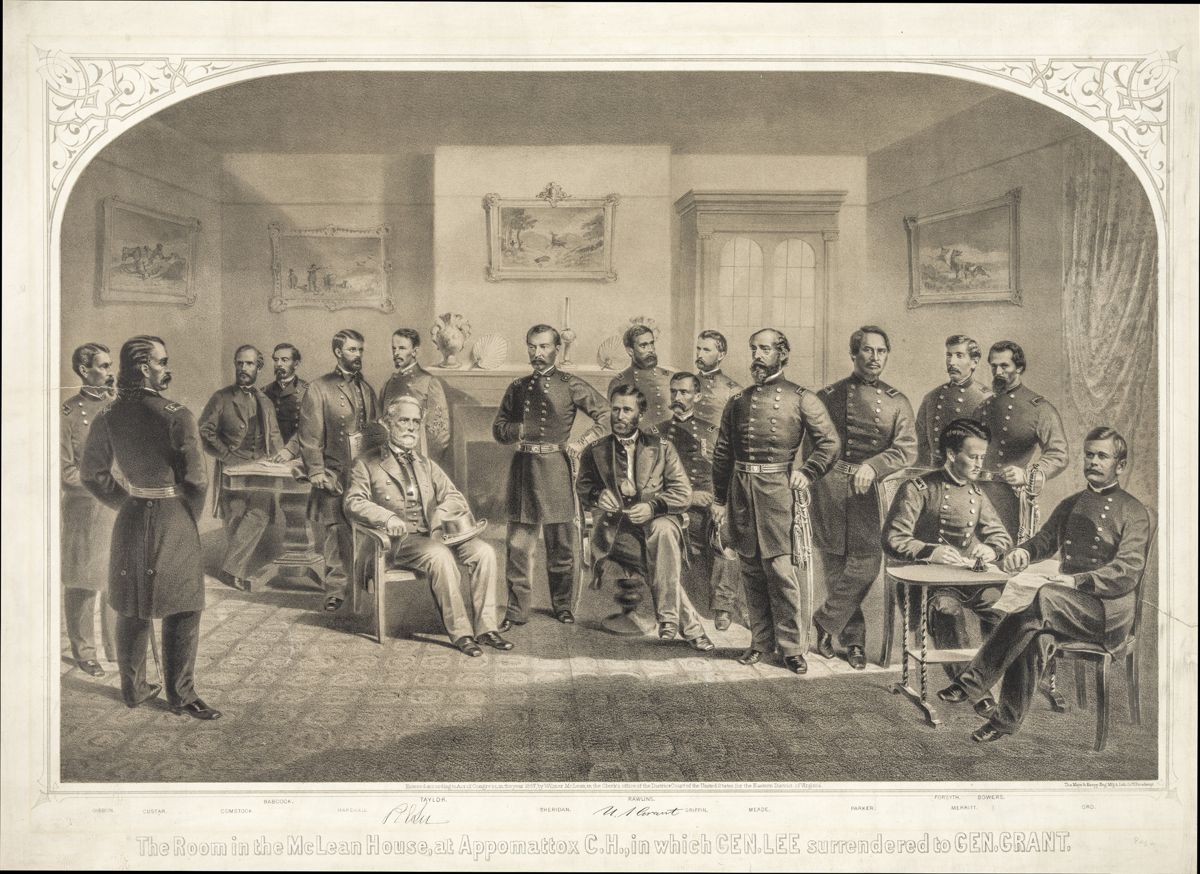
Lee’s aide-de-camp, Charles Marshall picked McLean’s Appomattox house as the location for the surrender negotiations. At 1 o’clock, Lee arrived outfitted in a “fine, new, splendid uniform.” Half an hour later, Grant appeared in muddy boots, wearing a nondescript blouse with two stars attached to the collar. According to historian Elizabeth Varon, Grant’s entourage who stayed for the entire meeting were his aide-de-camp Brevet Brigadier General Orville Babcock, Assistant Adjutant General Colonel Theodore S. Bowers, and military secretary Captain Ely S. Parker. Others who came in and out during the meeting, among others, were Lieutenant Colonel Adam Badeau, and aidede-camp Lieutenant Colonel Horace Porter. Later, many others entered the room once the terms of surrender were agreed upon. They included Sheridan, Robert Lincoln, and Sylvanus Cadwallader of the New York Herald.2 The momentous occasion was anything but joyous for Wilmer McLean. Within days, treasure seekers stripped McLean’s house of mementos of the historic event. Union officers seized furniture, candlesticks, children’s toys, and pieces of upholstery. No relic was too small. It’s unclear if some items were paid for or merely confiscated. Supposedly Phil Sheridan seized the surrender desk and then offered it to Libbie Custer in recognition of her husband’s “gallantry.”3 According to the National Park Service, Wilmer McLean moved back to his estate in northern Virginia in the fall of 1867,4 but not before he tried to save his Appomattox home. That year, New York lithographers Henry B. Major and Joseph F. Knapp published a view of the surrender room. This was a different situation because Wilmer McLean had commissioned the print as a fund raiser to stave off the financial distress he was experiencing. The war, a falloff in his wholesale business, and the ransacking of his home by Union soldiers, eventually led him to default on his mortgage by 1869. In the print, Major and Knapp emulated the so-called “rubber room” depictions of Lincoln’s death scene in the Peterson House. Anyone who had been in the room was depicted. General Meade, shown to Grant’s right, was late to the meeting and never entered the house. The lithographers used existing photographs of some participants, most notably
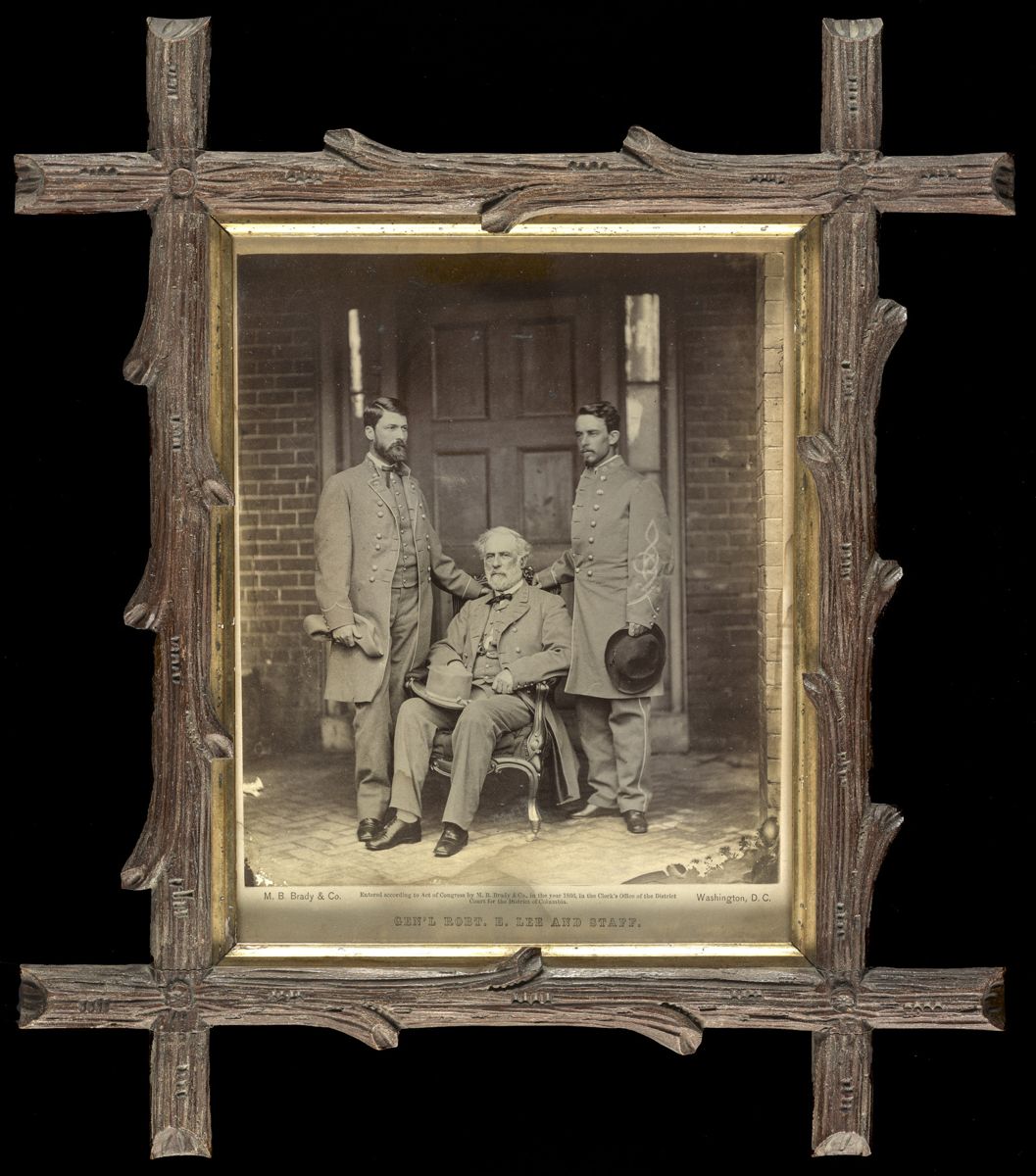
CivilWarNews.com Mathew Brady’s photo of Lee and his two aides at Lee’s Richmond home immediately after the surrender. The two aides have been identified as Colonel Walter Taylor on the right and either Custis or Rooney Lee on the left. The lithographers, however, have reversed Lee’s position in order to face Grant. On the far left is General George Armstrong “Custar” [sic]. Sheridan stands between Lee and Grant. On the right is General Wesley Merritt, sitting in the place of Colonel Eli S. Parker who is shown “leaning on the arm of the chair in which he should have been sitting.”5 Today the print is rare. It is unknown how many were produced. It is equally unknown how many were sold. Obviously, the print failed in its inherent purpose to provide financial relief to the McLean family. The McLean house was sold and dismantled. Today an accurate reproduction that opened in 1950 is part of Appomattox National Park. Wilmer died in 1882, in Alexandria, his birth place.
Endnotes: 1.
William Bake, “Wilmer McLean House,” https:// encyclopediavirginia.org/94hpr72261d400cf110b/. Originally Appomattox, Court House National Historical Park. For a thorough recounting of the meeting in McLean’s parlor see Elizabeth Varon, Appomattox: Victory, Defeat, and Freedom at the End of the Civil War, Oxford, 2014, Chapter 3, “The Surrender Conference,” 48-78. Grant’s description of Lee’s uniform, 54. Varon, 89. “McLean House,” NPS, https:// w w w. n p s . g o v / a p c o / l e a r n / education/mclean-house.htm. Mark E. Neely, Jr., Harold Holzer, and Gabor Borritt, The Confederate Image: Prints of the Lost Cause, Chapel Hill, UNC Press, 1987, 72-73.
History Center. His most recent books are Upton’s Regulars: A History of the 121st New York Volunteers in the Civil War (U. Press Kansas, 2009). His twovolume Correspondence of Major General Emory Upton, (U. of Tennessee Press, 2017), received the 2017–2018 American Civil War Museum’s Founders Award for outstanding editing of primary source materials. His latest book “Till Death Do Us Part,” an edit of Upton’s letters to his wife 1868– 70, was published in 2020 by the Oklahoma University Press.
After 43 years in the museum field, Cilella devotes his time collecting American prints and maps and writing. His last professional position was President and CEO of the Atlanta (Library of Congress)