
Critic's Corner
Sherman, Wade Hampton and the Hanged Man
By Stephen Davis · Originally published April 2022 · pp. 26–27
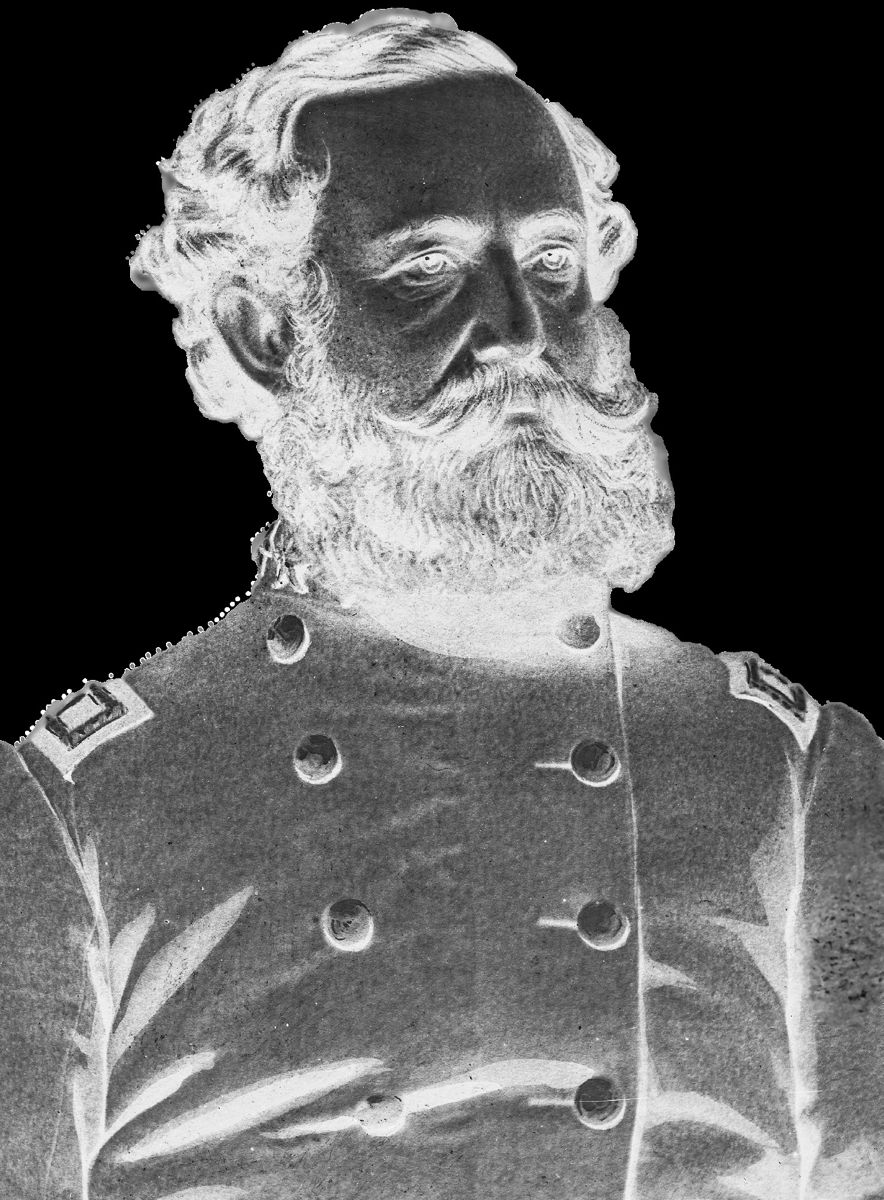
William Tecumseh Sherman. (Library of Congress)
After spending more than a month in Savannah, on Feb. 1, 1865, Union Maj. Gen. William T. Sherman led his army of 60,000 veterans into South Carolina, with the intent of making for Goldsboro, North Carolina, 300 miles to the northeast. The Federals were opposed by fewer than 20,000
Wade Hampton III. (Library of Congress)
Sherman, Wade Hampton and the Hanged Man
Confederates under Lt. Gen. William J. Hardee, commander of the Department of South Carolina, Georgia and Florida. Remnants of the wrecked Army of Tennessee were expected from Mississippi, but how many troops, their condition and expected date of arrival were unknown. South Carolina suffered more at the hands of Sherman’s soldiers than had Georgia. At Barnwell, a town seventy-five miles north of Savannah, Federals killed animals and looted civilians’ houses, then set them on fire. Union cavalry commander Brig. Gen. Judson Kilpatrick sent a message to Sherman: “we have changed the name of Barnwell to Burnwell.”1 It was even worse in Columbia, the state capital, which Northern troops entered on February 17. Two days before, General Beauregard had ordered all cotton in the city to be burned before the Yankees arrived. But on the morning of the 17th, newly-promoted Confederate Lt. Gen. Wade Hampton worried that the strong winds prevailing would spread the flames to buildings. They did. Fires were fanning when Northern troops began marching in around 10:30 a.m. Some Federals chanced upon a cache of whiskey, and drunkenness led to deteriorating discipline and still more fires. Fine houses fell victim to deliberate arson, even as some Federals tried to snuff out the flames. Before the conflagration subsided about 8 p.m., 265 residences and 193 business and public structures, virtually Columbia’s entire business district, had been wiped out.2 Before Sherman and Hampton began arguing over which side was responsible for Columbia’s burning—the kerfuffle would last years after the war—the two officers began a heated correspondence over another issue. The Union general started it. On February 24, Sherman composed a letter to Hampton, who was commanding Confederate cavalry in the Carolinas. Sherman came right to the point: soldiers in his army out on foraging expeditions—in his orders for the march he had encouraged his troops to live off the land—had been found dead with signs on their bodies reading “death to foragers.” He gave two such instances: a lieutenant and seven men found thus near Chesterville, and twenty more found near a place called Feasterville. Sherman informed Hampton that foraging was a long-accepted practice in war and that soldiers so engaged should not be murdered as criminals. He then pointedly stated, “I have ordered a similar number of prisoners in our hands to be disposed of in like manner”—in other words, he would retaliate for his soldiers’ deaths.3 Hampton got Sherman’s letter on the 27th and immediately composed a long reply. First, the retaliation threat: for every Confederate soldier murdered at Sherman’s order, Hampton would have two killed, “giving in all cases preference to any officers who may be in my hands.” Then, the foragers: he had given no orders for the killing of prisoners, and he knew nothing of the two alleged incidents. But that did not really matter, as Hampton blamed Sherman’s foragers for setting fire to civilians’ homes. “It is a part of the system of the thieves whom you designate as your foragers to fire the dwellings of those citizens whom they have robbed,” he charged. Hampton declared that he had instructed his troops to shoot on sight any houseburning Yankees they encountered. Not content with that, Hampton went on to accuse Sherman for having fired artillery into the city of Columbia without giving warning to its residents, and for having “laid the whole city in ashes, leaving amidst its ruins thousands of old men and helpless women and children, who are likely to perish of starvation and exposure.” Then came the accusation of rape: “in more than one household there is now an agony far more bitter than that of death,” he explained, using the customary Victorian euphemism.4 Sherman liked to verbally spar with Rebel generals, and he had a knack for it—recall his exchange of molten missives with Hood in September 1864. But this time Cump dropped the matter and didn’t reply to Hampton’s letter of February 27. Maybe he felt bested, for because of the letter-exchange, as Hampton’s biographer writes, Sherman “hated Hampton more hotly thereafter.”5 Even Sherman’s biographers notice it. During the course of his Carolinas campaign, “Sherman developed a deep hatred” of the South Carolinian, writes Stanley Hirshson in The White Tecumseh.6 Nevertheless, historians have concluded that neither side carried out retaliation against prisoners. Edward G. Longacre makes the statement in his biography of Hampton that “neither Sherman nor Hampton resorted to executing prisoners in retaliation for the offenses of the other.”7 “Historians have concluded”…until Bud Robertson came along. In Dr. Robertson’s famous “The War in Words” column that ran in Civil War Times Illustrated from April 1972 (the Official Records) to December 1987 (Kate Cummings’ Journal of Hospital Life), there appeared one in CWTI for October 1979. Here’s the story. In the late 1970s Robertson was completing his massive Index for the Southern Historical Society Papers (two volumes, 1980), during which he came upon something that intrigued him. In a roster of Confederate naval officers (SHSP, vol. 35 [1907]), he found this statement, under the name of George E. Hazlehurst: “captured by Sherman, and drew lots for life and death act of retaliation; Miller drew and was shot.” AWP! Bud was frankly stumped—how often did this happen?—as he confessed in “The War in Words” for August 1978. He asked readers with knowledge of Miller and that “life or death act of retaliation” to write him c/o CWTI in Harrisburg.8 Well, several did, and from their statements, Robertson put together this narrative, which he laid out in the October 1979 issue:
On Feb. 28, 1865, at Pageland, South Carolina (near the North Carolina line) a Union soldier, Pvt. Robert Woodruff, 30th Illinois, was found dead, his skull brutally bashed in; Federals assumed that Woodruff had been foraging and was killed by Rebels; Union officers gathered a group of Confederate prisoners and had them draw lots;
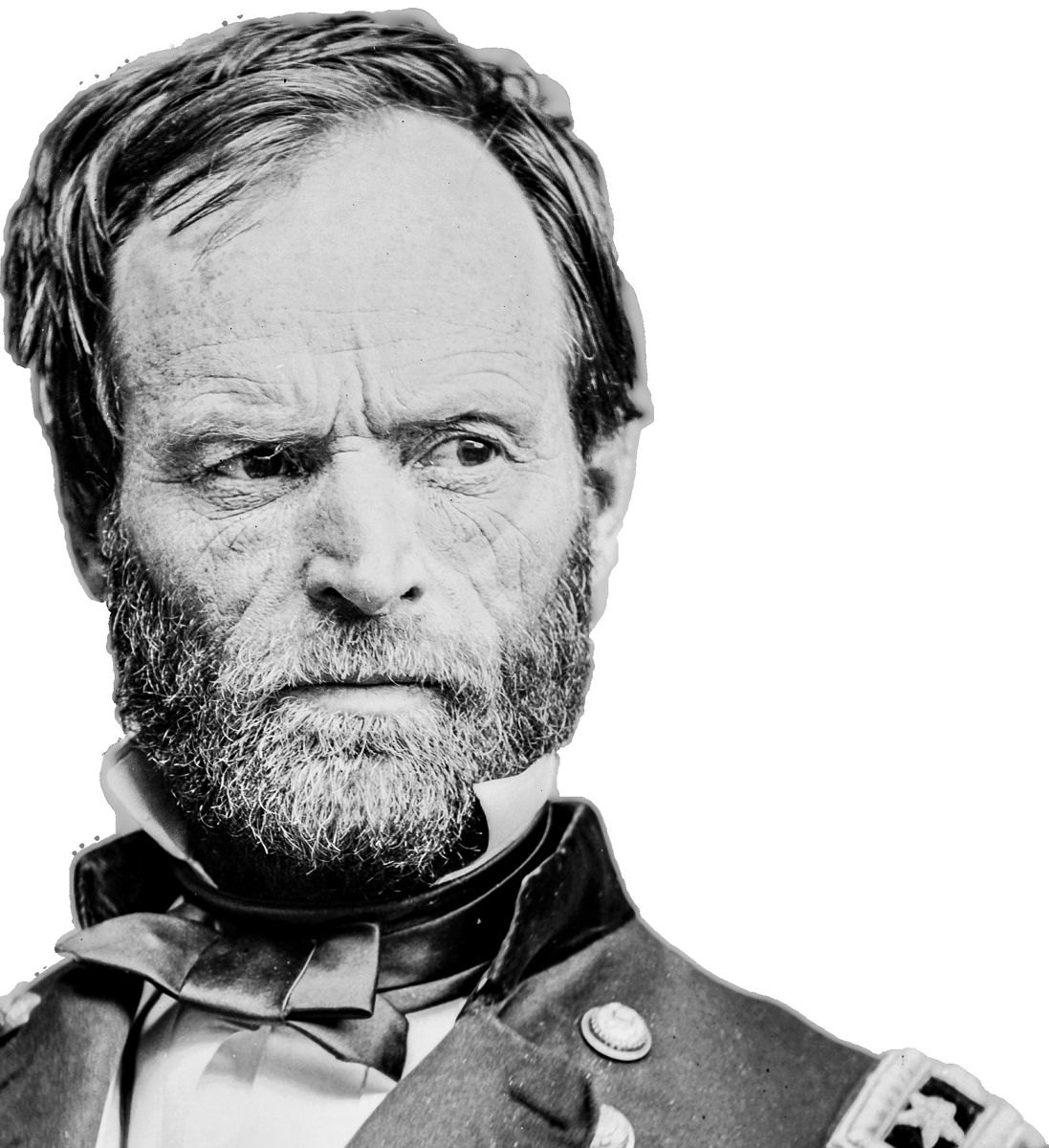
James M. Miller, 3rd Battalion, South Carolina Reserves, drew the death warrant; Miller was given an hour to make his peace.; perhaps he penned a letter to his family (at age 48, he was married and father of nine); his only request was that he not be shot in the face; and before the fatal volley, as observed by one Federal, Miller, “stood like a man, a soldier, and a Christian.”
On February 22, shortly before reaching Chesterfield County, 18 Union soldiers were found dead with a sign stating “Death to all foragers” left on their bodies. This action prompted General William T. Sherman to send letters to Union Major-General Howard and Confederate General Wade Hampton.
Gen. Sherman letter to Major General Howard. OR, Vol. 47, Part II, p. 537.
Endnotes:
- Stanley P. Hirshson, The White Tecumseh: A Biography of William T. Sherman (New York: John Wiley & Sons, 1997), 277; Nathaniel Cheairs Hughes, Jr., General William J. Hardee: Old Reliable (Baton Rouge: Louisiana State University Press, 1965), 273; Marion Brunson Lucas, Sherman and the Burning of Columbia (College Station: Texas A & M University Press, 1976), 42; Burke Davis, Sherman’s March (New York: Random House, 1980), 149. 2. Lucas, Sherman and the Burning of Columbia, 64, 67, 76, 128. 3. Sherman to Hampton, Feb. 24, 1865, OR, vol. 47, pt. 2, 546. 4. Hampton to Sherman, February 27, OR, vol. 47, pt. 2, 596-97. 5. Manley Wade Wellman, Giant in Gray: A Biography of Wade Hampton of South Carolina (New York: Charles Scribner’s Sons, 1949), 170. 6. Hirshson, White Tecumseh, 276. 7. Edward G. Longacre, Gentleman and Soldier: A Biography of Wade Hampton III (Nashville: Rutledge Hill Press, 2003), 230. 8. James I. Robertson, Jr., “The War in Words,” Civil War Times Illustrated, vol. 17, no. 5 (August 1978), 16; and in vol. 18, no. 6 (October 1979), 14. Stephen Davis of Cumming, Georgia, is author of seven books related to the Atlanta Campaign, including the Emerging Civil War paperbacks A Long and Bloody Task (2016) and All the Fighting They Want (2017). His two recent volumes on John Bell Hood (Mercer University Press, 2019, 2020) have won the Fletcher Pratt Award of the New York CWRT, the Richard Barksdale Harwell Award of the Atlanta CWRT, and the Douglas Southall Freeman Award of the Military Order of the Stars and Bars. His latest book, with Bill Hendrick, The Atlanta Daily Intelligencer Covers the Civil War, will be released this summer by the University of Tennessee Press.
“…General good order and quiet attended the entry, but, as the troops were halted for several hours in Main-street, stores and dwellings soon became objects of much attention, and the work of plunder commenced. From this time until the last Yankee left town, person nor property were safe from the impolite intrusions upon their welfare. Stragglers, “bummers,” pontoon men, and the riffraff of the army, were to be met in every street and almost every house. If they wanted a pair of boots they took, them from your fee. Watches were in constant demand — in several instances being snatched from the persons of the best ladies in the city. Gentlemen on the street quickly learned to appreciate the old phrase “tempus fugit.” Our cashier, the well-known Notary Public, P.S. JACOBS, Esq., was one of the pupils. He is said to have received two lessons; price — a watch each. Ear and finger rings were taken by force, and, in isolated cases, the dresses of ladies were torn from their bodies by villians [sic], who expected to find jewels or plate concealed. Search for silver and provisions was made in every conceivable place. Ramrods were used as probes to indicate where boxes were buried, and gardens, outhouses, cellars, garrets, chimneys and nooks never thought of by anybody but a thief in search of plunder, were turned, so to speak, inside out. In one instance it is reported that a box of valuables worth a large amount was found under a door step. We learn that the estimate of this character of property stolen is about two millions of dollars. Many of the robbers who perpetrated personal violence were intoxicated by liquor found in the city. Rev. Mr. SHAND, the Episcopalian clergyman, while conveying a trunk containing the communion service of silver from the church to the South Carolina College, was accosted by a Yankee and a negro, who compelled him, under a threat of death, to give it up, which was done. While one of the cups was afterward being used for drinking whisky, a Federal soldier (an Irishman) recognized the sign of the cross upon it, took it from the fellow and carried it to Rev. Dr. O’CONNELL, the Catholic clergyman, by whom it was restored to the owner. This description of pillage continued until the troops left. In the afternoon, the column which had occupied Main-street, moved into quarters in the various public grounds and vacant lots. No fires occured [sic] on Thursday, save such as were ignited by our own officials. The first alarm on Friday was given soon after the entry or the enemy, and proceeded from the burning of a row of cotton on Main street, between Washington and Lady streets. In fifteen or twenty minutes afterward, the jail, which had be [???] d as a Confederate prison, was set on fire. The bells rang, the engines promptly rallied, and proceeded as usual to their work, which was uninterrupted, except by drunken soldiers, who here and there cut the hose with their pocket knives; but all efforts to stay the flames were unavailing. Among the prisoners released were MORRIS, who murdered HICKS, several men confined on the charge of counterfeiting, and, it is said, a Federal prisoner. Why he was not removed with his comrades does not appear. It is reported that he subsequently married a lady in Columbia.” – Daily South Carolinian March 19, 1865.
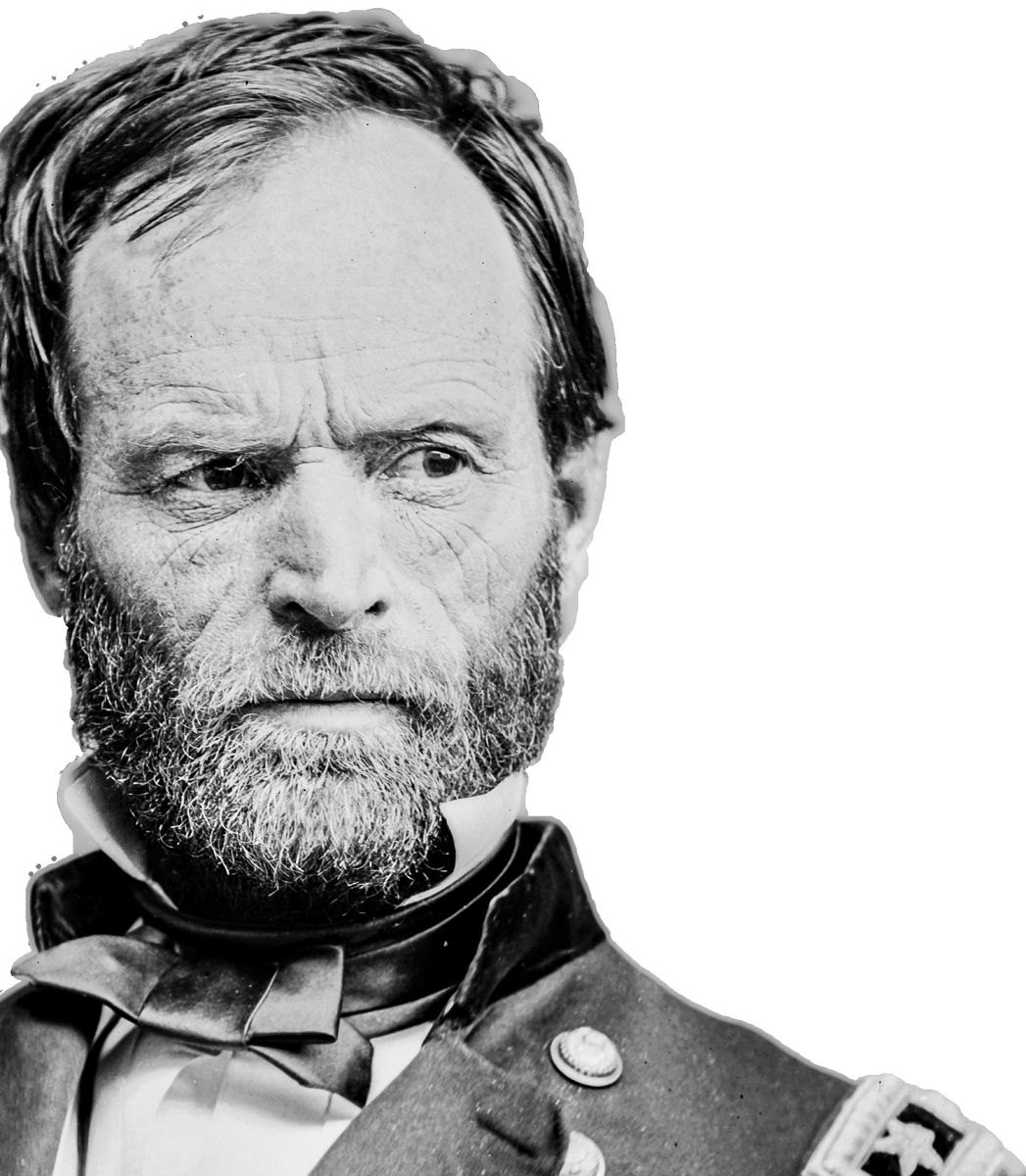
In Memory of James M. Miller Born April 7, 1816 Killed in Retaliation March 2, 1865
Sherman’s Troops Sack Columbia
STEPHEN DAVIS
Gen. Sherman letter to Gen. Wade Hampton. OR, Vol. 47, Part II, pp. 596-597.
Dr. Robertson took his tale all the way to Five Forks Cemetery near Kershaw, South Carolina, where a grave marker reads: