Shenandoah University’s McCormick Civil War Institute Celebrates Completion of Two Projects
By Jonathan A. Noyalas · Originally published April 2022 · pp. 1–4
Shenandoah University’s McCormick Civil War Institute (MCWI) prides itself on creating opportunities for students in Civil War Era Studies to engage in research and the real-world work of historians. Recently, two of those opportunities resulted in completion of projects; the first is the publication of the second volume in MCWI’s primary documents series, “A Good Cause”: Letters from the Ninth New York Heavy Artillery. The book consists of fifty-nine letters penned by eleven soldiers in the regiment, spanning the period from March 1863 to June 1865. The letters were donated to MCWI in the spring of 2020 by Al MacLeod, a longtime supporter and friend of MCWI. MacLeod is a descendant of a member of the 9th New York Heavy Artillery. When MacLeod donated the collection of letters and other documents related to the regiment’s service he did so with the intent that they would become a teaching tool for our students, providing students the opportunity to engage in document transcription. Six students, Caitlyn Graulau, Brianna Jarvis, Matthew Kohler, Kimberley Oliveto, Steven Stabler, and Aidan Steinly, assisted with the transcription. The task of editing, annotating, and contextualizing the letters was completed by me. Historian Brian Matthew Jordan, chair of the department of history at Sam Houston State University in Huntsville, Texas, and a Pulitzer Prize finalist, praised the book, stating: “Ably edited, annotated, and assembled … these letters yield valuable insights into how men navigated the war’s extremes.” Jordan added that “this gem of a collection illustrates the diversity and
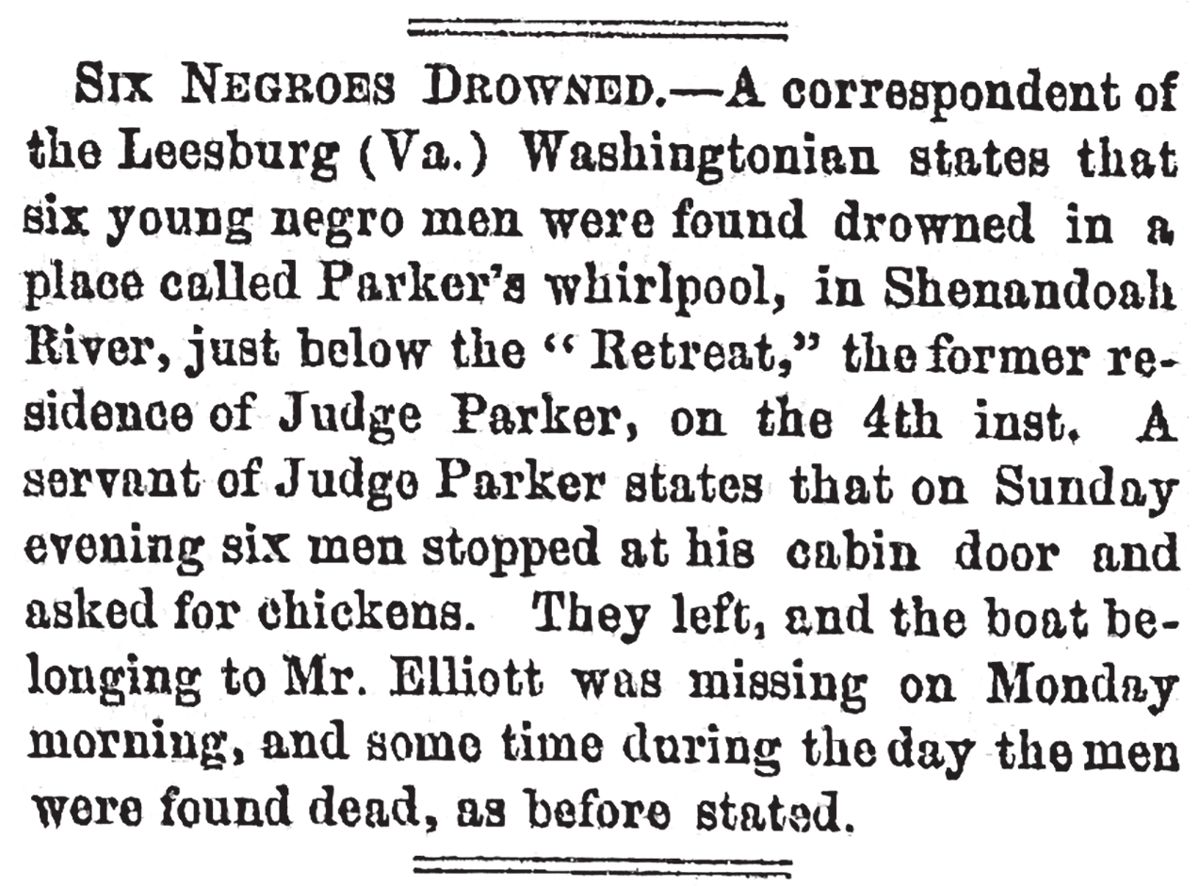
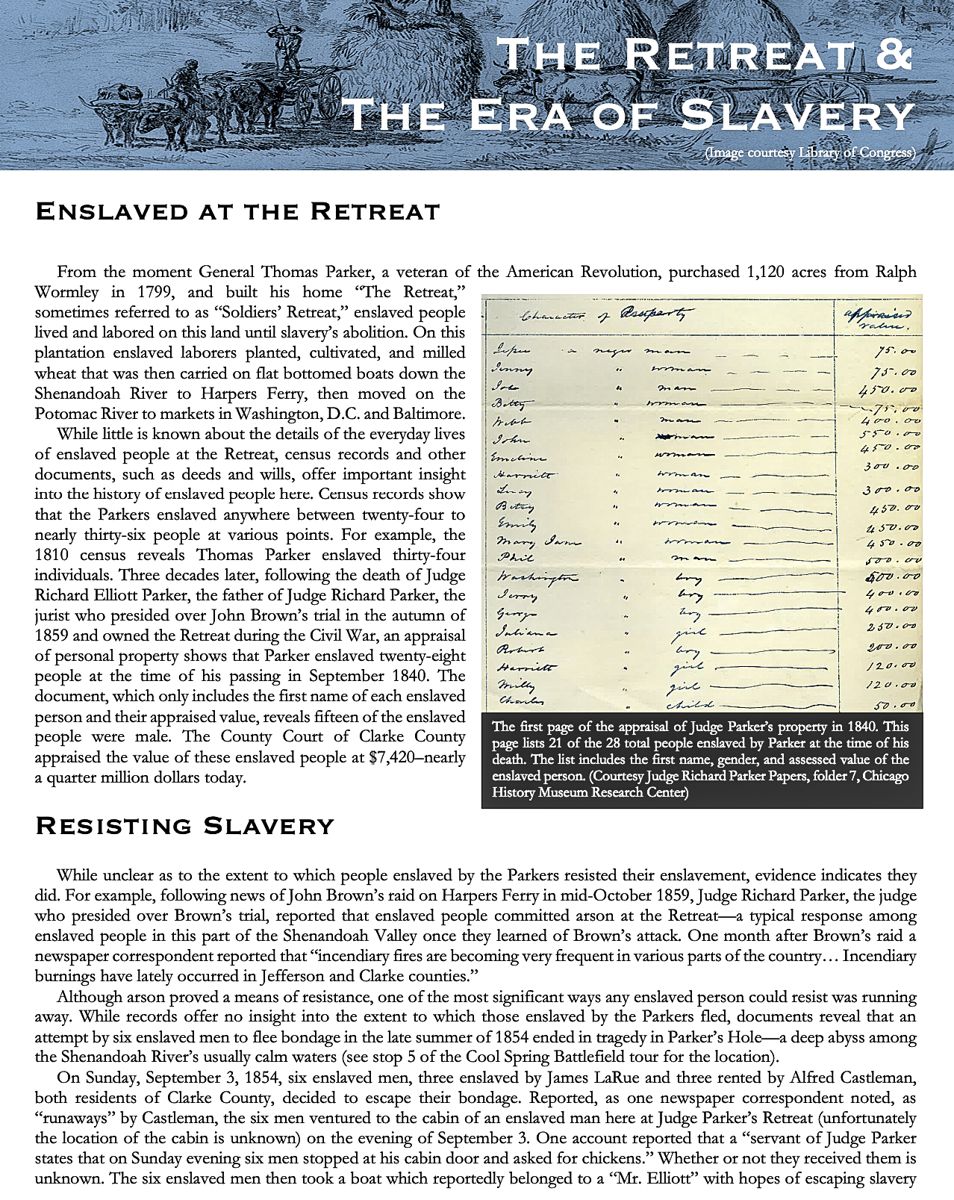
Students (from left to right) Steven Stabler, Jayce Hall, Brianna Jarvis, Caitlyn Graulau, and Aidan Steinly, gather with MCWI’s director, Prof. Jonathan A. Noyalas (at right) for a photograph to celebrate the release of “A Good Cause” and “The Retreat & the Era of Slavery.” demands of soldiering in the Civil War.” Historian Jennifer Murray, Oklahoma State University, stated that those “interested in the defenses of Washington, D.C., the Overland Campaign, or the 1864 Valley Campaign, will find much of value” in the “smartly and thoroughly annotated collection.” In addition to the release of “A Good Cause”: Letters from the Ninth New York Heavy Artillery, MCWI also celebrated the release of an interpretive handout detailing the experiences of enslaved people at Shenandoah University’s River Campus at Cool Spring Battlefield. The 195 acres owned by SU were once part of a 1,120-acre plantation owned by the Parker family. General Thomas Parker, an American Revolutionary War veteran, built his home, “The Retreat,” after purchasing the Cool Spring property in 1799. Since my arrival as the director of MCWI in January 2017 my students and I have collaborated on a variety of projects aimed at helping site visitors understand the complexities of the Battle of Cool Spring and the impact the engagement had on Union and Confederate soldiers and their families. While we’ve uncovered much about the battle and have created various interpretive tools, MCWI didn’t yet have an opportunity to engage in telling the story of the enslaved people’s lives who lived and labored on the property. Thanks to financial support from Diane Kearns, a member of the Shenandoah University’s Board of Trustees, MCWI was able to conduct initial investigations into the lives of enslaved people at The Retreat during the spring of 2021. I was aided in this effort by students, many of whom assisted with “A Good Cause”—Caitlyn Graulau, Jayce Hall, Brianna Jarvis, Kimberley Oliveto, Steven Stabler, Aidan Steinly, and Mel Siebert. This research team investigated a variety of primary source materials, including land records, wills, receipts, census data, and contemporary newspapers, to piece together aspects of the experiences of enslaved people at The Retreat. The research led to a clear understanding of the numbers of enslaved people who lived and labored at The Retreat, the type of work they performed, and the ways in which enslaved people at The Retreat resisted. For example, the investigation showed that enslaved people at The Retreat committed arson on the property once they learned of John Brown’s raid on Harpers Ferry. At the time of the raid the property was owned by Judge Richard Parker, the jurist who presided over Brown’s trial in the autumn of 1859. The research also uncovered the tragic end for six enslaved men who in September 1854 fled their enslavers, James LaRue and Alfred Castleman. The runaways appealed to an unidentified enslaved male at The Retreat for chickens, and took a boat, determined to use the Shenandoah River to get to freedom. Unfortunately, the boat capsized in Parker’s Hole, a deep abyss in the Shenandoah River’s usually fordable waters, and the six men drowned. The investigation also unearthed the story of Presley Dunwood, an enslaved man from Clarke County, Virginia, who served as Judge Parker’s carriage driver during the time of John Brown’s raid. During the Civil War, Dunwood, after fleeing Confederate forces, more than likely in the aftermath of the First Battle of Kernstown, offered his services as cook to the 46th Pennsylvania Infantry. Plans are currently underway to create an augmented reality experience based on Dunwood’s memoir. The handout, “The Retreat & the Era of Slavery,” is available at the site and online at www.su.edu/mcwi. Jonathan A. Noyalas is director of Shenandoah University’s McCormick Civil War Institute in Winchester, Virginia, a professor in Civil War Era Studies at Shenandoah University, and founding editor of Journal of the Shenandoah Valley During the Civil War Era. He is the author or editor of fourteen books. Noyalas’ latest book, Slavery and Freedom in the Shenandoah Valley during the Civil War Era, was published by the University Press of Florida.