Historic Burger & Brother D-guard Bowie Knife
By Shannon Pritchard · Originally published April 2022 · pp. 24–25
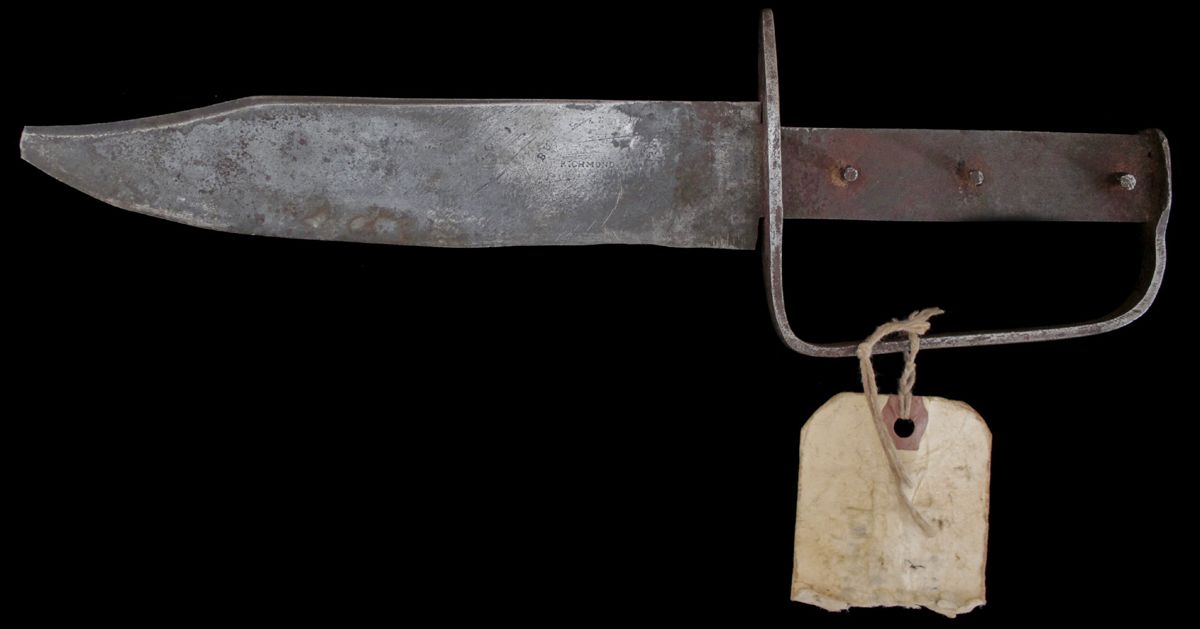
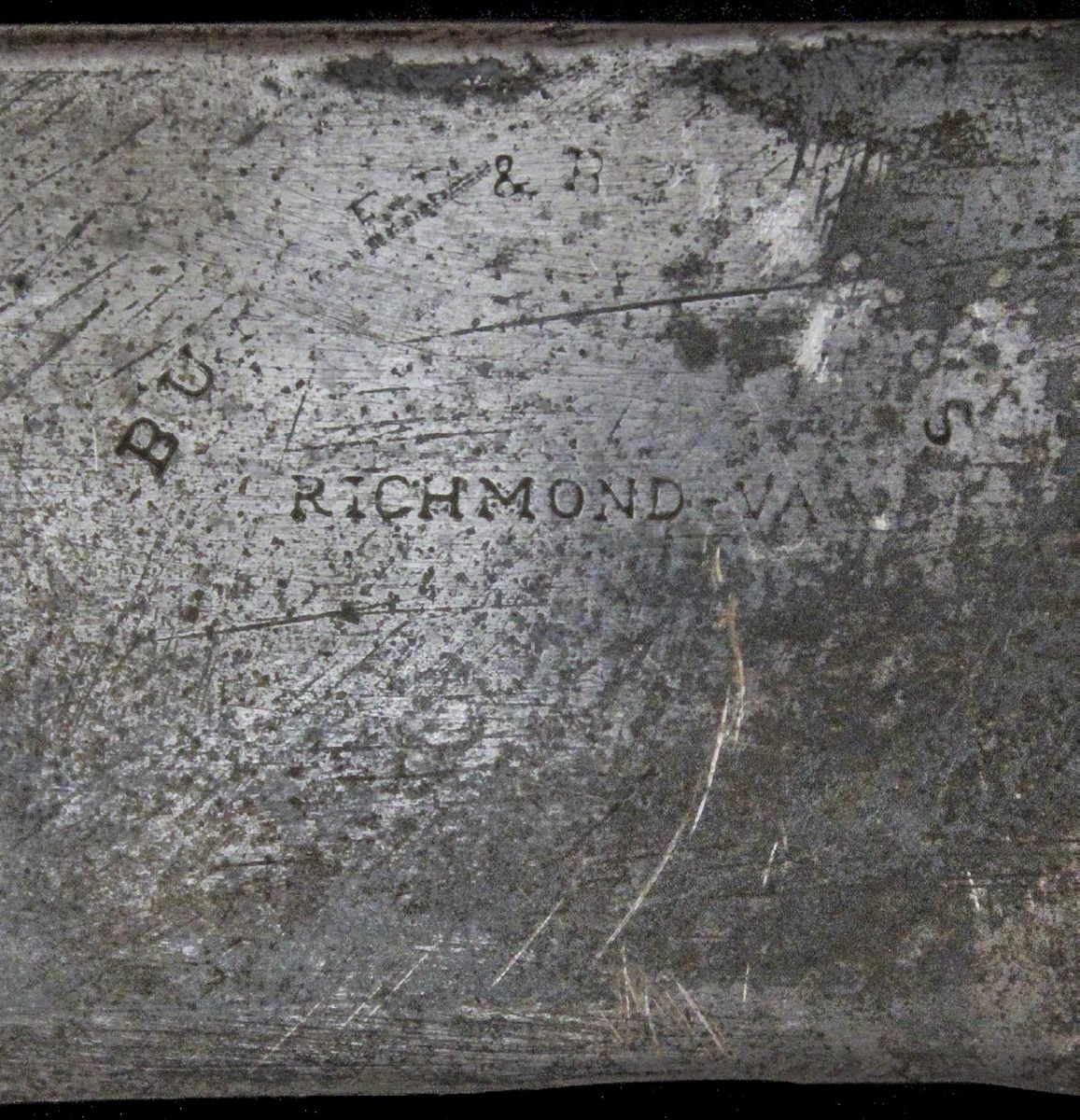
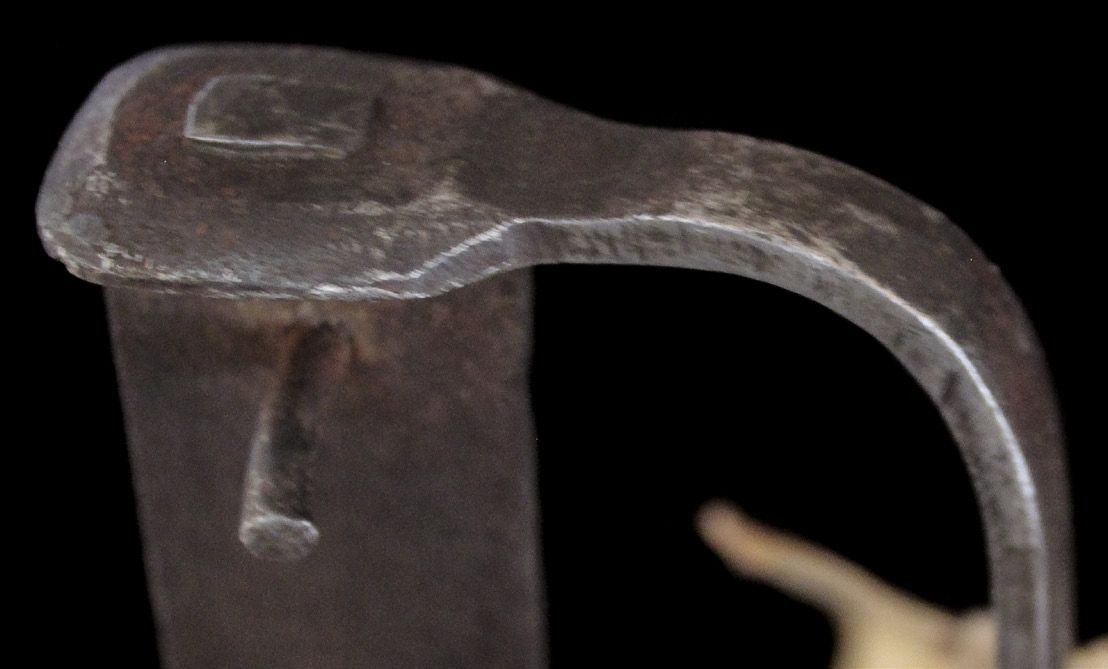
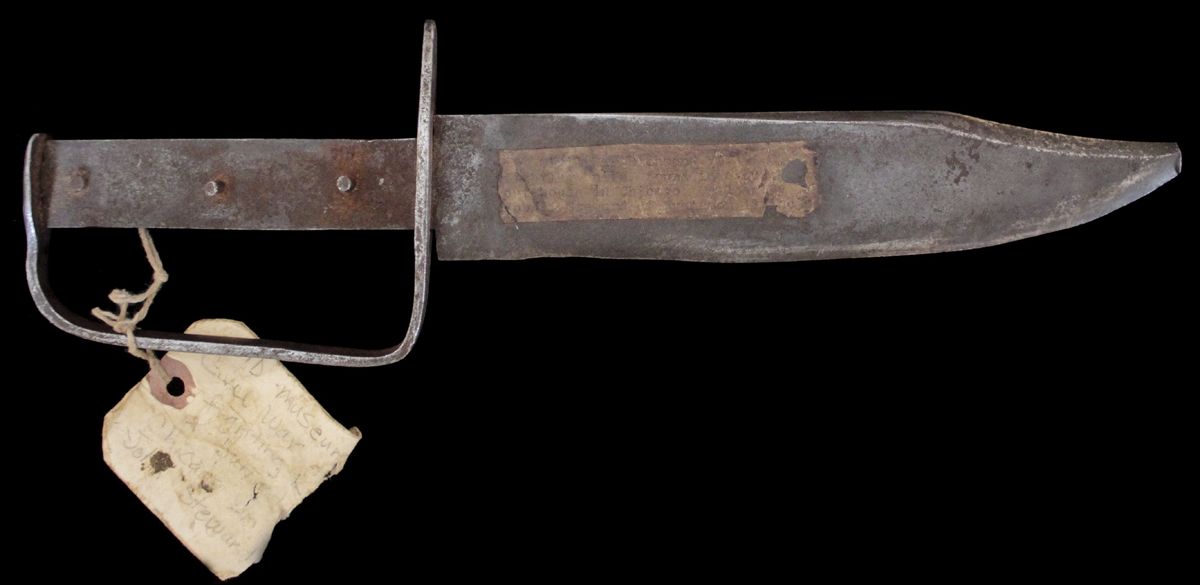
This knife is extraordinary for several reasons. First, it has the “BURGER & BROTHERS RICHMOND VA.” maker’s mark stamped into the blade. Second, it is a pattern heretofore unrecognized as a Burger product, though the guard is very similar to their more commonly encountered D-guard, previously known as a Kenansville Cutlass. Third, it has its history pasted to the blade! The paper tag tied to it with a string is torn in two, but what is there reads: “Old Museum/Civil War/ fighting/illegible/Chicago/John Steward.” When complete, this was an explanation and transcription of the typed paper label pasted to the knife’s blade. The label begs the question: why was a Confederate knife hidden in a Chicago outhouse? Had it been taken home by a Yankee as a souvenir, there would have been no need to hide it. So, I must assume that it was hidden by a Southerner, not a Copperhead. There, of course, were Copperheads in Chicago, but they would not have had access to a Richmond, Virginia, made knife. What Southerners came to Chicago during the War and may have needed to hide a weapon? I can come to only one reasonable possibility, that it was hidden by one of the Camp Douglas Conspirators. In 1864 two plans for the relief of prisoners confined in Camp arched stamp. Above: Notice the rectangular peen, as opposed the common round peen.
Enhanced photograph of the label. “Civil War Richmond VA Fighting Knife found in [a] house Outhouse in Chicago on loan by John Steward of Evanston Il[l]inois”
Douglas were formed. Three peace commissioners, Jacob Thompson, C.C. Clay, and J.P. Holcomb had been sent from Richmond to Canada. These men frequently met with leaders of the Copperhead organizations in the North including U.S. Congressman Clement L. Vallandigham and Brigadier General Charles Walsh, head of the movement in Chicago who had a large number of allies in the city. In May 1864, Jacob Thompson of Mississippi, Secretary of the Interior during President Buchanan’s administration, went to Windsor, Canada, under the assumed name of Captain Carson. He carried large sums of operational funds supplied by the Confederate government. He organized an expedition to release the Confederate prisoners suffering at Camp Douglas. He also arranged to aid the “Knights of Liberty,” an organization of Northern secessionists, with arms and money so that they might raise an insurrection in Chicago. On August, 24, 1864, many previously escaped prisoners and Copperheads, after having been furnished with Confederate supplied arms in Canada, gathered in Chicago, making the Richmond Hotel their general headquarters. The management of the affair was entrusted to special agent Captain Thomas H. Hines, who had previously been second in command to Gen. John Morgan. Colonel Vincent Marmaduke, of Missouri and the famed St. Leger
Grenfell, an Englishman serving with Morgan, were to carry out the military program. The date set for the attempt to liberate the Southern prisoners was August 29, 1864, when the National Democratic Convention was to assemble in Chicago. It was thought that large bodies of secretly armed men might be brought into the city at that time without exciting suspicion, as it was expected the city would be so crowded that the presence of the promised Knights of Liberty force would not excite comment. The program also included an attack on the city by water for which purpose reliance was placed upon a horde of Canadian refugees, under Capt. John B. Castleman. There were some 26,500 Southern prisoners in Illinois at the time, of whom about 8,000 were at Chicago, 6,000 at Rock Island, 7,500 at Springfield, and 5,000 at Alton. It is estimated that there were 4,000 Knights of Liberty in Chicago who would be largely re-enforced. With these and the Canadian refugees the prisoners at Camp Douglas were to be liberated. The army thus formed was to march upon the Rock Island, Springfield, and Alton prison camps, but there were traitors within the Copperheads, and the plan was postponed when the Camp was re-enforced by a regiment of infantry and an artillery battery. November 8, 1864, election day, was then selected for the attack. The same preliminaries were arranged, except that no water attack would be made. Chicago was to be burned and flooded, and its banks pillaged. Detachments were designated to apply the torch, open fire plugs, levy arms, and attack banks. Due to traitors in their ranks, the sentenced to the penitentiary. plans of Captain Hines and his Daniel managed to escape and associates were well known to the was never recaptured. Walsh and authorities. Detectives were put Semmes, after undergoing brief upon their track by U.S. Colonel terms of imprisonment, were B.J. Sweet, the commandant at pardoned by President Johnson. Camp Douglas. Some of the most Colonel Grenfell was sentenced valuable service in capturing to be hung. Afterwards his the Confederates was rendered sentence was commuted to life by traitorous Confederates, imprisonment at Fort Jefferson a Colonel Langhorne and in the Dry Tortugas, a fate worse Colonel J.T. Shanks, a traitorous than death. He disappeared after a Confederate prisoner who was few years, but whether he escaped known as “The Texan.” He was or was drowned in the attempt is not in fact a Colonel; he was still debated. He had powerful lying to both sides. and wealthy friends. His brother Shanks was permitted to escape was a British Army General, from Camp Douglas, thereby and the British government had getting in communication with tried unsuccessfully to have him the plot leaders who assisted released. Thus, it is possible that in concealing him; all while he escaped, but since he never he faithfully apprised General resurfaced under his own name Sweet of their plans. Shortly after the War, it is likely he died after midnight on the morning of in the attempt. November 7, the day before the The traitor Shanks had a action was to take place, Colonel $1,000 bounty placed upon his Sweet conducted simultaneous worthless head, so he and his arrests of the leaders at their new Yankee wife had to flee. hiding-places. This raid caused a Whether he was ever brought to wholesale hiding of weapons and justice is unknown. He was only flight by many conspirators. a private, not really a colonel, Captain Cantrill, Captain and had a grievance because he Traverse, and Charles Walsh was arrested for embezzlement the Brigadier General of the in the Confederate commissary Knights of Liberty who was department. sheltering them were captured. Curses upon his ashes. A large quantity of arms and military stores were found in his barn. The famed Morgan Man, Shannon Pritchard has authored Colonel St. Leger Grenfell, was numerous articles relating to seized along with Colonel W.R. the authentication, care and Anderson, R.T. Semmes, Vincent conservation of Confederate Marmaduke, Charles T. Daniel, antiques, including several and Buckner S. Morris. cover articles and is the author These men were tried in of the definitive work on Cincinnati by a military Confederate collectibles, the commission. Both Marmaduke widely acclaimed Collecting and Morris were acquitted; the Confederacy, Artifacts and Colonel Anderson committed Antiques from the War Between suicide during the trial. Walsh, the States, and is co-author of Semmes, and Daniels were Confederate Faces in Color.
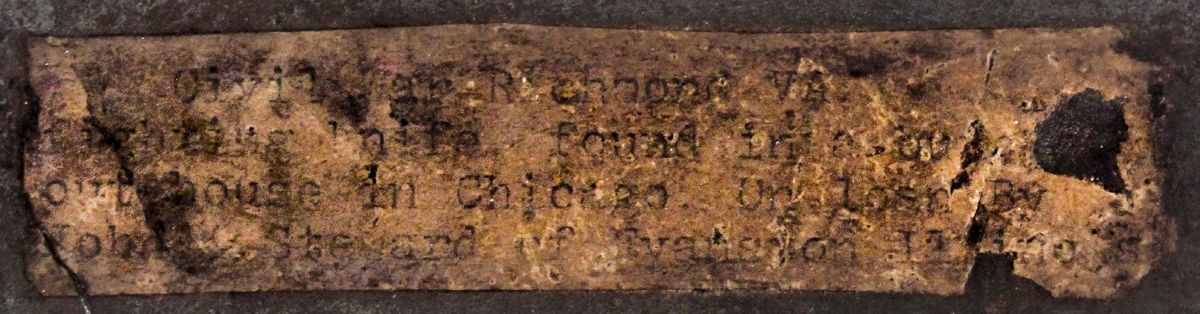
![Though very hard to read with the naked eye, I could read the label pasted to the blade clearly under a microscope. I record it exactly as it is written, any letters that I could not clearly read I have entered [ ]. The top label has been digitally enhanced for easier reading.](/article-images/cwn-2022-april/cwn-2022-april-historic-burger-brother-d-guard-bowie-kn-05.jpg)