
Superb Rare Charleston Freeman’s Badge Uncovered
By Cliff Krainik · Originally published September 2021 · p. 29
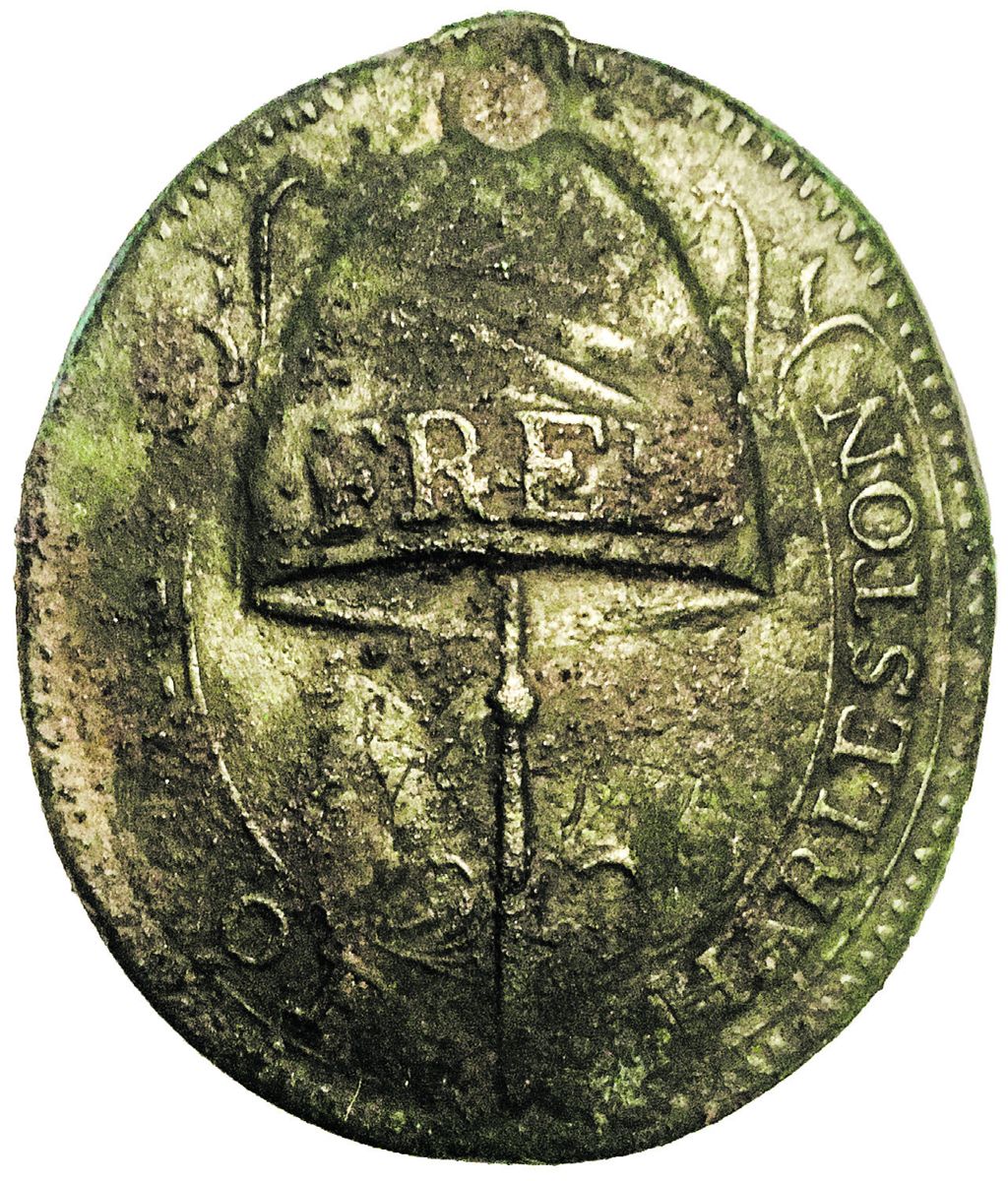
Superb Rare Charleston Freeman’s Badge Uncovered by Cliff Krainik When veteran relic hunter Ralph Fields brushed off the surface dirt from the small piece of copper he had just pulled from the ground, he couldn’t believe his eyes. The smooth oval artifact had the word FREE stamped boldly across the design of a stocking cap suspended from a pole. Ralph knew instantly what he had found and softly uttered the words, “Holy Moly!” On Sunday morning, Feb. 28, 2021, Ralph, along with some close friends and his fiancée Gail Hejna, were hunting a construction site in Mt. Pleasant, S.C. Around noon Ralph swept his metal detector across a flat area and received a promising beep. The badge, Number 147, was resting only four inches below the surface. Over the course of his eight years of relic hunting in the Low Country Ralph had found his fair share of treasure, including an array of American and English Revolutionary War buttons. His many searches had failed to turn up an elusive and highly prized Charleston Slave Hire Badge. By digging the Charleston Free Badge, Ralph jumped to the head of the line of relic hunters and joined a very exclusive group. Only three other men can claim the distinction of having dug a Free Badge. Pete Eles found Free Badge Number 259 in Beaufort County during 2005. Hal McGirt recovered Free Badge Number 320 on a plantation site near Charleston, February 2012. Free Badge Number 258 was dug on the banks of the Black River in the Low Country by Dr. Cantey Haile Jr. on Nov. 21, 2013. Ralph Fields’ discovery is only the tenth extant example of a Charleston Free Badge. In 1783, the year Charleston was incorporated, the city enacted an ordinance requiring all free persons of color above the age of fifteen to purchase, at a cost of five shillings, a badge to indicate their free status. The one-and-ahalf-inch oval copper badge featured a Liberty cap on a pole, with the word “Free” prominently displayed. The inscription “CITY OF CHARLESTON” and the issuance number were engraved or stamped into the badge. One example of a Free Badge bears the letter “U” rather than a number. No date appears on any of the badges. The Charleston Free Badge has long been considered the “Holy Grail” of relic hunters and cultural archaeologists. There are several reasons why Charleston Free badges are extremely rare. The law requiring their use was in effect for less than six years, from 1783–1789, and the number of persons required to wear the Free Badge was also limited. According to the United States Census no more than six hundred free persons of color were living in Charleston in 1790. Unlike the later Slave Hire Badges, the Free Badge was not issued annually. Once a badge was obtained, it was presumably good in perpetuity. Of the ten known Free Badges, three are in institutional collections, five, now six, are held in private hands and one badge remains unlocated. If the news of a newly discovered Free Badge was not enough cause for excitement, Field’s badge, Number 147 has a feature unlike any other. The word “FREE” is stamped on the back. The word is positioned to correspond to the cap on the front design. No other Free Badge has been found with this extraordinary designation and only speculation remains to address this enigma.
Cliff Krainik was the recipient for Best Educational display at the American Digger’s 2021 Low Country Show for his Charleston
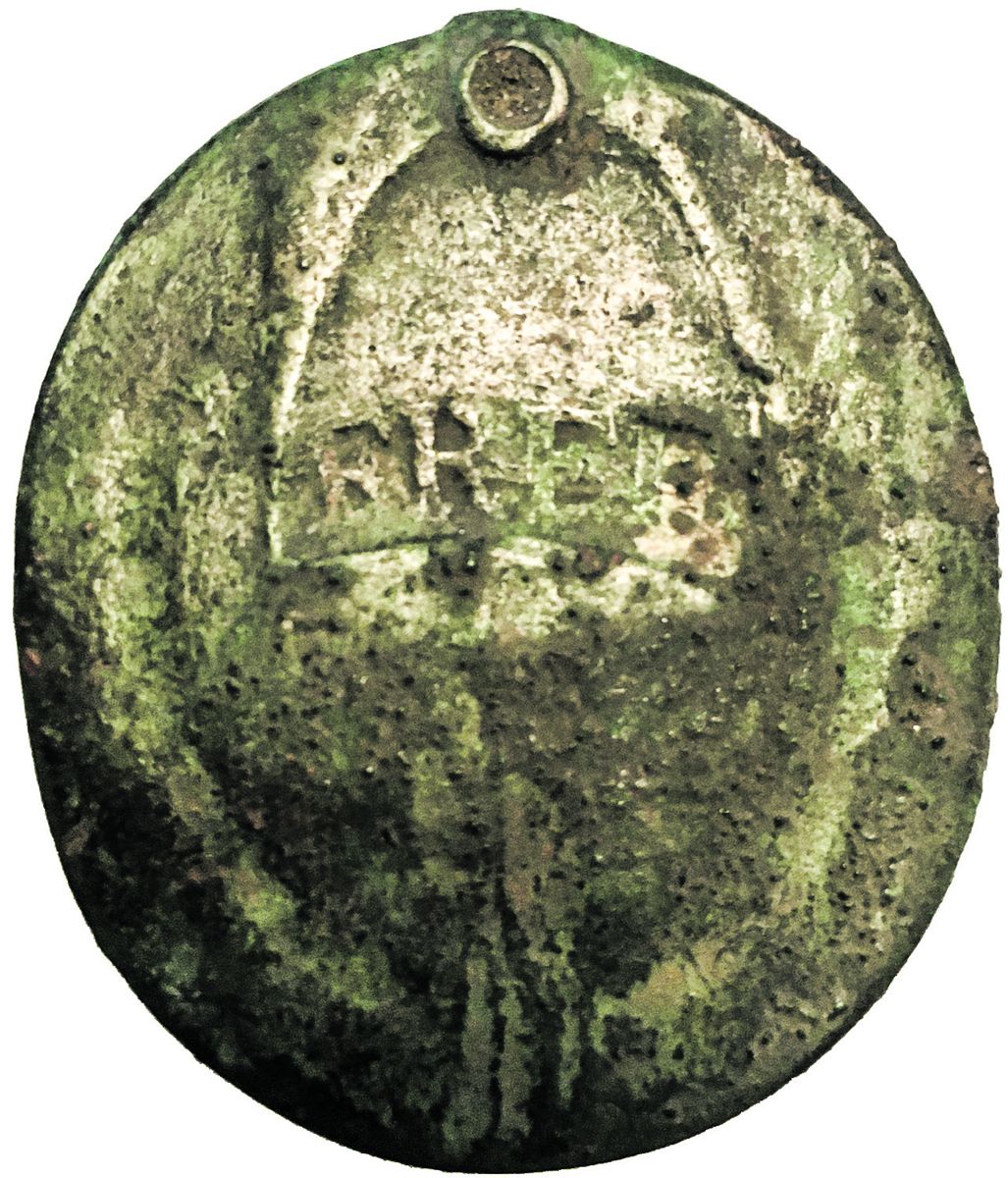
Free Badge exhibit. He and Bruce Mayer are coauthors of the forthcoming book, Charleston Slave Badges: First Glimpse of Freedom.