
This And That
Salty Language, or It’s Greek to Me
By Gould Hagler · Originally published September 2021 · pp. 10–39
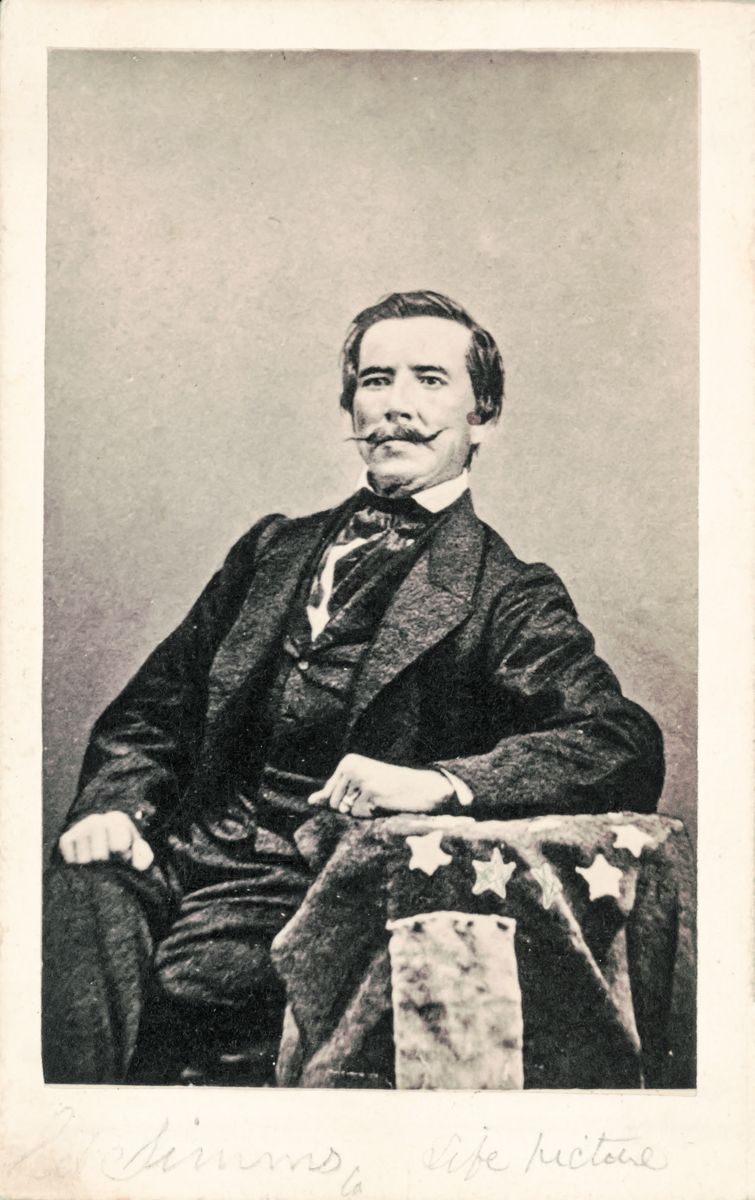
Salty Language, or It’s Greek to Me I suspect that most readers of Civil War News are less conversant with naval terms and practices than they are with matters pertaining to forces that fight on land. I recently read Raphael Semmes’ Memoirs of Service Afloat During the War Between the States. As I journeyed through this fine account, I was frequently at a loss to follow what Admiral Semmes was telling me as he described various actions he took while raiding Federal commerce, first as commander of the CSS Sumter and then in the more famous CSS Alabama. I noted some perplexities, did some additional reading, and sought assistance from friends who are more acquainted with such matters than I. In this column we will have a quiz to test the naval knowledge of CWN readers. First, however, a brief look at Admiral Semmes and some commentary on his memoirs. Raphael Semmes was a native of Maryland and an officer in the Old Navy, from which he resigned in 1861. He joined the Confederate Navy with the rank of commander and advocated a strategy of attacking Northern commerce on the high seas. In
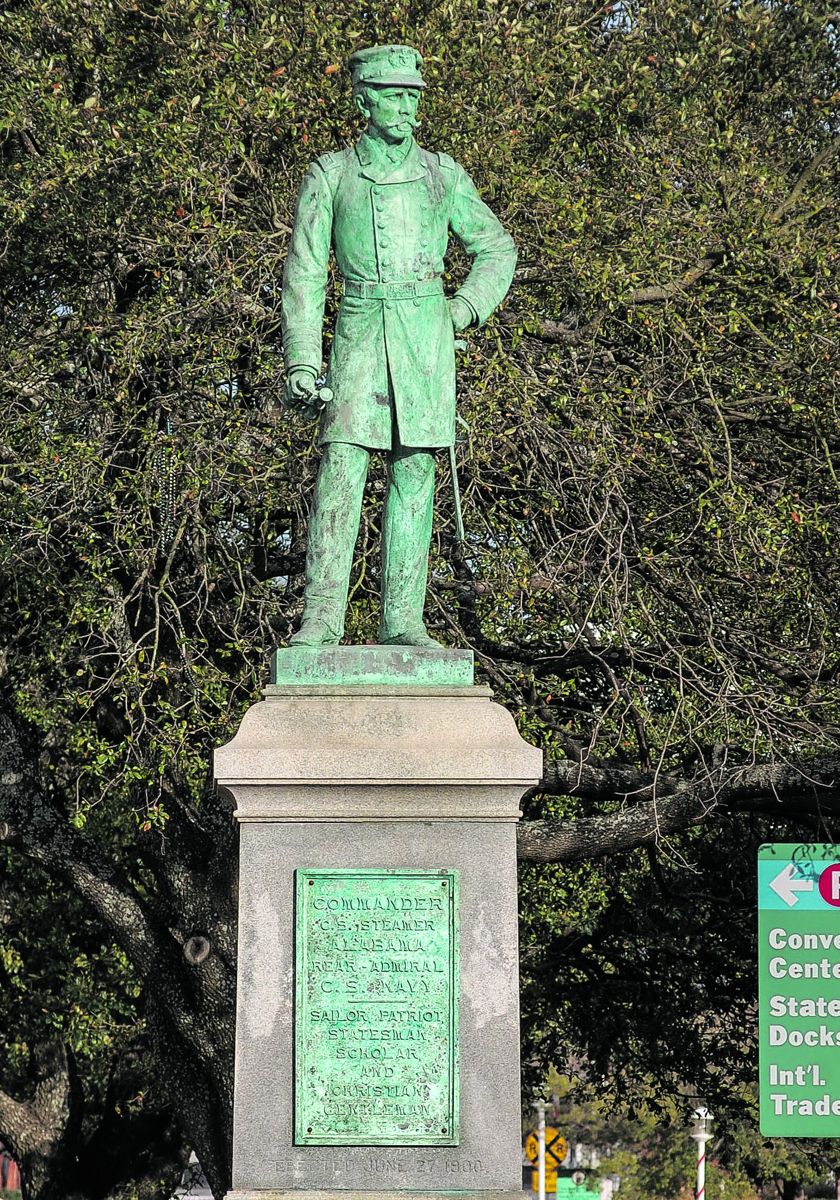
June 1861, Semmes sailed from New Orleans aboard the Sumter. He eluded the Federal blockade and in a six-month voyage captured 18 Federal ships. After the worn-out Sumter was sold at Gibraltar, Semmes and his officers made their way to England. Semmes, now a captain, took command of his new Englishbuilt ship, then armed and commissioned the vessel at sea. Christened the CSS Alabama, this steam- and sail-powered vessel was purpose-built for maritime predation. For 22 months the ship cruised the highways of oceanic commerce from the Caribbean to the East Indies. Semmes captured 65 U.S. merchant ships, burning most vessels and their cargoes. The story of the Alabama ended in June 1864 when the raider was sunk by the USS Kearsarge in the English Channel off Cherbourg, France. After being rescued at sea by an English yacht and returning home, Semmes was promoted to rear admiral. He commanded the James River Fleet until Richmond fell. Memoirs of Service Afloat is a delightful read. Beyond descriptions of the raiding itself, Semmes writes eloquently of the seas he sailed and the seamen he commanded. He describes the ports in which he found temporary refuge. He tells of his encounters with various officials in these ports as they dealt with the issues related to the presence of a warship in their neutral territory. He is critical of the small-minded and cowardly officials he sometimes encountered and the bullying U.S. consuls who pressured them to refuse Semmes the courtesies and privileges to which Semmes insisted belligerents were entitled. As Semmes writes of the pleasant contact he had with naval officers of other nations, especially British officers, one gains an insight into the fraternity to which Semmesbelonged,abrotherhood of men who commanded on the oceans, far from home and the close oversight of their superiors, in positions requiring the ability to act independently, as well as possessing diplomatic skills and knowledge of the laws of war at sea. Semmes describes the flora, fauna, and geographic features of the lands he visited. He writes about weather patterns at sea, the winds and the currents ,and the other factors that circumscribe man’s efforts to traverse the oceans and to engage in commerce and warfare in this vast environment over which he has no control. That Semmes was a lawyer as well as a seaman is evident throughout the work. He wrote in detail of the rules of conduct which bound men and nations, both those engaged in war and those who were neutral. He was candid in expressing his opinions of the rightness of his cause and of the noble nature of his people, contrasting their values with those of the Puritan race and the Yankee polity against which his people waged war. If he was “occasionally plain-spoken,” Semmes explained, it is “because he has used the English language, which calls a rogue a rogue, notwithstanding his disguises.”
When Richmond fell, Semmes and his sailors became soldiers. They made their way to Danville (where President Davis made Semmes a brigadier general) then to North Carolina where on April 26, 1865, they became civilians again, under the convention signed by Johnston and Sherman. That is a quick glance at one of the best first-person accounts of the war I have read. Now to the test. I will quote some passages which puzzled me and may also puzzle the reader. Explanations are found on page 39. 1. Before burning a whaler, the Levi Starbuck, Semmes transferred to the Alabama a supply of things he could use. “Here was another storeship for us, with plenty of provisions, slops, and small stores. Getting on board from her such articles as we stood in need of, and removing her crew, we burned her about nightfall.” 2. Of a schooner the Alabama overtook, Semmes wrote: “She had heels, as well as the Alabama, and when day dawned she was some distance from us, though we had gained on her considerably.” He added that“She was under
all sail, with studding-sails, and sky-scrapers set.” As a ship approached the Tropic of Cancer, Semmes wrote, “She will probably be several days in passing through this region of the ‘doldrums,’…continually bracing her yards to catch the ‘cats-paws’ that come, now from one, and now from another point of the compass; and making no more than twenty, or thirty miles per day.” Semmes at one point had to deal with a drunken sailor who threw a belaying-pin at an officer. While in port at Martinique, Semmes had a near encounter with the San Jacinto, famous for stopping the RMS Trent and capturing Confederate envoys Mason and Slidell. The Alabama crew observed the Federal ship outside the harbor, readying for a fight. “We could see his men aloft, busily engaged in slinging yards, stoppering topsail sheets, getting up preventer braces, and making such preparations, as the Victory or Royal Sovereign might have made on the eve of Trafalgar.” The officers and crew of
the Alabama relaxed a bit while coaling at Blanquilla. Semmes himself took a busman’s holiday, venturing “long distances from the land” in his gig, which he described as “a fine boat, fitted with a lug sail.” 7. At one point the Alabama was overburdened with prisoners taken from the bark Parker Cooke. This problem was good fortune for the next ship captured by Semmes, the Union, a Baltimore schooner. Semmes wrote: “I released the prisoners of the Cooke to [the Union] and released her [i.e., the Union] on ransom-bond.” 8. Following the release of the Union, Semmes wrote that “The next day was Sunday, and the holy-stones had been busy over my head during all the morning watch.” 9. Semmes’s targets were, almost without exception, unarmed commercial vessels. On one occasion, however, the Alabama sailed into the Gulf and engaged a Federal ship of war. He lured the ship away from other ships in the fleet with a stratagem, pretending to be sailing away to avoid battle. “To carry out my design of decoying the enemy, I now wore ship, as though I were fleeing from his pursuit.” 10. Captain Blake of the Hatteras wrote the following in his report: “With the vessel [his own] on fire in two places, and beyond human power, a hopeless wreck upon the water, with her walking-beam shot away, and her engine rendered useless, I still maintained an active fire….” 11. On August 7, 1863, the Alabama anchored at Cape Town, where Table Bay offered little protection against an oncoming gale. The Alabama and other ships prepared to face this test of nature. “These ships, forewarned by the usual signs, had all struck their upper masts, sent down their yards, and let go second anchors, and veered to long scopes. The Alabama did the same.” Sources: All the quoted definitions are taken from the Merriam-Webster on line dictionary. Glossaries of nautical terms are easily found on line. I am indebted to my friends Bill Dyer and Joe Jordan, without whose help I would have been lost at sea. Gould Hagler is a retired lobbyist living in Dunwoody, Ga. He is a past president of the Atlanta Civil War Round Table and the author of Georgia’s Confederate Monuments: In Honor of a Fallen Nation, published by Mercer University Press in 2014. Hagler speaks frequently on this topic and others related to different aspects of the Civil War and has been a regular contributor to CWN since 2016. He can be reached at [email protected].
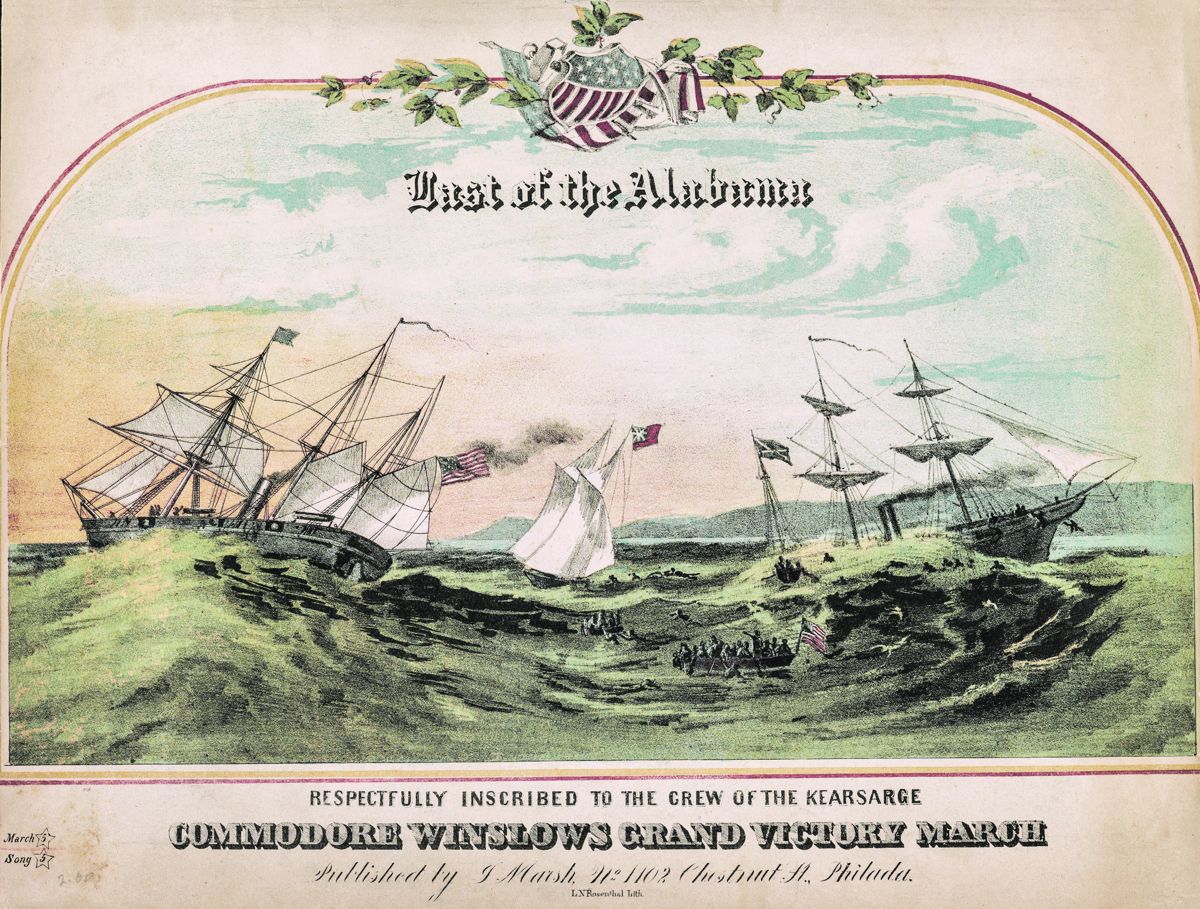
Statue of Admiral Semmes in Mobile, Ala. Courtesy Alabama Department of Archives and History. Salty Language, or It’s Greek to Me Answers from page 10-11
-
Slops are supplies of clothing held in a ship’s stores and available for sale to the ship’s crew. 2. Saying that a ship has heels is simply a salty way of saying that it is a fast ship. A studding sail is “a light sail set at the side of a principal square sail of a ship in free winds.” (I probably don’t need to add that“studding sail” is pronounced “stuns’l.” The reader can assume that many terms discussed are pronounced with similar compressions.) A skyscraper is, as one would guess, the top most sail on a square-rigged ship. Usually the top most sail, that is. Some ships built for speed set a moonraker above the skyscraper. 3. A cat’s-paw is “a light air that ruffles the surface of the water in irregular patches during a calm.” A brace is a line that is pulled to rotate a yard (or yard arm) around a ship’s mast, the yard of course being a horizontal pole holding the sail. At the same time, the brace on the opposite side is released. The action being described is the constant turning of the sails to capture slight and intermittent breezes. 4. A belaying pin is “a pin around which ropes on shipboard are belayed to make them fast.” “Belay” means “to secure (a rope or cable) by turns around a cleat, pin, or bitt.” A belaying pin (when it is not being hurled by a drunken sailor) is held in either a fife rail (around the mast) or a pin rail (on a ship’s bulwarks). 5. Slings, ordinarily made of rope, are lines that support the yard arms. Stouter chain slings were added for battle. Similarly, preventer braces reinforced the braces controlling the yards. The sailors who were slinging yards and getting up preventer braces were strengthening these components of the rigging. My research did not discover precisely what Jack Tar was up to when he was stoppering topsail sheets, but the
context gives a general understanding that the lines (“sheets”) were reinforced by a short line secured at both ends to hold them and prevent their running out of control if they happened to be cut by shot. The San Jacinto “threw more than two pounds of metal to my one,” Semmes wrote, so he prudently slipped away during a dark and rainy night, avoiding a fight he could not win. A lugsail is “a 4-sided [neither square nor rectangular] sail bent to an obliquely hanging yard that is hoisted and lowered with the sail.” A gig is “a long, light ship’s boat.” In naval usage, a gig is used to transport a ship’s captain to other ships and to shore. A ransom-bond was a promise made by the commander of a captured commercial vessel to pay for the release of the ship. Needless to say, the Union victory and the demise of the Confederate government destroyed whatever value these bonds held. The holystones were not related to any religious observances. A holystone is “a piece of soft sandstone used to scrub a ship’s wooden deck.” The term refers to the material itself as well as the chunks put to use by the kneeling sailors as they rubbed the holystone over the deck, often on sand to increase the scouring effect. The larger chunks, because of their size and shape, were called bibles. Smaller pieces used for nooks and crannies were called prayer books. Perhaps the sailor who tossed the belaying pin at an officer used the occasion to reflect upon his misdeeds and resolve to sin no more. A ship under sail is said to be “on a tack.” The precise meaning of “to tack” is to change the angle of the ship’s long axis by turning into the wind. To wear ship is the opposite, to change tack by turning away from the wind. Wearing ship requires more time and space than tacking, so it seems that Semmes was surreptitiously slowing his ship as he pretended to flee. After luring the enemy for 20 miles Semmes, in his words, “furled my sails, beat to quarters, prepared my ship for action, and wheeled to meet him.” 10. A walking beam is a component of the type of steam engine used to power the Hatteras and many other ships of the era. The beam is rocked up and down by the piston. This action transfers the force from the piston to the ship’s paddle wheels. The Hatteras went down quickly, probably as a result of the way the metal hull was fastened to the frames. The wreck rests under the sand and 60 feet of water, 20 miles off Galveston.
- A ship’s mast is not a single piece but two, three, or even four vertical sections. When they struck their upper masts the sailors were taking down the more vulnerable sections to avoid storm or battle damage. To veer is to let out a line or cable. Scope is the amount of anchor cable
that is veered (or played out) relative to the depth of the water. A longer scope puts the anchor in the sea floor at a more acute angle and strengthens its purchase (holding strength). When ships veered to long scopes they were taking prudent precautions in the face of the oncoming gale.