
Photographic Archaeology
Photographic Archaeology — September 2021
Originally published September 2021 · p. 17
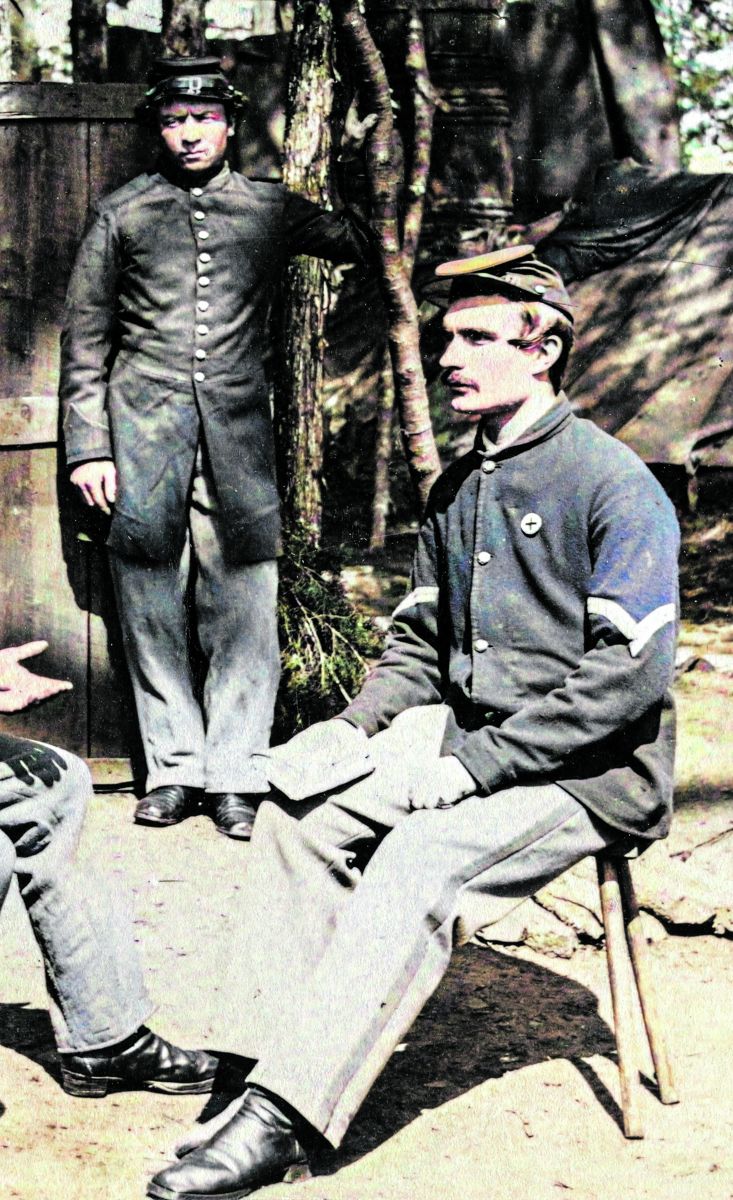
This is a new Civil War News column. It is intended to be both informative and enjoyable, but challenge readers to look beyond their first impression of an image. Many Civil War photographs were taken shortly after fighting ended and before the battlefield was cleared of bodies, useable materiel, and other detritus. For viewers 150 years later, any photograph can be seen as an artifact; those that show a landscape can be almost be seen as an archaeological site. The challenge is to recognize what is present beyond the featured element(s).
Following the seminal work of William Frassinetto, many students of material culture have “excavated” artifacts from many photographs. These include identification of British accoutrements and wooden buttons on Confederate bodies, corps identification on Union clothing, and artillery projectiles. This was possible because there are many real experts out in Civil War land who do know the period’s material culture and they had a specific reason for looking at the imagery to amplify what they were working on.
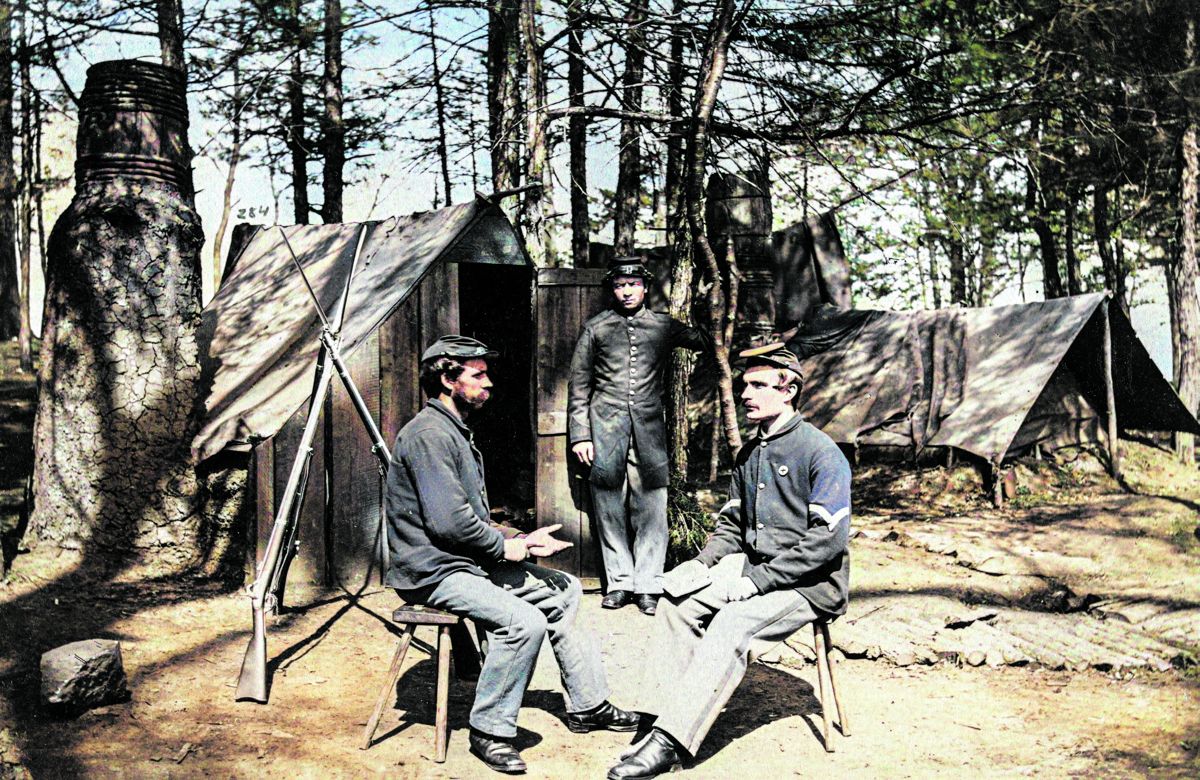
For this column, we will present a blown up image for your examination. What is in this view beyond the specific photographer’s topic? The next issue will contain a key showing what our staff have found in the photograph. How well did we do, compared with your own analysis? The key element to bring to bear is your own interests and knowledge but beware, as Thomas Pynchon wrote in Gravity’s Rainbow (1987, Penguin Books, New York, p 251), one of his parables for paranoids is, “If they can get you asking the wrong questions, they don’t have to worry about answers.”The photographic archaeologist needs to look at an image with an open mind to bring out things the photographer himself may not have seen. The flip side, of course, is found in Arthur C. Clarke’s First Law, “When a distinguished but elderly scientist states that something is possible, he is almost certainly right. When he states that something is impossible, he is very probably wrong” “Hazards of Prophecy: The Failure of Imagination,” in Profiles of the Future (1962). That’s why the Civil War News won’t tell you what is in the photograph first.