
Inspection, ARMS!
Benjamin Wilhoite’s Confederate Fighting Knives
By Tim Prince · Originally published September 2021 · pp. 22–23
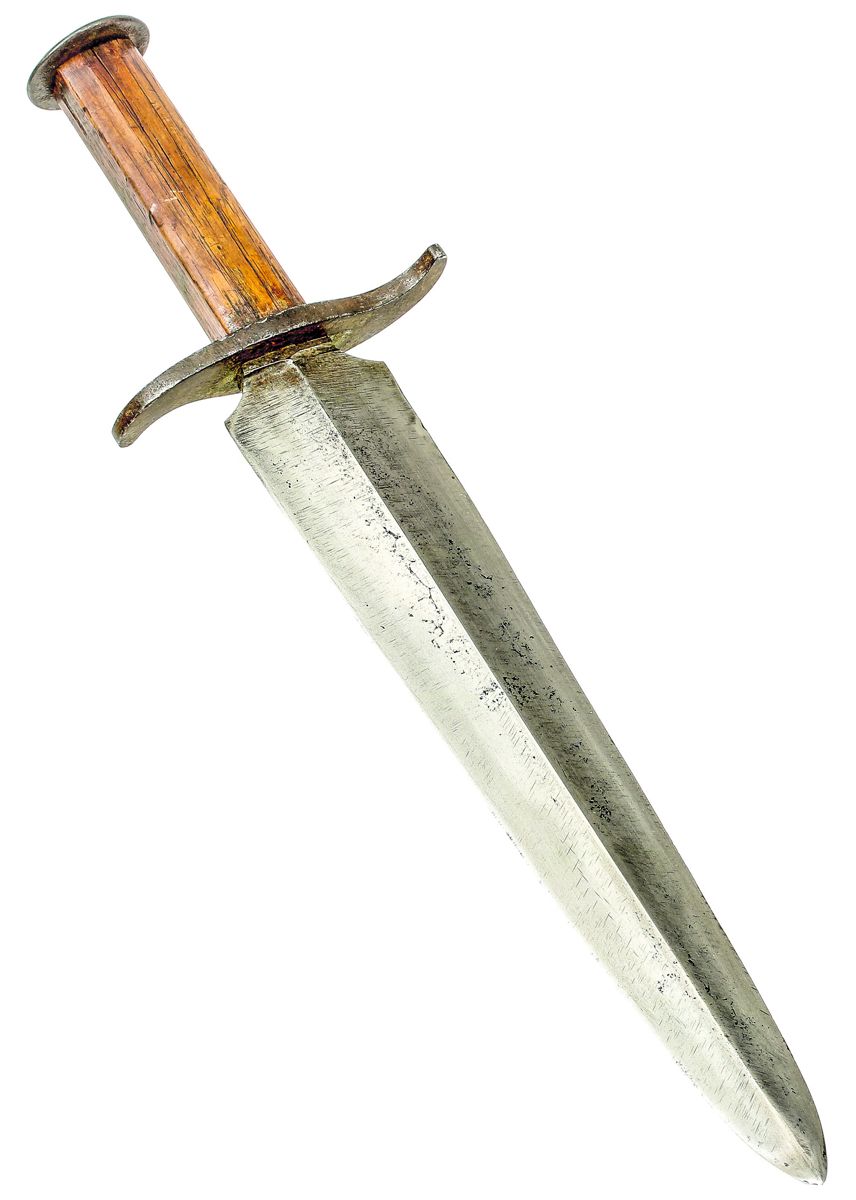
Benjamin Wilhoite’s Confederate Fighting Knives There is probably no more iconic Civil War image than that of the young Confederate soldier heading off to war with an absurdly large fighting knife in his hand or on his belt. Early war southern ambrotypes and tintypes provide a dizzying array of large, wicked, and sometimes comical fighting knives of all descriptions, usually made by local blacksmiths for the Southern boys of ’61 to take to war. Over the years, the majority of these local knife makers have remained anonymous, although sometimes certain traits and characteristics of surviving knives can help us to make general statements about the likely region or state where an unmarked knife may have originated. More recent scholarship has allowed us to identify some knives as to their maker, even though they bear no markings. The classic Southern fighting knife was usually overly large and robust, with an overall length that was typically between 12 inches and 24 inches, with blades that varied from about 8 inches to over 18 inches! The knife depicted in this article is one of those rarely encountered examples of a locally made, unmarked Confederate fighting knife whose maker and history have been identified. This knife is the work of Benjamin Wilhoite of Madison County, Va. According to research on Wilhoite published in The Confederate Knives of Madison County by Harold Woodward Jr., and cited in Confederate Bowie Knives by Jack Melton, Josh Phillips, and John Sexton, Wilhoite established his blacksmith shop in
Wolftown, Va. Wolftown was located about half-way between the county seats of Madison and Greene about 30 miles east of Harrisonburg, Va., and some 30 miles north of Charlottesville, Va. This is just on the east side of the Blue Ridge Mountains from Harrisonburg. According to Woodward, Wilhoite’s blacksmith shop included three forges, and was 40 by 28-feet in size. Woodward further notes that three African American enslaved people assisted Wilhoite in his labors, but no slaves are listed as being owned by Wilhoite in the 1860 Census. According to the 1860 Census, Wilhoite, spelled “Wilhoit” in the census records, was a “blacksmith,” 48 years old with an estimated birth year of 1812. The Wilhoit(e)s are listed as Family Number 99; Benjamin was shown as having real estate valued at $4,000 with a total personal estate valued at $5,000. The census listed the other household members as his wife, Eunice (45) and four children: Benjamin W (male, 15), David S (male, 14), Jeme Mc (male, 11, probably really reads James M) and Betty K (female, 7). Further investigation into the Confederate Citizen Files (National Archives Record Group 109/M346) reveals that, with the coming of the Civil War, Wilhoite did business with the Confederate government, as a blacksmith supplying horseshoes, nails, and shoeing services, and a source for supplies and fodder such as wood and hay. No mention in the 20 or so pages of records includes knives. However, the wonderful research by Woodward and others who have family knives made by Wilhoite that were passed down since the War has allowed us to identify his work and some units he made knives for. It appears that Wilhoite made the knives on a contract basis for men going off to war, selling them individually and not to the state or Confederate government. Research indicates that men who served in five different locally organized units carried knives made by Benjamin Wilhoite. These units include the Greene Rough & Readies (Captain St. Clair Deane’s Artillery Company, later 34th Va. Infantry), the Jeff Davis Guards (10th Va. Infantry), the Madison Invincibles (Company C, 4th Va. Infantry), Company F of the 13th Va. Infantry, and the Madison Home Guards. Three basic patterns ofWilhoite knives are known, categorized as Types I, II, and III by Phillips, et al. Type I was the basic enlistedman’s knife; two known examples exist, both identified to Greene County Confederate soldiers. Three existing Type II, or “Officer’s Knives,” are identified with officers who served with some of the above listed units. Finally, a single Type III knife is known; it is substantially different from the other knives. This knife was given to William Simms of Company F, 13th Va. Infantry. It is believed that Simms, a tinsmith, made the scabbards for Wilhoite’s knives and received this special double D-guard knife from Wilhoite as a token of appreciation for his work. This knife remains in the Simms family today. Type I and Type II knives are fairly similar in overall design, with the Type II knives being somewhat more embellished for the officers who purchased them. In general, they have extremely well-made spear point blades of a quality that suggests Wilhoite was a skilled cutler in addition to being a blacksmith. The consistent quality in the blades stands well above the typical work of a blacksmith who was not well versed in blade making. The blades are all slightly hollow ground and tend to be slightly over 2 inches wide at their widest point, with a well-defined median ridge down the blade’s middle. The blades are fairly thick as well, normally around .40 inch at the ricasso and around .30 inch along the median ridge above the ricasso.The blade lengths vary to some degree, with published examples of enlisted (Type I) knives varying from 11 to 13 ½ inches; the officer’s (Type II) knives tend to vary between 11 3/8 inches and 12 1/8 inches. The massive 18 inch blade of the lone Type III knife owned by Simms is probably an exception to the way Wilhoite constructed fighting knives and is certainly atypical. The S-shaped guards are iron. The hilts are typically hickory; on enlisted knives they are secured with an iron, washer-style, pommel cap that is threaded on to the tang. The hilt of the enlisted knife is essentially octagonal in cross section, with the left and right sides being wider than the other facets of the grip. The hilt of the officers’ knife is slightly
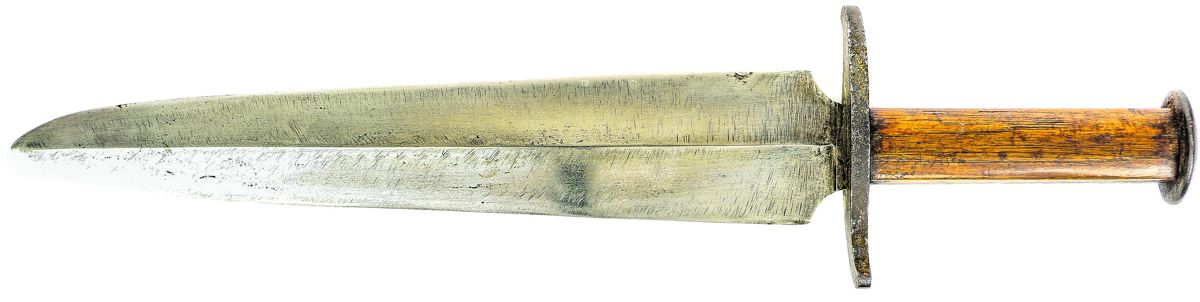
S-shaped, with two checkered scales pinned to the tang. As previously mentioned, the scabbards were tin, with the officers’ scabbards being covered in leather. It is generally believed that General George Armstrong Custer was directly responsible for putting Wilhoite out of business. A troop of cavalry under Custer’s command burned Wilhoite’s shop on February 29, 1864, while raiding up and down the Shenandoah Valley, and nearby areas. As noted above, no receipts for knives are found in the Confederate Citizen Files, only for general blacksmithing and supplies. I would argue that in addition to the knives being private purchase items, they were very early war products, and Wilhoite no doubt turned his attention to much more mundane manufacturing and blacksmithing activities once the initial war fervor was over, and the reality of surviving, and providing for a family, in a region that would be a war zone for the next four years set in. This example of the Madison County, Virginia, Enlisted (Type I) Fighting Knife pictured here remains in wonderful overall condition and is a fantastic example of a scarce, well documented, known-maker Confederate knife. This knife is pictured on page 202 (bottom image) of Confederate Bowie Knives by Melton, Phillips, and Sexton. As noted in the general description of Wilhoite’s work, it is far superior to most blacksmith made knives produced in the Confederacy during 1861 and 1862. The knife is 15½ inches in overall length, with a heavy 11 inches long, hollow ground, spear point blade with a substantial median reinforcement ridge running the length the blade. The ridge makes the center of the blade rather thick, measuring about .39 inch at the ricasso and .296 inch further up the blade. The blade measures 1 1/8 inches wide at the ricasso and 2 1/8 inches wide at the widest point just above the ricasso. It is interesting to note that three of the four Type I knives listed in Phillips, et al., have blades measuring between 11 and 11 5/8 inches. This suggests that about 11 ½ inches +/- was the preferred length for a Wilhoite blade; the single enlisted Simms knife with a 13 ½ inch blade being an exception. The blade length is just long enough to be fairly wicked looking and impressive, but not so large as to be unwieldy and cumbersome. The knife is a comfortable 1 pound, 2 ounces in weight and is much more practical than many larger Southern knives of the era that often weighed two or three times this weight.. The iron,
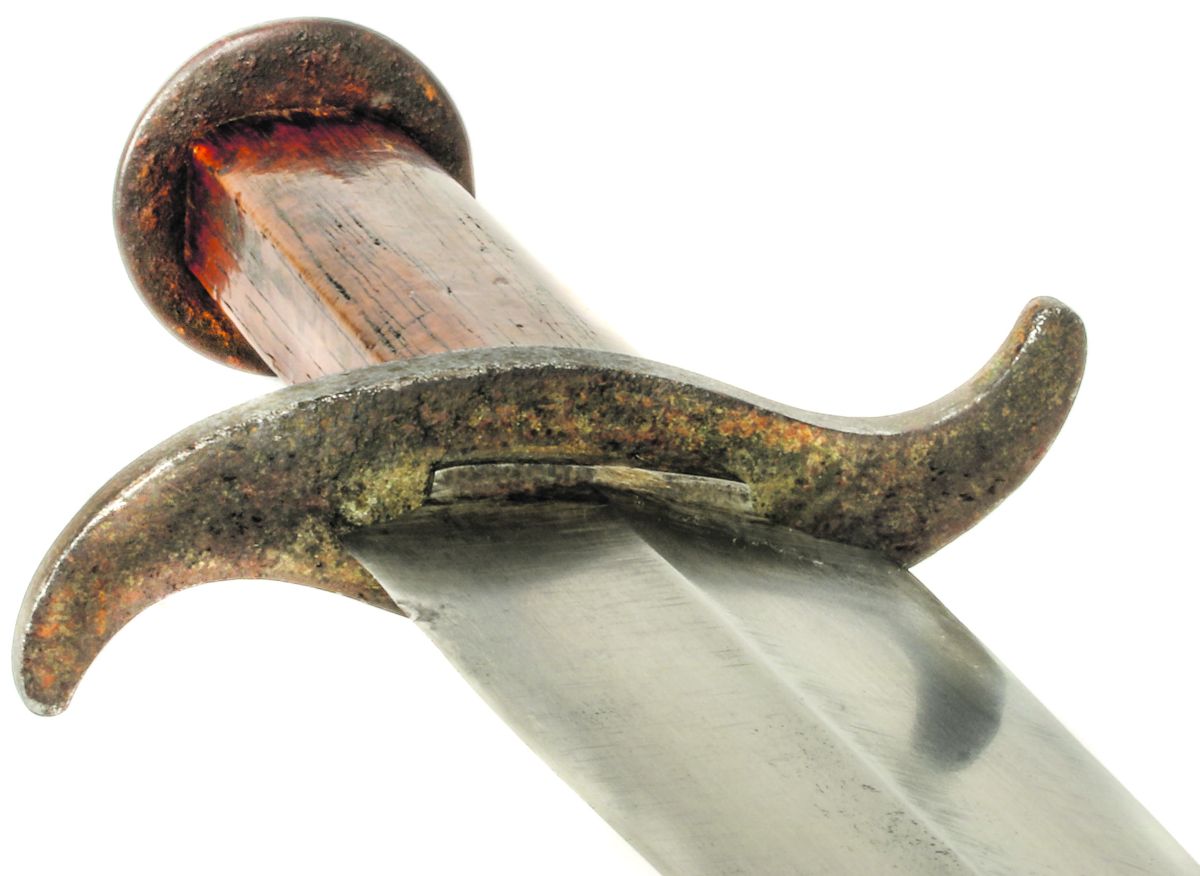
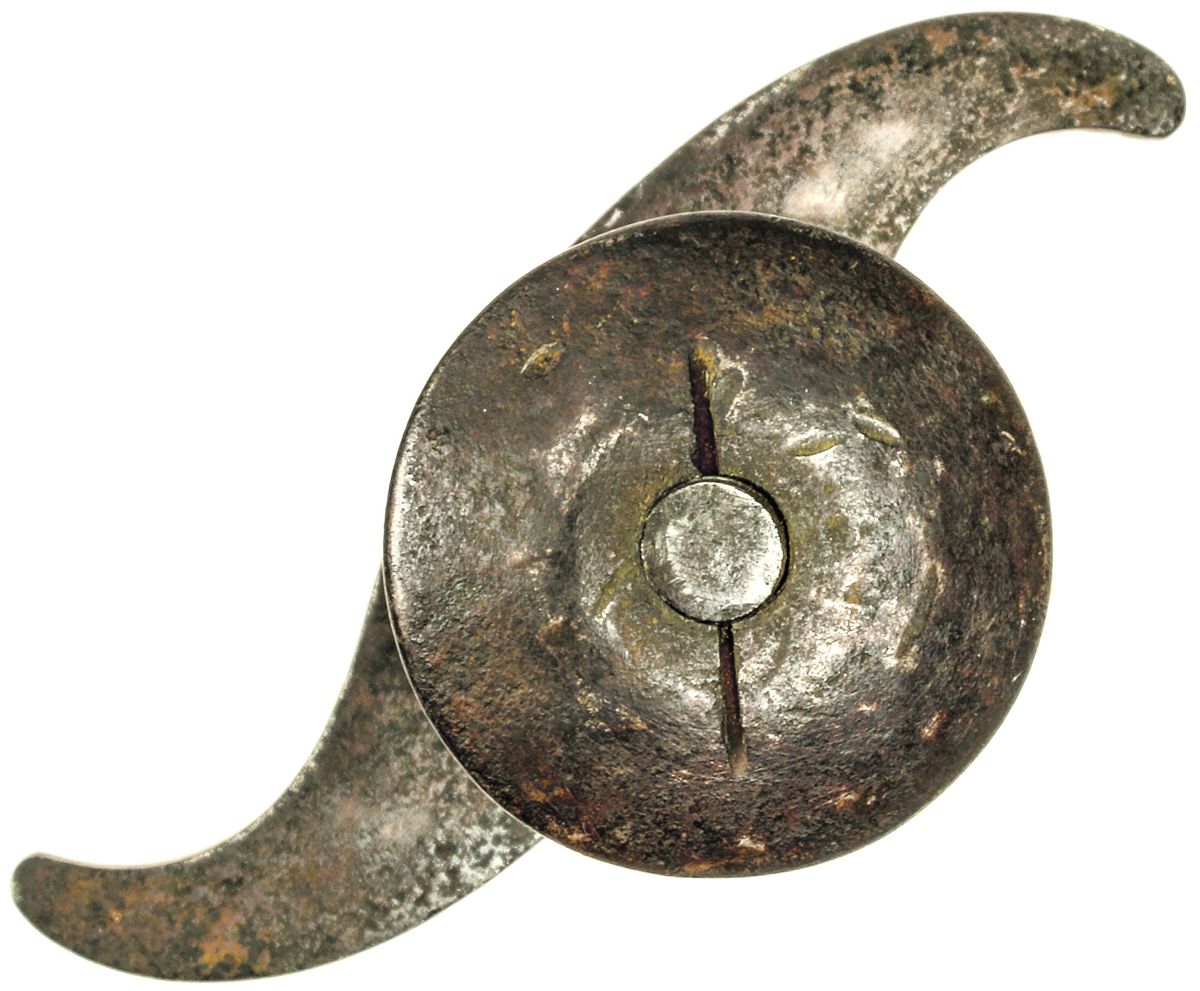
S-shaped cross guard is about 4 inches long and securely attached to the tang and grip. The slightly faceted octagonal hickory grip is a single piece of wood with the tang passing through its center. It has the trademark Wilhoite iron washer-style pommel cap threaded on to the end, compressing the grip and securing it tightly to the tang. Of late a large number of less than authentic “Confederate” bowie knives have appeared on the collector market.The best protection that any collector has against being sold an item that is not authentic is to educate themselves extensively in the areas that they intend to collect. Considering the prices southern-made fighting knives often bring on the collector market, investing in a book like Confederate Bowie Knives by Jack Melton, Josh Phillips, and John Sexton is money very well spent.
Publisher’s Note: Confederate Bowie Knives book is available from Mowbray Publishing, https://gunandswordcollector.com.
A Type I “Enlistedman’s” Confederate fighting knife by Benjamin Wilhoite. All photos by Tim Prince.
Tim Prince is a full-time dealer in fine and collectible military arms from the Colonial Period through WWII. He operates College Hill Arsenal, a web-based antique arms retail site. A long time collector and researcher. Tim has been a contributing author to two major book projects about Civil War era arms including The English Connection and a book on southern retailer marked and Confederate used shotguns. Tim is also a featured Arms & Militaria appraiser on the PBS Series Antiques Roadshow.
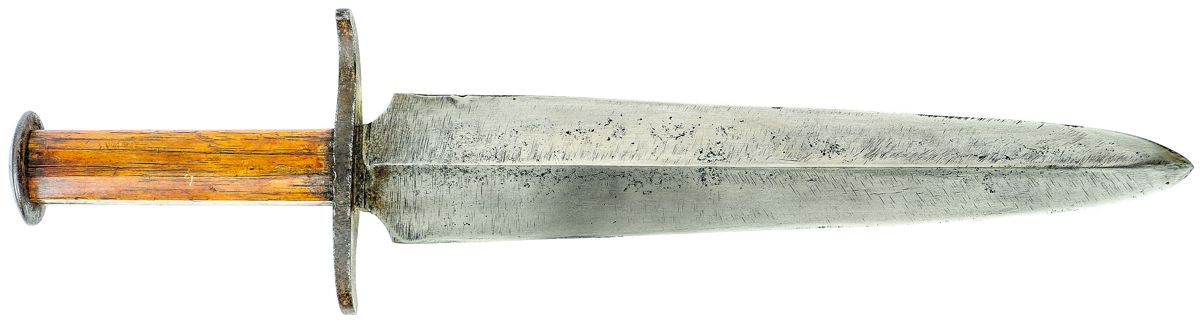
Overall reverse view of a Type I Wilhoite knife.
Overall obverse view of a Type I Wilhoite knife.
S-shaped guard of the Type I Wilhoite knife and also showing the slightly beveled edges of the grip.
Threaded pommel cap of the Type I Wilhoite knife.