
A Confederate General’s Indiscreet Letter Discovered
By Bruce Allardice · Originally published September 2021 · p. 25
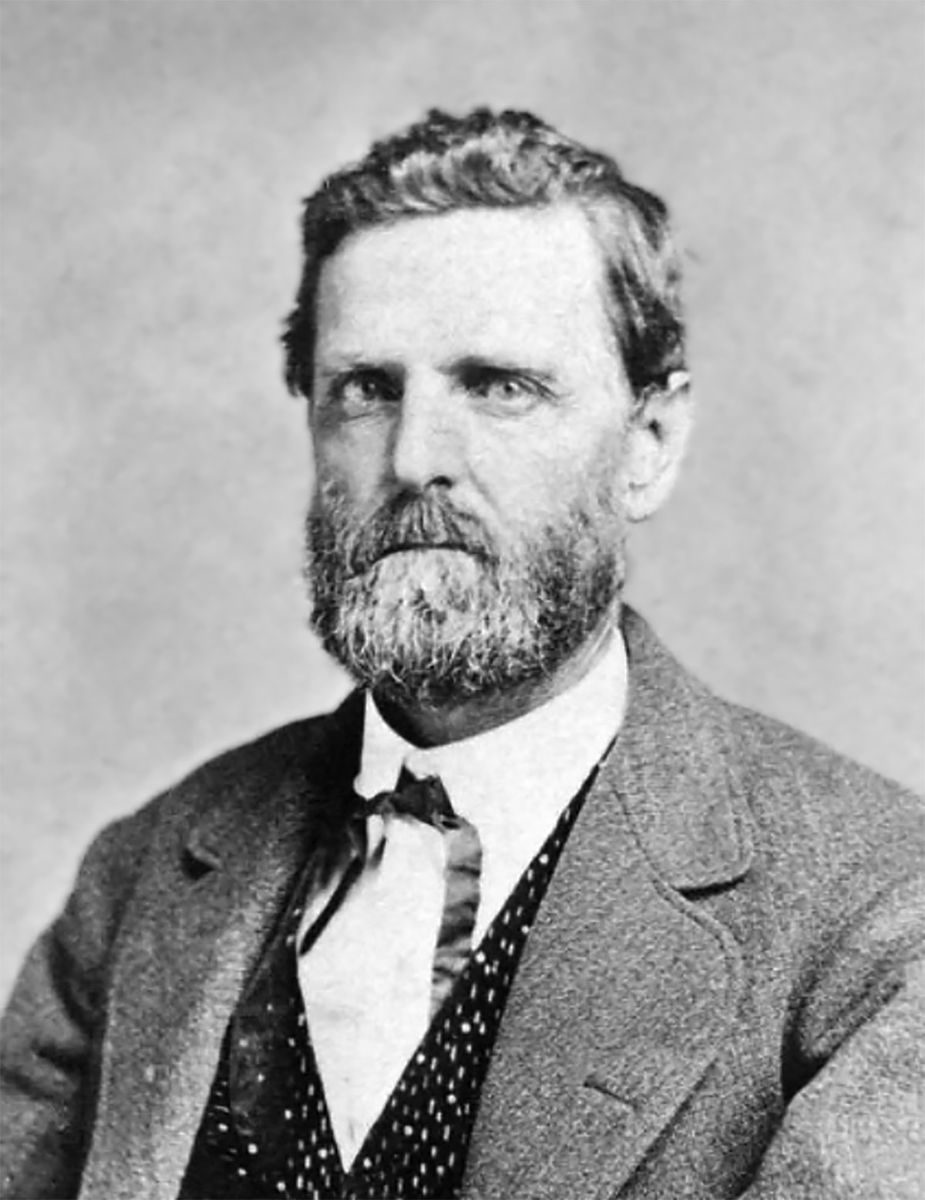
A Confederate General’s Indiscreet Letter Discovered by Bruce Allardice For most of the Civil War, Confederate General John C. Vaughn (1824–75) labored in obscurity in his East Tennessee home area, with stints in the 1863 Vicksburg and 1864 Valley Campaigns. A prewar merchant and Mexican War volunteer officer, Vaughn was among the first East Tennesseans to enter Confederate service and he was quickly promoted to Colonel and then to Brigadier General. His record as general was decidedly mixed. While all praised Vaughn’s energy and courage, some criticized him as a poor disciplinarian and tactically inept. The one biography of Vaughn, a 2009 book by Larry Gordon titled The Last Confederate General, presents the most complete picture of Vaughn the few surviving sources allow. A recently discovered wartime letter of Vaughn’s sheds new light on both Vaughn and his opinion of the generals he served with. The letter was discovered in the papers of Union army Major Ephraim Dawes of the 53rd Ohio, at Chicago’s Newberry Library.1 It is unknown how Dawes obtained the letter. Perhaps Dawes captured the letter during the Atlanta Campaign. The letter was written in the spring of 1864 to French-born Louis De Bos (1814–1900), a prewar college professor in South Carolina and a wartime staff officer to Generals Beauregard and Samuel Jones. It is unclear how Vaughn and Du Bos became such close friends. Perhaps they met during Vaughn’s 1860 sojourn in Charleston, S.C. At the time Vaughn commanded a ragtag, ill-equipped brigade of cavalrymen who had spent the last winter fighting in Longstreet’s East Tennessee Campaign. In the unbelievably indiscreet letter Vaughn raged against his superior officers, up to and including General Longstreet. He calls his superiors, particularly Generals Buckner and Ransom, “old fogies,” despite Ransom being younger than Vaughn, and Buckner only three years older. He complained that Longstreet missed a chance in the Nov. 15/16, 1863, engagement at Lenoir, Tenn., to destroy Burnside’s Union army, a chance modern historians discount, because Longstreet was “too slow.” Like many junior officers before and since, Vaughn bragged that if he was only given free rein, he could have struck “some hard blows.” What is ironic is that his fellow officers were just as hard on Vaughn, as Vaughn was on his own superiors. An inspecting officer, Col. Archer Anderson, reported that Vaughn “had no idea of discipline… the great fault is with the commander of the brigade. Another officer should be put in command of the mounted men…” While acknowledging that Vaughn’s troops were ill-supplied, the officer labeledVaughn’s men “almost a band of marauders.” Vaughn was also heavily criticized, perhaps unfairly, for his conduct in the Confederate defeats at Piedmont in 1864 and Big Black River Bridge in 1863. General Vaughn survived the war, relocated to Georgia and resumed his profession as a merchant. In 1874 he plead guilty to defrauding the U.S. Government over a pension claim. He died in Georgia in 1875.
~
Headquarters, Vaughn’s Brigade Kingsport, Tenn April 7, 1864 Col. Louis Dubose2 My Dar Friend: I received your note last night sent by Mr. Hall mailed somewhere in GA he says he will be along soon. I was glad to receive a line from you. We seldom get to see a [Mobile, Alabama] Register + never until they are 8 or 10 days old. Our good friends wear them nearly out…. [He went on to talk about how civilians are suffering in East Tennessee] Well Col. I say to you in Confidence that Genl [James] Longstreet’s whole E. Tennessee campaign has been a perfect failure and future history will so record it. He could have ruined this army near Lenoir. He could have captured Knoxville the day after he arrived there but with small loss. Could have whipped them two or three times since + I know he was posted as to their strength + positions the greatest chance was for us when Longstreet was gone to Richmond [Longstreet left Greenville [Greeneville], Tenn., on March 8, 1864, and returned on March 18] but Genl. [Simon B.] Buckner let it go. Now Genl Longstreet is at Bristol with his two divisions going to VA [On April 7 Longstreet was ordered to return to Virginia with his two divisions] I guess but don’t know officially. Rumor says Buckner will be left in command about the salt works [in Saltville, Va.] with his old command. [Major General Robert] Ransom is in command of the cavalry and I guess it will be left here or part of it, all the E Tenn Cavalry + the 16th GA Battalion has been placed under my command, the VA under [General W. E. “Grumble”] Jones + the Ky under Col. Harry Giltner. Our horses are starving to death here at this time. I hope some things turn up in our favor soon, we must have corn shipped here from some quarter, or go into Ky where all our mounted force should go. I only wish I was free from under some old fogies. I have a command I could strike the enemy some hard blows but I am under Ransom’s + where he or Longstreet is they have to have their engineers out a day or so + survey the expected battlefield + when they are ready their bird has flown. But I shouldn’t complain of my superior officers [!] and only do so to you confidentially as a friend. Genl Bragg remarked to Genl Swann3 when Longstreet left Chattanooga that E TN would be reclaimed if Longstreet did not prove too slow. E Tenn has been stripped of [e]very thing many families will suffer. All that each army gets here now will have to be shipped in. But my only desire is to help drive the vandals out, but will submit to the wisdom of my commanders.The enemy’s advance is at Bulls Gap small force said to be repairing the railroad at that point. My field of operations are North of the river none above Rutledge, only small scouts. Your friend, J. C. Vaughn
~
Endnotes: 1.
Ephraim C. Dawes Papers, Newberry Library, Box 2, Folder 72. Alternate spelling of Du Bos. Probably William Graham Swan (1821-69) of Knoxville, former Attorney General of Tennessee and Confederate Congressman.
Bruce S. Allardice is Professor of History at South Suburban College in Illinois. He is a past president of the Civil War Round Table of Chicago. Professor Allardice has authored or coauthored six books, and numerous articles, on the Civil War. His latest book is Two Years Before the Paddlewheel: Charles F. Gunther, Mississippi River Confederate (State House Press, 2012), the edited diary of Charles F. Gunther, a Confederate steamboat officer who later became Chicago’s leading candymaker. Other books include More Generals in Gray (LSU Press 1995) a selection of the History Book Club. He had two books come out in 2008: Confederate Colonels: A Biographical Register (U of MO Press), a biographical register of Confederate army colonels, and Kentuckians in Gray (U Press of KY), co-authored with Professor Larry Hewitt.