Savas Beatie Authors/Readers Gather at Gettysburg
By Leon Reed · Originally published October 2021 · pp. 14–16
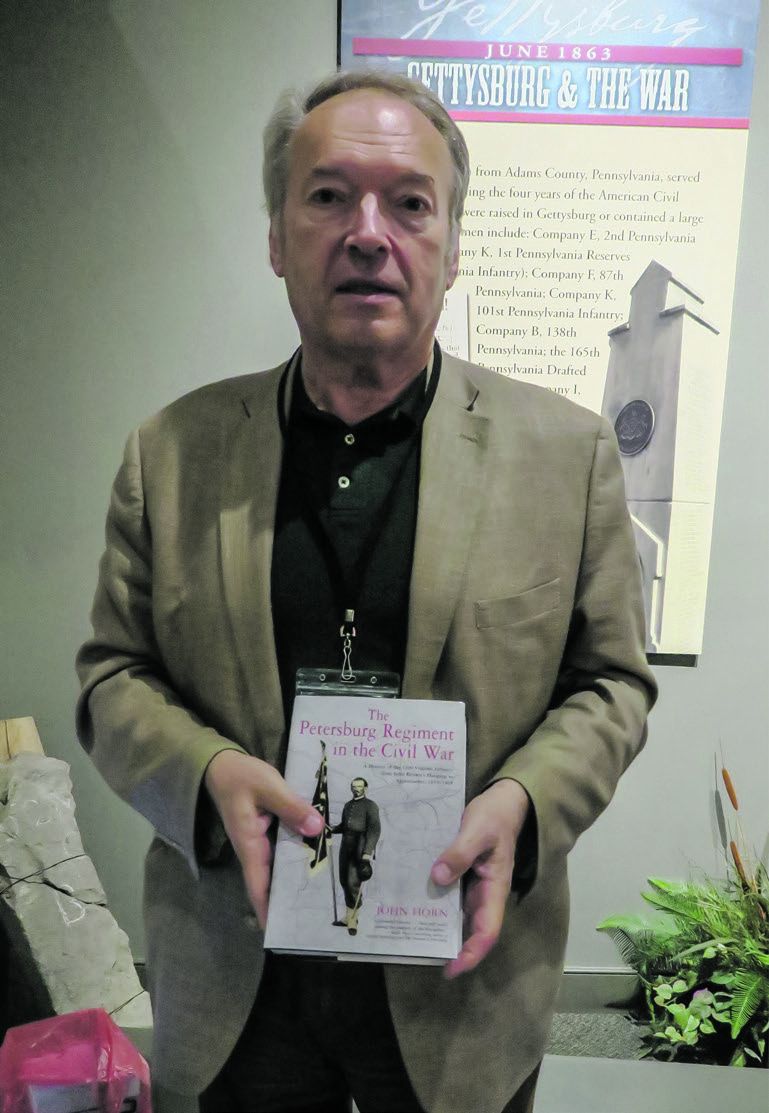
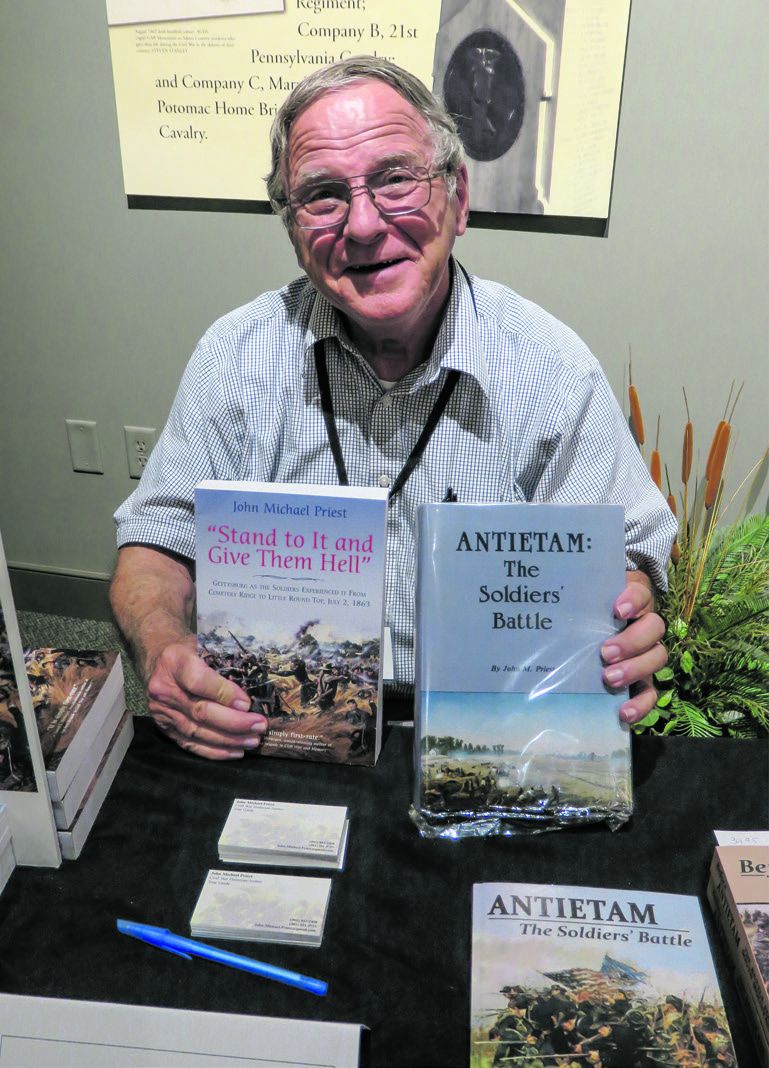
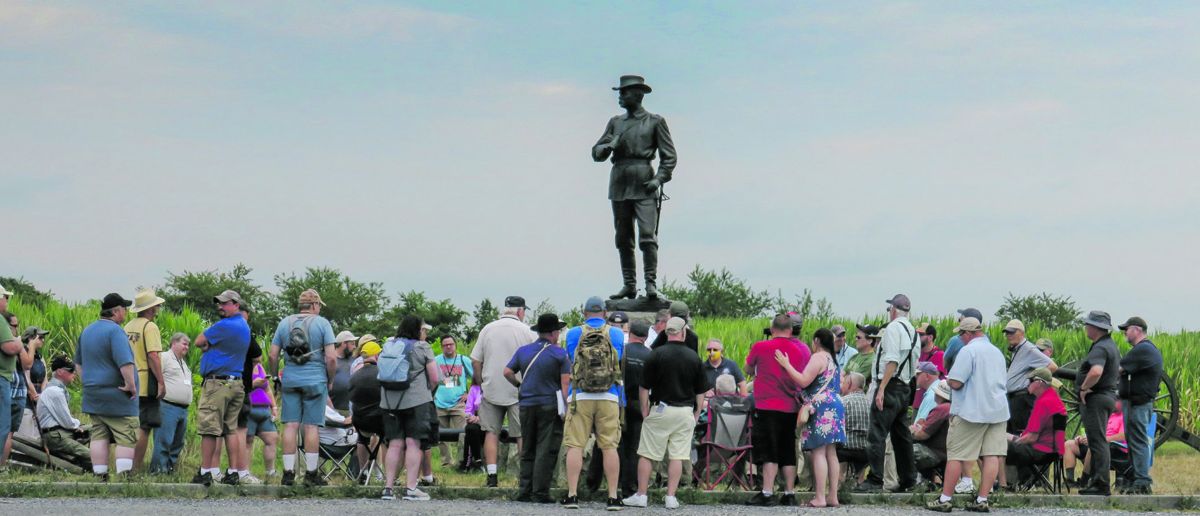
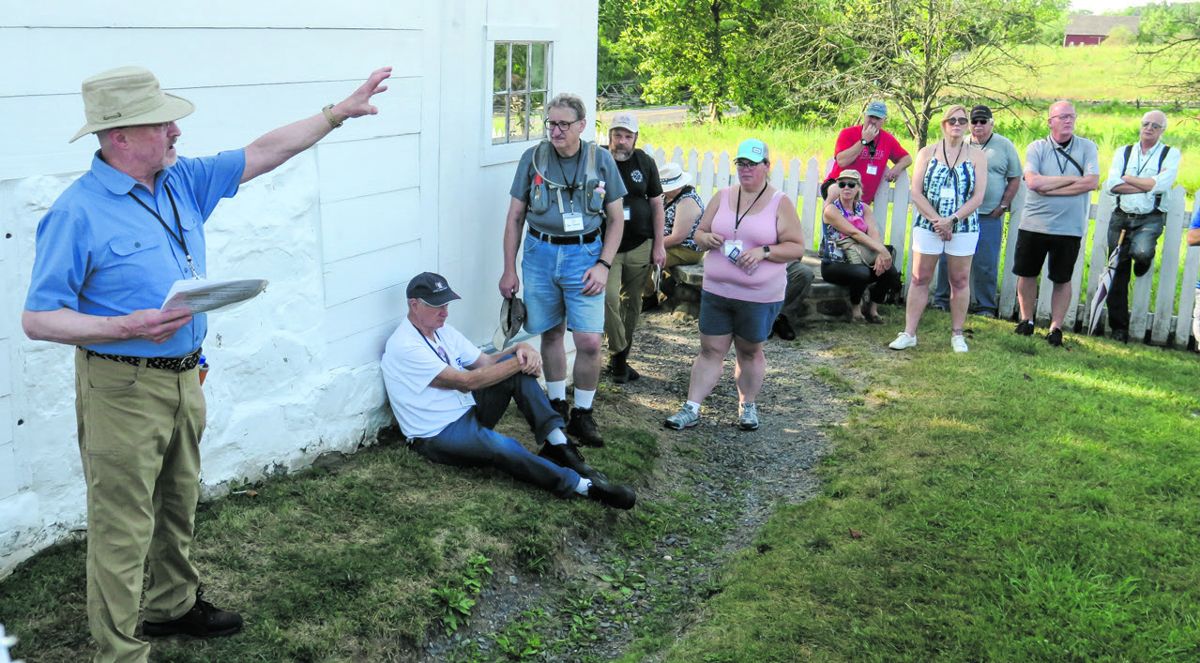
GETTYSBURG, Penn.—The leading trade publisher of Civil War and other military history books, Savas Beatie, sponsored their 3rd Gettysburg Meetup from August 12-15. The meetup gave a chance for approximately 200 Civil War enthusiasts to meet at least 20 Savas Beatie authors in a series of informal sessions, scheduled either in advance or as events unfolded. These included a get together Thursday night at O’Rorke’s pub, a picnic lunch in 100o heat at the local recreation park, and an after-hours opportunity to restore hydration at the Gettysburg headquarters for many Civil War aficionados, the Reliance Mine Saloon. The event also allowed the guests to attend a series of battlefield talks, hear author presentations and panel discussions, and buy massive amounts of books. Interestingly, four of the seven battlefield talks related to events of the relatively neglected battle’s first day. On Friday, visitors braved intense heat to listen to Rick Schaus on General George Meade’s activities on July 3, the final day of the battle; Mike Harris on Confederate Brig. Gen. John Archer’s brigade, the start of the battle, and the capture of Archer by Union forces; and Brad Gottfried on the action at the unfinished railroad cut just west of Seminary Ridge. Presentations Saturday, in slightly more moderate weather, included Emerging Civil War editor Chris Mackowski on events at day’s end, July 1; “What if Stonewall Jackson had been at Gettysburg?”; John Horn on the controversy involving Confederate brigade commander Brig. Gen. William Mahone and the perception that he failed to support another attacking Confederate brigade; and Eric Wittenberg on actions of cavalry commander Brig. Gen. John Buford on July 1.
Mackowski was pinch-hitting for Dave Powell, who was kept in Chicago by car troubles and the aftermath of weather miseries. Mackowski noted that speculation about Stonewall Jackson at Gettysburg probably dates back as far as the day after the battle. “Unfortunately,” he said, “when people ask that question, they really just want to drop him onto the battlefield on July 1, 1863, and then let him have at it.” Mackowski reviewed the tactical situation that existed at the end July 1 as well as the assumptions people make when they ask that question. He concluded that is hard to conjure a situation where Jackson makes it off the Chancellorsville battlefield in one piece, let alone one where he gets all the way to Oak Hill on the afternoon of July 1! But he concluded that such “what if?” questions are legitimate inquiries that allow a student to dig deeper into the actual events that did happen. The conference concluded Sunday morning with a presentation at the High Water Mark by Chris Brenneman on the Cyclorama. The meeting started out right at the painter’s viewpoint, across Hancock Ave. and directly back from the 71st PA monument. Brenneman was part of the team that researched this and other cycloramas during the restoration process and had a seemingly inexhaustible supply of information. He pointed out numerous “real people,” including members of the painting team, were incorporated into the painting. The Cyclorama was created by a 12 painter crew; they all specialized: one did just trees, another sky, and so forth. “So you would have one person who painted a horse, a second did the general sitting on the horse, and a third did his face.” The Gettysburg Heritage Center served as the headquarters for the event and hosted author presentations and panel discussions on
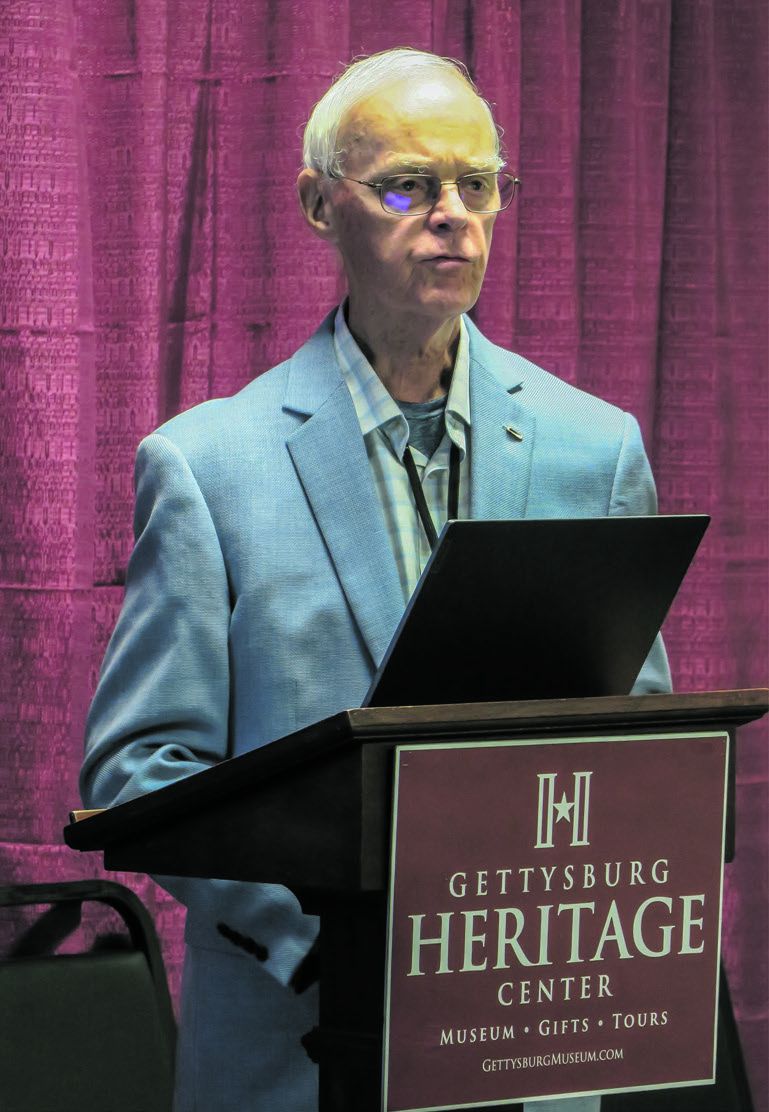
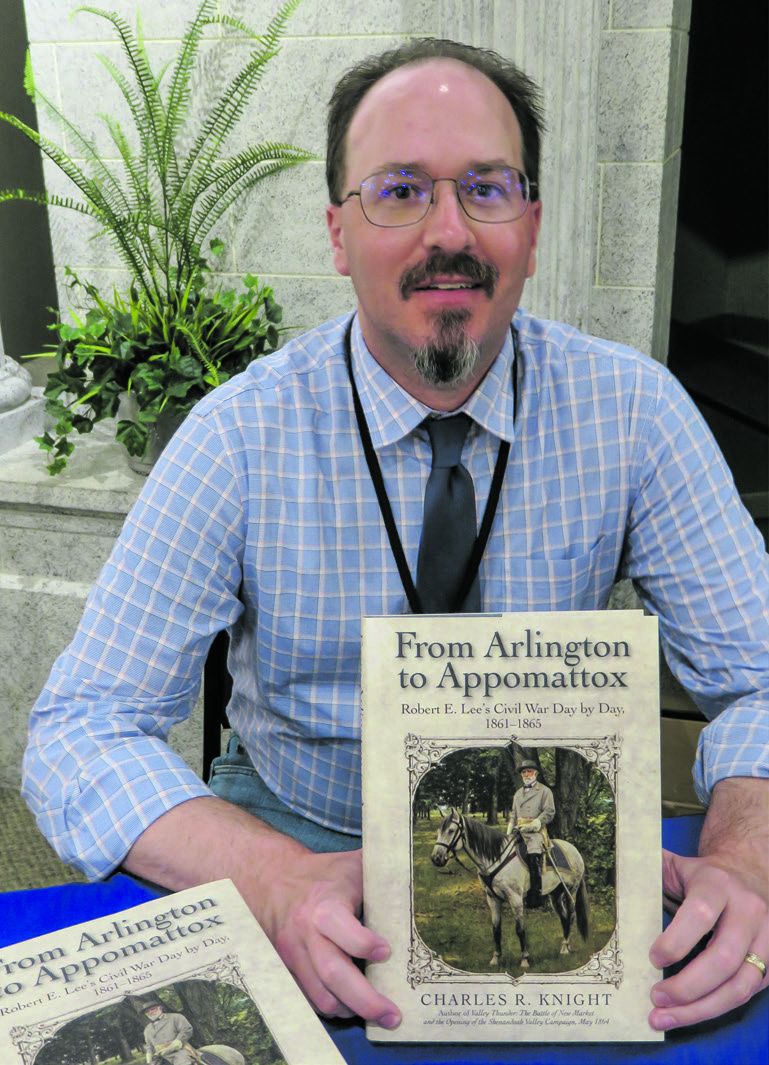
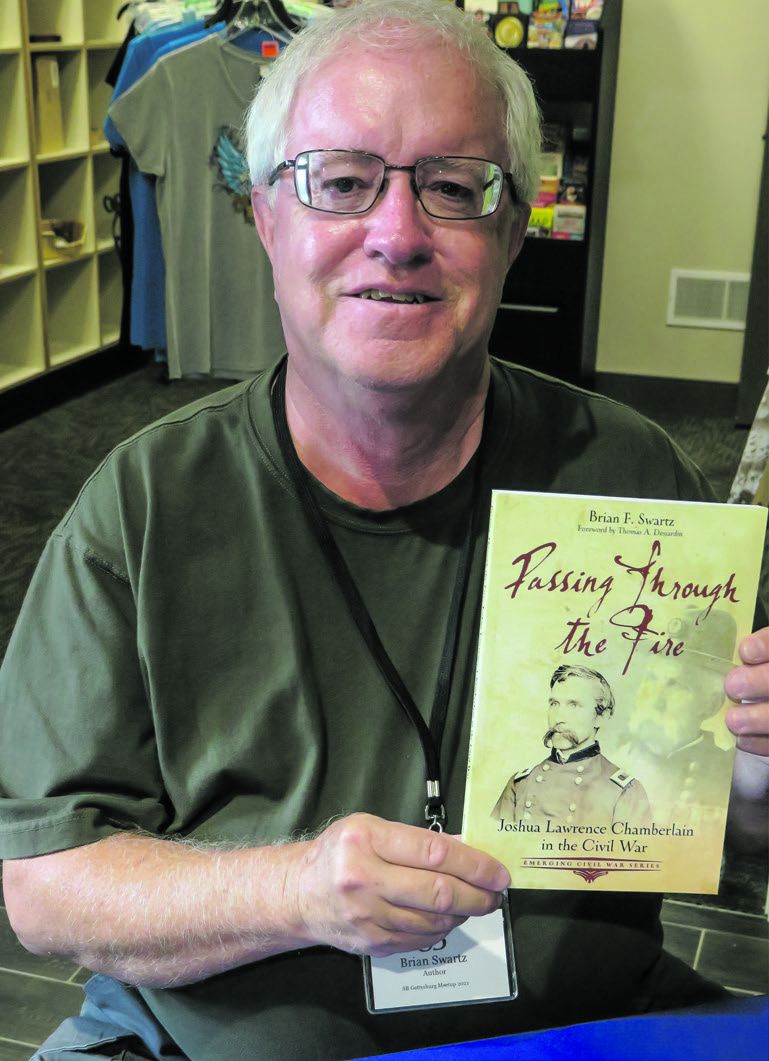
Friday and Saturday. Speakers included Charlie Knight, author of a book on Robert E. Lee’s activities day by day; Brian Swartz, who discussed his new book on Joshua Chamberlain; Dwight Hughes, who discussed the Monitor and the Virginia, the first battle between ironclad warships; and Scott Mingus, who discussed his book on Lee’s invasion in York County. The authors made many interesting observations. For example, Knight pointed out that at one house during the Overland Campaign, Lee came close to being killed by a shell and also probably came down with a case of food poisoning which had serious consequences for the Army of Northern Virginia. Lee was very fond of buttermilk and had a glass, shortly after the shell passed through and almost immediately became very ill. It affected Lee for several weeks, a loss that the Army of Northern Virginia particularly couldn’t afford at that time with a severely thinned out senior officer corps. Hughes commented that the Union got “Monitor fever” after the first battle, even though the ship was of limited utility. It was not seagoing and was not effective against land fortifications. Its main visible innovation was the rotating turret, but everything about its design and production was innovative. The ship was designed and built in 100 days, entirely in civilian yards using an extensive network of suppliers. This represented a new process of shipbuilding. The two author panels provided an interesting contrast. Ted Savas moderated both panels and introduced both by saying “here’s your chance to find out what you’ve always wanted to know,” and basically guided an hour long Q&A. The discussion on Friday, with panelists Jan Croon, Brad Gottfried, Jim Hessler, Dwight Hughes, Leon Reed, Ken Rutherford, Rick Schaus, and Eric Wittenberg, became a detailed tactical discussion of the Battle of Gettysburg, with a particular emphasis on cavalry operations. Questions were raised about topics such as command and control, who was responsible for units that were reassigned to a different battlefield sector, whether Howard’s criticism of Doubleday and Meade taking First Corps away from him, was fair, whether Meade pursued Lee aggressively enough, and similar questions. On Saturday, basically the same audience experienced an hourlong seminar on the writing and publishing business, with questions about working with editors, responding to criticism, selecting what materials to use, collaborating with co-authors, etc. The panel this time was Michael Harris,
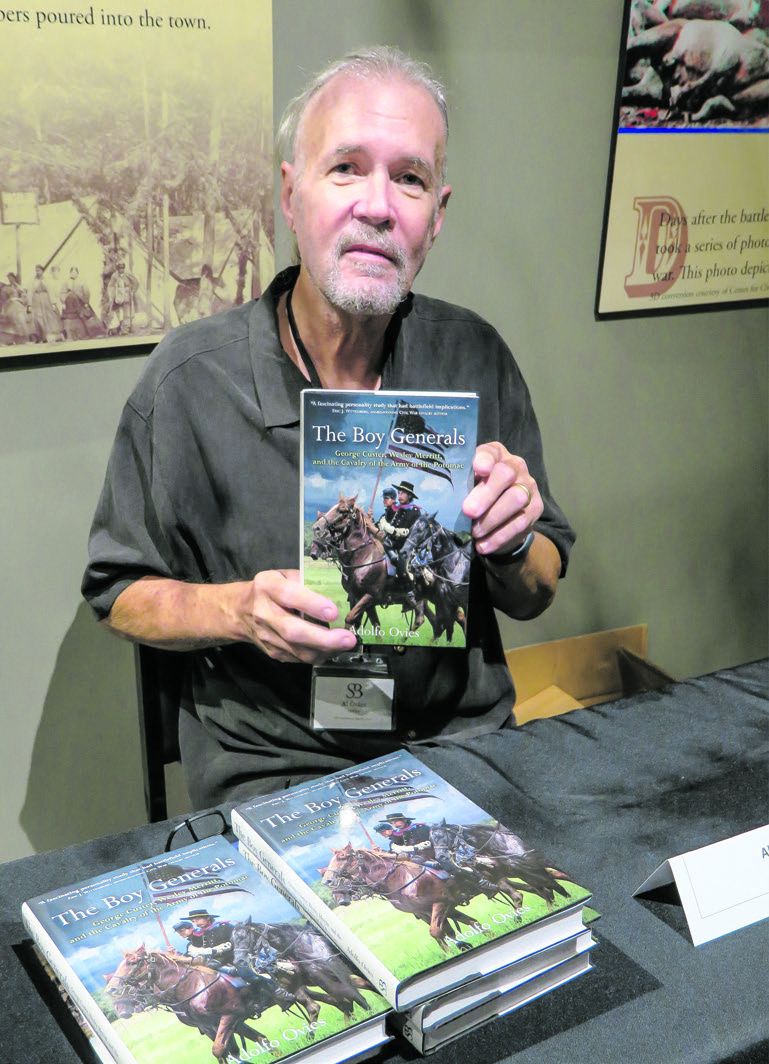
John Horn, Charles Knight, Derek Maxfield, Scott Mingus, John Michel Priest, Alexander Rossino, Brian Swartz, and Eric Wittenberg. All the authors said they owed their success to early advice and mentoring and that comments from editors consistently improved their work. Eric Wittenberg observed that he has written plenty of books and now is making a priority of working with his friends. He said they have all been good collaborations; some took time to come together and some were smooth from the first day. He mentioned that in anyone to identify which chapters which of us wrote. It was truly seamless work.” Many writers mentioned their gratitude that an established writer had encouraged them. Al Ovies, author of the best-selling Boy Generals, mentioned that he had self-published a book about 15 years ago and noticed that
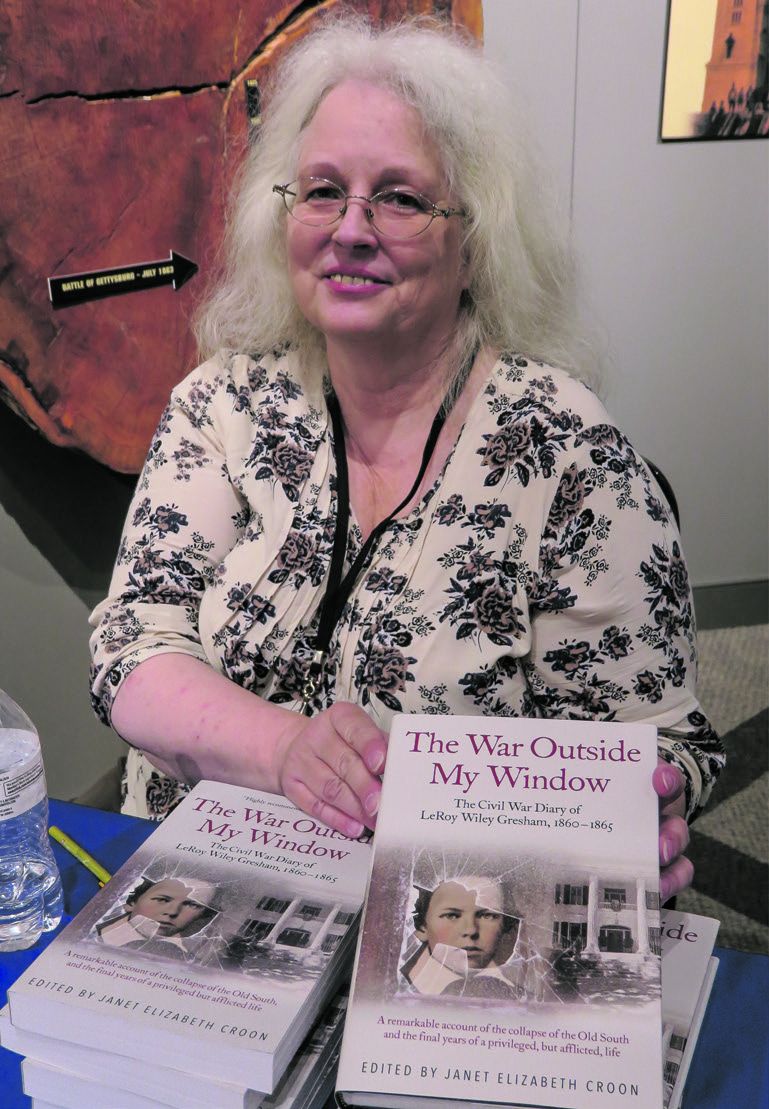
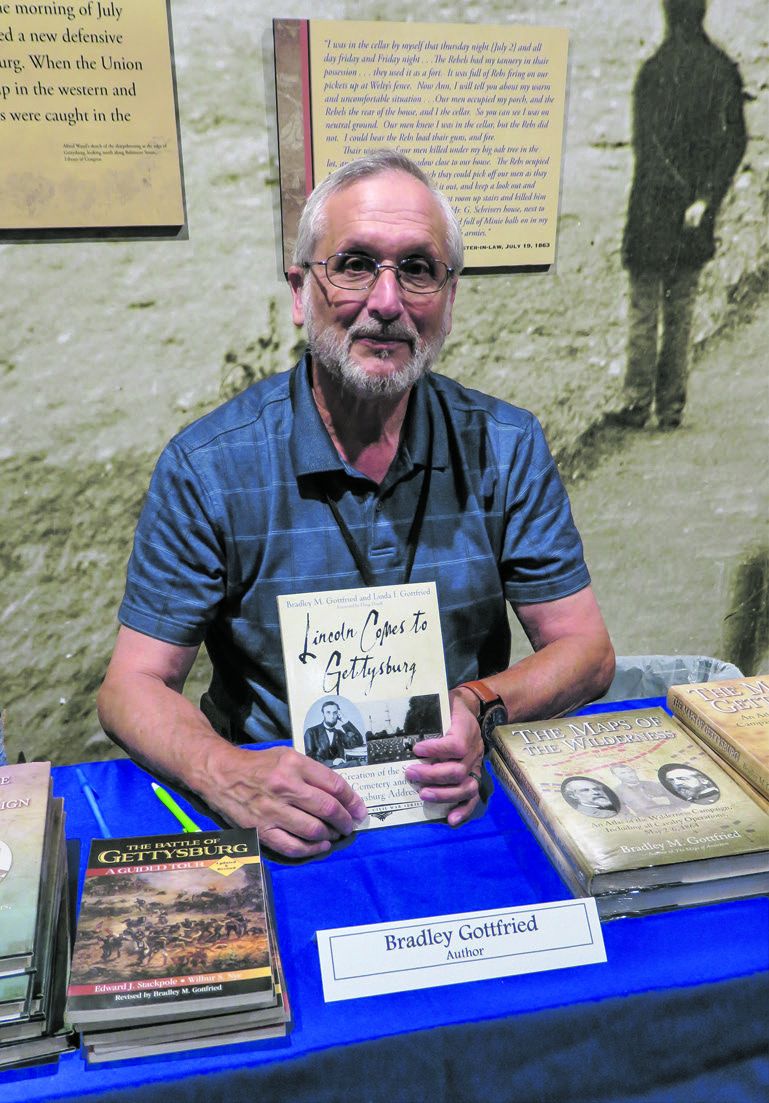
Eric Wittenberg had left a critical Amazon review. He wrote Eric and said that he would try to do better in the future and Eric so appreciated his constructive reaction that he worked with him and they have since become good friends. An interesting generation gap showed up with the answer to one question: what book ignited your interest in the Civil War? Many panelists nodded when Bruce Catton and the American Heritage Illustrated Civil War were mentioned but others mentioned the Ken Burns series and Michael Shaara’s Killer Angels. After both evening panel discussions, there were mass autograph sessions with 15-20 authors and a very active trade. The authors were certainly happy to sell books but there were animated discussions throughout the book signing area. The relationship between Civil War authors and their readers is especially close. All the authors started out as, and still are, Civil War enthusiasts; most are not full-time writers and many of their fans are deep students of the War. The interchanges often are more peer to peer than “expert to fan.” Publisher Ted Savas said he was well pleased with the event. “It went off better than we expected. The turnout was great, and I think people really enjoyed it and we’re grateful for their participation.”
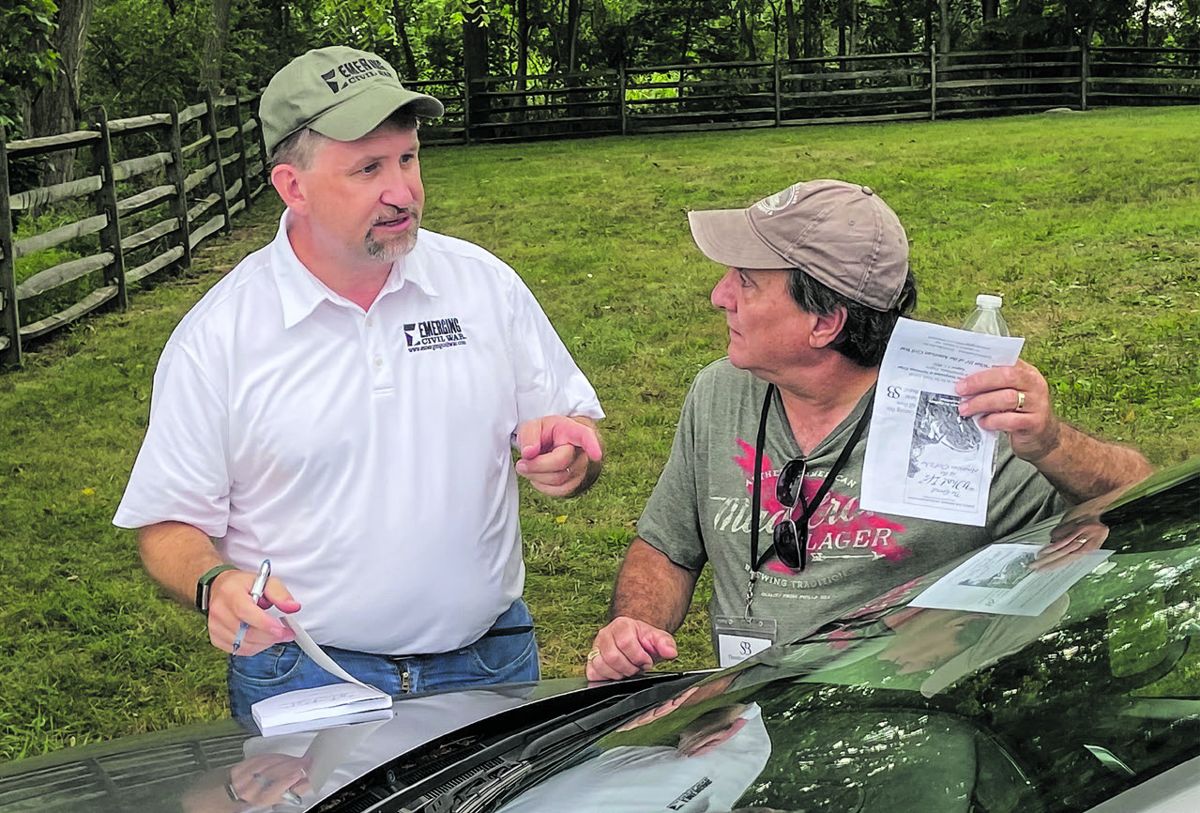
Eric Wittenberg (left) and Scott Mingus (seated).
Rich Keehner, who attended the conference from Ohio, agreed with Ted’s assessment. “This event was, simply put, one of the best Civil War events that I have attended. The on field talks were both informative and enjoyable; then there were the indoor lectures by authors, followed each day by round table style discussions prompted by audience questions. Everyone was polite and respectful regardless of the knowledge of the person asking the question. All the authors present were friendly and approachable. Ted Savas and Sarah from his staff treated all of us like we were old friends. In my opinion it was truly a five star event!”