
Nelson Miles at Chancellorsville & Po River
By Sarah Kay Bierle · Originally published October 2021 · pp. 32–33

In 1861, twenty-two-year-old Nelson Miles joined the 22nd Massachusetts Infantry Regiment as a first lieutenant. He was destined to rise to other commands and the rank of brevet major general of volunteers by the end of the Civil War. He fought on numerous battlefields, including two locations preserved by Central Virginia Battlefields Trust, McLaws Wedge at Chancellorsville, and the Po
Nelson Miles received the Medal of Honor for his actions in the Battle of Chancellorsville.
River Tract. For his actions at Chancellorsville, Miles received the Medal of Honor in 1892 for “Distinguished gallantry while holding with his command in an advanced position against repeated assaults by a strong force of the enemy; was severely wounded.” The Civil War became a defining event in Miles’s life and began his life-long career of military service. After brief service with the 22nd Massachusetts, he served on General O.O. Howard’s staff during the Peninsula Campaign, then transferred and was promoted to lieutenant colonel of the 61st New York Infantry Regiment. At the Battle of Antietam, when the 61st’s colonel, Francis C. Barlow, was severely wounded, Miles took command of the regiment and continued to press forward; trying to keep the advantage they had gained in flanking the infamous Sunken Road. His promotion to colonel and commander of the 61st resulted from his quick thinking and leadership at Antietam. During the Battle of Fredericksburg in December 1862, Miles was wounded during one charge against Marye’s Heights. The following spring, Miles and his regiment were part of the Army of the Potomac’s advance on May 1, 1863. As the brigades followed orders from General Joseph Hooker and withdrew to the Chancellor House, the 61st New York covered part of the II Corps’ retreat. Later, Miles wrote about the fighting on May 2-3: “We were constantly engaged skirmishing with the enemy during the day, and at about 3 p.m., the enemy commenced massing his troops in two columns, one on each side of the road, flanked by a line of battle about 800 yards in front in the woods. Their orders could be distinctly heard. They soon advanced with a tremendous yell, and were met with a sure and deadly fire of simply one line. A very sharp engagement continued about an hour, when the enemy fell back in disorder. Their charge was impetuous and determined, advancing to within 20 yards of my abatis, but were hurled back with fearful loss, and made no further demonstrations…. About 9 a.m. of the 3d instant, I received a detachment of 250 men, under command of Lieutenant-Colonel McCreary, of the One hundred and forty-fifth Pennsylvania, as support. Soon after, my line was vigorously attacked by the enemy on the left, and engaged the entire line. This continued for about half an hour, when I deployed about one-third of my reserve on the left, and was about to order up the remainder when I received a severe wound in the abdomen, and was obliged to leave the field….” In a later reminiscence, Miles described constructing rifle pits and using the marshy ground to his front to delay the Confederate advance. He made a determined stand while other units broke and ran around his regiment. General Winfield S. Hancock sent reinforcements to Miles and carefully ensured they were commanded by junior officers, purposely allowing Miles to retain command of that portion of the field. Hancock reportedly declared that Miles was worth his weight in gold at Chancellorsville for holding his line against “desperate assaults.” In this fight, for which Miles was awarded the Medal of Honor, the young officer’s experience took a turn for the worse. Riding along the line to encourage and rally his men, Miles was badly wounded in the abdomen. Hauled to the Chancellor House hospital parlor, he suffered an examination and the doctor’s declaration that he would die. Miles lay paralyzed from the waist down, relying on others to move him, and narrowly escaped death when the Chancellor House caught fire. After a tortuous journey by ambulance and through hospitals, Miles arrived at his family home and surprised all by slowly recovering. He returned to active duty prior to the 1864 Overland Campaign, leading the First Brigade, First Division of the II Corps. The II Corps engaged in some of the hardest fighting during the campaign. After battling in the Wilderness, the II Corps marched down Brock Road and then swung south toward the Po River. Crossing the waterway, the II Corps attempted to attack Confederate supply trains without significant success. Pushing east toward Blockhouse Bridge which spanned a twisting turn in the Po River, Miles’s Brigade battled the Confederates on May 9-10, until the First Division was ordered to withdraw north of the river and march to another location. On May 12, Miles led his brigade in the attack on the Mule Shoe Salient, punching through the east side of the Confederate defensive works. Miles’s promotion to brigadier general was due to his role in this attack. During the rest of the Overland Campaign, he continued to lead conspicuously and rose to temporary command of the First Division, and then II Corps as superior officers left with illness or injury. His final Civil War campaigns were at Petersburg and Appomattox. When the Civil War ended, Miles stayed in the U.S. Army, guarding Jefferson Davis and working with the Freedman’s Bureau. In the 1870’s, Miles commanded troops in the Plains Indian Wars. Even though he is associated with the events resulting in the Massacre at Wounded Knee, Miles regarded the massacre as “the most abominable criminal military blunder and a horrible massacre of women and children” and advocated compensation and aid for the survivors. He actively organized troops during the Spanish American War and even volunteered to leave retirement to see combat in World War I. When General Nelson Miles died in 1925, he was buried with military honors in Arlington National Cemetery. Miles’s memorable defense of the Union lines at Chancellorsville occurred on the preserved tract of land now called McLaws Wedge. Preserved in the early days of the Central Virginia Battlefields Trust, the property has since been incorporated into Chancellorsville National Battlefield where a tour stop on the walking trail interprets Miles’s defense and wounding.
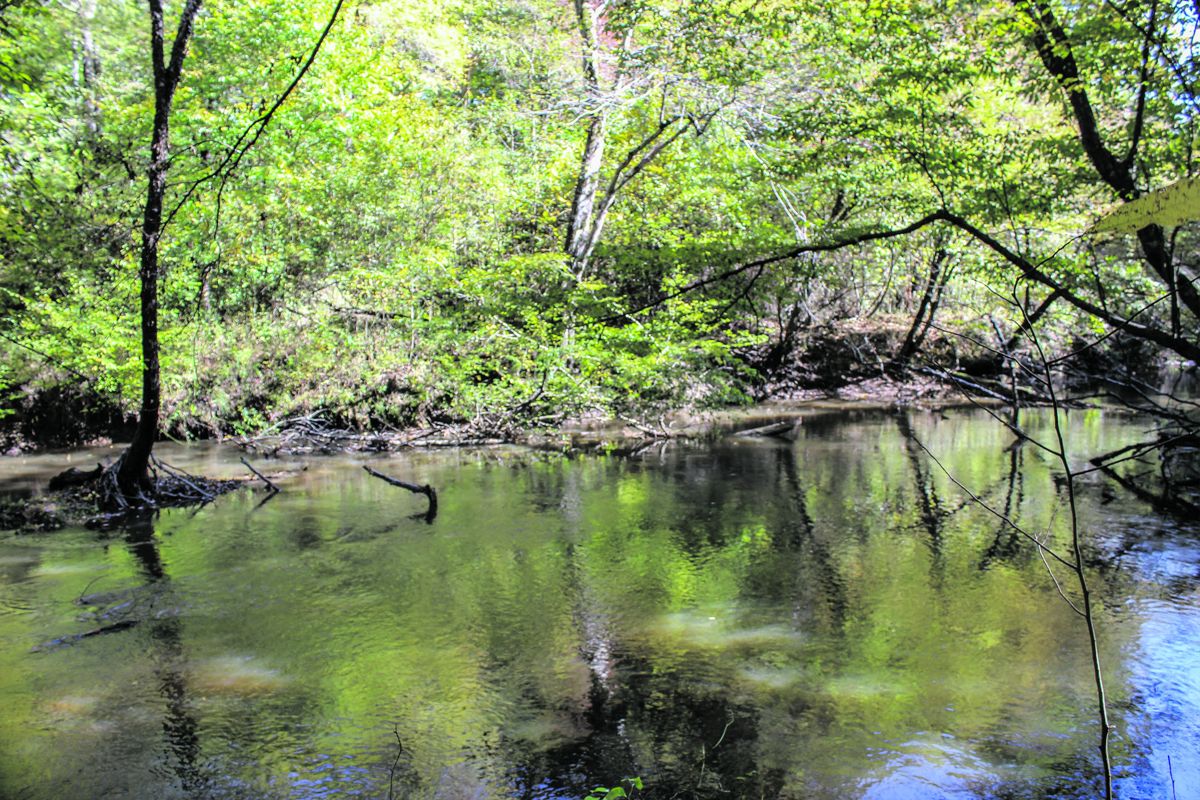
The land where Miles battled near the historic Blockhouse Bridge during the Battle of Po River segment of Spotsylvania Court House is one of two tracts Central Virginia Battlefields Trust preserved in the early 2000’s. This site is not currently open for public access, but hopefully, it will be interpreted in the future. Sarah Kay Bierle serves as the Chief Administrative Officer at Central Virginia Battlefields Trust. CVBT is dedicated to preserving hallowed ground at Fredericksburg, Chancellorsville, The Wilderness, and Spotsylvania Court House. To learn more about this grassroots preservation non-profit, please visit our website at www.cvbt.org.