
Highly Respected Norfolk Physician Hanged for Murder
By Bob Ruegsegger · Originally published October 2021 · pp. 30–31
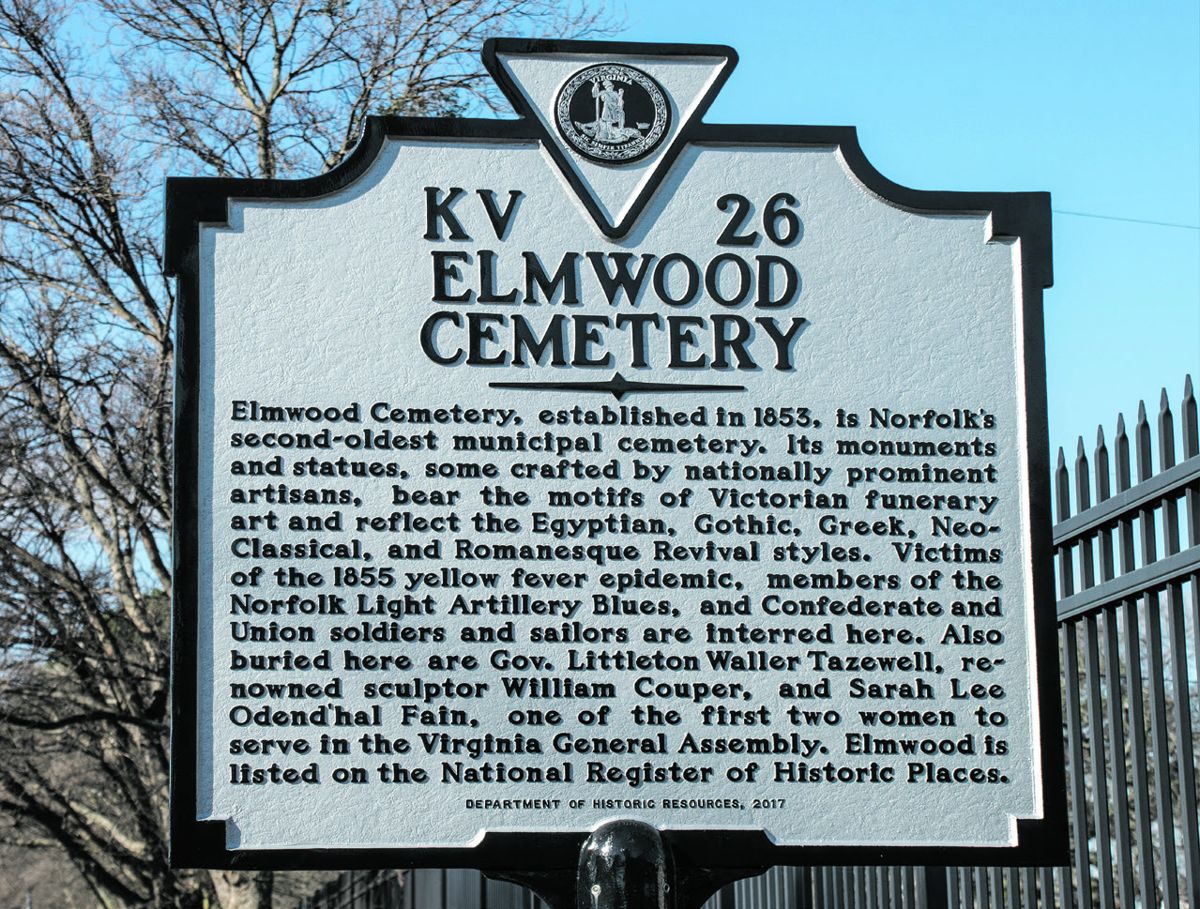
On October 23, 1863, Dr. David Minton Wright was taken to a gallows erected in the middle of the old Norfolk Fairgrounds racetrack outside town and hanged. Federal occupation troops posted in a square guarded the scaffold. Local citizens watched from rooftops or stood on wagons, carriages, and carts to witness his execution. After a funeral service at Christ Church, Dr. Wright was quietly buried in Elmwood Cemetery the following evening. Dr. Wright moved to Norfolk, Va., from Edenton, N.C., in 1853. When the most severe yellow fever epidemic in Norfolk’s history plagued the city in 1855, Dr. Wright fell ill. He recovered and selflessly administered to the sick and dying in the city he had so recently adopted. His devotion to Norfolk’s citizens during the yellow fever plague earned him the respect of the seaport community. “Dr. Wright’s grave was one of the places I’d always stop when I did cemetery ghost tours,” said Robert Hitchings, archivist with the Norfolk County Historical Society. “I’d stop and talk at his grave stone. He was well liked, and everybody respected him. He won the admiration of the locals.” While Dr. Wright was a Southerner born in Nansemond
County, he was a Unionist and objected to Virginia’s Ordinance of Secession that declared the bond between Virginia and the United States of America under the U.S. Constitution dissolved. When secession came in April 17, 1861, Dr. Wright elected to remain in Norfolk in spite of the imminent change in the political circumstances. Two of his sons enlisted in the Confederate army, and Dr. Wright eventually became a staunch supporter of the Confederacy. Anticipating the impending Federal invasion, Confederate Major General Benjamin Huger withdrew his Rebel forces from the area and directed that military provisions be turned over to civilian authority. Mayor W.W. Lamb of Norfolk surrendered the city to Federal military authorities under a flag of truce. He was given the “strongest assurances” by General John Wool and Secretary Salmon P. Chase that “persons and property of all inhabitants” would be treated with the “utmost respect.” “After surrendering the city, Mayor Lamb later was sent to Fort Monroe under lock and key and a ball and chain. He was sent over there as a prisoner,” said Hitchings. Norfolk immediately fell under martial law. Brigadier General Egbert Viele became the military governor. “When the Federals took over, they more or less turned out everybody on Freemason Street, a fashionable part of the city,” said Hitchings. “They made residents get out of their houses. There was a lot of hostility and anger.” Norfolk’s white citizens gradually became more and more resentful of Federal occupation and oppression, especially toward the regiments of armed USCT troops that marched through the city streets. Dr. Wright was among those who had come to feel antipathy toward the occupational forces. Following a celebration of his wedding anniversary on June 17, 1863, Dr. Wright was walking on Main Street toward its intersection with Church Street when he encountered a column of troops from the 1st USCT Regiment led by a white officer. A group of civilians had gathered to peacefully protest the presence of the USCT troops serving as occupation forces as they marched boldly down a sidewalk forcing the citizens aside. Dr. Wright clenched his fists and gave voice to his revulsion by shouting a direct insult at Lt. Alanson L. Sanborn, the white officer commanding the black soldiers. “Oh! “You coward!” shouted the indignant Dr. Wright. Lt. Sanborn ordered his troops to halt and approached Dr. Wright, “You are under arrest,” Sanborn told Wright. Sanborn approached Dr. Wright with his sword raised. Soldiers under Sanborn’s command moved to take Wright into custody. Provoked at the thought of being arrested or threatened by Sanborn’s saber, Dr. Wright pulled a pistol from his coat pocket (some witnesses claimed Dr. Wright was handed the pistol by another angry citizen) and fired two shots at Lt. Sanborn. Dr. Wright’s violent actions proved deadly for Sanborn, and ultimately for Dr. Wright as well. The fatally wounded Union lieutenant staggered into Foster and Moore’s Drug Store and soon expired. There was no doubt who shot Sanborn. There were many eyewitnesses to the alleged assassination. Dr. Wright was immediately arrested by the provost guard and jailed to await trial by a military commission. “I am tried by a military commission to-day or tomorrow,” wrote Wright in a note to his wife. “I suppose the verdict will be the same as that of the provost marshal, made before he
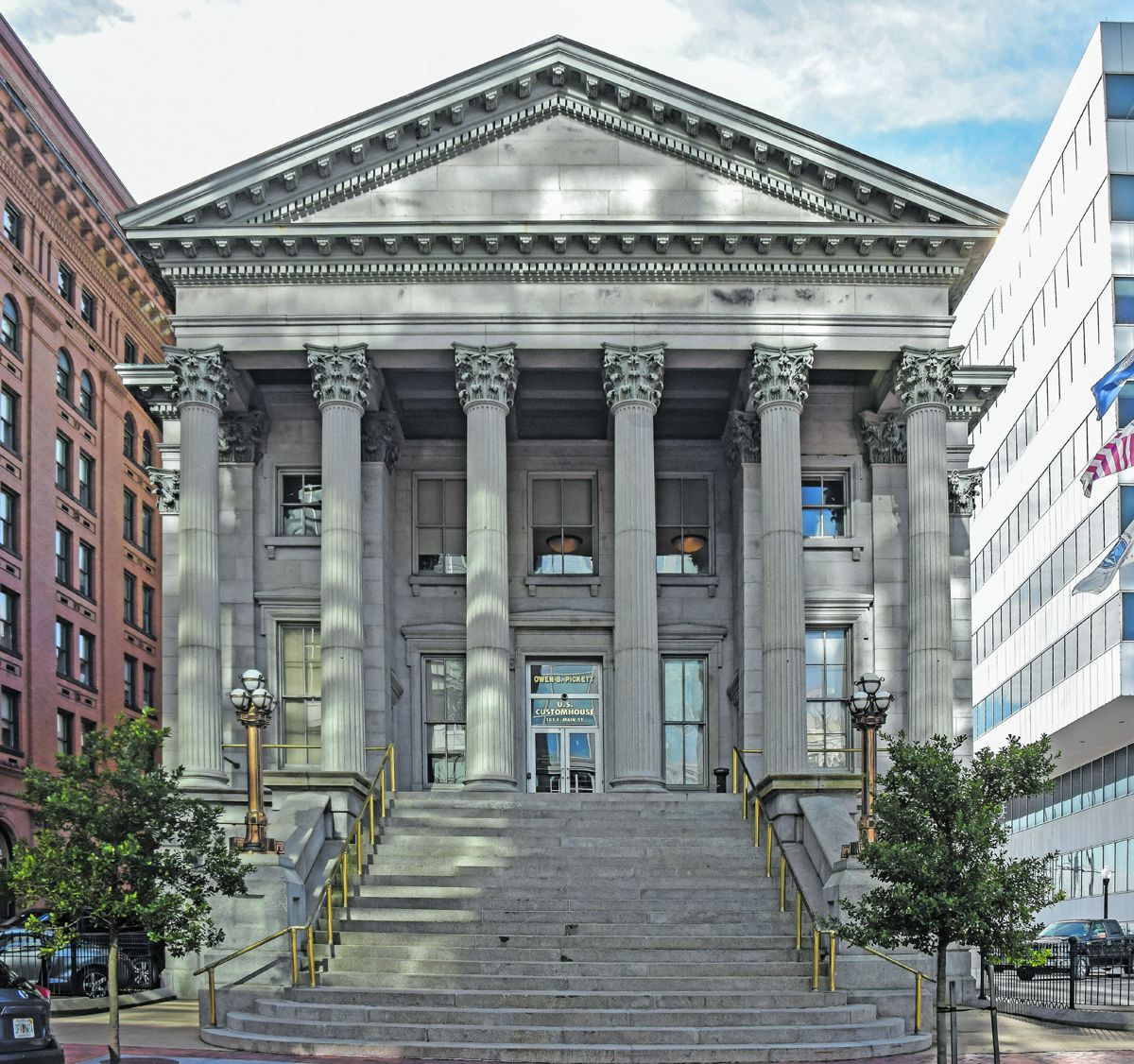
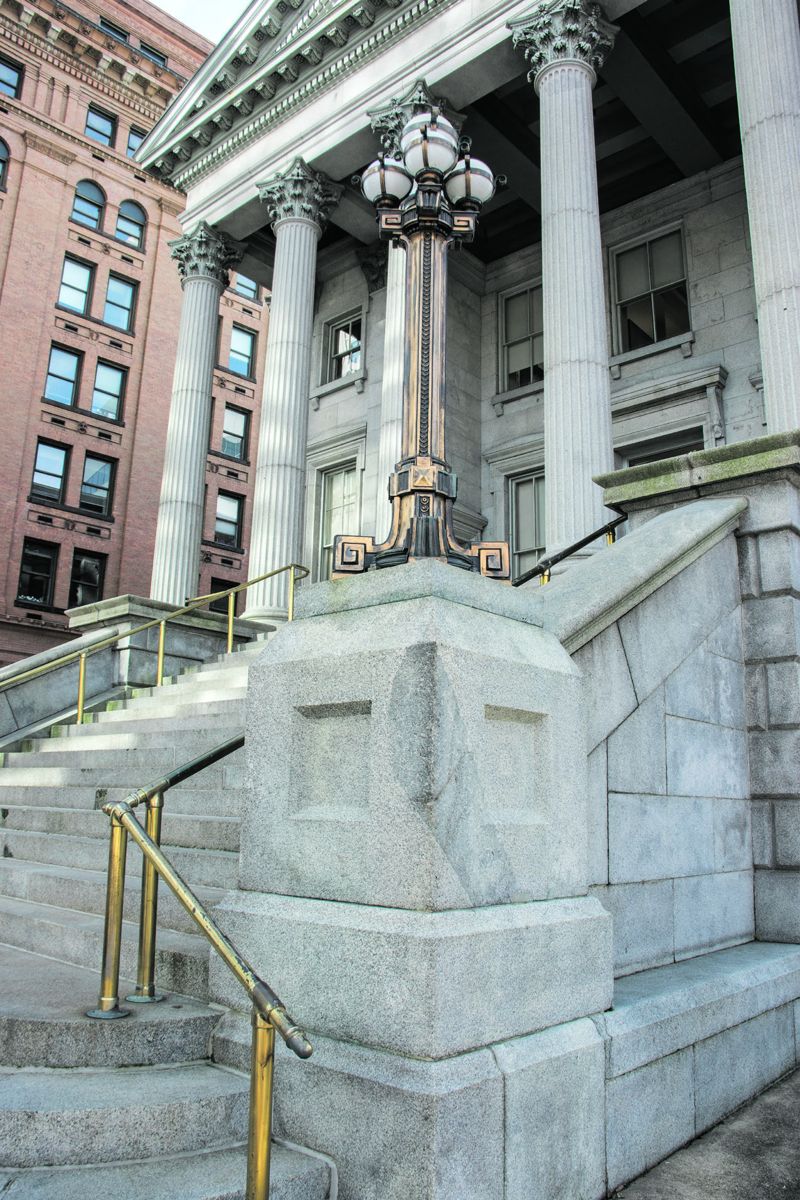
Dr. Wright portrait. had examined the first witness,” anticipated Wright. “Should it be so, let us, while we hope and pray for the best, try to prepare for the worst.” While Wright was incarcerated, Union authorities proceeded to arrange a court martial for his trial. The court convened in the stately Custom House on Main Street in Norfolk. For eight days with his wrists and ankles chained, Dr. Wright was forced to climb up and down the stone steps within the view of his sympathetic friends and neighbors.
Dr. Wright spent the next four months trying to escape the death penalty for killing of Lt. Sanborn. Self-defense and insanity pleas found no favor with the military tribunal. As Dr. Wright had expected, he was convicted of murder and sentenced to death by the court. General Orders No. 17 directed that David M. Wright “be hung by the neck until he be dead” on the “16th day of October, at 10 o’clock in the forenoon” at a place in or near Norfolk as Brigadier General James Barnes, commander of United States forces may designate. Friends and family of Dr. Wright did everything that they could to help the respected physician avoid terminal accountability. “They sent appeals to President Lincoln,” noted Tim
Bonney with Friends of Norfolk’s Historic Cemeteries. “Lincoln telegraphed Major General Foster.” “If Dr. Wright, on trial at Norfolk, has been, or shall be convicted, send me a transcript of his trial and conviction, and do not let the execution be done upon him, until my further order,” directed Lincoln. “Politically, Lincoln faced serious issues such as the draft riots, the necessity to recruit slaves into the army, the morale and discipline of the army, and the upcoming presidential election,” observed Tim Bonney. President Lincoln thoroughly reviewed all of the evidence and directed that the findings and sentence of the military commission be carried out. Lincoln granted a brief delay in Wright’s execution.
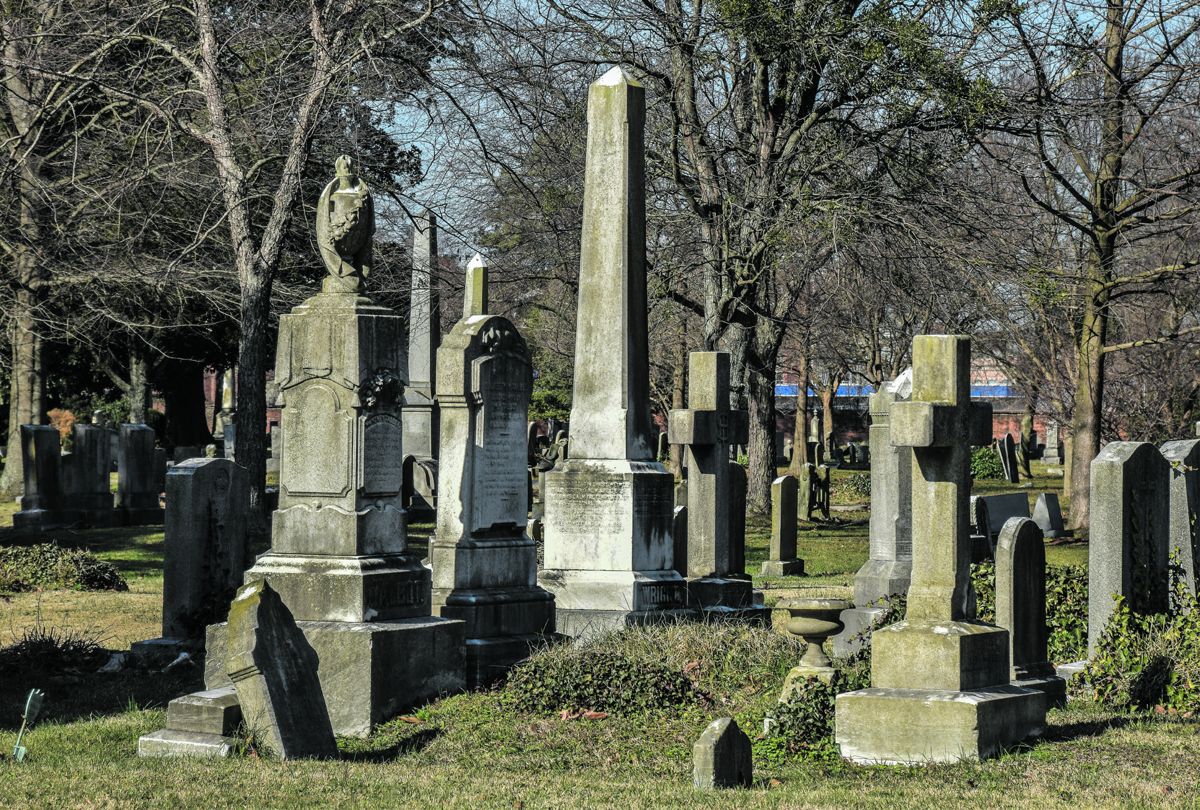
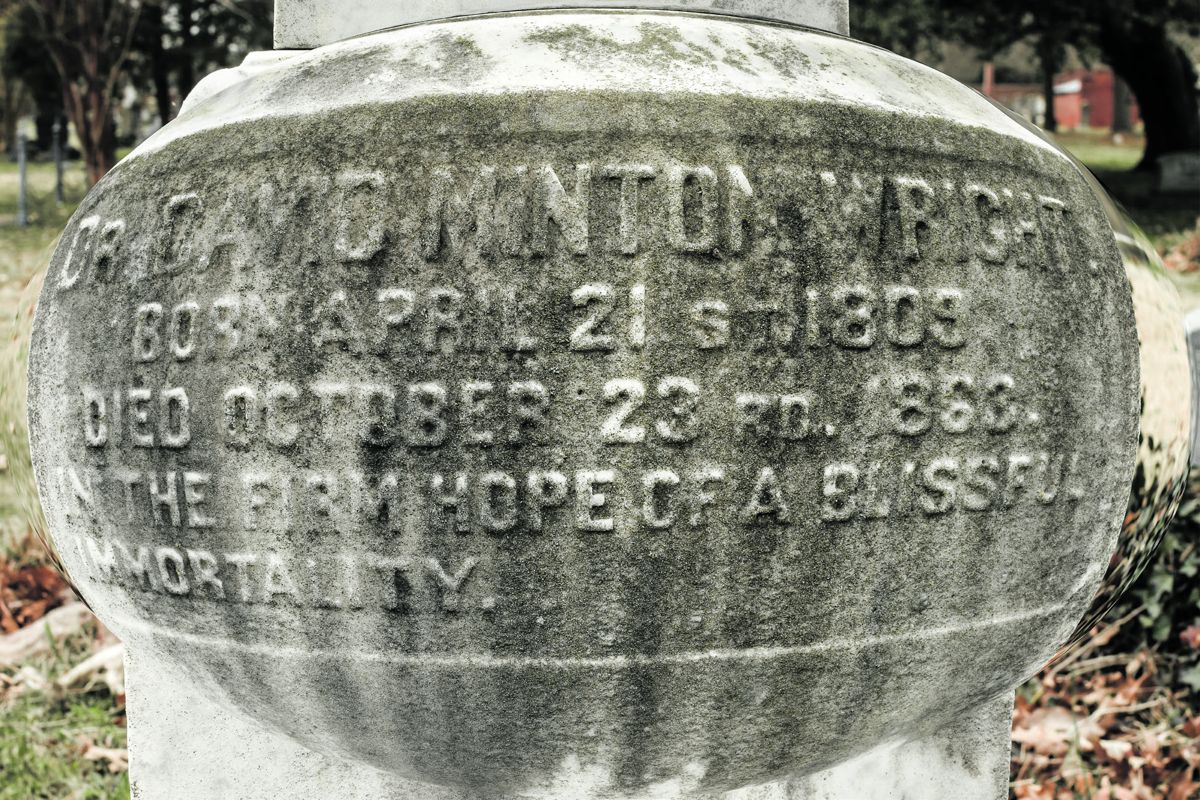
Wright was allowed an additional week to get his personal affairs in order. “While in prison, Dr. Wright made his own coffin of cypress and placed daguerreotypes of his family inside the lid, including a portrait of his son, Minton Augustus Wright, who had been killed in the Battle of Gettysburg,” noted Bonney. “His family had kept the news of Minton’s death from him.” Two days before her father’s scheduled execution, one of his daughters made a desperate effort to save her father from the hangman. “Dr. Wright was visited by his daughter Penelope. Dr. Wright shaved his beard and exchanged outer clothes with his daughter. He donned a dark veil and attempted to escape,” said Tim Bonney. Guileful Penelope had slipped on her father’s boots and covered up with the blankets on his cot while her father sashayed out of his cell toward a waiting carriage. “An alert guard, Lt. Cook, suspicious of “Penelope’s” height and manly gait stopped him, and he was returned to his cell,” explained Bonney. Maj. Gen. J.G. Foster sent a dispatch to General-in-Chief H.W. Halleck on Friday, Oct. 23, 1863. “Dr. Wright was executed this morning at Norfolk, according to orders,” wrote Foster. “Everything passed off very orderly.” After his execution, Dr. Wright’s body was turned over to his friends. A funeral was held in Norfolk’s Old Christ Church and Wright’s remains were quietly interred in Elmwood Cemetery. The epitaph on the front of the obelisk marking Dr. Wright’s grave notes that he “died on October 23rd, 1863, in the firm hope of a blissful immortality.” There is no reference to the cause and place of death. On the cemetery interment card, his name, age, and year of death are written but, again, the spaces for his place and cause of death are left enigmatically blank. Sources: ✪ Norfolk Historic Southern Port, Wertenbaker and Schlegel ✪ The Recording Angel, Volume 10, Issue I, Volume 9, Issue II (Newsletter Friends of Norfolk’s Historic Cemeteries) ✪ Norfolk Highlights 1584– 1881, Tucker ✪ Tyler’s Southern Historical Society Papers, Volume 21 ✪ Official Records of the War of the Rebellion Bob Ruegsegger is an American by birth and a Virginian. His assignments frequently take him to historic sites throughout Virginia, the Mid-Atlantic, and the Southeast. His favorite haunts include sites within Virginia’s Historic Triangle—Jamestown, Yorktown, and Williamsburg. Bob served briefly in the U.S. Navy. He is a retired educator and has been an active newspaper journalist for the last twenty years.