
Emerging Civil War Celebrates 10th Anniversary
By Leon Reed · Originally published October 2021 · pp. 36–37
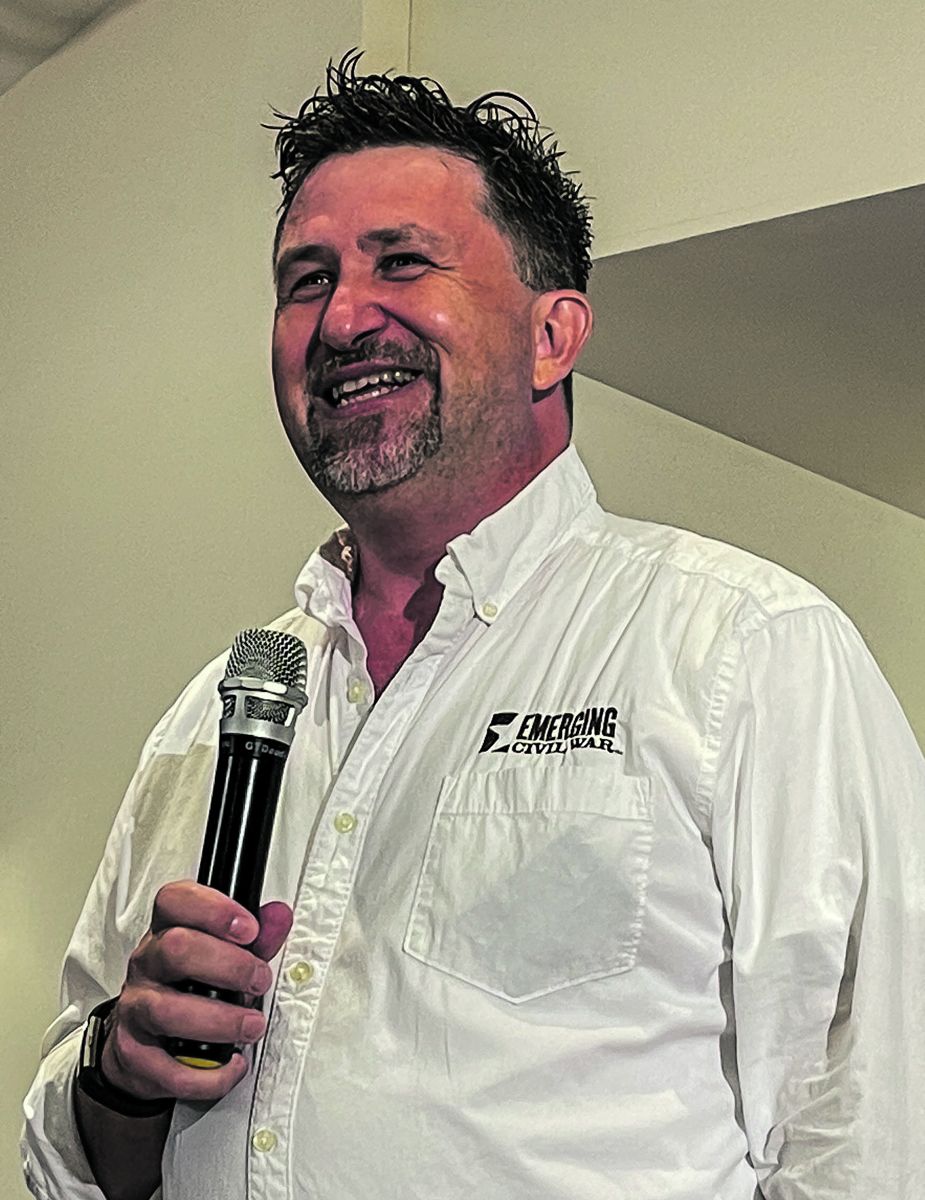
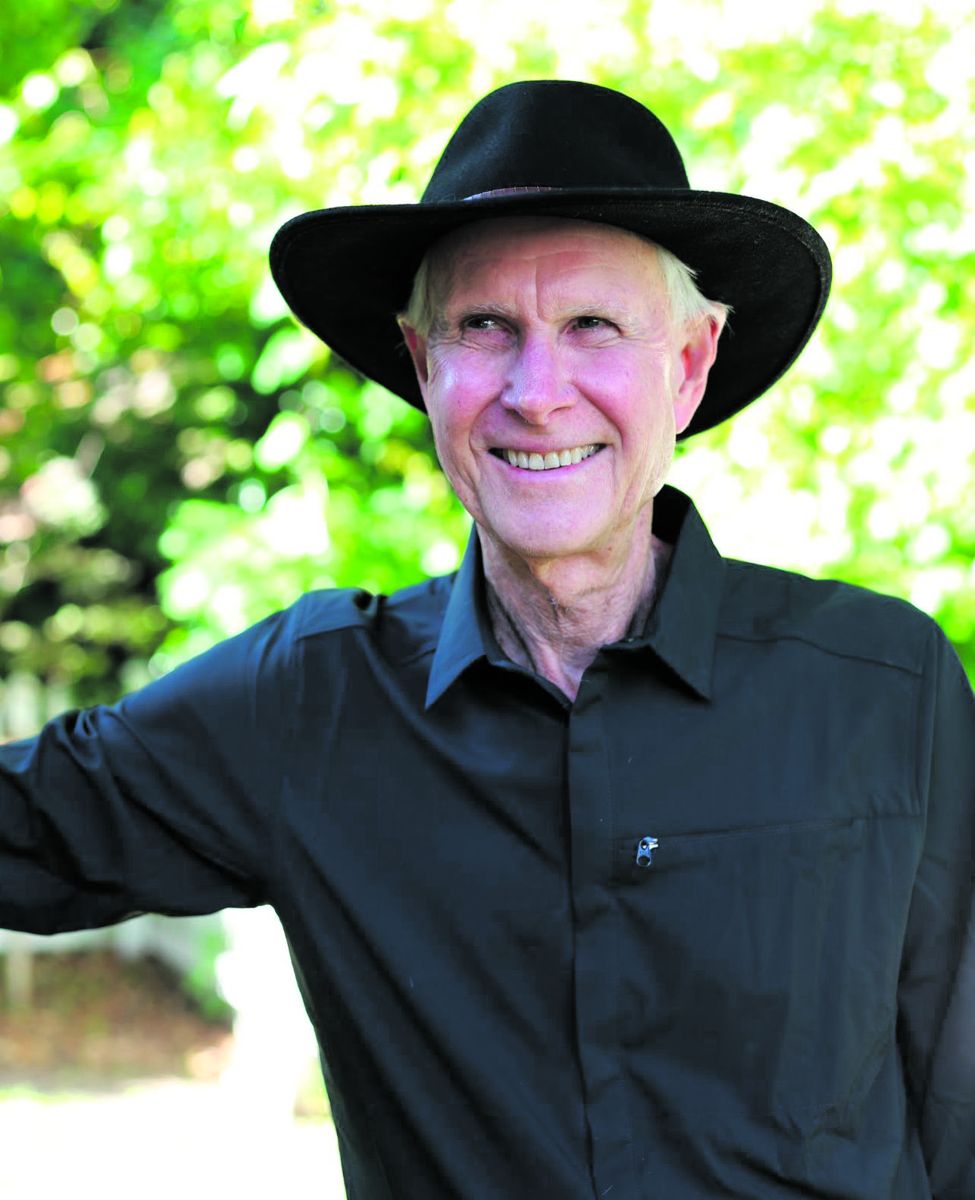
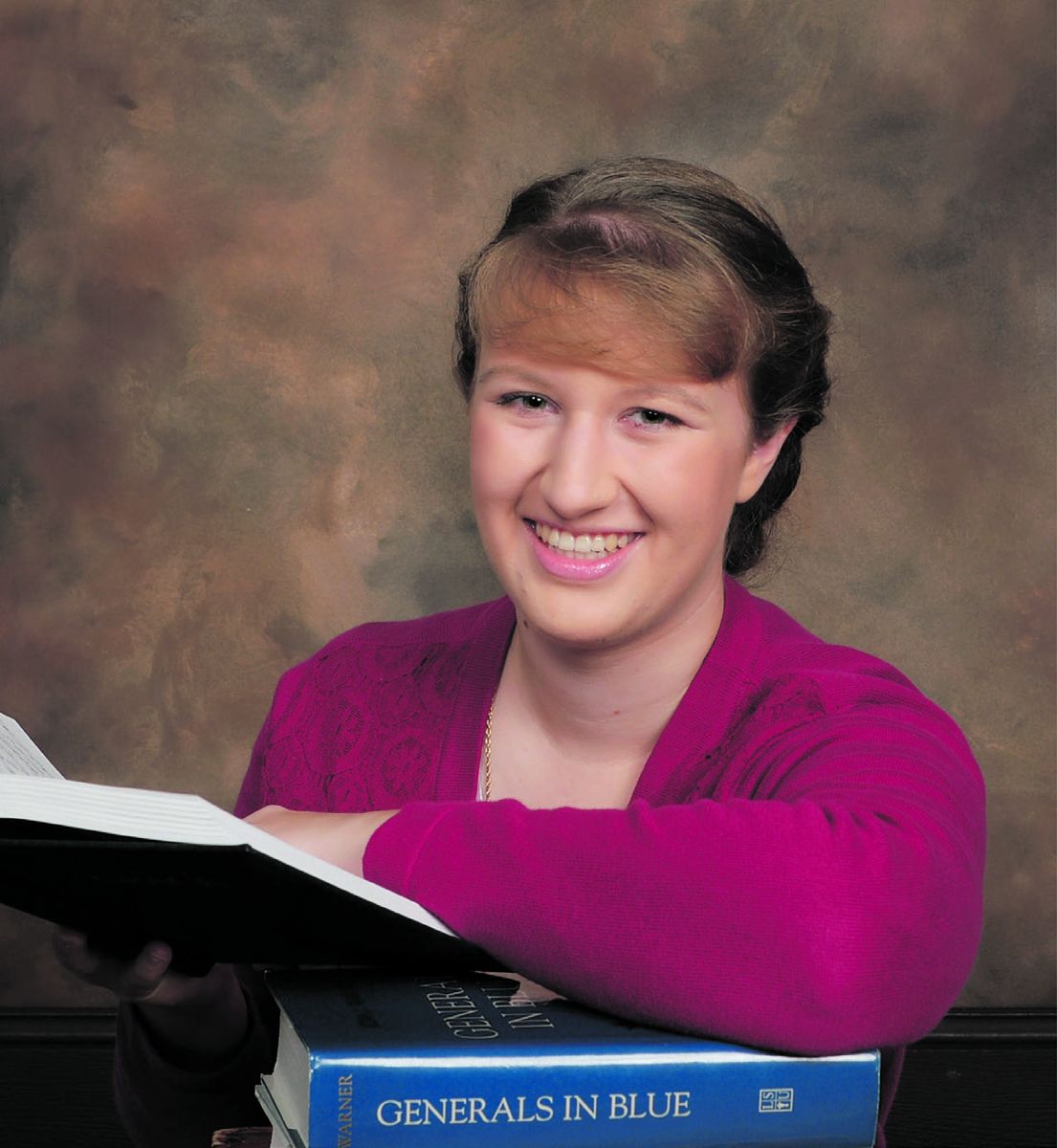
SPOTSYLVANIA, Va.—More than 165 Civil War scholars, writers, and enthusiasts gathered August 6 through 8 at Stevenson’s Ridge conference center in Spotsylvania, Va., for the 7th Emerging Civil War Symposium. Emerging Civil War Editor-inChief Chris Mackowski opened the conference by presenting the Emerging Civil War Award for Service in the Field of Civil War Public History to Dr. Gary Gallagher. (see cover story) Mackowski and other attendees praised Gallagher for a lifetime commitment to historic studies, battlefield preservation, and education of the next generations of historians; for his years of service on many boards; and for his willingness to mentor young people. ECW also presented several other awards later in the evening. Another celebration happened at lunch on the second day of the conference when the hosts brought out a cake and celebrated the 10th birthday of Emerging Civil War. ECW authors and staff present were called forward for a “team picture.” Not earning an award but perhaps deserving one, were Doug Crenshaw and Robert Dunkerly, who put together a joint presentation on Joseph Johnston with about two hours’ notice to pinch hit for a scheduled presenter who couldn’t make it. This year’s conference theme was “Fallen Leaders of the Civil War.” The people at ECW used the term “fallen” broadly. While the presentations dealt with many officers who died during the War, including Jeb Stuart, John Pelham, Earl van Dorn, Richard Armistead, Thomas G. Stevenson, and Leonidas Polk, it also included officers who were alive and more or less well at the end of the war, including PGT Beauregard, Joseph Johnston, John Pope, and Fitz John Porter, leaders who had fallen from grace. Best-selling author Gordon Rhea gave the keynote presentation on “JEB Stuart’s Mortal Wounding at Yellow Tavern.” He covered the outline of Stuart’s career as a cavalry leader and acknowledged the traditional accusation that Stuart was occasionally too interested in publicity, public acclaim, and the ladies. He then reminded listeners the effective leadership Stuart provided was not always in the cavalry sphere. For example, after Stonewall Jackson fell on the first night of the Chancellorsville campaign, Lee selected Stuart to lead Jackson’s Corps, and Stuart led the infantry very effectively through the rest of the battle. Raising a theme that echoed through many presentations, Rhea pointed out how Stuart redeemed himself after his acknowledged failure during the Gettysburg campaign. His active defense on the retreat to Virginia and his superb work during the early stages of the 1864 Overland Campaign demonstrated his value as a cavalry leader. Rhea gave Stuart particularly high marks for his defensive efforts during the Army of the Potomac’s attempt to flank the Army of Northern Virginia after the Battle of the Wilderness. Stuart’s aggressive screening held up Grant’s army and ensured that the Army of Northern Virginia would beat Grant to the key crossroads at Spotsylvania Courthouse. After his presentation, Rhea patiently signed extensive collections of his works from fans who seemingly had emptied their bookshelves for the occasion.
Certain commonalities emerged across the presentations. In at least five cases, personality may have contributed as much as performance to the officer’s downfall. Doug Crenshaw and Sean Chick both asserted that Johnston and Beauregard’s feuding with each other and their ongoing conflicts with President Jefferson Davis certainly made them more vulnerable to dismissal when performance disappointed. Matt Atkinson pointed out that Earl van Dorn’s death, of course, traced directly to his reputation for womanizing. Atkinson said that van Dorn showed distinct traits throughout the war: impetuosity, thirst for glory, and a continuous interest in “the fairer sex.” Before the war, he was known as one of the greatest Indian fighters in the U.S. Army. With responsibilities of higher command, he suffered defeats at Pea Ridge and Second Corinth but had several triumphs leading cavalry, including a raid that destroyed a major Union supply depot and another success at Thompson Station. Although John Pope’s dismissal was inevitable after his thrashing at 2nd Manassas, Dan Welch observed that his bombastic statements upon assuming command made him a more visible target and did much to make his fall “unavoidable.” Fitz John Porter, whose path crossed Pope’s, was arrested and convicted for refusing to follow orders, but, according to Kevin Pawlak, his public criticisms of Pope made him a bigger target. In three cases, a general’s “fall” was far from the end of his career. Robert Dunkerly pointed out that Johnston was brought back to command in the spring of 1865 and, considering the Army of Tennessee’s condition after Hood’s defeats at Franklin and Nashville, performed a magnificent job of getting a fighting force organized and then leading them effectively in the Battle of Bentonville, one of the last major battles of the war. Dunkerly said he considers Johnston’s work during the spring of 1865 “Johnston’s finest performance.” Welch described the ambition, use of political connections, and slender accomplishments that preceded John Pope’s appointment to command in the east. The “inevitable fall” in his title referred to his incompetent handling of his forces in the Battle of Second Manassas. Welch went on to point out that the conventional view Pope was exiled to a backwater after Second Manassas is an incorrect reading of the situation.
The Sioux war in Minnesota was assignments, including theater a dangerous uprising that caused command during the war and the Lincoln administration seri- postwar assignments that influous political problems. “If he was enced the future of the U.S. Army. being exiled, why did they send PGT Beauregard was another him to a place where important general whose flamboyant perfighting was taking place?” Pope sonality repeatedly got him in handled the situation effectively trouble but his popularity and and sensitively and went on from unquestioned abilities as an engithere to several other important neer kept him in demand until the
War’s end. Chick pointed out that the “hero” of Fort Sumter and the victor of First Manassas performed valuable services in preparing the Charleston defenses, commanding troops at Bermuda Hundred, and, perhaps most impressively, conducting the initial defense at Petersburg. Chick described the latter effort as “one of the finest defensive battles of the Civil War.” Finally, Fitz John Porter was the one general who survived the war but did not recover from his “fall.” Porter, a corps commander and close associate of George McClellan, was part of the portion of the Army of the Potomac assigned to reinforce John Pope’s short lived Army of Virginia. Kevin Pawlak pointed out that Porter made himself vulnerable with his open criticism of Pope, a vulnerability that he then compounded by not staging attacks on Lee’s right at Second Manassas that Pope ordered him to make. Pawlak argued that the charge that Porter refused to move in order to undercut Pope, and therefore endangered the entire army is incorrect; a board finally exonerated him, years after the war. The most obscure individual covered was the man for whom the ridge and the conference center are named. Mackowski said
“For eight years, Emerging Civil War has gathered at Stevenson Ridge to talk about the Civil War, but we’ve never really talked about the guy the place was named after, Brig. Gen. Thomas Greely Stevenson. Stevenson was a 28-year-old division commander in the Federal IX Corps who was killed during the battle of Spotsylvania Court House on May 10, 1864. According to historian Gordon Rhea, Stevenson was “arguably Burnside’s ablest division commander.” “But most people don’t really know who Stevenson was. As a short-tenured division commander in the most under performing Federal corps (IX), commanded
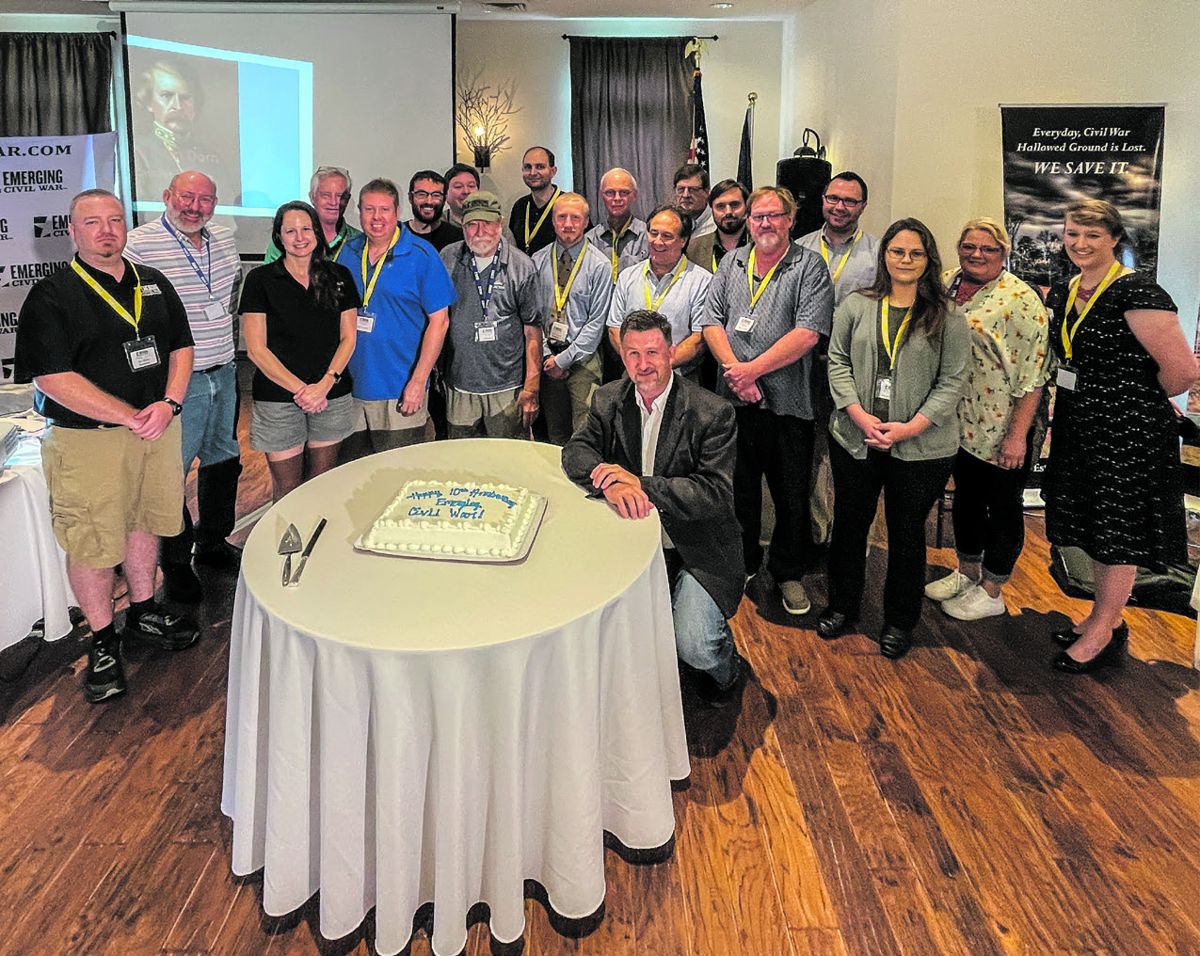
Sarah Bierle.
by one of the most lampooned Union generals (Burnside), along the least-known front of the battle, it is little wonder that Stevenson is barely remembered today or that his death gets little mention. Late historian Richard Sommers describes him as “the neglected hero Stevenson.” At least three presentations foreshadowed forthcoming books. Crenshaw covered material from his forthcoming book, To Hell or Richmond: The 1862 Peninsula Campaign, while the topic covered by Chick was based on his upcoming book Dreams of Victory: PGT Beauregard in the Civil War. Sarah Bierle’s discussion of Pelham was also based on her forthcoming book. Her presentation summarized his life and brief military career but also examined the inflated position he assumed, almost immediately, in Confederate mythology and memory. She challenged the audience to recall that “a person’s life and the story written about them after their death may not match.”
The conference was bookended by a pair of battle walks. On Friday morning, Ted Savas led 84 people on a tour of Payne’s Farm on the Mine Run battlefield. Savas and Paul Sacra rediscovered the lost battlefield in the
1980s and it has since been protected by the American Battlefield Trust. Sunday morning, historian Greg Mertz took more than 100 people on a walk through the Wilderness Battlefield and discussed the wounding of James Longstreet. In keeping with the conference theme, he also worked Longstreet’s postwar “fall” into his presentation. Sarah Bierle, one of the chief conference organizers, summarized her feelings at the end of the conference: “It was exciting to see this year’s symposium come together and such a delight to see so many friends. I particularly enjoyed meeting some of our newest writers for the blog and symposium guests who were attending for the first time. The Symposium is such a wonderful networking event, in addition to the scheduled programs, and I find it satisfying to watch people connecting, talking about their interests and research, and making plans for the future. That is at the heart of the Emerging brand, and to see it in-person and be a part of making the event happen, is a fulfilling way to give back to the history community.”
Next year’s conference theme is “What-if’s of the Civil War.”