
American Battlefield Trust — October 2021
Originally published October 2021 · pp. 12–13
The Trust Brings Education Efforts to the Forefront Despite amid ongoing turbulence in the time of Covid, the American Battlefield Trust succeeded in delivering its largest educator event yet, the 2021 Virtual Teacher Institute, held July 12-16. Following the smash hit that was last year’s first-ever Virtual Teacher Institute, this year’s iteration dared to push the envelope: A whopping 38 sessions were held over five days, welcoming 537 virtual participants from three continents. Trust President David Duncan noted that “The Virtual Teacher Institute has quickly become a staple, as it built a bridge for educators to connect with our worldclass tools, brilliant experts and speakers, and their fellow colleagues.” The 2021 online event featured a diverse mix of workshops and lectures that left attendees considering America’s formative struggles from a wide range of perspectives. Sessions included: “Using Trust Resources in the Classroom,” “A Behind the Scenes Look at the History Channel,” and “A Civil War Photo Extravaganza.” Moving forward, the organization will pursue a dual-track program with in-person and online options; both will remain free and provide an opportunity to procure Continuing Education Units. Next year’s in-person Teacher Institute will bring participants to the port city of Mobile, Ala. As the new school year takes shape, the Trust’s education programs do as well, with plans to connect students to hands-on history education by way of its traveling trunk, field trip fund, and Great Task programs. For more information on these eye-opening resources, visit www.battlefields.org/learn/educators. These classroom programs, plus on-site and digital battlefield interpretation and online resources, are vital ways to bring the past alive. They do not happen in a vacuum and require passionate supporters and financial backing. Thanks to the generosity of the HTR Foundation and the first-time availability of the federal interpretation and restoration matching funds, the Trust’s latest education fundraising campaign will allow each donation to be matched dollar-for-dollar. To learn more about this opportunity, visit www.battlefields.org/ supporteducation.
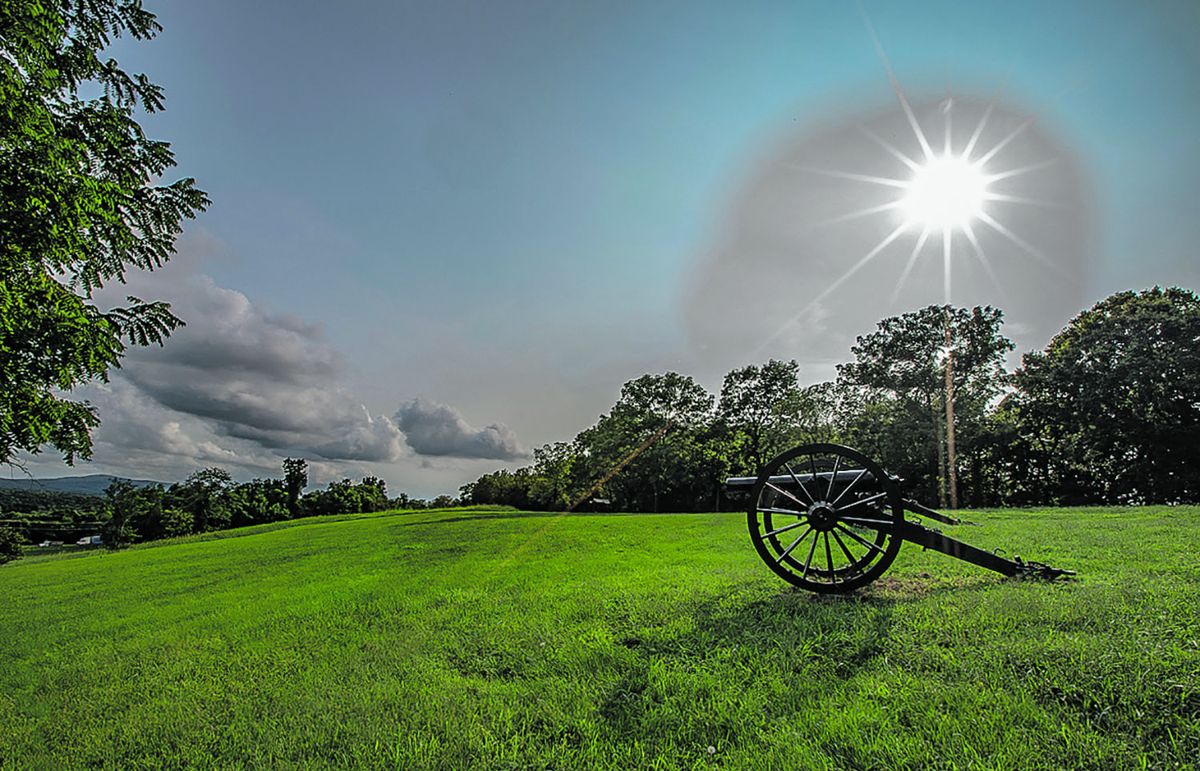
Expanding Preservation Efforts at Harpers Ferry While the Trust is constantly seeking new locations to add to its roster of successes, some sites are so significant they merit returning to time and again over the years and decades. One such place is Harpers Ferry, where we’ve succeeded in saving 542 acres of hallowed ground over 29 years, most of which has been incorporated into Harpers Ferry National Historical Park. As the dynamic preservation story continues at the West Virginia site, the Trust has transferred the last of four tracts, totaling almost 17 acres that were saved in 2013– 2014. All told, the Trust is now responsible for 342 acres joining the national park. One particular 0.61-acre tract was once the proposed site for a gas station or mini-mart, but the Trust and its devoted partners stymied development in its tracks. Along with 3.28 adjacent acres, the property was acquired in 2013 through a partnership between the Trust, the National Parks Conservation Association, the National Park Service, and the Bank of Charles Town. All of them recognized its unforgettable role in the American story. Sitting along the Harpers Ferry–Charles Town Turnpike on Bolivar Heights, the property was in the center of the Union’s defensive position and a target of Confederate artillery on September 15, 1862. Ultimately, a Union surrender was rendered. Only three years earlier, the land witnessed a monumental moment on the hard-fought journey to expand civil rights when, in 1859, abolitionist John Brown raided the town’s federal armory. The Trust will continue to prioritize its work with the nation’s parks to transform its inholding land into special, public spaces that all Americans can access and enjoy.
Looking Out West: Help Save 407 Acres at Four Western Battlefields! Students of the Civil War readily recognize battles fought in the Western Theater as “game-changers,” shifting the war’s progress. Today, the Trust seeks to protect a total of 407 acres at four battlefields that shaped the course of history: the Second Battle of Corinth and the Battle of Champion Hill in Mississippi, the Siege and Battle at Port Hudson,
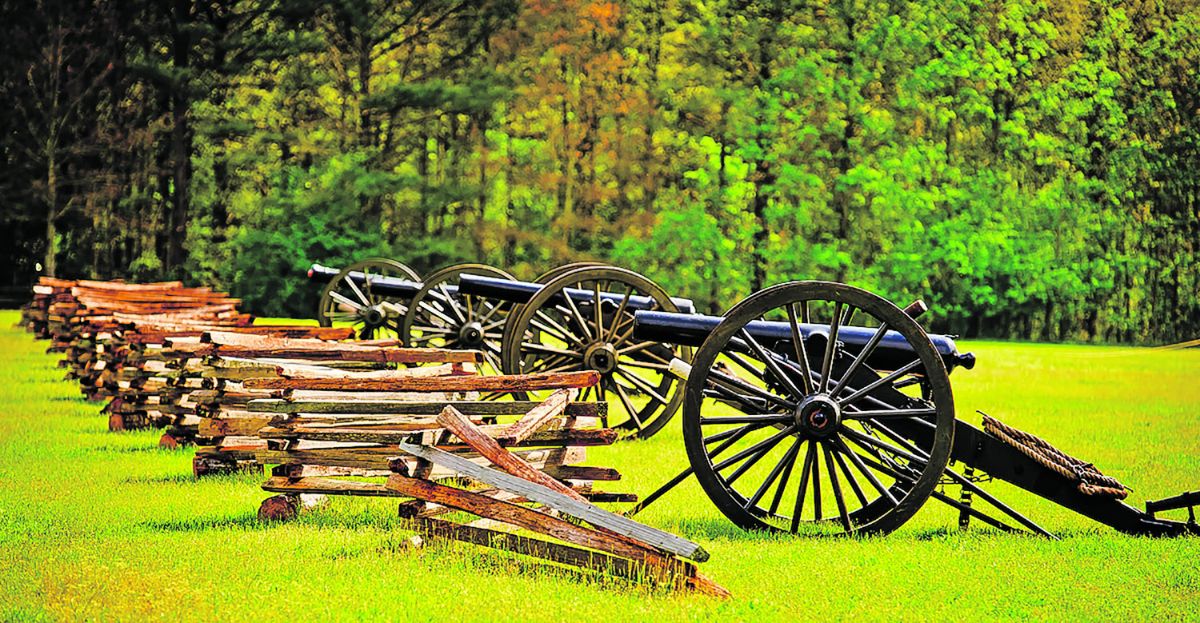
Louisiana, and the Battle of Chattanooga, Tennessee. Faced with a total transaction value of $2,850,600, the Trust sought out a variety of private, state, and federal grants to complete these projects, reducing the private fundraising need to just $307,450, — less than 11% of the total value and cost. Thus, every dollar donated will be multiplied by $9.27. At Champion Hill, the largest battle of the Vicksburg Campaign, we are building off past successes, including a significant effort earlier this year. Similarly, we’ve recently come across a number of exciting opportunities at Chattanooga, where a series of battles ultimately created Union dominance of a vast transportation network. At Corinth, Confederates nearly succeeded in recapturing the important transportation center on October 3-4, 1862. After desperate hand-to-hand fighting, Federal defenders counterattacked and pushed the Confederates just over the Tennessee line, then defeated them at Hatchie’s Bridge to maintain control of the region’s infrastructure. While we’ve already saved nearly 800 acres there, it’s been more than three years since a new chance arose. Our target tract at Port Hudson was within the Confederate defenses during the 48-day siege from May 21-July 9, 1863. After the Confederates surrendered, the Union took significant steps to fortify and garrison the site, including the acreage the Trust seeks. Additionally, it served as the headquarters for the “Corps d’Afrique” under Maj. Gen. Nathaniel Banks, before this group became incorporated into the United States Colored Troops. One of the Trust’s predecessor organizations first protected land at Port Hudson in 1993, but it has been nearly three decades since we had an opportunity for further work.
Please help us expand the protection of these four critical sites today at www.battlefields.org/4west.
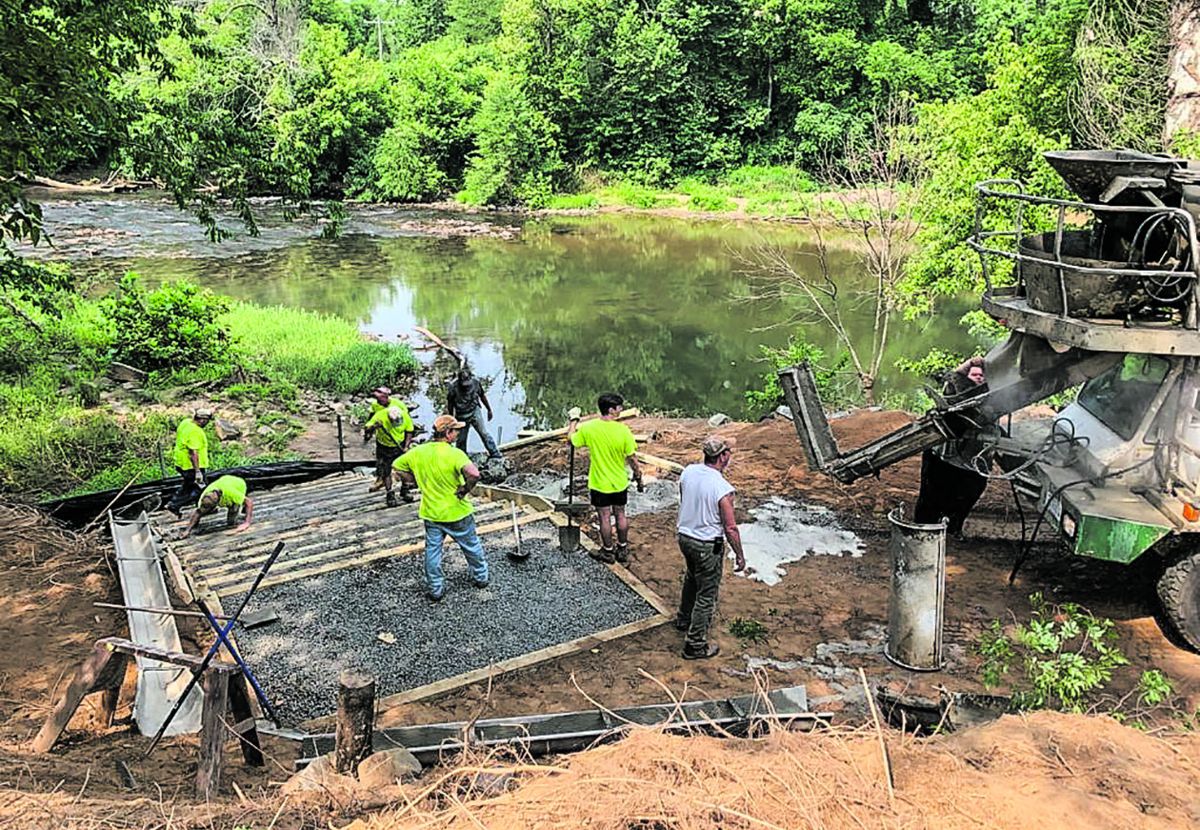
Celebrating New Recreational Access to the Historic Rappahannock River The Trust is thrilled that our partners at the Piedmont Environmental Council (PEC) have completed installing a boat launch on Trust-protected property at the Rappahannock Station Battlefield, giving residents a new public access point to the state-designated scenic river. A timber-framed, concrete staircase with a wooden slide for hand launching non-motorized vessels, the boat launch was built over five days in late July by representatives of the Virginia Department of Wildlife Resources, Fauquier County Parks and Recreation,
The Piedmont Environmental Council, and resident volunteers. An official ribbon-cutting ceremony was held Saturday, August 14. The Rappahannock River runs for approximately 55 miles, serving as a boundary between Fauquier, Rappahannock, and Culpeper counties. Until now, the only water access point with a boat launch along that entire distance was at Kelly’s Ford in Culpeper County. Now, with the opening of the Remington boat launch adjacent to the future Rappahannock Station Park, paddlers can put in at Remington and take out at Kelly’s Ford after a five-mile float. The new boat launch is part of a broader goal to create an upper Rappahannock River water trail system, opening up public access to the Rappahannock River in Fauquier, Culpeper, and Rappahannock counties.