
The Graphic War
Marshall’s Lincoln
By Salvatore Cilella · Originally published November 2021 · p. 28
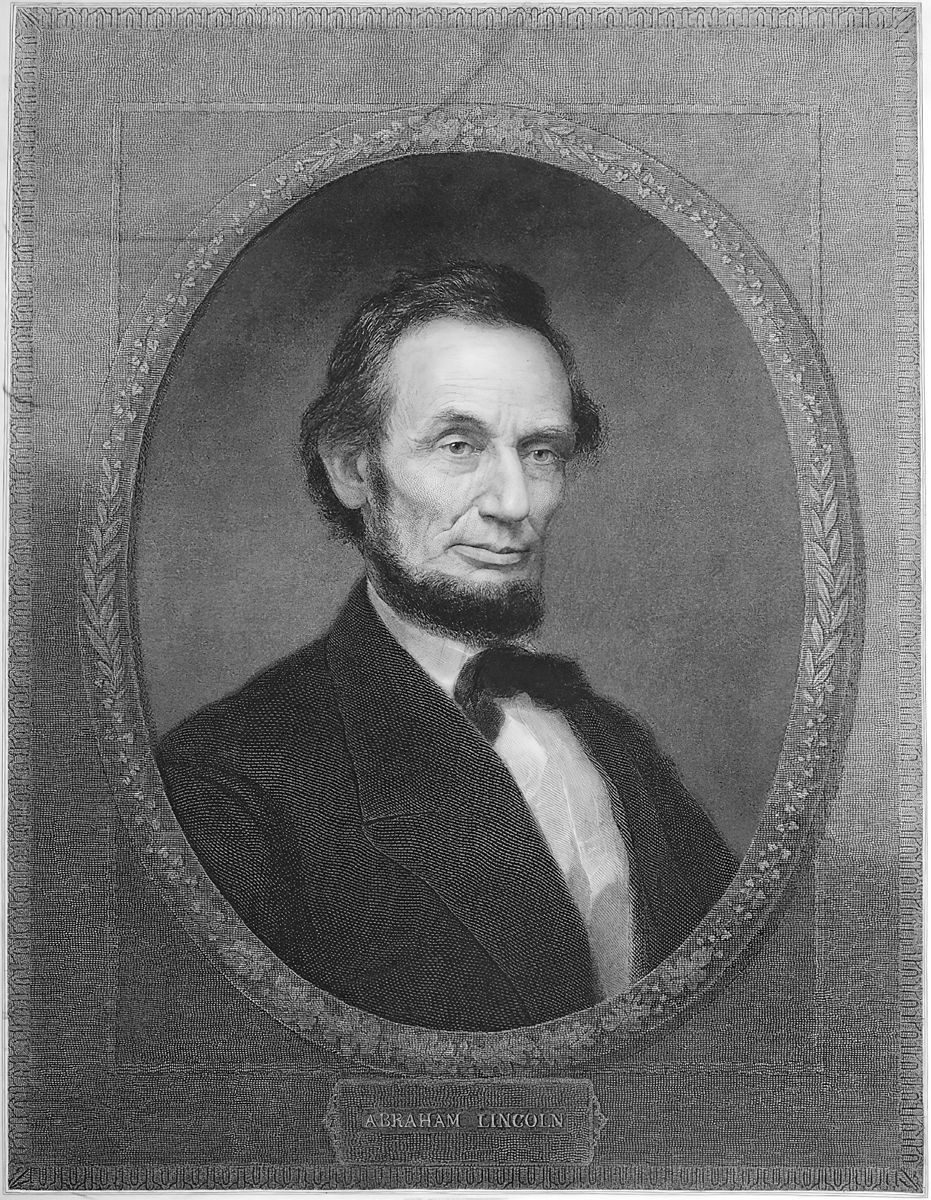
The Graphic War highlights prints and printmakers from the Civil War discussing their meaning and the print maker or artist’s goals. It was an instant success. Perhaps it came so closely after his assassination; perhaps it was the uncanny likeness; perhaps the engraving’s sheer artistic achievement by its creator William Edgar Marshall insured its acceptance as “the definitive Lincoln portrait.” When he died of pneumonia in 1906, William Marshall had been largely forgotten. In fact his obituary stated that he “lived a life so retired, always occupying the same studio on Broadway near Washington Square, keeping entirely aloof from the ambitions and contests in and out of the National academy, that his death will be a surprise to many who supposed he was no longer among the living.”1 Marshall was a native New Yorker, his parents Scottish immigrants. He began his adult life at an early age as an engraver of watches in Washington, D.C., but it was at his job with the Treasury Department where he learned to engrave; that set him on his course as a recognized artist. At Treasury he engraved likenesses of James Buchanan and John C. Fremont. At age 21, feeling the need to formally learn art, Marshall decamped to Paris. Returning at War’s end, he painted portraits of Grant, Sherman, James G. Blaine, and George Washington (after a painting by Gilbert Stuart). His likeness of Washington was described by Edward Everett as a “perfection of execution.” Washington’s portrait firmly established Marshall’s reputation as a portrait engraver. Marshall’s portrait of Lincoln placed him in the pantheon of mid-19th century artists. After Lincoln’s assassination, a distraught Marshall painted this portrait from other prints and photographs. Lincoln never sat for Marshall as an art subject. The print elicited immediate admiration as the finest portrait of the martyred president. The Boston firm of Ticknor & Fields announced an agreement to have Marshall engrave his painting on copper; he did, and it was published in 1866. Like the painting, the engraving of Abraham Lincoln won wide acclaim. The president’s son, Robert Todd Lincoln, declared it excellent “as a likeness,” and could not “suggest any improvement.” The French artist, Gustave Dore, declared it “the best engraving ever made by any artist living or dead.” Fredrick Douglas owned a copy.2 Marshall solicited endorsements, which came readily, without reserve. Lincoln’s old partner, William Herndon called it a “work of the highest art.” Those who knew Lincoln, Herndon testified, “may rest assured that the expression…and mood of the man are well caught, expressed and observed.” The print captured Lincoln “in kindness, tenderness and reflection.” Edwin Stanton was as effusive: “As one who knew and loved him, I rejoice that you have so well succeeded in your effort…preserving the memory of his countenance, and enabling the world to know what manner of man he was.” William Sumner focused in on Marshall’s rendering of Lincoln’s expression, “where gentleness and sympathy unite in strength.” Speaker of the House, Schuyler Colfax thought Lincoln appeared “calm but grave.”3
On July 25, 1866, Marshall wrote the Atlantic Monthly with information about his new print. In his letter, Marshall emphasized that it was “a truthful portrait of…Lincoln as he appeared in his calm and thoughtful moments.” He touted the myriad endorsements he received from Lincoln’s contemporaries. He finished his sales pitch with: “The execution of this portrait has been a pleasant labor to me during the many months I have been engaged upon it; and in executing it, 1 have endeavored not merely to gratify a professional ambition in producing a work of art, but 1 have sought, so far as could be done in one picture, to represent Mr. Lincoln as he was, and as he will be known in the pages of history and biography.”4 Similar “announcements” were made in newspapers and magazines nationwide. In the end, the print was a huge success for Marshall and is today considered by many to be one of the best-engraved likenesses of Lincoln. 1.
Endnotes:
“William E. Marshall Dead,” NYTimes, August 30, 1906 Obituary. Harold Holzer, Gabor Boritt, Mark E. Neely, Jr. The Lincoln Image: Abraham Lincoln and The Popular Print, New York: Scribner Press, 1984. 212-213. Ibid., 214. https://graphicarts.princeton.edu/2017/05/19/abraham-lincoln-for-sale/
After 43 years in the museum field, Salvatore Cilella devotes his time collecting American prints and maps and writing. His last professional position was President and CEO of the Atlanta History Center. His most recent books are Upton’s Regulars: A History of the 121st New York Volunteers in the Civil War (U. Press Kansas, 2009). His two-volume Correspondence of Major General Emory Upton, (U. of Tennessee Press, 2017), received the 2017–2018 American Civil War Museum’s Founders Award for outstanding editing of primary source materials. His latest book “Till Death Do Us Part,” an edit of Upton’s letters to his wife 1868– 70, was published in 2020 by the Oklahoma University Press.