Lee Statue Removed
By Leon Reed · Originally published November 2021 · pp. 4–7
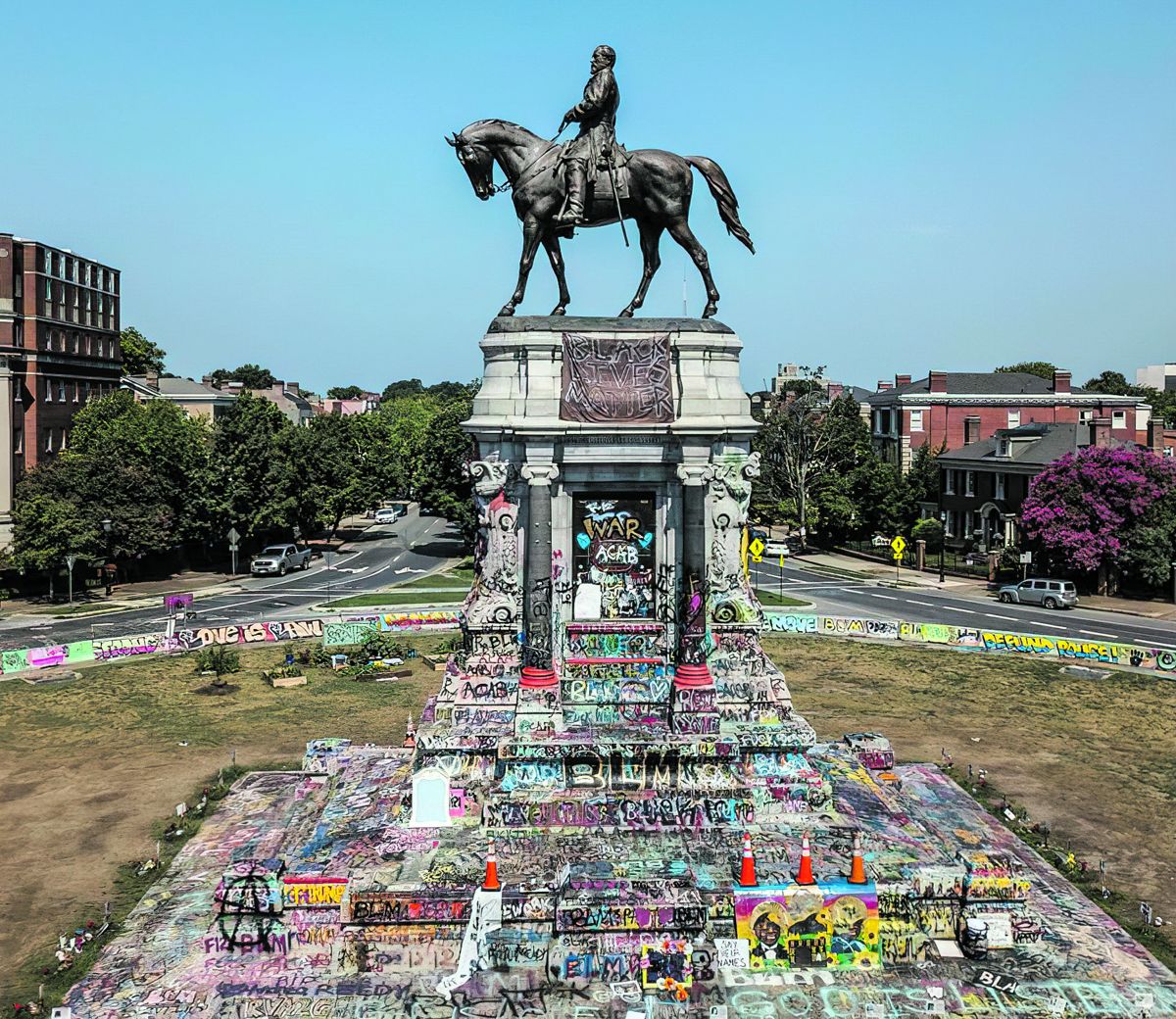
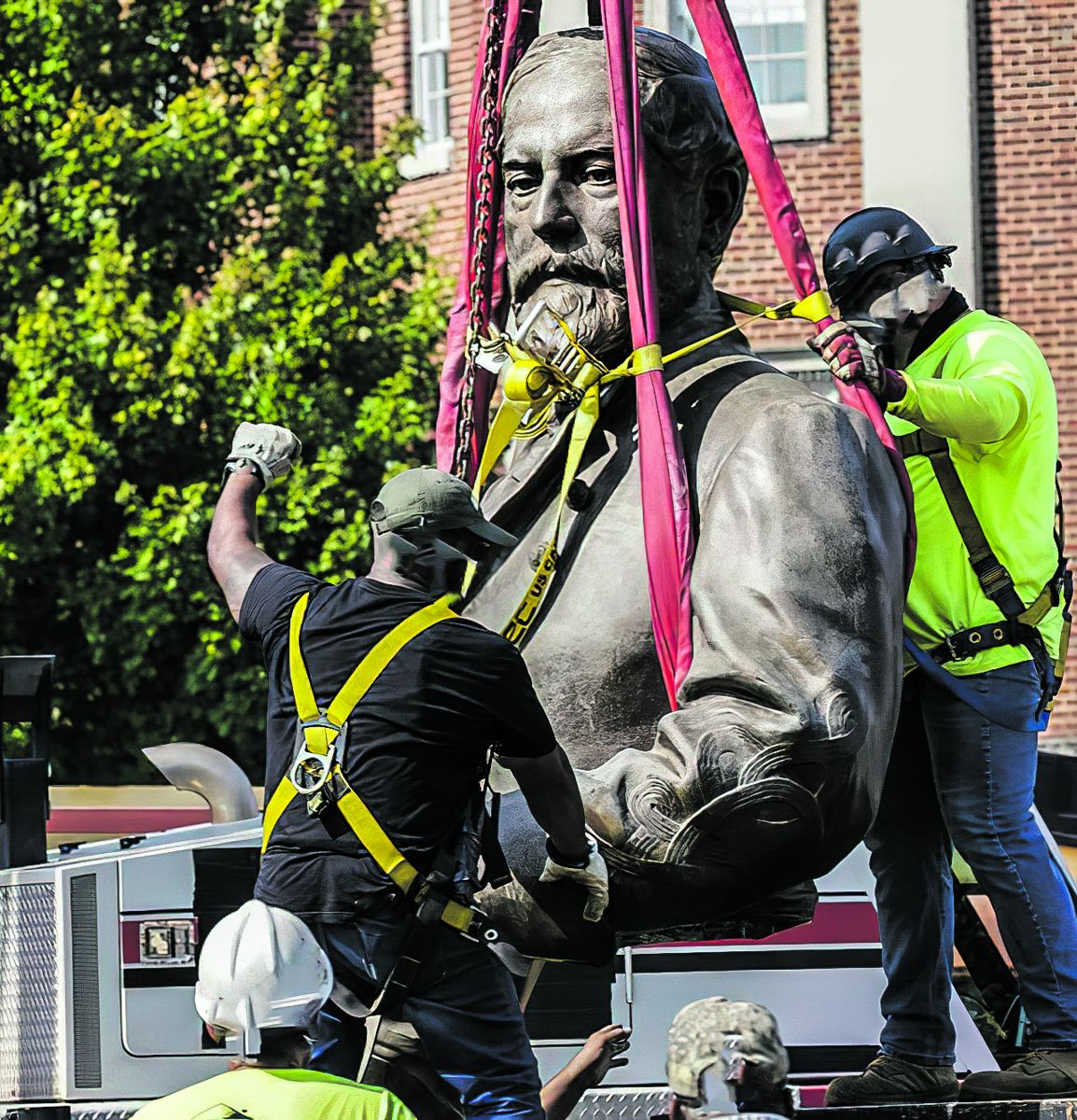
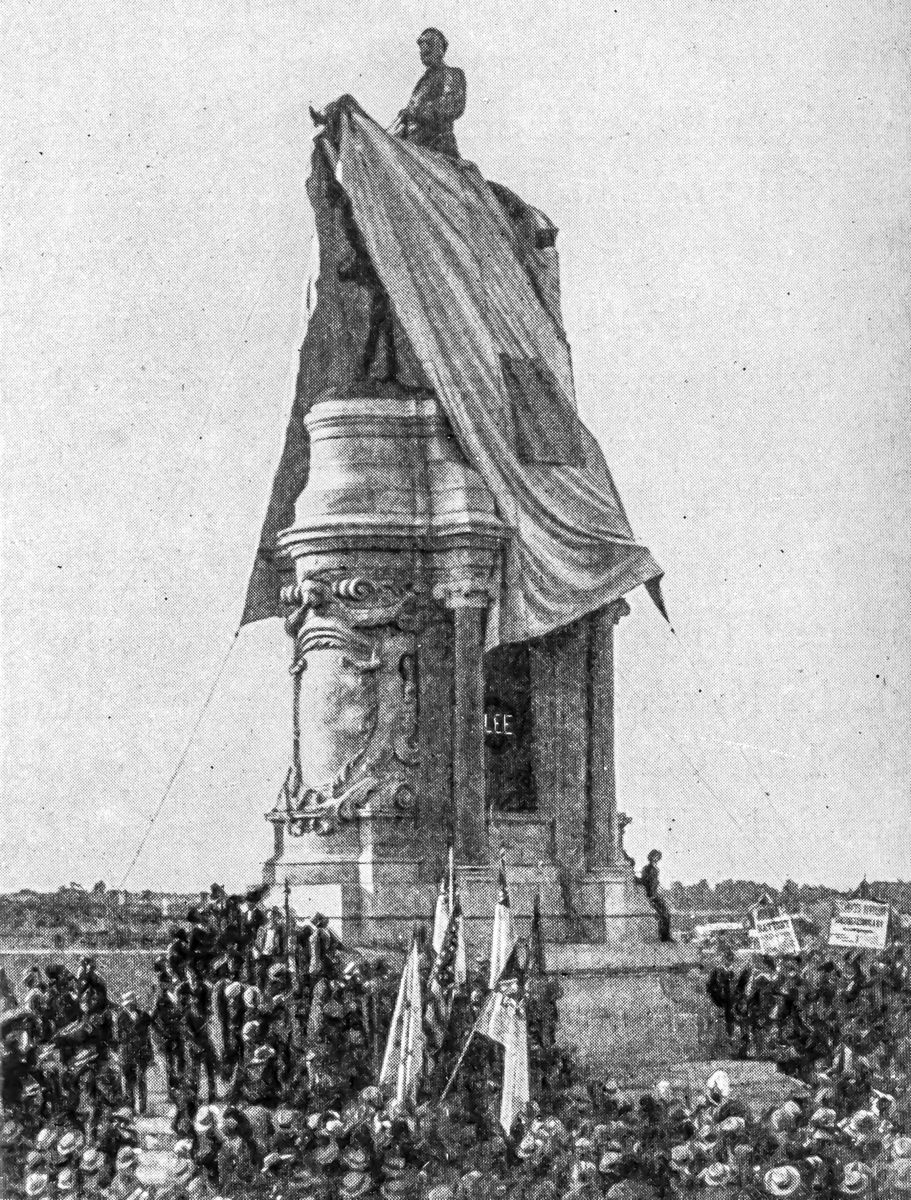
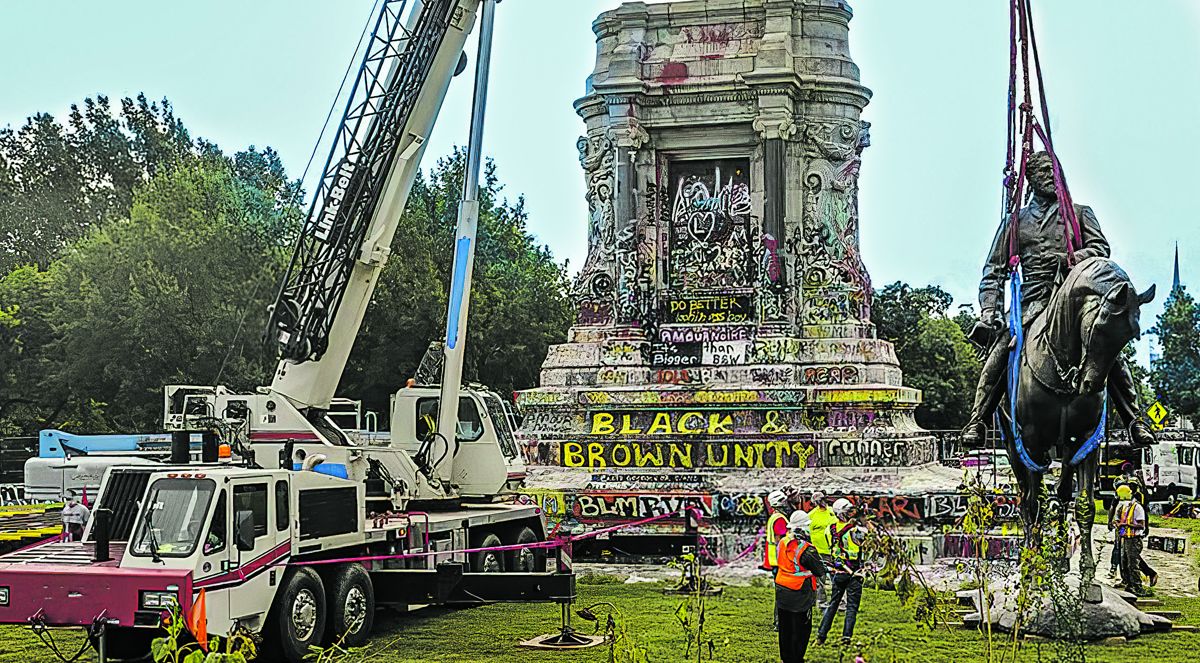
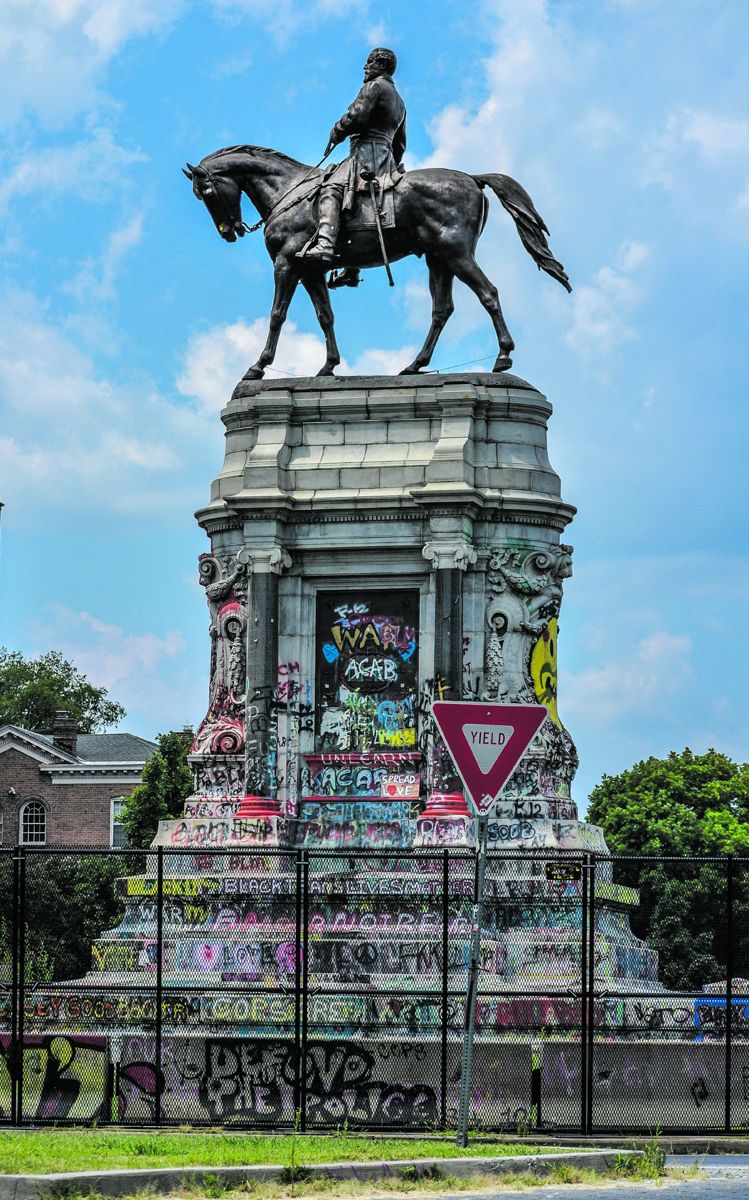
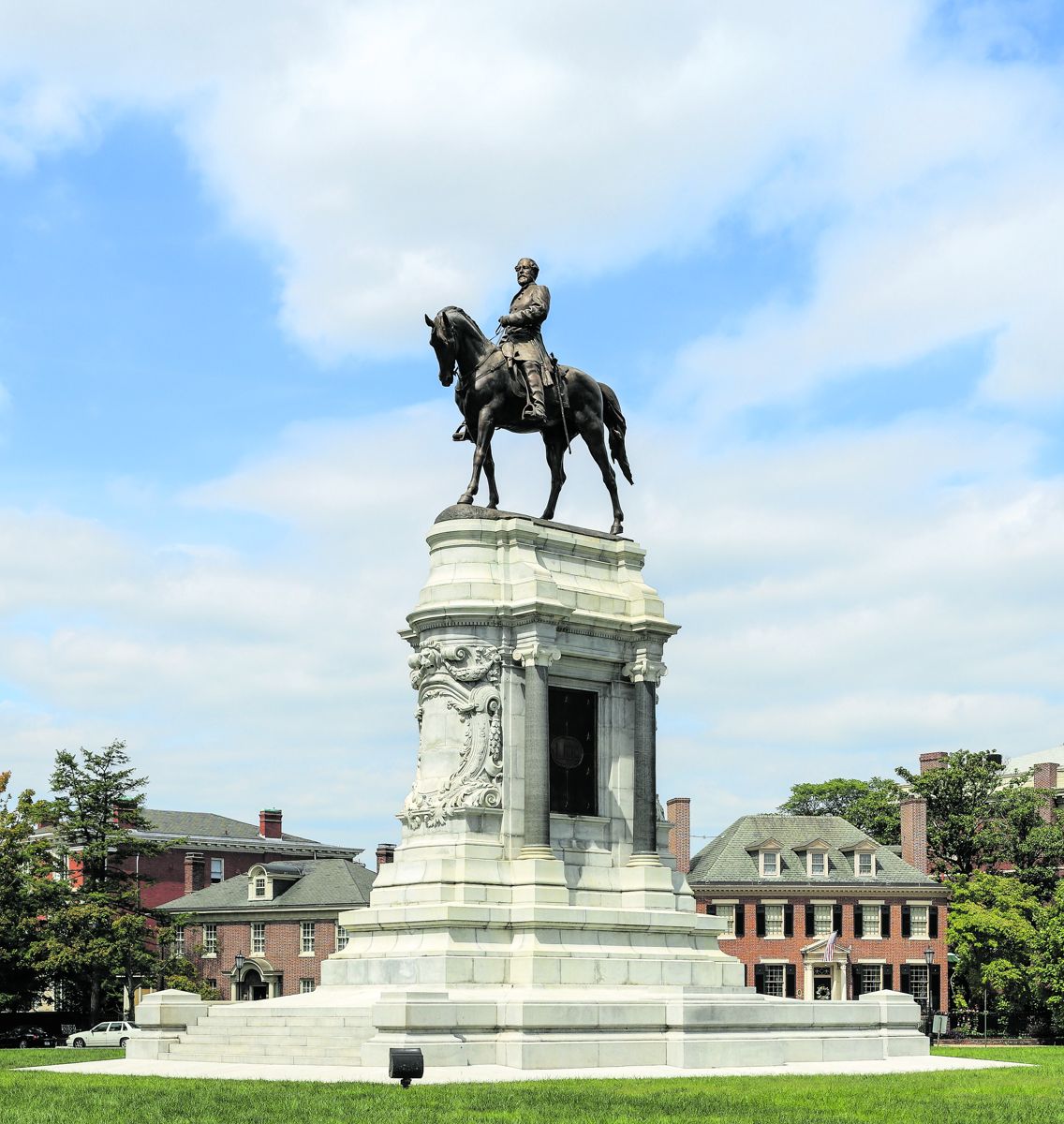
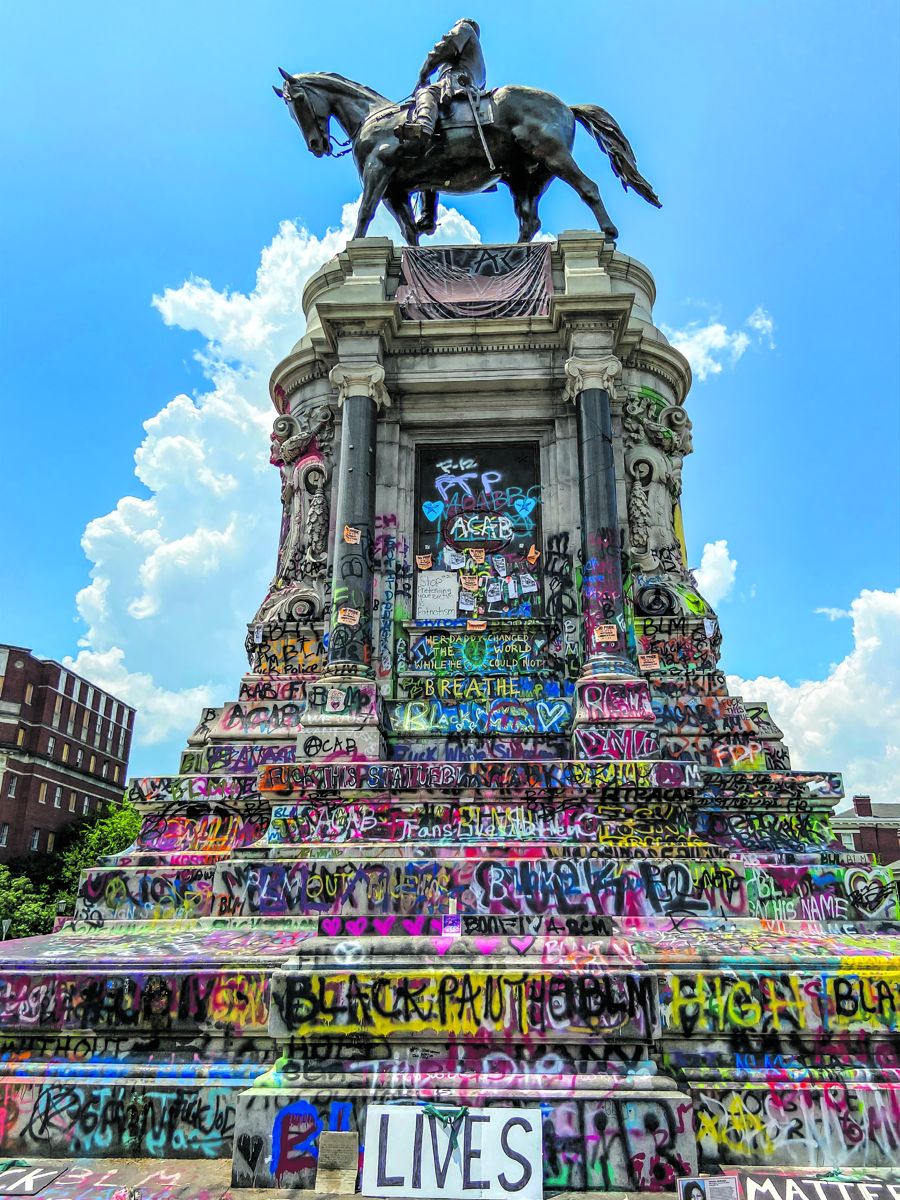
RICHMOND, Va.— On September 8, 2021, the Robert E. Lee statue, once the centerpiece of Richmond’s National Register of Historic Places, the Monument Avenue complex, was removed. It was the latest in a series of removals and relocations that gained momentum in the aftermath of high-profile incidents such as the 2017 Charlottesville Unite the Right rally and the 2020 death of George Floyd. The pace quickened over the past year. Through 2016, a total of 11 Confederate monuments were taken down or relocated. In 2017, a total of 36 were removed following the Unite the Right rally. The next two years saw the removal of eight more; then 94 were removed in 2020, the year George Floyd was killed. Removal spikes were triggered by events that caught national attention; the difference now may be the long-lasting nature of removals. The Lee statue’s removal from Monument Avenue was coming for a long time. Monument Avenue was developed in the 1890s as the centerpiece of what was to become the most high-style neighborhood in Richmond. Lee’s statue was installed in 1890 before a crowd estimated at 100,000. Statues to Jefferson Davis, JEB Stuart, Thomas J. “Stonewall” Jackson, and oceanographer Matthew Maury were added over the next few years; the suite was completed nearly a century later with the installation of a statue to Richmond-born tennis player Arthur Ashe. For some years, Monument Avenue served as a ceremonial centerpiece for Richmond. The neighborhood had its ups and downs over time; by the 1960s, most of the stately homes had been carved up into boarding houses; but a strong preservation group maintained the “brand.” In 2007, the American Planning Association selected Monument Avenue as one of the “10 Great Streets in America for 2007” for its historical design, diversity of land use, and commitment to historic preservation. The Lee monument, located in the Monument Avenue Historic District, was also individually listed on the National Register of Historic Places in 2007 and the Virginia Landmarks Register. Nationally, some of the first prominent removals were made in New Orleans during 2017 and in Maryland. With the emergence of threats to monuments, Virginia and a few other states passed laws making it more difficult or impossible to remove any public monument. But with the election of a Democratic majority in both houses of the Virginia legislature, the Virginia law was repealed, and eventually, an injunction preventing removal was voided. The Lee monument was cut in half for transportation and is now in storage. Reportedly, several organizations have expressed interest in Richmond’s Lee statue. The fate of other Monument Avenue monuments, removed earlier, is less clear. Virginia was one of several states’ laws, including Alabama, Georgia, Mississippi, North Carolina, South Carolina, and Tennessee, enacted, chiefly since 2000, to impede or prohibit the removal of Confederate monuments. Nevertheless, some city and county governments and private groups continued to press for removal. The debate about Confederate monuments, such as it is, has been unedifying on both sides. The primary arguments on behalf of removal are a) that it is inappropriate to erect memorials to men who rebelled against their country and, somewhat in contradiction, b) that they are not really monuments to honor or mourn the old soldiers anyway, but instead are monuments to the Jim Crow system, intended to intimidate black residents. Monument supporters have tended to view monument preservation as a self-evident matter and have been less aggressive in “selling” their point of view; generally, they have used the argument that “you shouldn’t destroy our history.” The arguments advanced by monument supporters haven’t been compelling and, while monuments have many merits as arbiters of memory, they are most undoubtedly historical symbols from a past time. Whether the memorial removed is King George III, Robert E. Lee, Thomas Jefferson, or Jefferson Davis, history is not being erased when a monument comes down or is relocated. The very nature of history involves a continuous reassessment of people and events in light of new knowledge (revisionist history). Recent years have seen Grant, Eisenhower, and Truman, once considered mediocrities at best, be redeveloped into more positive historical figures while Jefferson and Woodrow Wilson have gone into eclipse. Arguments on behalf of bringing down monuments are not any more effective, but, to date, they have prevailed in many locales. In the immediate aftermath of George Floyd’s death, public opinion remained in favor of keeping Confederate monuments. Still, the margin narrowed to 44% who favored keeping monuments, 32% calling for their removal, and 23% undecided. Numbers in a July 21, 2021, poll returned to “normal” levels, with 51% in favor of monuments and 30% against. A staggering 10,600 demonstrations occurred across the U.S. between May 24 and August 22, 2020. About 7,750 were protests/riots linked to the Black Lives Matter movement. Most of those arrested at these events had their charges dismissed or reduced. From the beginning, proponents of removal have been more organized. There is now a (sort of) monument removal “industry” made up of the Southern Poverty Law Center, the Make it Right project, various local activist organizations, and the largest of them all, the Black Lives Matter movement. For the most part, the fight has been waged in city and county council chambers, state legislatures, and courtrooms, but it has occasionally spilled out into the public domain. Most demonstrations and counterdemonstrations have been peaceful, but many monuments have been vandalized. A few have been torn down, including a statue known as “Silent Sam” on the University of North Carolina campus, and Confederate soldier monuments in Durham, N.C., and Seattle, Wash., by protesters, while law enforcement officers stood down. The practice has been especially widespread in Virginia, where serious vandalism or destruction occurred to monuments honoring Robert E. Lee (Roanoke), Jefferson Davis (Richmond), and Confederate soldiers (Portsmouth). In the same state, Confederate monuments in Alexandria, Norfolk, Richmond, Leesburg, Farmville, Virginia Beach, Charlottesville, and Bowling Green were removed or recommended for removal by the actions, either of the state, city council, or UDC. Monument defenders have had moments that didn’t reflect to their credit, most notably with the 2017 “Unite the Right” rally, which was ostensibly a gathering to defend the Robert E. Lee monument in Charlottesville but turned into a two-day celebration of white supremacy, anti-Semitism, and violence; another was the July 4, 2020, a mass outpouring of more than 1,000 armed militia and others at Gettysburg, to “defend the monuments” because of a rumor, thoroughly debunked by the time the “monument protectors” showed up, that said statues in the National Military Park would be destroyed. Neither side contributes to their cause with vandalism or armed response. As predicted by proponents of keeping the Confederate monuments, removal and vandalism of historical monuments have not been limited only to Confederate monuments.
Several monuments to Supreme Court Chief Justice Roger Taney, who wrote the Dred Scott decision, have been taken down, as was a Charlottesville monument to Lewis and Clark, which was thought to show Sacajawea in a subordinate position. The Lincoln Emancipation monument also has come under fire for the patronizing, paternalistic attitude it supposedly shows. Broadening the scope of historical revisionism, numerous monuments to individuals accused of participating in genocide against Native Americans have been removed, including monuments to Kit Carson, Father Junipero Serra, Christopher Columbus, and Spanish colonial governor Juan de Oñate. Monuments in Denver and Santa Fe honoring soldiers who fought against Native Americans have also been taken down. It is ironic, in view of suggestions by some that Confederate monuments should be “contextualized” or sanitized, that the Santa Fe monument had been both sanitized to remove offensive, archaic language and contextualized with plaques explaining that attitudes in the 1800s were different than modern-day attitudes, but the monument still came down. Regardless of what monument defenders think should be true, it is evident that there is a movement in favor of removing many or all Confederate monuments, even from National Parks. Removals have taken place all over the country, including in many states that ban monument removal. They have happened through the actions of protesters, city and county governments, state governments, universities, churches, and the UDC. Many of the measures were taken under duress, but that pressure is likely to persist. Arguments advanced to date in defense of the monuments have not been effective, and it isn’t likely that they will be more effective in the future. Supporters of Confederate monuments need to re-examine the issue and develop arguments and tactics more effective than those that have been used to date.
Leon Reed is a former U.S. Senate aide and U.S. history teacher. He lives in Gettysburg and is the author of No Greater Calamity for the Country: NorthSouth Conflict, Secession, and the Onset of Civil War (2019).