
Emerging Civil War
Emerging Civil War — November 2021
Originally published November 2021 · pp. 36–37
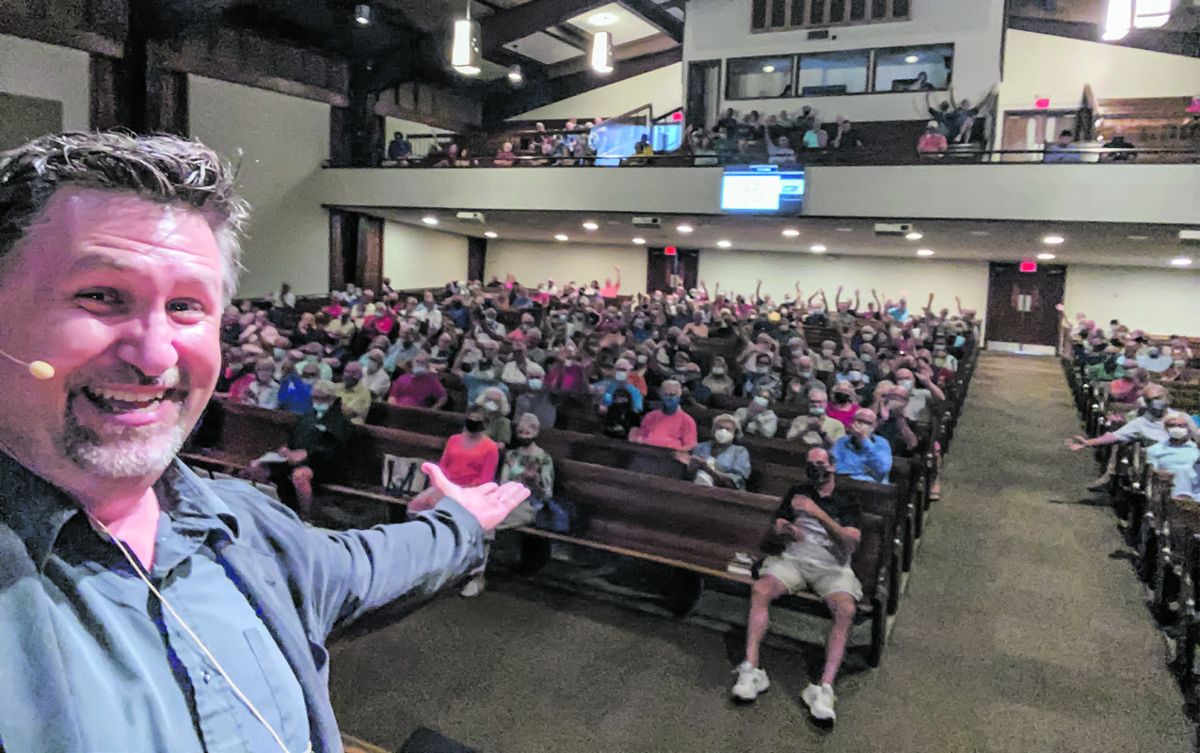
I’ve had the chance to hit the road quite a bit in September. Roundtables have been trying to reopen, although the COVID Delta surge has made in-person meetings more challenging than originally expected. Conditions vary from place to place, and roundtables are doing their best to adapt to their specific situations. Some roundtables have required masks, others have strongly suggested them, and others have been as lax as local guidelines will let them be. I have a four-year-old at home who can’t get vaccinated, so I’ve been doing my best to mask-up as a precaution. My colleague David Dixon, who’s been on the road promoting his excellent August Willich biography, Radical Warrior, reports a reaction similar to the one I’ve experienced. “People are crazy excited to be meeting in person again,” he told me,
“though attendance is muffled and groups … have been forced to meet in churches or other larger venues where social distancing is easier.” Social distance guidelines have varied, depending on location. Some roundtables, conscious that at-risk members might still be wary of venturing forth in person, have tried hybrid meetings, allowing people to attend live while also simulcasting on Facebook or YouTube or recording presentations for later posting. In short, folks are trying to make due. It’s nice that our shared passion for Civil War history still brings us together despite the challenges. I hope everyone still remembers to take precautions, though, and exercise patience as roundtables continue to make adjustments and do the best they can to help us share that passion (and not the virus!). — Chris Mackowski, Ph.D. Editor-in-Chief, Emerging Civil War
August 5-7, 2022: “Great What Ifs of the Civil War” We’ll start rolling out early announcements in October followed by the speaker line up around the first of November, so stay tuned to the website for details. Early-bird tickets are $200 through December 31,
- For event details, or to order tickets, visit our website: h t t p s : / / e m e r g i n g c i v i l w a r. com/2022-symposium/. Check out the American Battlefield Trust’s YouTube channel for the Trust’s coverage of the 159th anniversary of the battle of Antietam, featuring ECW members Kevin Pawlak and Kris White: https://www.youtube.com/c/AmericanBattlefieldTrust. Paige Gibbons Backus was recently interviewed for the next season of Legends and Lies: Battles for America. The documentary series will air in the spring 2022, and Paige will be featured in the Manassas, Antietam, and Vicksburg episodes. Sarah Kay Bierle has spent nearly two years working at the Central Virginia Battlefields Trust. She is grateful for the opportunity to learn and advocate for battlefield preservation at the local, grassroots level. Later this autumn, she will be joining the American Battlefield Trust’s Education Department where she will continue her career in the history field, assisting with the preparation, distribution, and support of history resources and curriculums for students and teachers across the nation; and, yes, she will still be involved with Emerging Civil War! Sheritta Bitikofer is incredibly excited about her new part-time position with the University of West Florida Historic Trust in Pensacola helping out in their archives and collections department. “Other than that,” she adds, “I’m writing articles (ECW, ABT, and CWT) and working on my degree.” In the November issue of America’s Civil War, ECW›s Book Review Editor Steve Davis has two brief pieces. “A Little Freehand” features a drawing that Bvt. 2nd Lt. Robert E. Lee drew while working on Cockspur Island, below Savannah in 1830. In it Lee drew a terrapin and an alligator, fauna he saw in abundance while working in the swamp on what would become Fort Pulaski, at whose National Monument they now repose. Under the heading “Home Front Heroes: 12 extraordinary civilians who impacted the Civil War,” Steve highlights John H. Steele (1807–1871), editor of the Atlanta Daily Intelligencer during much of the war. With Bill Hendrick, Steve has written The Atlanta Daily Intelligencer Covers the Civil War, due out next year from the
University of Tennessee Press. Guy Hasegawa’s Matchless Organization: The Confederate Army Medical Department, part of ECW’s “Engaging the Civil War” Series with Southern Illinois University Press, has been garnering a lot of positive press. “Matchless Organization will be of interest both to students of the Civil War but also to those interested in the history of the development of American military medicine,” says the AMHEDD Historian, published by the Army Medical Department’s Center if History and Heritage. “Though written for the general reader, it is extensively end-noted and indexed, contains a useful bibliography, and is replete with an array of photographs, including Col. Moore, other key players, and some medical department buildings.” Civil War Books and Authors called it “a history that is arguably the greatest singlesource advancement in our knowledge of the Confederate Army’s medical apparatus since Cunningham’s Doctors in Gray (1958).” (https://cwba.blogspot.com/2021/08/review-matchlessorganization.html). Chris Kolakowski had a short essay on Charles Francis Adams appear in the latest America’s Civil War. It was part of a series examining unheralded civilians who impacted the war. From Meg Groeling: “At the request of Chris Mackowski, I would like to announce that I have achieved a specific status among friends, family, and assorted medical personnel: I am officially a ‘cute little old lady!’ So top that one!” Dan Welch did an interview with WVXU-FM, an NPR affiliate in Cincinnati, about the new book he co-authored with Kevin Pawlak, Ohio at Antietam. Listen here: https://tinyurl.com/d3kj2n6m. Kris White will be leading a tour at Salem Church for Central Virginia Battlefields Trust on October 9. On September 22, LSU Press is publishing Civil War Witnesses and Their Books: New Perspectives on Iconic Works, edited by Gary Gallagher and Stephen Cushman. Cecily Nelson Zander has a chapter on Elizabeth Bacon Custer’s three memoirs of life with her husband in the postbellum army appearing in the volume. You can read more at LSU Press: https://lsupress. o rg / b o o k s / d e t a i l / c i v i l - w a rwitnesses-and-their-books/.
ECW Bookshelf Dan Welch and Kevin Pawlak welcome the arrival of their new book, Ohio at Antietam: The Buckeyes Sacrifice on America’s Bloodiest Day.
Dan Welch and Kevin Pawlak co-authored Ohio at Antietam, published by History Press. The book details the role of Ohio and her native sons during the war’s earliest days, the state’s total contribution to the war effort, and the cost to the Buckeye regiments during the battles of South Mountain and Antietam. Their work also pays respects to those Ohio soldiers who “gave their last full measure of devotion,” with stories about those who are buried in the Antietam National Cemetery; it also joins these aged veterans as they return to Antietam in the early 1900s to fight for and preserve the memory of their sacrifices all those years ago. Kevin and Dan note it was an honor to share these stories from Dan’s home state.
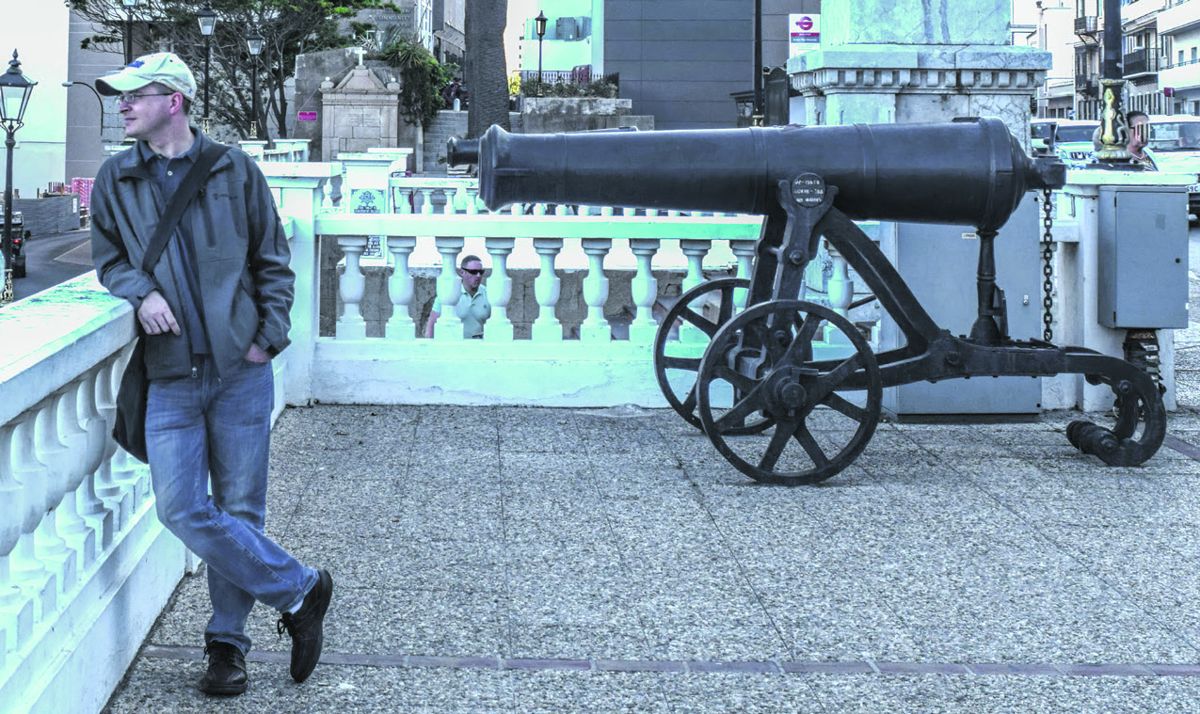
10 Questions … with Neil Chatelain Neil Chatelain (photographed here in Gibraltar) is the newest addition to the ECW team. As a guest author, he’s written quite a few posts about naval warfare, so we thought it was time to bring him aboard! You can read his full ECW bio here: https://emergingcivilwar.com/author-biographies/authors/neil-p-chatelain/.
What’s your Civil War “origin story”? (How did you get interested in the war?) Being from New Orleans, I was surrounded by museums, monuments, and the memory of the Civil War everywhere. I can’t remember a time, even in elementary school, when I was not trying to read about it. I literally did projects on battles and uniforms in middle school, and was fortunate to travel to many of the biggest national battlefields with my dad as a teenager. Last fall, you published a book, Defending the Arteries of Rebellion: Confederate Naval Operations in the Mississippi River Valley (Savas Beatie, 2020). Can you tell us about that project? Defending the Arteries of Rebellion looks at Confederate naval operations on both the Mississippi River itself and its numerous tributaries, bayous, and coastal approaches. There has been plenty written about U.S. riverine naval operations, but relatively little on the ships and sailors opposing them or on battles after the 1863 Vicksburg campaign. I started digging and realized that the Confederate Navy tried to forge a naval squadron to gain parity with that of the U.S. Navy on the Mississippi, and later to reforge numerous smaller squadrons on the tributaries and distributaries. Confederate efforts failed, thanks to lack of resources, lack of time, poor leadership and communication, and the strength and coordination of U.S. naval efforts. The book also looks at how the Confederacy’s naval forces innovated on these inland waters, with ironclads, torpedoes, ram tactics, privateering, commerce raiding, and submersibles all introduced along the Mississippi River Valley. Did you hit any particular snags or have any particular challenges writing that book? The biggest snag I encountered was a lack of Confederate naval records, especially when compared to those of the U.S. Navy’s riverine forces. For example, each volume of the Official Naval Records is generally three quarters U.S. records and one quarter Confederate records. Archival material is generally the same, and in many instances, there are no firsthand accounts or archival material for Confederate river warships at all. To add to it, many Confederate warships were destroyed in early stages of construction or conversion, and all records of those vessels were destroyed with the burning hulls as U.S. forces approached. It made investigative work tedious, but also served to compound my excitement when a new source or account was found. What got you interested in brownwater navies? In college, I started getting more interested in the naval aspects of the war. In my History of New Orleans class, the professor asked everyone to research something about the city’s history that we did not know about, so I took the chance to dive deeper into the campaigns for the city at that time. For that 5-page assignment, I turned in a 50-page report on the CSS McRae. Fortunately, my professor encouraged me, even getting me approved to speak at a history conference soon after. From there, I just kept digging deeper into Confederate riverine activity. What are you working on next? My next big project is an examination of the Civil War campaigns to control America’s mineral wealth. In short, an examination of gold and silver in the war, just not the buried treasure kind. This is a combination of activities taken by both the United States and Confederacy in the western territories, the Pacific coastline, and along the Panamá route at sea to secure the bullion mines of the west directly and the trade routes transporting this wealth. It is an aspect of the war largely overlooked, and even though more is now being written about the far western campaigns of the war, almost no one is looking at the larger picture of how western mineral wealth helped stabilize the U.S. government’s war effort. Efforts by the Confederacy to seize control of these territories and states, as well as to interdict the shipping lanes directly, to stabilize their own economy and bolster it in European markets have been largely ignored. The U.S. effort also had impacts on how the U.S. attempted to maintain the Monroe Doctrine during the war and how the U.S. Navy’s activity in the Caribbean and Pacific in the war had far larger impacts than many realize.
Lightning Round (short answers with a one-sentence explanation) Favorite primary source? The letters of Roswell H. Lamson, edited into the book Lamson of the Gettysburg by James and Patricia McPherson, have a special place in my heart because of its portrayal of the monotony and chaos of naval life, which relates to my own time in the U.S. Navy very well. Favorite Civil War-related monument? It is not really a monument, but the Organ Cavern in West Virginia, where Confederates mined saltpeter, has many family memories that I treasure. Favorite unsung hero of the Civil War era? The latest unsung hero I have been looking more into has been Rear Admiral James Lardner. He commanded a ship at the Battle of Port Royal Sound, commanded the East Gulf Blockading Squadron, then spent a year and a half commanding the West India Squadron where he cleaned up international messes caused by Admiral Charles Wilkes while protecting U.S. commerce across the Caribbean. What’s a bucket-list Civil War site you’ve not yet visited? I would love to get out to San Francisco soon and be able to see the bay, Alcatraz Island, and get a better feel in person of how the US defended its critical Pacific port during the war. Favorite ECWS book? Dwight Hughes’ Unlike Anything that Ever Floated is fantastic in how it uses ship diagrams and imagery to display the complexities of naval service.
Ian Hughes designs the covers for the Emerging Civil War Series, which have become an instantly recognizable part of our publishing brand. We asked Ian to talk a little bit about his work.
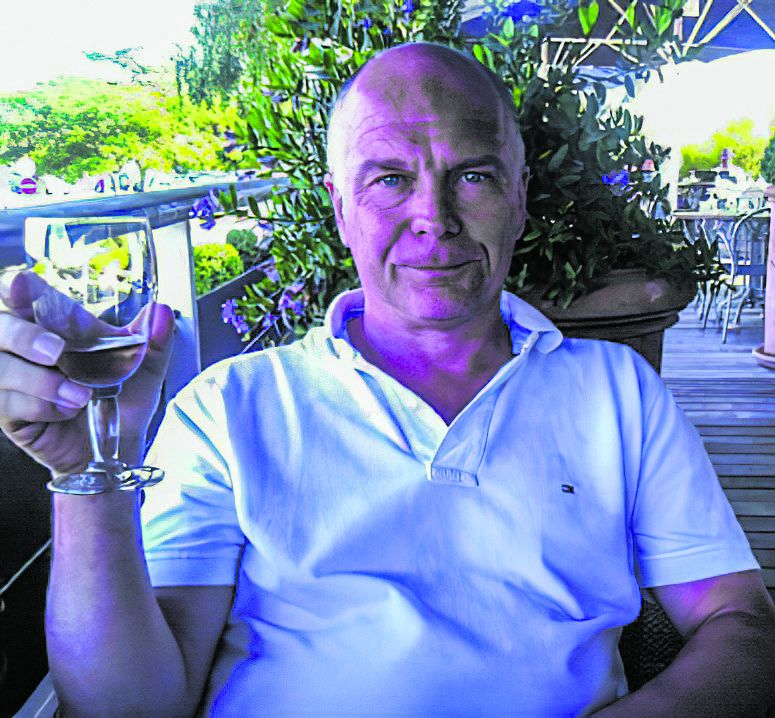
“Cheers” from Ian Hughes. To give you a little background information about myself: I am based in the UK, living about 15 miles south of London, married with one daughter, Zoë. I have been involved with publishing ever since leaving college, starting my career at an educational publisher called Longmans. I moved on after a year to a general design studio in south London. They handled books and in-flight magazines along with other general design work; I handled most of their book design. It was hard work and long hours, but you learned how to work very fast! From there I moved on to a subsidiary of the Times Mirror group and, after a couple of years, found myself as art director at one of the leading publishers here in the UK. We produced about 800 covers a year across all ranges of books. Given my position, I handled most of the mass market and lead titles for the authors that made the most money. I designed the covers for Stephen King and John le Carré for many years, which was great fun. So, around twenty years ago, I moved on to set up my own business. I have been very lucky in that I have worked with some lovely companies with professional staff and have pulled in a lot of work through their recommendations. Most of my time is still spent within publishing, and I find my time split between text design, cover design, and eBook production. I rarely turn away work (who does?) but I have to say that my preference is to work with the smaller or niche publishers. They usually operate with fewer staff and somehow you feel more a part of the team, even though I rarely meet them personally. It’s the same when you are approached by self-publishing authors. It’s quite rewarding to guide someone through the publishing process and offering advice. I have often been asked, what is my favorite cover? Daunting question as I have literally designed thousands of covers over the years. For Savas Beatie
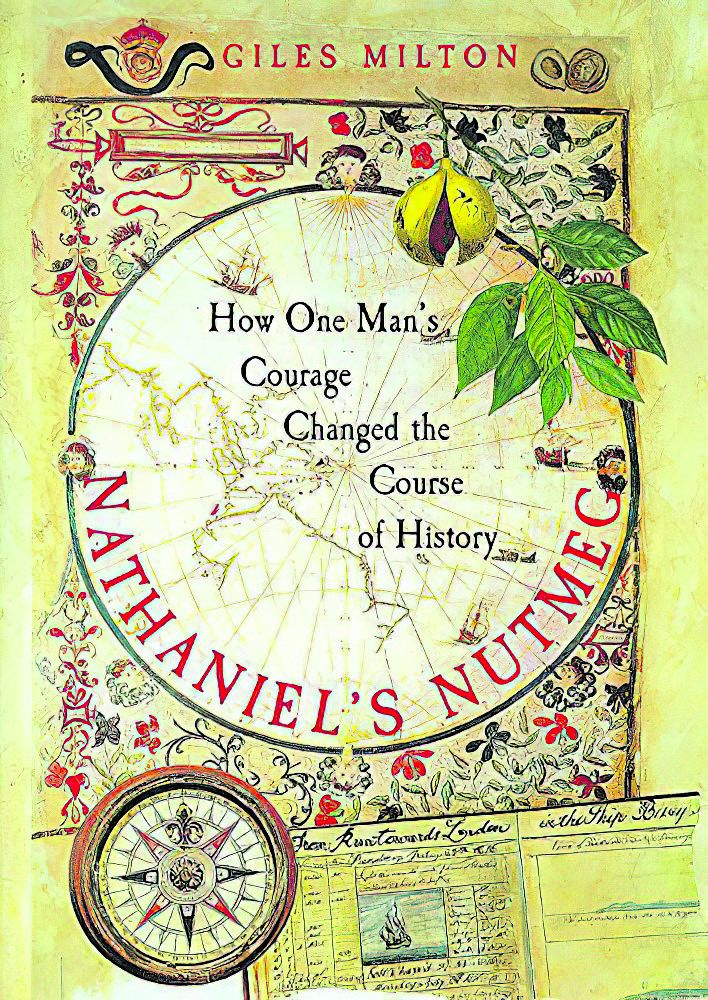
Ian Hughes favorite cover design was Nathaniel’s Nutmeg.
my favorite has been, and still is, the Sickles at Gettysburg cover. That said, I really like the recent Summer of ’63: Vicksburg and Tullahoma jacket. Away from military books, my favorite is a strange choice, Nathaniel’s Nutmeg by Giles Milton (Hodder & Stoughton Publishers). At the time it was a bit radical in the approach, but the publisher went with it. First-time author, 150,000 sales in hardback/paperback in the first 12 months. Job done! When I am not working, I enjoy cooking, particularly the bit when you put on some lounge jazz and open a bottle of wine from the southern Rhone Valley, France. Cairanne, Vacqueyras and Gigondas are my favorites. I would encourage you all to try them. How long have I been in the business? A long time. Just look at my website name: www.mousematdesign.com! Who uses mousemats these days?