
Ulysses Grant – An Alternative Perspective
By Joe Krom · Originally published May 2021 · pp. 36–37
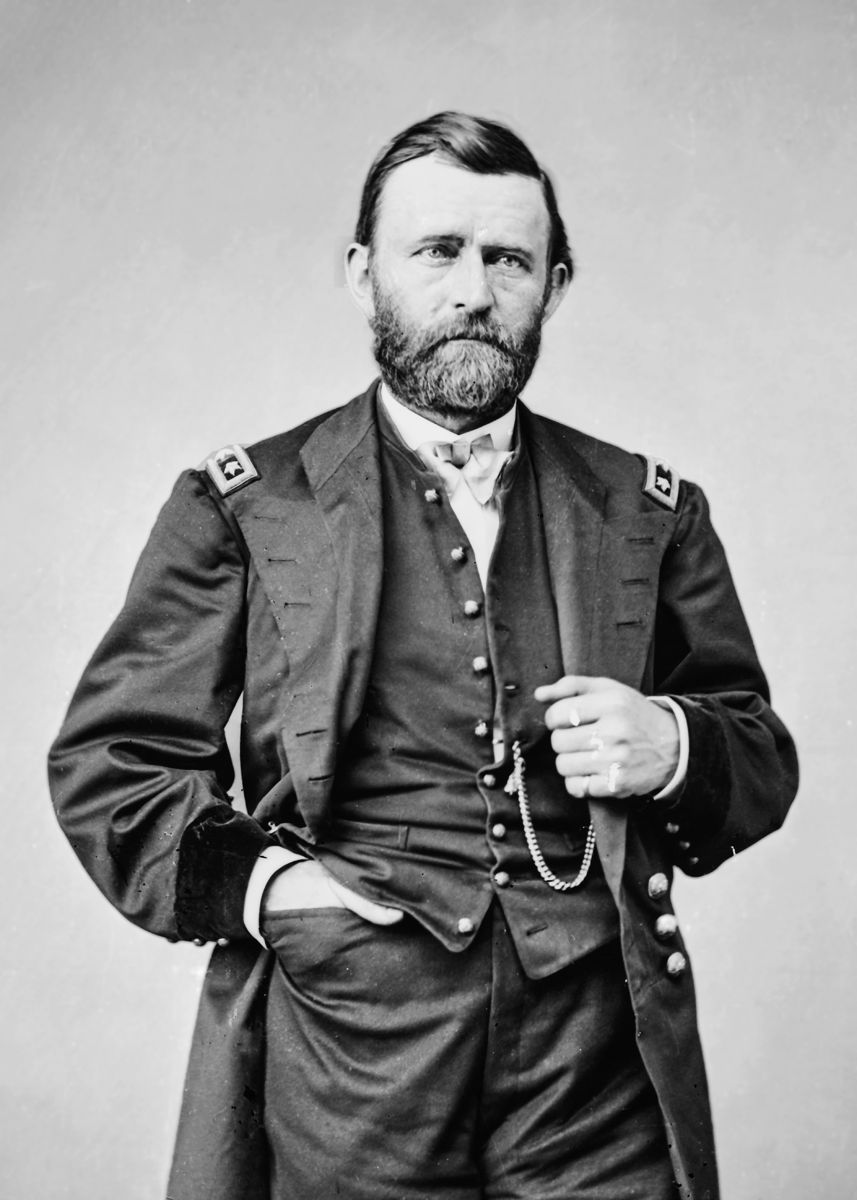
I stood at Shiloh National Military Park on a cold February day in 2015. On a display wall in the Visitor Center, I viewed a large portrait of General Grant. Beside the picture is a four-sentence bio snippet of Ulysses Grant. In large type I find with chagrin these two sentences in the middle: “He served gallantly in the Mexican War, but the tedium of peacetime led to drinking problems. He resigned to avoid a court-martial.” Apparently, fully half of what the visitor to the park needs to know about Grant is attributed “drinking problems.” Rest assured that I give high marks to all our national parks. I cite this instance only to illustrate how deeply the legend of Grant’s “drinking problems” is engrained into our telling of history. Repudiation of old myths by modern scholars goes unheeded. M.G. Subhas does an outstanding job of summarizing findings by upstanding men who had personal access to Grant. Sent to spy out rumored faults in Grant’s character, they instead attest to his temperance and overall noble character. These can be found in Subhas’ September 2020 Civil War News article entitled Ulysses S. Grant Migraine and Drunkenness – a Reconciliation. Subhas proposes that “Many observed incidents of drunkenness, when interpreted through the lens of migraine, are likely a mistaken case of migraine.” I wish to point to an additional incident recounted by John Eaton that goes to the heart of the matter. Eaton is a reliable witness with a sterling reputation. He had unprecedented access to General Grant who appointed him superintendent of contraband to carry out his evolving policies on freedmen. In his 1907 book Lincoln, Grant, and the Freedmen, Eaton recounts a revealing story that transpired in Memphis prior to the Mississippi River campaign against Vicksburg. “I had questions to ask which needed his immediate attention, and I ventured to go to his private quarters. I found him with his head and neck all swathed in hot poultices, which his wife was applying in order to relieve the violent sick headache from which he was suffering and to which he was subject.” Eaton goes on to point out that a young dentist from Cincinnati was sharing Eaton’s quarters. The day following the above incident, the dentist declared that he had been watching Grant and had been satisfied with his conduct. However, he had just changed his mind on the matter.That morning he had observed the General,“his face had looked mottled, like that of a man who had been drinking the night before.” Eaton shared his observation of the previous night, thereupon restoring the dentist’s faith in Grant. Here we have a first-hand witness testimony of (a) Grant having repeated debilitating headaches; (b) Julia administering a home remedy; (c) an observer misinterpreting the episode as having a hangover. Eaton concludes, “In my judgement many of the stories of Grant’s intemperance had no better foundation than some such impression as that received by the young dentist, who became, after the episode I just related, one of the General’s greatest admirers.” Let us for a moment assume the postulate: Ulysses Grant had bilious migraines resulting in effects that were often misinterpreted as inebriation. How could this new light affect our interpretation of well-known events in Grant’s life? It is frequently cited by historians that Julia’s presence had a positive effect on Ulysses’ disposition. Many deduce that she kept him from drinking, or that he did not feel the need to drink when she was near. As we see from Eaton’s treatise, she may, in truth, have had a more direct effect by way of treating his migraines. Ulysses’ silence when accusations of his drinking were made is also com-
mented on by historians. He simply would make no reply and would forbid others to defend him. Under our hypothesis, for him to make a defense would be to expose his migraine affliction. Migraines are not well understood today; during the 1800s they were taboo, particularly for men, even more so for Army men. Drunkenness on the other hand was, to a point, excused. At that day and age what was considered by much of society to be a “mental incapacity”would not be ignored. He simply could not allow his malady to become public knowledge. Men of stature are known to have been sent to spy out Grant’s character, Lorenzo Thomas and Charles Dana being the most notable. There must have been others who remain unknown today. Each one, once having direct contact with General Grant, quickly refuted any predisposition to excessive drinking. Each became an eager Grant supporter. We have no record of an explanation for their conclusions. Perhaps they learned about Grant’s migraine malady and saw value in keeping it under wraps. Persons in position of authority repeatedly gave Ulysses Grant positions of trust. Colonel John Garland chose Grant for the new position of Regimental Quartermaster during the Mexican War indicating, among other qualities, trust in his ability to work independently without direct supervision. He continued quartermaster duties until his retirement from the Army in 1854. When Lincoln called on the states for troops after the firing on Fort Sumpter, the citizens of Galena, Ill., Congressman Elihu Washburne in particular, turned to Grant, who had resided in their community a mere nine months, to organize and train their first company of volunteers and shepherd them off to Springfield. While in Springfield, Governor Yates appointed Ulysses as State Adjutant to organize the influx of troops, providing him with an adjacent office in the state house. In need of an officer to curb a rambunctious state regiment, Yates, without consulting Grant, appointed him its colonel. Within weeks, we find that General John Pope placed Grant over four regiments stationed near Mexico, Mo. We then find Grant promoted to Brigadier General serving directly under Department of the West commander John C. Fremont. Fremont observed Grant quickly turning chaotic encampments into military organizations at both Ironton and Jefferson City. He rewarded Grant, within one month of Grant’s being made a general, with jurisdiction over the District of Southeast Missouri. Grant established his headquarters at Cairo. Highly regarded Flag Officer Foote and General Grant, both recently arrived at Cairo, quickly developed a mutual respect. Are we to suppose that in each case these persons placed their trust in a drunkard? Perhaps it should be considered that Grant privately confided in some of these persons concerning his migraines. Much has been written about Grant’s resignation from the Army in 1854. Rumors surrounding the reason for his decision to leave are often repeated. It is occasionally falsely reported that he was brought up on charges and that a court-martial was held. It is unfair to cite inconclusive rumors and falsehoods on so important a matter. Only a predisposition to perpetuate the drinking agenda justifies doing so. If there are indeed events that support the rumors mentioned, could they not just as well be attributed to migraines? More befitting of our attention should be the fact that Grant’s letter of resignation is dated on April 11. As cited by Ronald C. White in his American Ulysses, that is the same date as Grant’s letter of his formal acceptance of his commission as Captain. Certainly, Ulysses Grant is not the first officer to resign upon securing written notice of promotion. Are we to condemn every officer who has done so? This second letter to the War Department indicates a thoughtful and orderly resignation which requires no explanation involving intrigue. Grant states in his Personal Memoirs that he got along well in farming until “1858, when I was attacked by fever and ague. I had suffered very severely and for a long time from this disease, while a boy in Ohio.” The archaic “ague” is most frequently assumed to mean malaria. However, ague may be any reoccurring fit of fever or shaking accompanied by malaise. Migraines, lacking a better definition at the time, qualify. Later in his Memoirs, he tells of suffering from a “sick headache” during the night before receiving Lee’s surrender at Appomattox. He describes treating it with mustard plasters. “The headache was still present the next morning when a messenger arrived …” With victory in hand, he finally allows himself to tell the reader that his battle with migraines is real. In contrast to Ulysses’ outgoing father, we know little about his mother. The few kind descriptions can be categorized as pleasantries. Often, she is painted as a recluse. With indications that migraines are hereditary, could it be considered that she, too, may have suffered from migraines? John Eaton’s assessment of Grant’s character was not a flash in the pan. He was eventually tagged for a second position. President Grant appointed Eaton seven years later to be his Commissioner of Education. He charged Eaton with heading up a thrust to invigorate the nation’s education policies. Eaton’s forthright personal account of Ulysses Grant’s migraine cannot be ignored. Ulysses Grant’s own testimony about his experience at Appomattox cannot be challenged. The migraine perspective is rightly a part of the narrative.
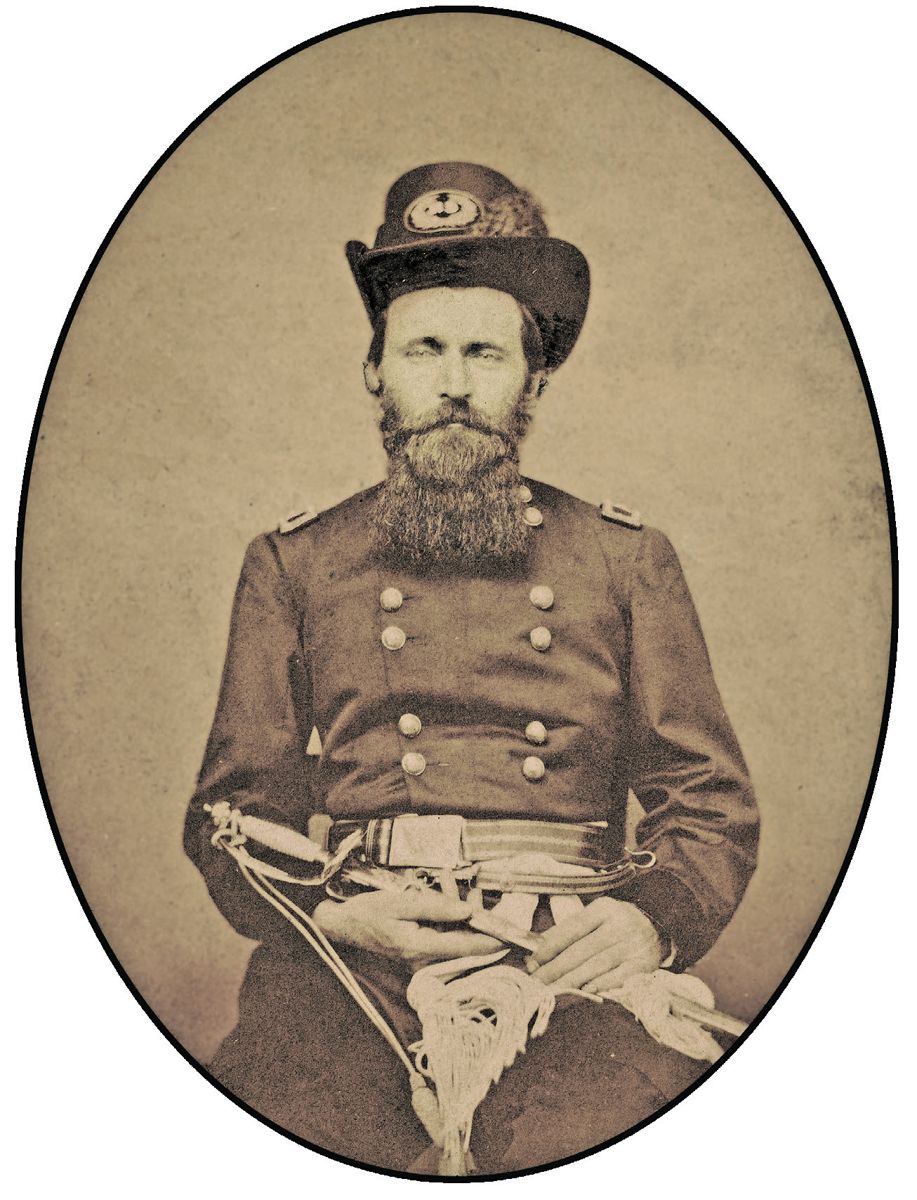
Joe Krom is a retired mathematics instructor. He resides in Argos, Ind. He has studied Ulysses Grant over the past eight years. Krom has authored three historical novels and lectures on historical interests.