
The 3rd U.S. Infantry Regiment Returns to Jamestown Settlement
By Bob Ruegsegger · Originally published May 2021 · pp. 30–31
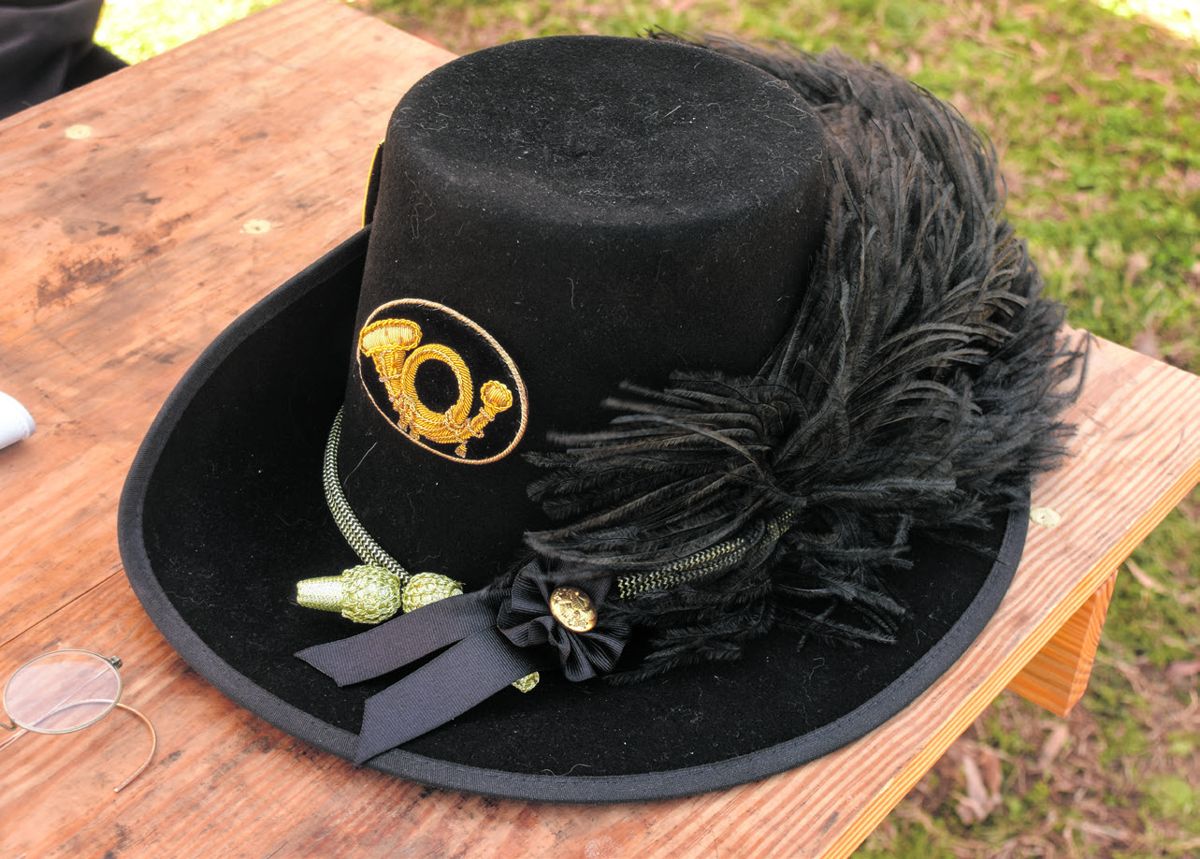
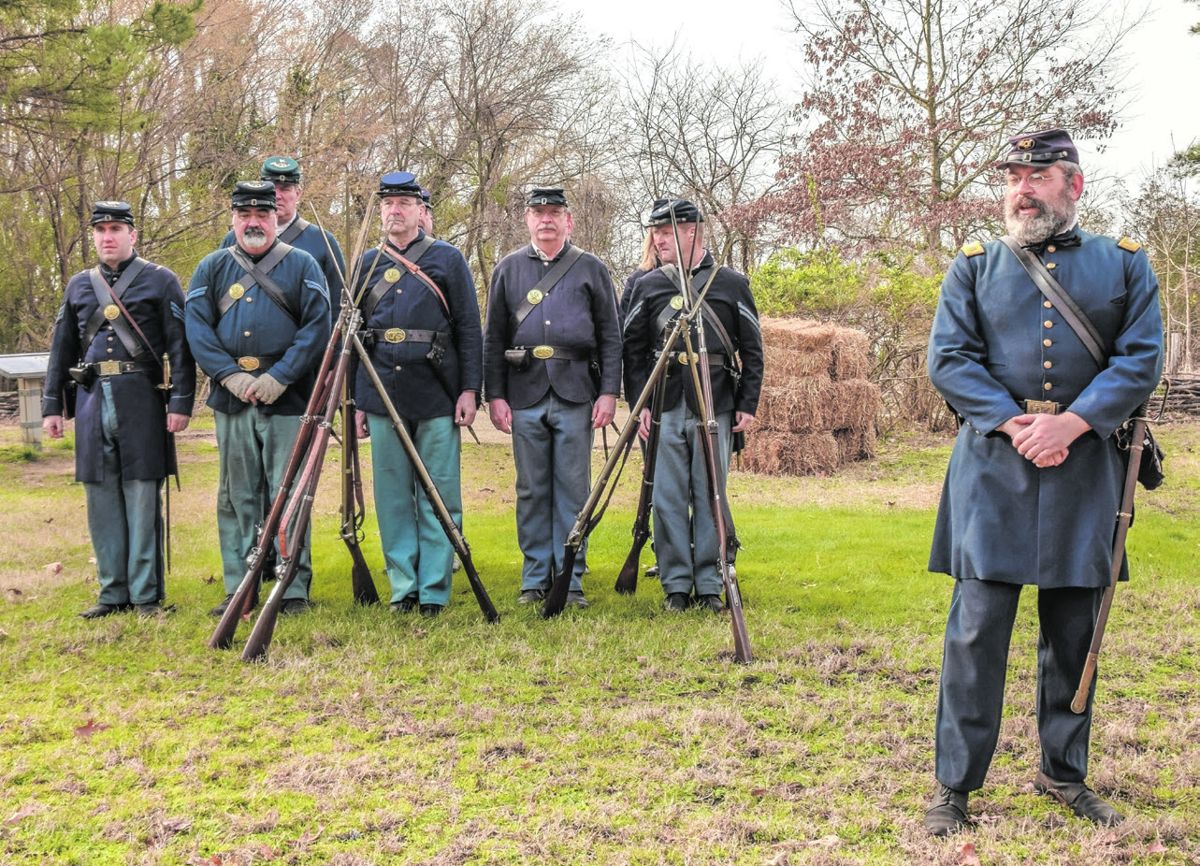
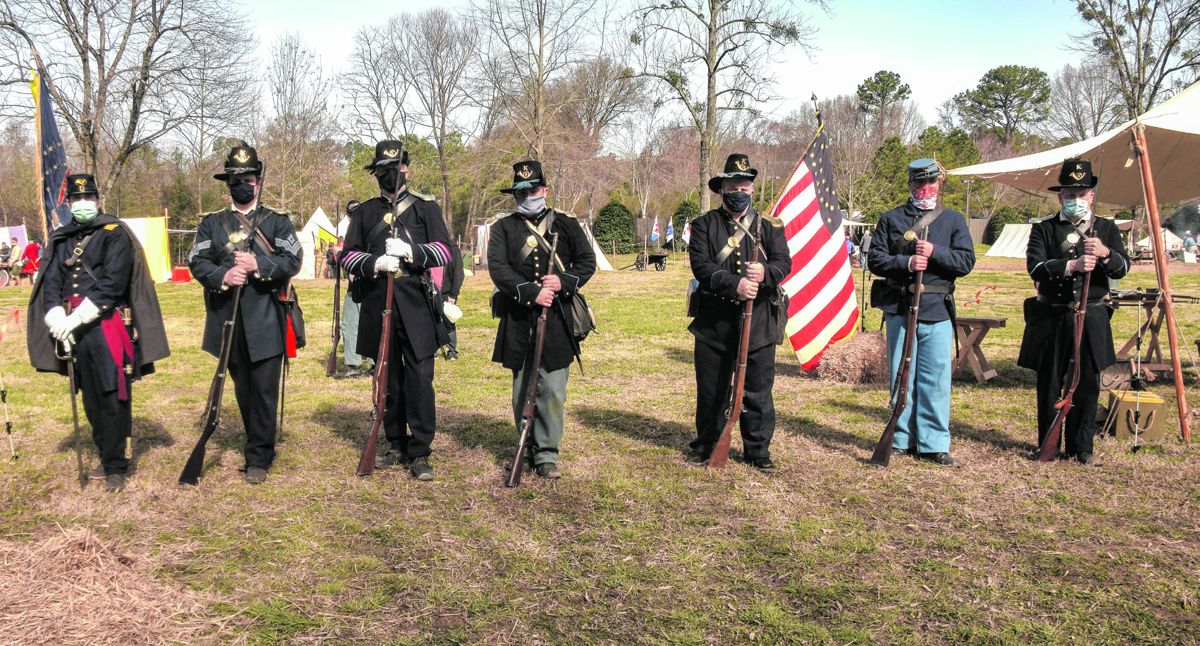
After Texas officially seceded from the Union, the 3rd U.S. Infantry surrendered their post at Fort Clark to the Provisional Army of Texas. Although there was considerable apprehension at Fort Clark, the Federal capitulation involved no military conflict. No blood was shed and Captain Trevanion Teel and a small contingent of Texas troops accepted the surrender of Fort Clark from Captain George Sykes. The 3rd U.S. vacated Fort Clark peacefully and then left Texas via steamer to rejoin the rest of their regiment in New York. At Military Through the Ages, the men of the recreated 3rd U.S. Infantry portray the original unit as the men would have appeared at Fort Clark in early 1861; before the Confederates fired on Fort Sumter. Last year, Military Through the Ages at Jamestown Settlement was cancelled. More recently, the 3rd U.S. participated in Military Through the Ages. “We’re representing the regulars as they would have appeared in 1861 with the frock coats, the scales, Hardee hats, and dark blue trousers,” said Lt. Geoff White who commands Company
Patrick Neal is an active duty U.S. Army soldier who loves history. His uniform reflects that of the 3rd U.S. Infantry when Fort Clark surrendered to the Provisional Army of Texas.
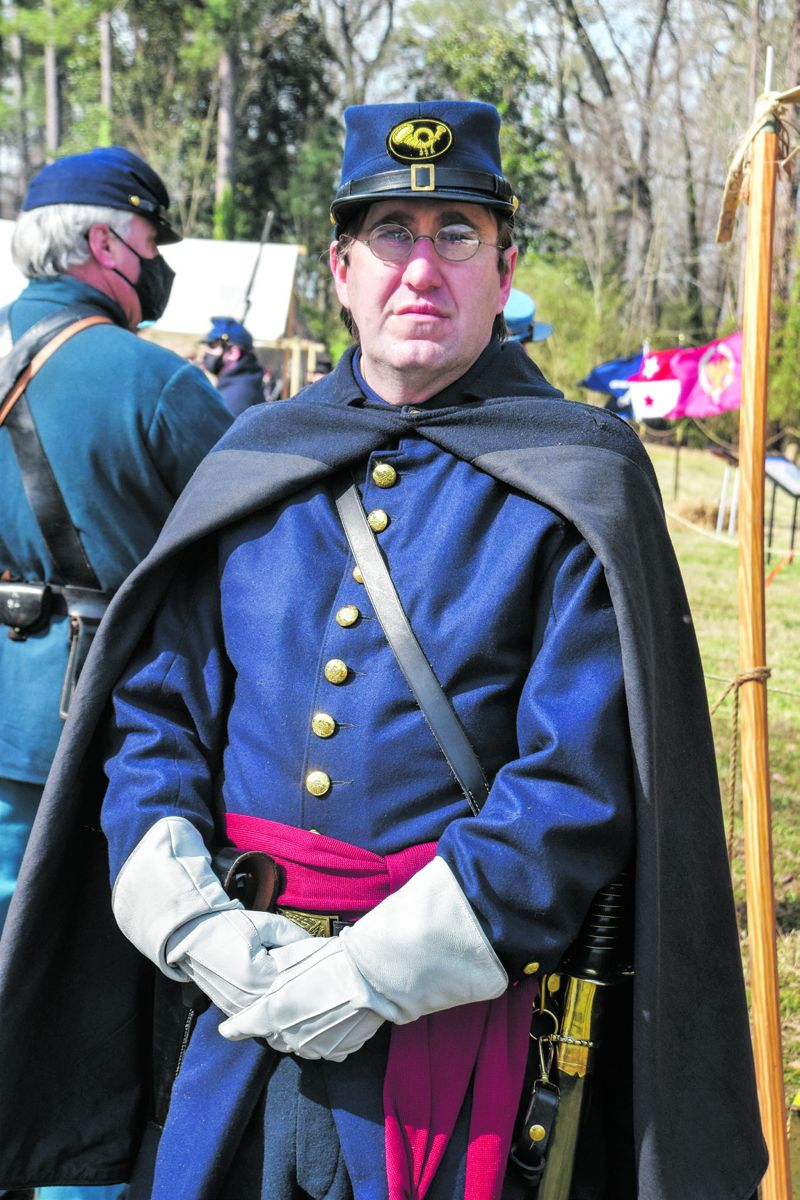
K. “It’s not what you’d typically think of when you think of Union soldiers.” A few soldiers in camp wear the fatigue uniforms, sack coats, light blue trousers, and forage caps, that depict the more generic soldier later in the war. “We are representing the contrast in uniforms,” said White. This year’s required COVID protocols, especially wearing masks and social distancing, have had an impact on their living history camp impression and display. “Normally, we have a dummy here, and we allow people to take a bayoneted rifle and stab the dummy,” said White. “It is very fun; unfortunately, we just can’t do that this year. We can’t be hands-on with our history,” he explained. “We have ropes where we’re cordoning off things and exercising a little bit more crowd control.” The 3rd U.S. Infantry impression reflects a pre-War U.S. army regiment as opposed to a war time regiment of volunteers. Essentially, the full time regular army units were professional soldiers who were better trained and more experienced then volunteer units or conscripts. Lt. White speaks of the bifurcation between the regular army and the volunteer army. “I’m an officer. I’m allowed to use those sorts of words.” There was a dichotomy in the Union army between regular army and volunteer army although they existed side by side. “The bifurcation was an important distinction. That inspires us to present a little different type impression,” said White. “My bread and butter is drill.” When the 3rd U.S. Infantry’s Company K breaks ranks, they shout a hearty “buff sticks” as a testament to their unit pride, esprit de corps. Buff sticks were a part of a
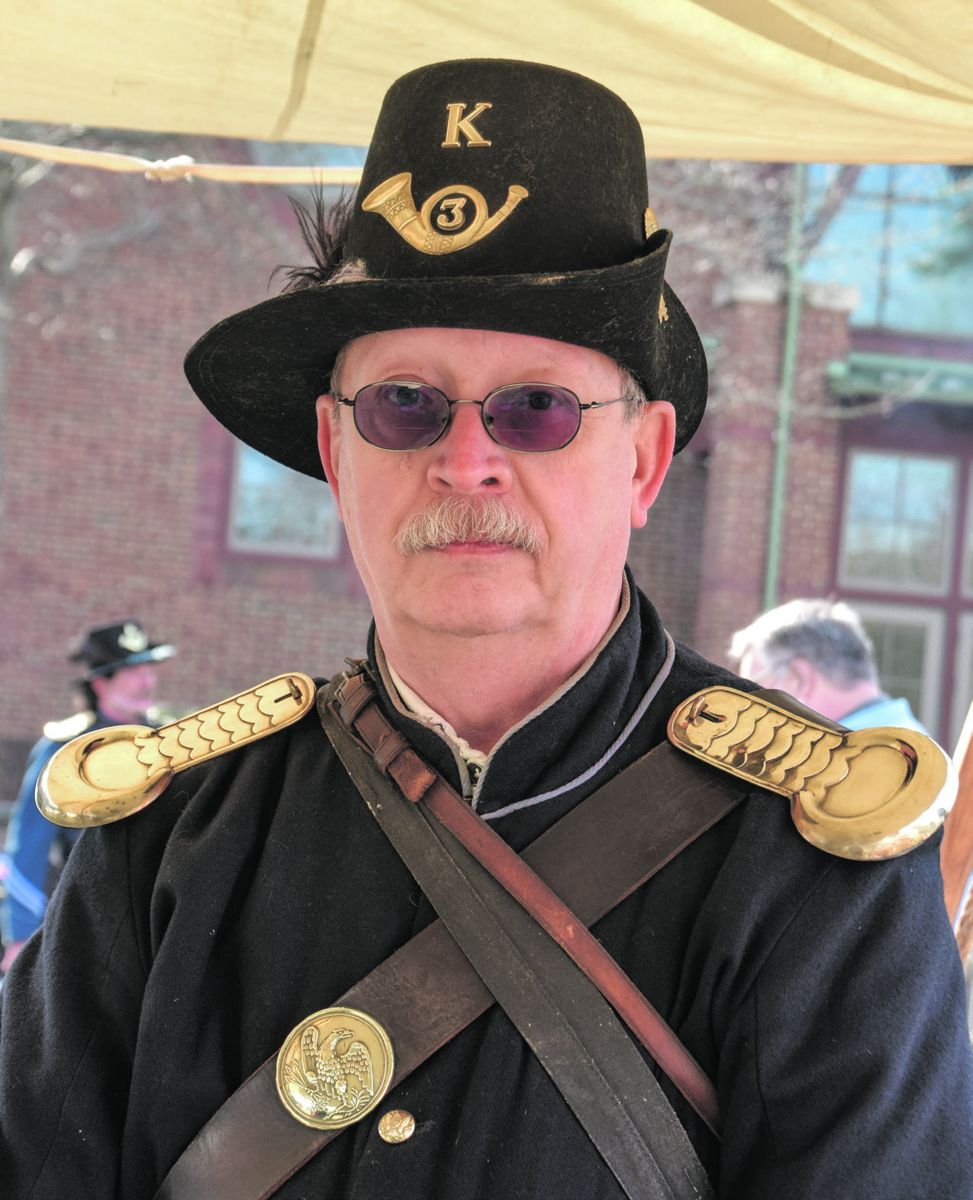
3rd U.S. recruiting sign.
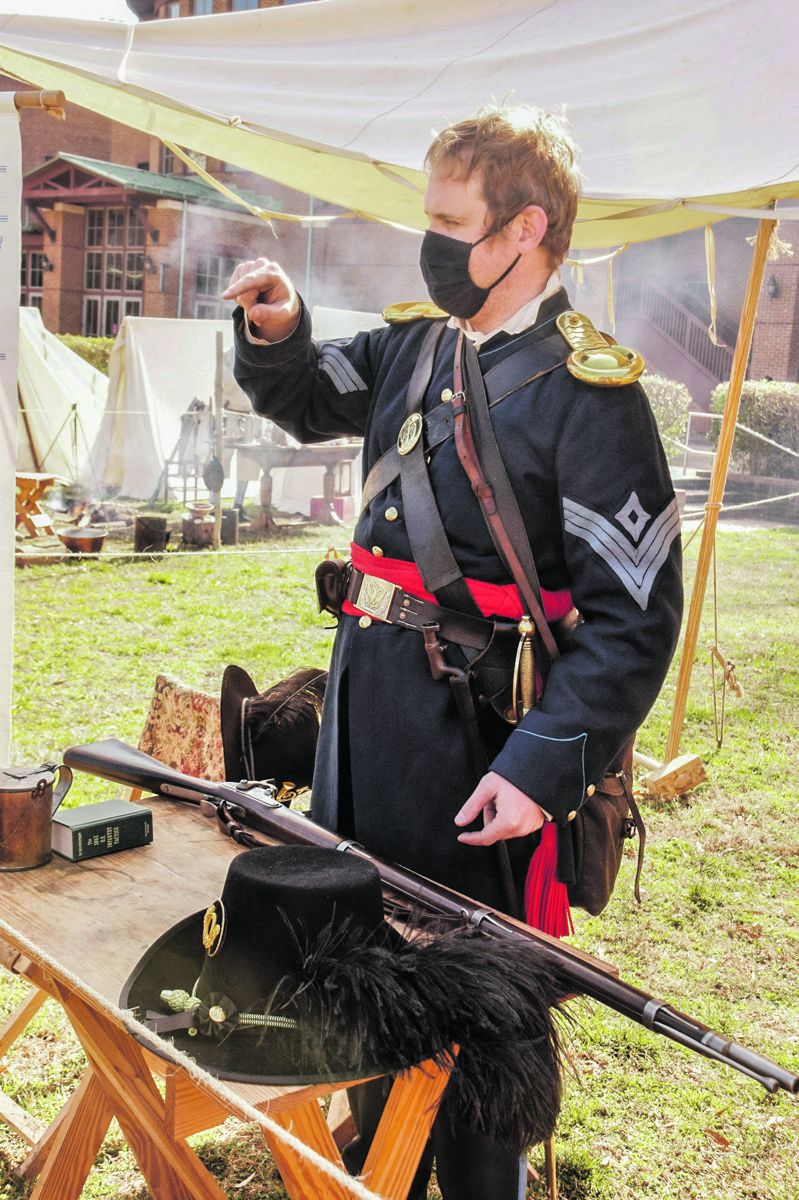
soldier’s kit. They were short, flat sticks with strips of leather glued to each side except for the handle. Soldiers used them to remove scratches and imperfections from their brass to project a sharp, soldierly appearance. A dab of a soft abrasive compound was added to the leather to help remove tarnish from brass buckles and buttons. A couple of companies in the original 3rd U.S. Infantry were drill companies. They were the instruction companies that taught other groups, especially recruits in other regiments. Other units took exception, mostly out of jealousy, to their precision in drill and spit and polish appearance.They were derided as “buff sticks.” Soldiers in the 3rd U.S. took the taunt “buff sticks” as a mark of distinction. “Yeah, damn right, we are the buff sticks. We have our brass polished shiny, and we drill well. That’s the mindset of our unit,” said White. “What was originally an epithet leveled at them by other units who resented their attention to detail was taken up as a point of pride.” Regular soldiers, such as the 3rd U.S., probably regarded inexperienced, poorly-trained volunteer regiments with a degree of contempt because of their lack of professionalism and knowledge of drill. “The size of the standing Federal army at the start of the Civil War was 17,000 men,” said Private Darrell Cochran of the 3rd U.S. “There were ten regiments of infantry, two regiments of cavalry, and three regiments of artillery. That was it,” he said. “That’s why they made the huge call for volunteers.” Patrick Neal joined the 3rd U.S. Infantry Regiment as a reenactor/ interpreter while he was a soldier stationed in Washington, D.C. Neal had always been interested in history and decided to take advantage of the opportunity to join the 3rd U.S. when he was recruited at a National Park Service event in the D.C. area. “I chose this unit for a couple of reasons. I chose Union because my family fought for the Union,” said Neal. “I also volunteer for the National Park Service and they [the 3rd U.S.] were out there supporting that event,” he said. “They asked me if I wanted to join.” A couple of weeks later Neal was at Gettysburg for his first event with the 3rd U.S. Infantry. Historically, they fought in the Wheat Field, the second day of the battle, July 2, 1863, the 10th bloodiest day in the Civil War.
The 3rd U.S. actually confused the Confederates because, as they were falling back, they were able to reload, turn around, and fire into their ranks,” said Neal. “They reloaded while falling back and fired two or three times. The Confederates were not expecting that,” he said. “The Confederates had the 3rd on the run and then suddenly the Union regulars turned around and fired a volley into their ranks.”
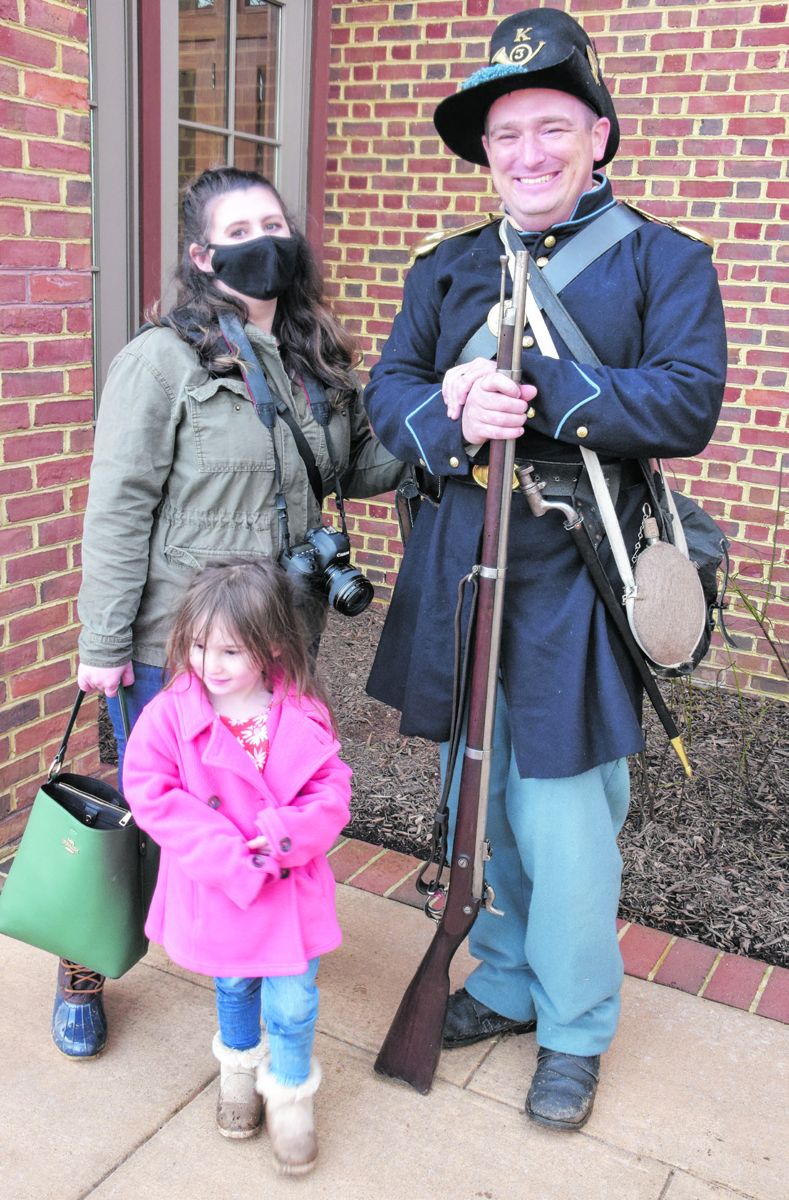
At the time Patrick Neal “enlisted” in Company K, he was keenly aware of the modern unit’s reputation for historical accuracy and active engagement with the public. Neal relishes the educational component, working with the public, of his participation with Company K. “I love to do it. Going out there and learning, the immersion of it is so much deeper,” said Neal “It makes it a lot more fun. It Company K.
makes what we do a lot more engaging, and meaningful,” he said. “It’s also a family friendly environment.” While Neal’s wife, Stephanie Barnhill Neal, is from North Carolina, she avidly supports his involvement with the 3rd U.S. Occasionally, she’ll pull on his uniform and playfully call him a “damn Yankee.” “She knows I love history,” said Neal. “I spent a lot of time reading about the Civil War history down there in North Carolina.” Patrick and Stephanie Neal are both “big history buffs.” She’s learned a good deal about period clothing and hand-stitched garments. She’s interested in seeing all the bags he packs before heading off for a reenactment to make certain they are right. A couple of years ago, while they were touring Gettysburg and West Virginia they listened to Ken Burns’ Civil War documentary in between spells behind the wheel. “I’m ok with his reenacting; not the expense of it,” said Stephanie Neal. “I want to make sure that whatever we’re doing is compassionate toward others who may have a very different view of the Civil War,” she said. “I have mixed feelings. I’m worried about how it sometimes comes across. For him, it’s all about honoring the history.”
Bob Ruegsegger is an American by birth and a Virginian. His assignments frequently take him to historic sites throughout Virginia, the Mid-Atlantic, and the Southeast. His favorite haunts include sites within Virginia’s Historic Triangle—Jamestown, Yorktown, and Williamsburg. Bob served briefly in the U.S. Navy. He is a retired educator and has been an active newspaper journalist for the last twenty years.