This And That
Eponymous Weapons and Other Necessities
By Gould Hagler · Originally published May 2021 · pp. 10–14
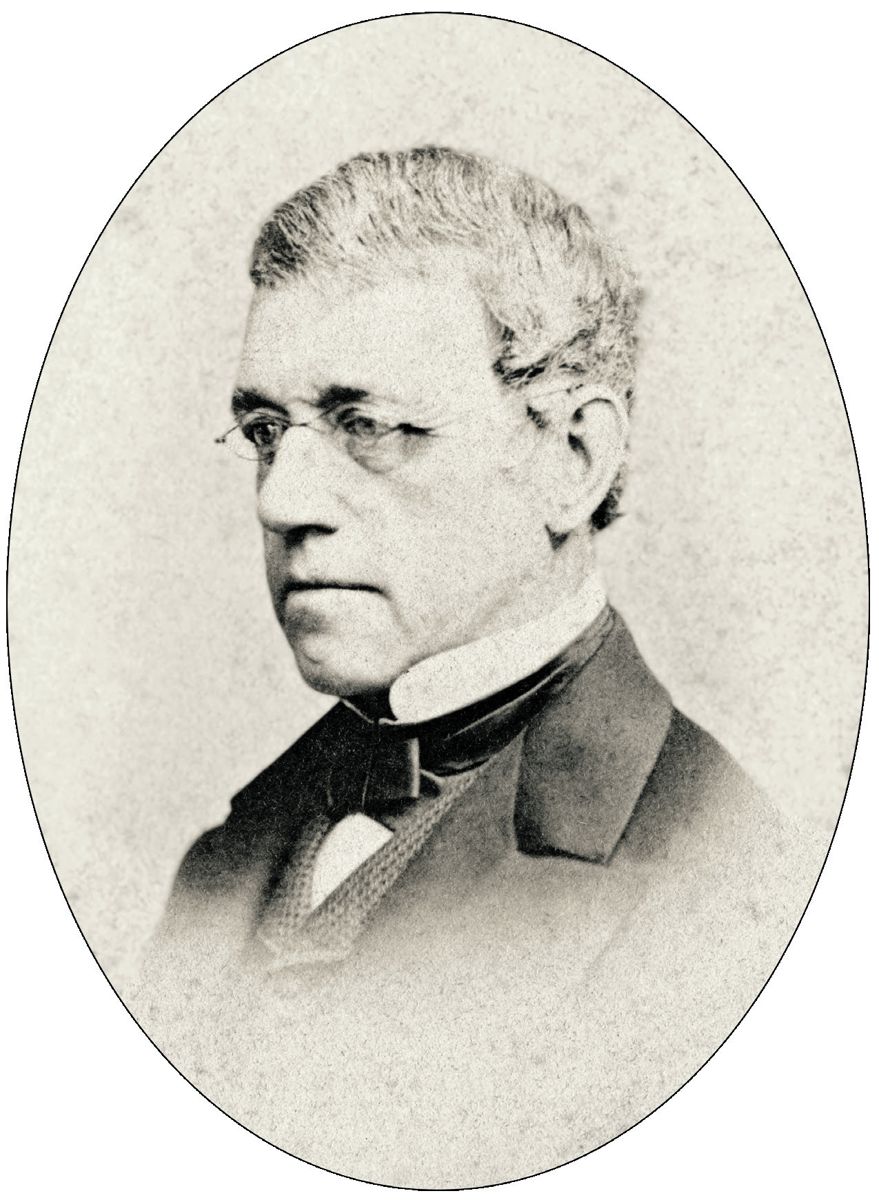
Several army and navy officers, before or during the Civil War, developed weapons that were used in the war and which bear their names. There are also eponymous items of a less deadly nature. In this column we will take a look at some of these inventions and their inventors. We begin with the big guns. John Adolphus Dahlgren was born in Philadelphia during 1809, where his father, a Swede, served as his country’s consul. Dahlgren joined the U.S. Navy in 1826 and served on the Coast Survey during the 1830s. He developed an expertise in ordnance, for which he is best known. In 1847 he was assigned to the Washington Navy Yard, where he remained until 1862. During this period, he developed the guns bearing his name. The navies of both Civil War belligerents used Dahlgrens. Dahlgren designed a bronze, smooth-bore boat howitzer soon after the Mexican War. Later came the large iron shell guns, ranging in caliber from nine inches to 20. The USS Monitor was armed with two XI-inch Dahlgrens. The shell guns’ tubes were heaviest at the breech, the part bearing the greatest stress, hencetheirwell-knownsoda-bottle shape. Dahlgren’s iron rifled guns were designed during 1860. They ranged from a 50-pounder to a 150-pounder. In July 1863 Dahlgren took command of the South Atlantic Blockading Squadron. After the war he served in the Pacific, then returned to the Washington Navy Yard, which he commanded until his death in 1870. Robert Parker Parrott was an army officer, West Point class of 1824. Unlike Dahlgren, Parrott left government service and did his ordnance work as a civilian. He resigned from the army in 1836 and was hired to superintend the West Point Foundry. The Parrott gun, first produced in 1860, was a cast iron rifled cannon running from 10-pounders to 300-pounders. The innovative feature of the Parrott was the method by which a reinforcing wrought-iron band was attached to the tube. As the heated bands were put into place, the tube was rotated and sprayed with water to ensure a strong bond around the entire perimeter. A Parrott projectile was developed for the gun; Parrott also patented a fuse and a sight. The Parrotts were less accurate than other guns, and the heavier calibers were prone to burst. However, they were simple to operate and could be produced quickly and inexpensively. Robert Parrott left the foundry soon after the war and died in
- Our last big gun is the 100%-Confederate Brooke rifle, invented by naval officer John Mercer Brooke. Brooke, an 1847 Annapolis grad, resigned from the U.S. Navy and joined the Confederacy just days after Fort Sumter. Brooke helped design the conversion of the USS Merrimack into the famous CSS Virginia. From the fall of 1862 until the end of the war he led the navy’s Bureau of Ordnance and Hydrography. Manufactured in Richmond and Selma, his namesake rifle,
like the Parrott, had a cast-iron tube banded with wrought-iron to reinforce the breech. Calibers ranged from 6.4 to 11-inches. The gun was used on ironclads and in seacoast defenses. After the war Brooke taught at the Virginia Military Institute. He died in 1906, just short of his 80th birthday. We now move from heavy ordnance to small arms and the Burnside carbine. Ambrose Everett Burnside graduated from West Point in 1847 and served in the Mexican War. He resigned from the army
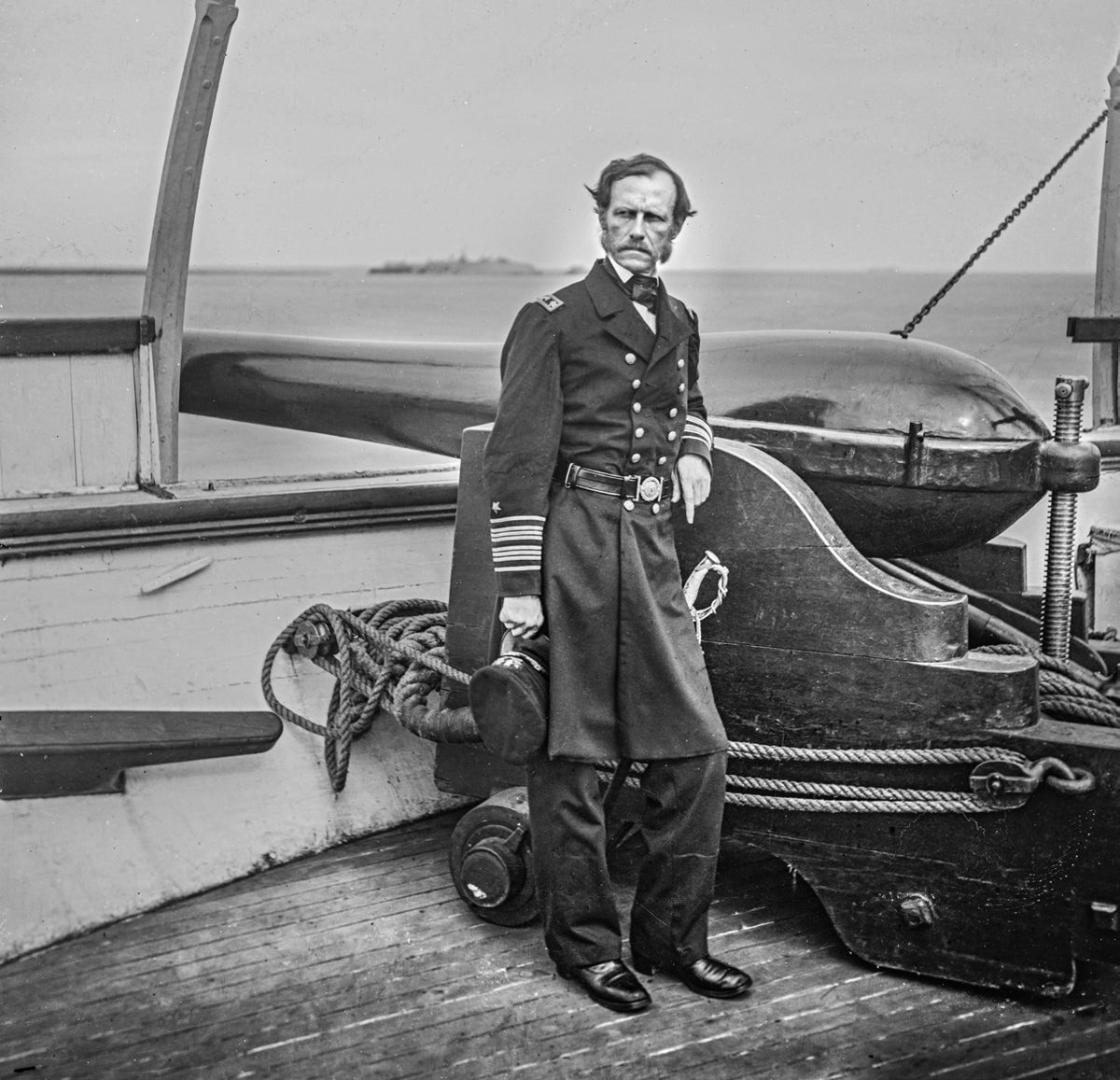
Robert Parker Parrott. Civil War 2nd Model Burnside Breechloading Carbine. Photo Courtesy of Poulin’s Antiques & Auctions.
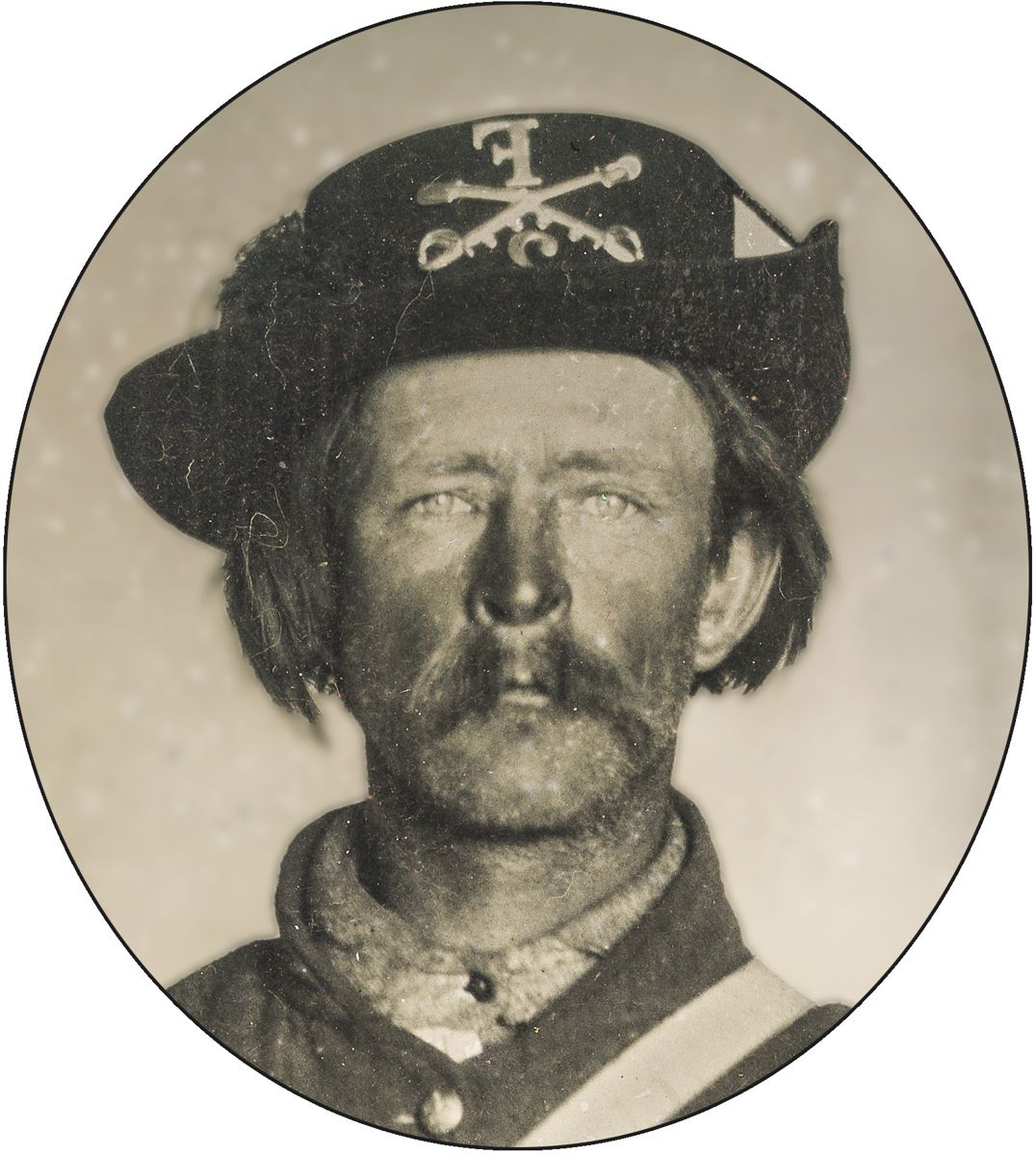
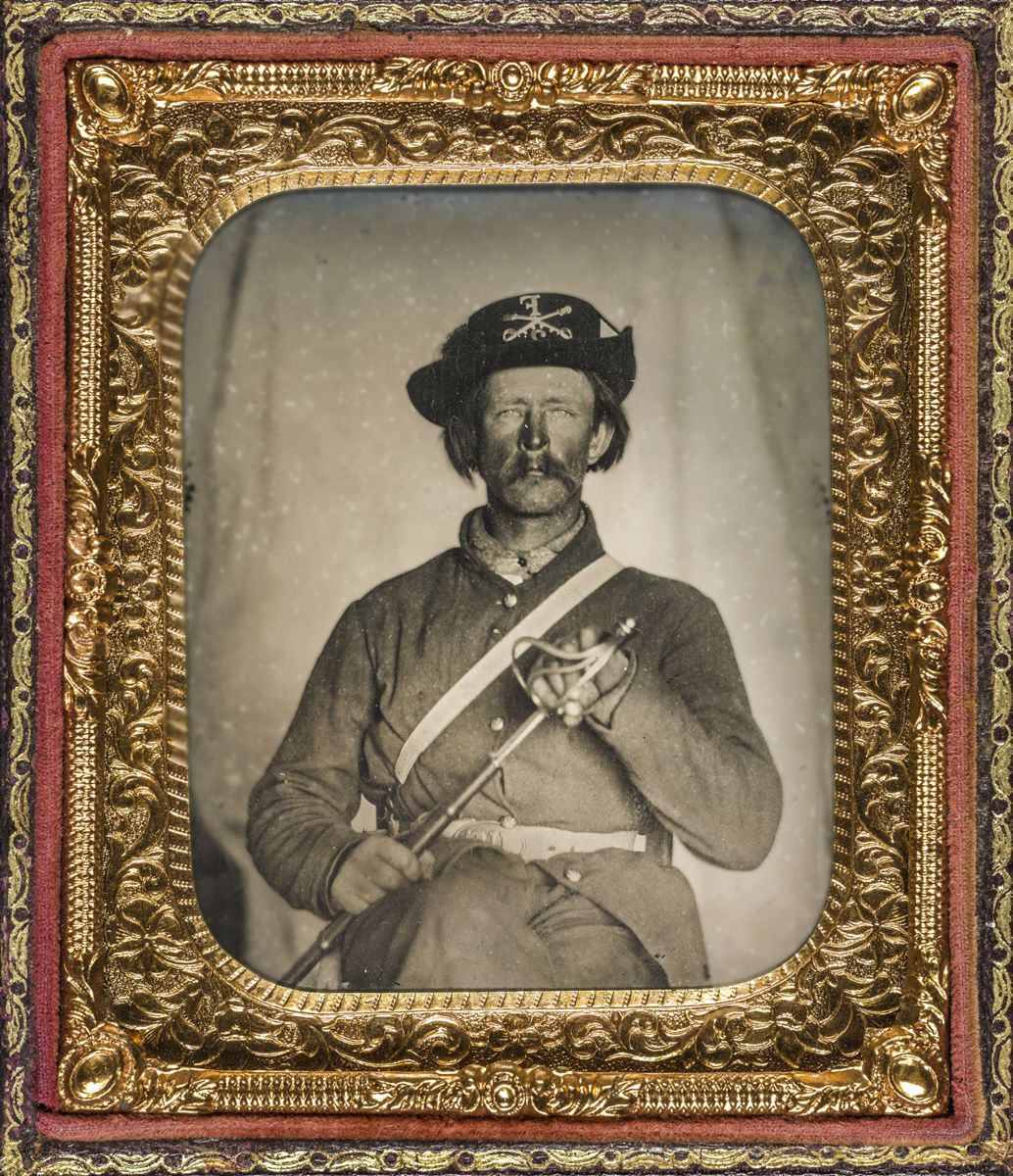
Left: Union soldier in uniform with Burnside carbine and cavalry saber. Liljenquist Family Collection of Civil War Photographs (Library of Congress).
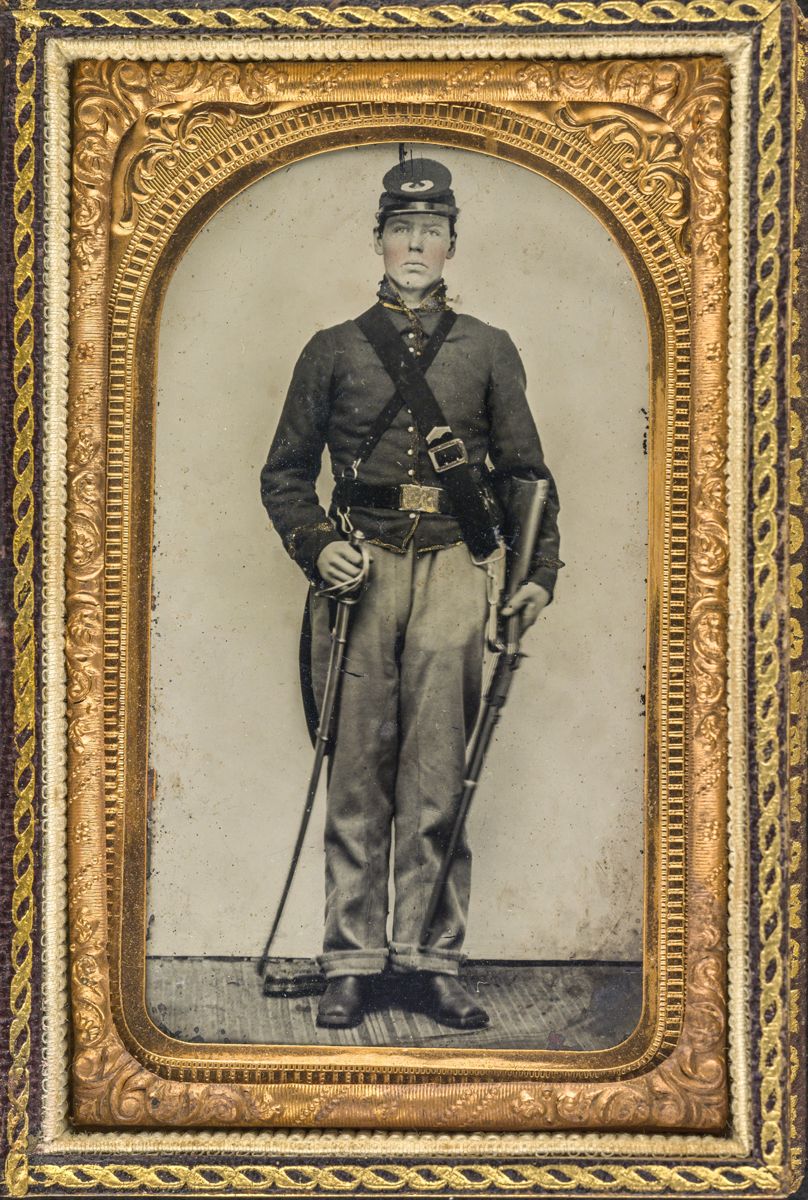
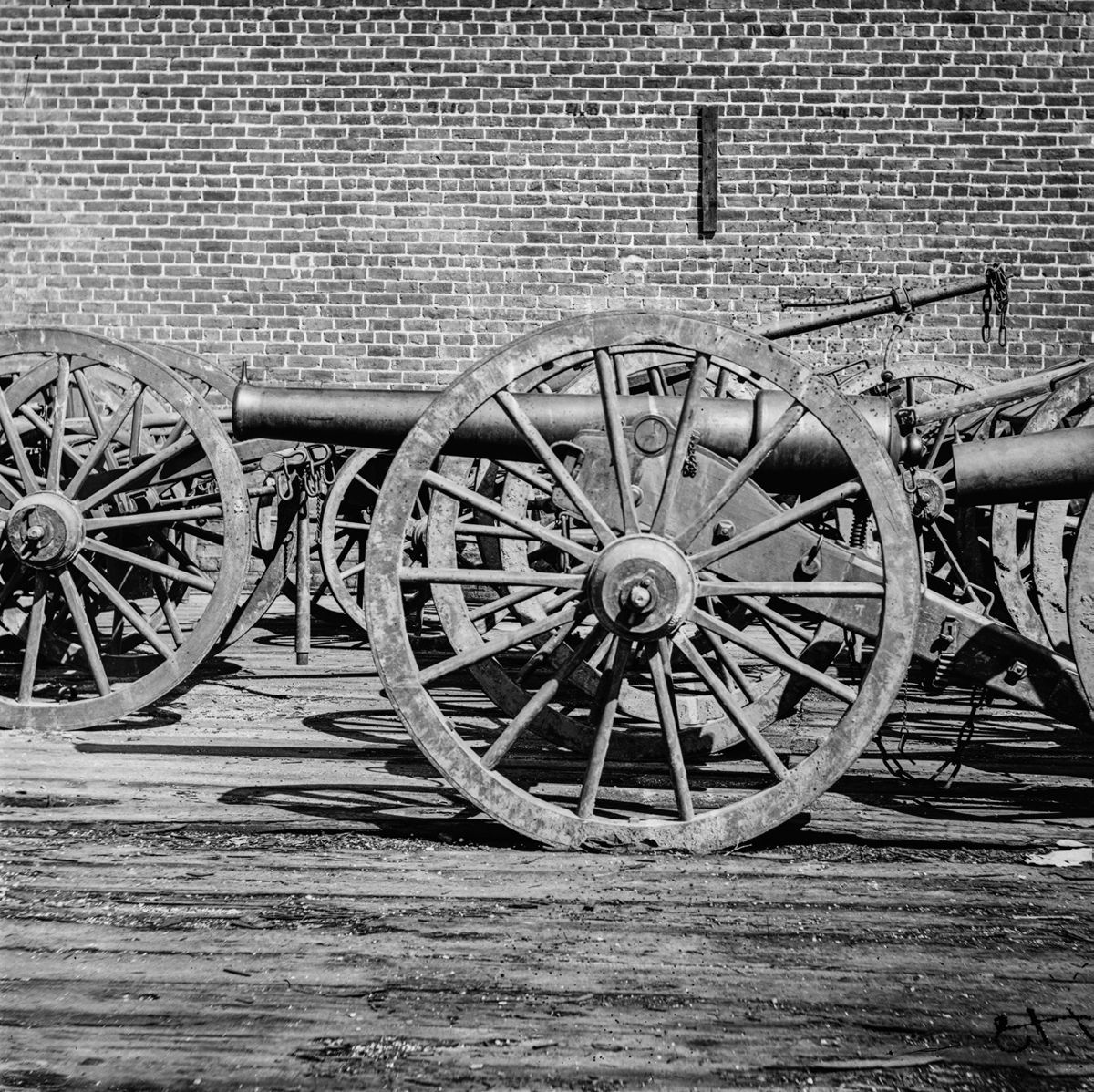
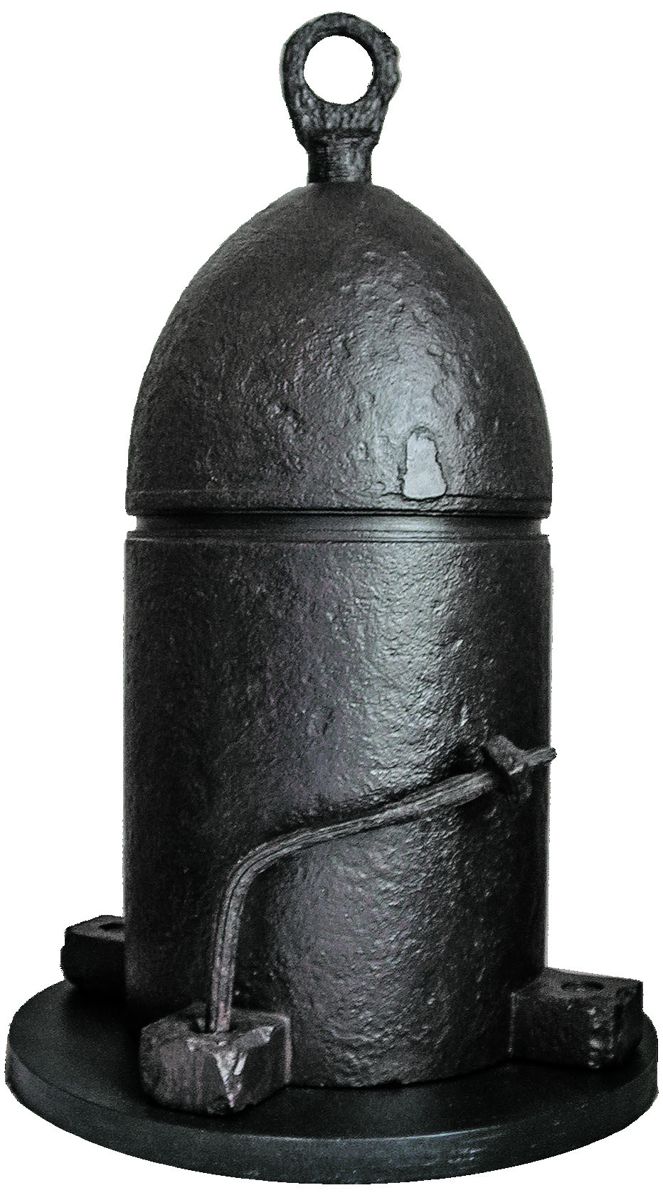
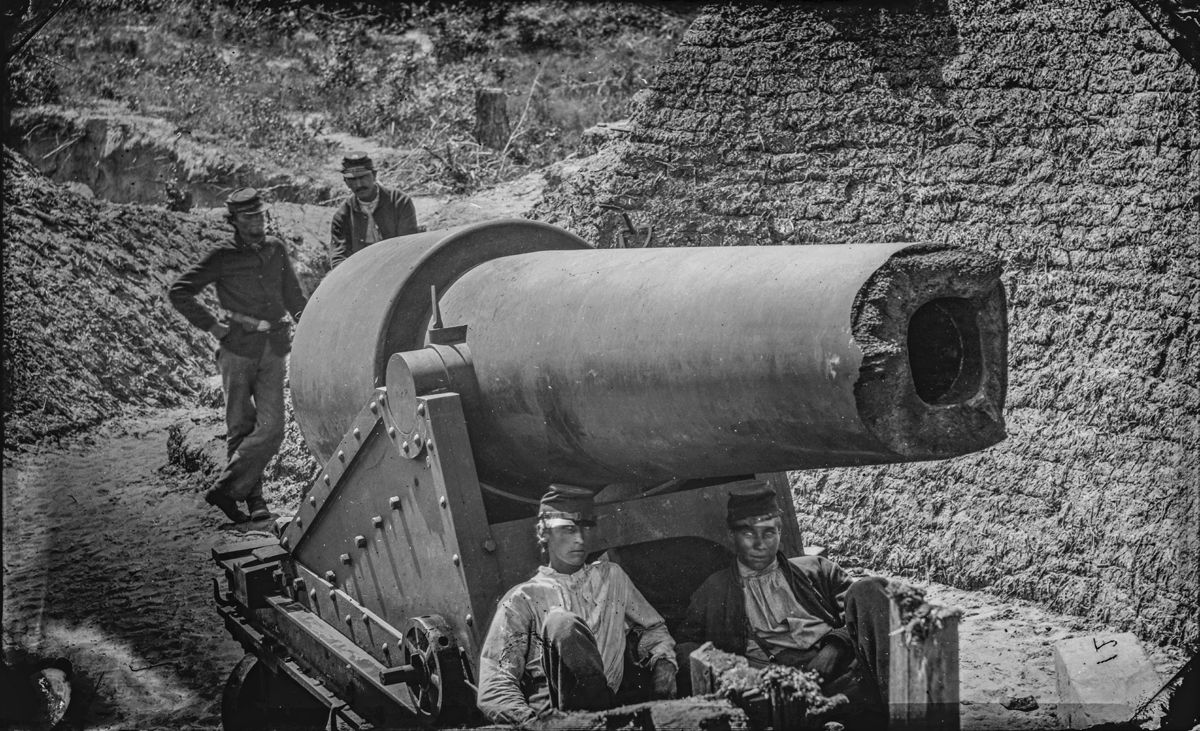
John P. Demeritt. “The 10-inch [Parrott rifle, 300-pounder] required a little greater elevation to attain the same range than the 8-inch, but was more accurate. It was mounted on an iron carriage with a centre pintle chassis, and worked with great ease and facility….Unfortunately, it was disabled soon after opening fire, by a premature explosion of a shell near its muzzle, which blew off about eighteen inches of its length. It was repaired at the suggestion, and under the supervision, of Captain Gray, Seventh Connecticut, the battery commander, who was a skillful mechanic, by chopping off the lands for a distance beyond the fractures, and enlarging the diameter of the bore this distance from an eighth to a quarter of an inch. This left a band of iron, as it were, around the muzzle. The gun was fired three hundred and seventy times after this, without any appreciable difference in the range or accuracy being noticed. Subsequently it was completely disabled by continued premature explosions of shells near the muzzle. The iron used in the manufacture of this gun is of a superior quality, and I see no reason, if it had not been for this accident, which can be guarded against in future, why it would not have endured for one thousand or fifteen hundred rounds, in which case it appears to be the perfection of a heavy rifle gun. No one could witness its performance during the bombardment of [Fort] Sumter, and notice the terrible crushing effect of its huge projectiles upon the masonry of that place, the ease with which it was worked, and its remarkable accuracy at a distance of two miles and a half, without being filled with admiration and wonder.”1 in 1853 to open a firearms factory in Rhode Island. In 1856 he patented and began producing a breech-loading rifled carbine. The innovative Burnside carbine was the first American military firearm to use a metallic cartridge. Along with the Spencer and Sharps rifles, Burnside’s carbines were widely used by the Federal cavalry. While the invention was a success, Burnside did not see financial gain. His company went bankrupt before the war and his patent was taken over by creditors. Others, therefore, profited from the wartime sales of thousands of carbines and millions of rounds of ammunition. We turn back to the Southern side and to another kind of weapon:torpedoes designed by Gabriel James Rains. An 1827 West Point graduate, Rains, at 57, was an old-timer when the war broke out, but he had some new-fangled ideas about warfare that were initially considered uncivilized by his fellow Confederate officers and their enemies as well. Rains, in command of a brigade in the retreat up the Peninsula, impeded the Federals’ march with devices we would now call land mines. Later, as head of the Torpedo Bureau, he developed explosive devices for use on land and water. (By then commanders had overcome their earlier scruples about Rains’s methods of warfare.) In addition to the aforementioned sub-terra land mine, Confederates used Rains’s barrel torpedoes (mines, in modern parlance) and underwater frame torpedoes (large cast iron mines). Most readers can visualize the subsurface torpedoes, but the submarine torpedoes (mines) call for some explanation. Rains’s biographers describe this as a “series of percussion torpedoes, mounted on a submerged wooden frame.”When an enemy ship rode over the frame, the impact of the ship against the percussion fuses
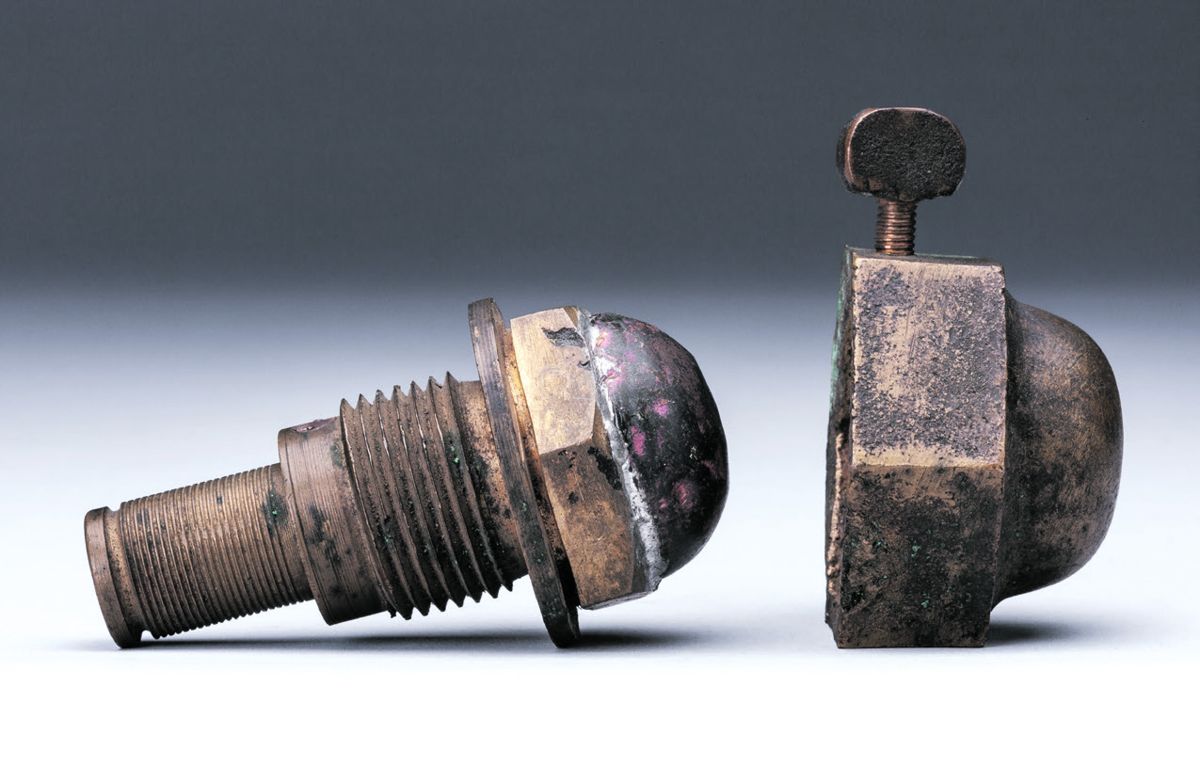
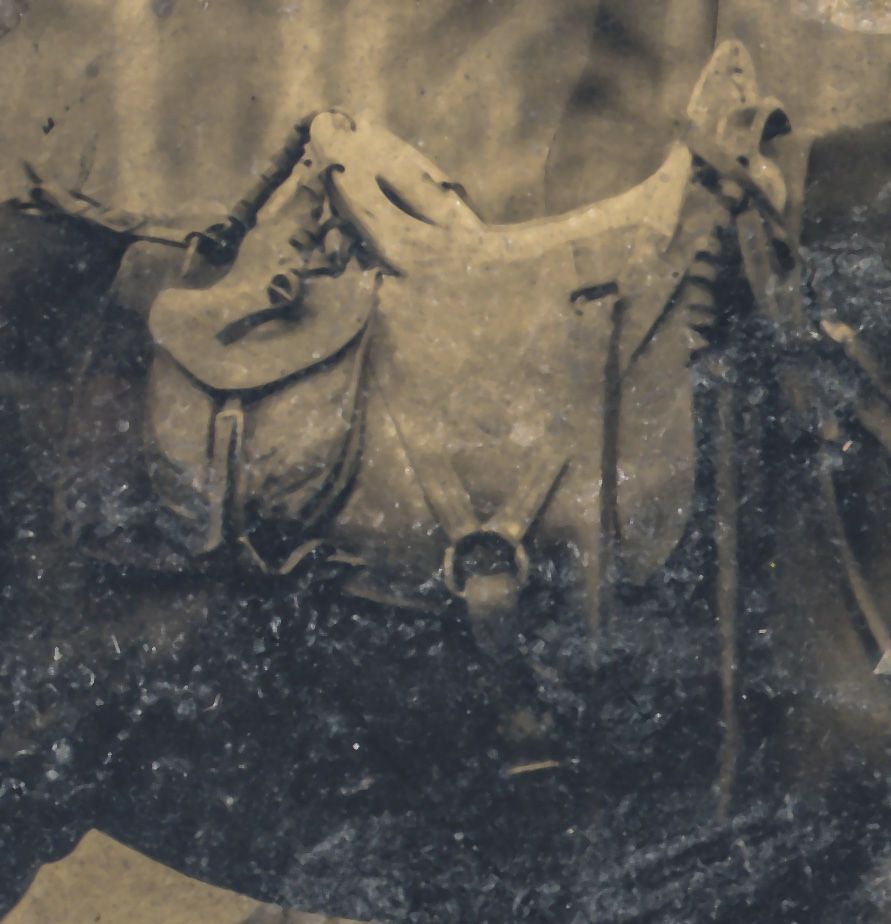
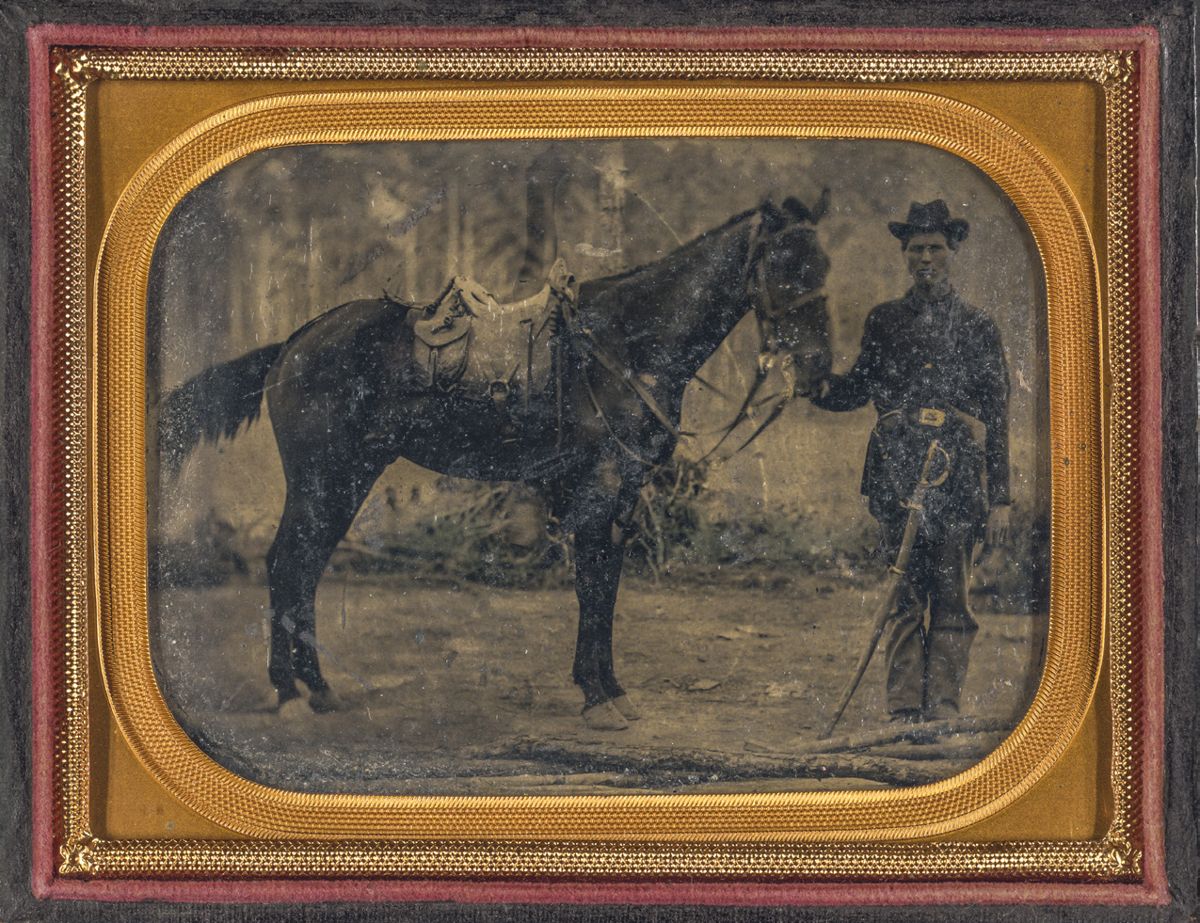
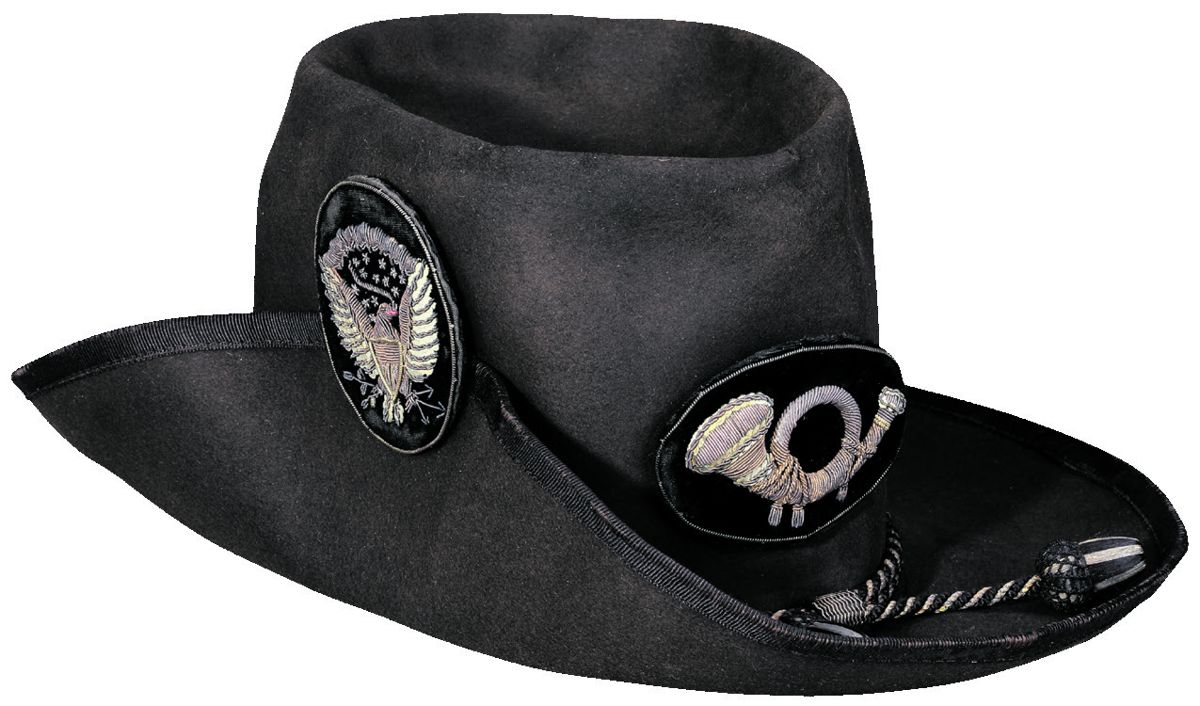
(Rains-designed, of course) exploded the frame torpedo(es) into the ship’s hull. As many readers will know, it was a Rains device that caused the mammoth blast at City Point in 1864. Two Confederate agents managed to slip a Rains horological bomb onto a Federal ammunition barge at this huge port and supply depot. The resulting explosion did extensive damage and killed and wounded scores of men. The Federals did not learn the cause of the explosion until after the war. Not all eponymous inventions were lethal; we now turn to head covers and footwear. First the Hardee hat, sometimes known as the Davis hat. Neither William Hardee nor Jefferson Davis actually designed the hat, but played what we can call a managerial role. William J. Hardee, a major at the time, served on the 1855 army board was responsible for selecting the design for a new dress hat. Chosen in 1858, the black hat had a tall crown and wide brim that was pinned up on one side by a brass eagle, the right side for the cavalry and artillery, the left for the infantry. The side opposite the fold sported a black plume. A wool cord designated the branch of service, blue for infantry, gold for cavalry, and red for artillery. Davis, Secretary of War from 1853 to 1857, is sometimes associated with the hat. The hat was a mark of distinction for the Iron Brigade, but otherwise was not widely used during the war. During Davis’s tenure as Secretary of War, the army also picked a new boot, which is sometimes called the Davis boot. The footwear had a practical design and was widely used by both armies in the Civil War. It continued to be standard for the U.S. Army until the 1880s. Halfway between the head and the foot is the part of the anatomy that Gen. John Pope confused with his headquarters, the part that rests on a saddle. The inventor of the last item we will cover is the man who both preceded and succeeded Pope as commander of the Army of the Potomac, Gen. George B. McClellan, whose name was given to a saddle. McClellan, then a captain, travelled to Europe in 1855 with other American officers to observe European armies. On his return McClellan presented a design for a light-weight, durable saddle that was adopted by the cavalry in 1859. The pattern was based on a saddle McClellan saw used by hussars in the Crimean War. Or so McClellan said. One writer, Randy Steffen, was skeptical of McClellan’s claim and had this to say: “Captain McClellan always asserted that his saddle was the result of an intensive study of European saddles…., and more often than not military writers quote him as claiming that he used the best features of the Hungarian and Mexican trees to perfect his design. It is strange that no military writer has seen through this subterfuge on Captain McClellan’s part.” Steffen pointed out the similarities between McClellan’s design and three other American designs, all of which had been adopted or used experimentally by the cavalry. The designers of the other saddles did not raise objections, Steffen wrote, perhaps because they died soon after the McClellan saddle was adopted. British and colonial cavalry used McClellan saddles in the Boer War. Some Indian warriors on the Great American Plain also used this saddle in the years after the Civil War. The 7th Cavalry was riding on McClellan saddles, so a couple of hundred were taken by Indians on June 26, 1876. McClellan’s saddle was used even longer than the Davis boot. After its adoption it was regulation issue for as long as the United States Army had horse cavalry, until 1943. The saddle is used even today for ceremonial purposes. Sources and further reading: Much of the information here is taken from Faust’s Encyclopedia of the Civil War. Online sources can be easily found by anyone who wants to learn more. Steffen’s book, United States Military Saddles, 1812–1943, was published in 1973. Gabriel Rains and the Confederate Torpedo Bureau, by W. Davis Waters and Joseph I. Brown, was published in 2017 and reviewed in the August 2018 edition of CWN.
- Gillmore, Quincy Adams. Engineer and Artillery Operations Against the Defences of Charleston Harbor in 1863, United States: D. Van Nostrand, 1865, Brig. Gen. J. W. Turner’s Report, pp. 152-153. Gould Hagler is a retired lobbyist living in Dunwoody, Ga. He is a past president of the Atlanta Civil War Round Table and the author of Georgia’s Confederate Monuments: In Honor of a Fallen Nation, published by Mercer University Press in 2014. Hagler speaks frequently on this topic and others related to different aspects of the Civil War and has been a regular contributor to CWN since 2016. He can be reached at [email protected].
A tablet installed by the Alabama Historical Association tells the story of the Brooke rifle on display at Selma’s City Hall. The VII-inch gun was cast on Aug. 24, 1863, at the Naval Gun Foundry and Ordnance Works located on the Alabama River a short distance from the display. This piece was the first gun shipped from the foundry. It was mounted as the stern pivot gun on the CSS Tennessee II, an ironclad ram also made in Selma. At the Battle of Mobile Bay on August 5, 1864, Admiral Franklin Buchanan, C.S.N., commander of the Confederate naval forces at Mobile, was near the gun when he was wounded during the battle. This gun aboard the CSS Tennessee II when the ironclad was captured by Federal forces in the battle and was taken to the U.S. Navy Yard in Washington as a trophy. It is the only surviving naval gun from the battle. The gun is 12 feet 3 ½ inches in length and its weight is 15,300 pounds. It had a range of 7,900 yards. In 1981 the gun was returned on loan from the Naval Historical Center in Washington to the Selma-Dallas County Museum of History and Archives.
On top of S-5’s breech band is marked: CAPTURED ON BOARD THE REBEL RAM TENNESSEE / BY / R. ADMIRAL FARRAGUT’S FLEET / IN MOBILE BAY AUG. 5TH 1864. [CSS Tennessee II]
A double banded VII-inch Brooke rifle currently mounted in front of City Hall, Selma, Ala.