
The Unfinished Fight
Buttermilk
By Craig L. Barry · Originally published May 2021 · pp. 8–9
“One kneeds but little in this country as thare is scasly anything here to sell and what little thare is, it is so high that a soldier cant buy it… if we get a glass of buttermilk we pay $1.00 for it $2.00 for a mess of greens and everything else in proportion.” – Letter home dated May 28, 1864, Pvt. Edmond Hardy Jones 64th Georgia. If the account in the heading is to be trusted, buttermilk must have been quite a treat for soldiers on a $13 monthly income to pay $1 for a glass of it. What was buttermilk like in the mid19th century and how was it different from what we buy today? Buttermilk was a by product of making butter, so perhaps this is a good place to begin the discussion. There are many references in Civil War diaries and letters home that mention butter. For example, in a letter home, a soldier named Ira S. Jeffers wrote “October 10, 1862, I have not any butter or bred [sic] since I left Washington… it has been all hard crackers and bacon.” Butter was an item of culinary luxury seldom afforded to the common soldier. One particular recollection about butter that stands out is, “Please Pass the Butter” written by Sam Watkins in his Civil War recollections, published as Company Aytch. It is easy to chuckle at Watkins’ detailed account of the time he received an invitation to a civilian home for dinner. He recalled that: “If I have ever eaten a better supper than that one I have forgotten it. They had biscuit for supper. What! flour bread? Did my eyes deceive me? Well, there were biscuits—sure enough flour bread—and sugar and coffee—genuine Rio—none of your rye or potato coffee, and butter—regular butter—and ham and eggs, and turnip greens, and potatoes, and fried chicken, and nice clean plates—none of your tin affairs—and a snowwhite table-cloth and napkins, and white-handled knives and silver forks…” Sam Watkins’ account continued as a dialogue while he sat at the dinner table:
“The old lady says, “Mister, have some butter?” “Not any at present, thank you, madam.” “Well, I insist upon it; our butter is nice.” “Oh, I know it’s nice, but my plate is full, thank you.” “Well, take some anyhow.” One of the girls spoke up and said: “Mother,the gentleman doesn’t wish butter.”
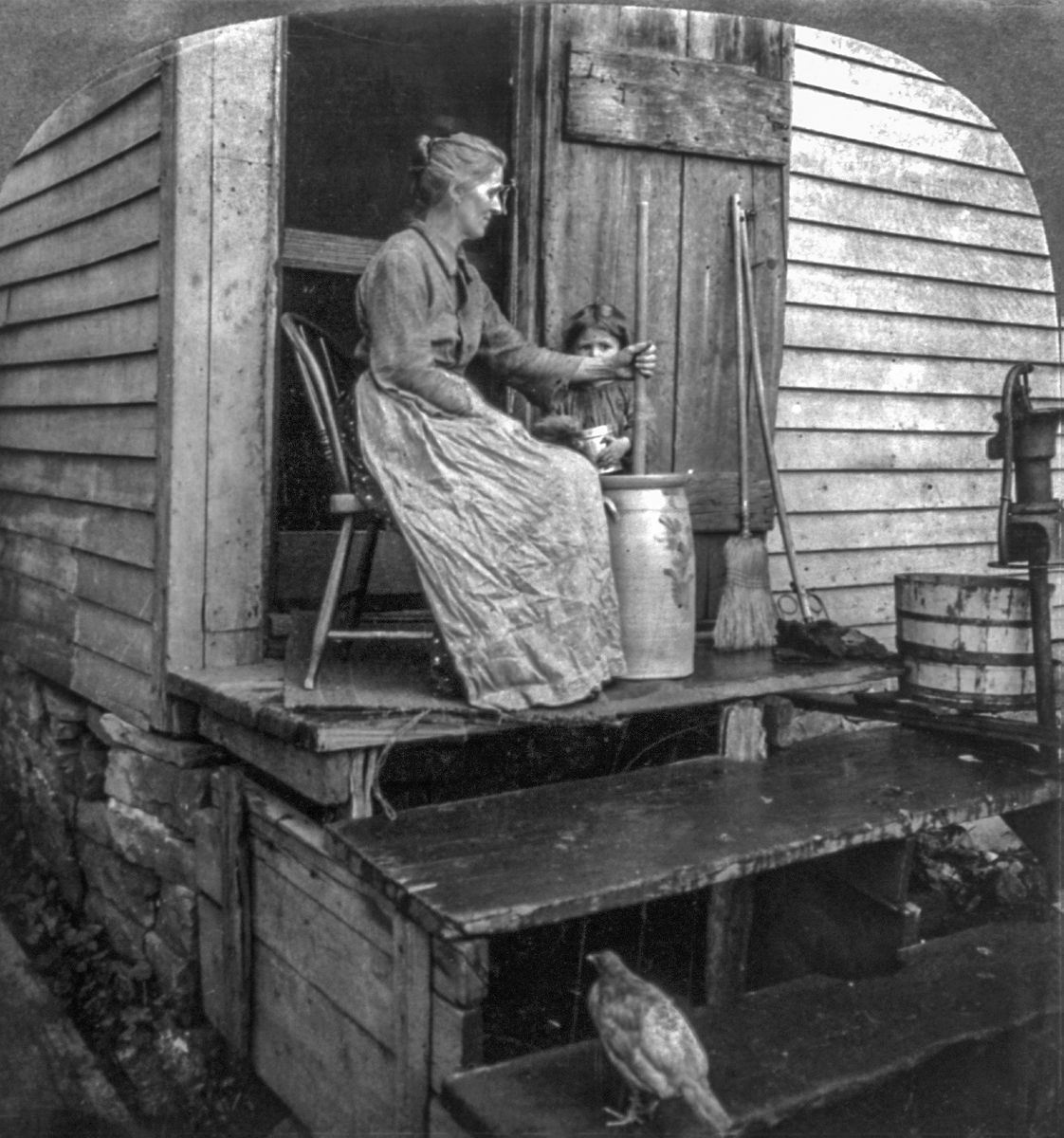
“Well, I want him to know that our butter is clean, anyhow.” “Well, madam, if you insist upon it, there is nothing that I love so well as warm biscuit and butter. I’ll thank you for the butter.” I dive in. I go in a little too heavy. The old lady hints in a delicate way that they sold butter. I dive in heavier. That cake of butter was melting like snow in a red hot furnace. The old lady says, “We sell butter to the soldiers at a mighty good price.” I dive in afresh. She says, “I get a dollar a pound for that butter” and I remark with a good deal of nonchalance, “Well, madam, it is worth it.” The awkward exchange at the dinner table that evening made such an impression on Sam Watkins that he recalled many finer points of the conversation when he sat wrote his memoirs twenty-five years later in the 1880s. He was clearly embarrassed about his unwitting social blunder over the butter and his awkwardness is palpable, but why is that so? What caused the farmer’s wife to become so insulted when first, Watkins refuses her offer of butter and then resentful when he overindulges? There were obviously a great many written rules of etiquette in the mid-19th century and Sam Watkins violated one of the many unwritten rules regarding butter. There was not only an element of social status associated with the quality of the household butter but it was also an important source of discretionary income for the women. In a rural household, the women kept the“butter and egg money” that was often the only income she could call her own. Sam’s failure to understand the significance and proper appreciation for butter identified him as an uncultured person from a lower station in society. Watkins concludes by admitting, “I did not know this characteristic of the human female at the time, or I would have taken a delicate slice of the butter.” It appears simple to make Woman churning butter while reading. A kitten is licking the buttermilk from the top of the lid. Library of Congress.
butter, as there are only two main ingredients: heavy cream and a little salt, however, churning it by hand is tedious and there is a trick to cleaning it at the end or else it is easily ruined. Fresh (raw) milk was stored in a cool place until the cream began to rise to the top. The cream skimmed from the top of the fresh milk was poured into the churn and agitated by moving the handle up and down. The cream was “worked” for fifteen to twenty minutes before the contents started thickening. When lumps (butter) appeared in a pearly liquid (buttermilk), the work was almost finished. The butter and the buttermilk were poured into a strainer placed over a bowl. The liquid residue, known as sweet cream buttermilk, was drained off into the bowl, and the solid butter stayed behind. The sweet cream buttermilk was saved for other purposes, including use in cooking, baking, and as a rich, refreshing drink. The butter was taken out of the strainer and put in the rinsed-out bowl. It was then covered with cold water and rinsed off through the strainer. The milky water was discarded. The process of cleaning the butter continued until the water poured off clear. It was critical to wash out the remnants of the buttermilk as the failure to do would quickly turn the butter sour. Culinary historian Anne Mendelson notes in Milk: The
Surprising Story of Milk Through the Ages that “…for as long as people have been making butter there has been buttermilk.” The buttermilk which was a by-product of making butter from sweet cream bears little resemblance to what we purchase today in supermarkets, which is known as cultured buttermilk. Cultured buttermilk has nothing at all to do with butter-making. As a result it tastes nothing like sweet cream buttermilk. It is merely pasteurized milk that has been chemically soured. Cultured buttermilk is a 20th century invention and truthfully, somewhat unpleasant to drink.
Craig
L.
Barry was born in and
Masters degrees from
Craig served
The
Charlottesville, Va. He holds his BA the University of North Carolina (Charlotte).
Watchdog Civil War Quarterly as
Associate Editor and Editor from
2003–2017. The Watchdog published books and columns on 19th-century material from and donated publications all to funds battlefield preservation. He is the author of several books including The Civil War Musket: A Handbook for Historical
Accuracy (2006, 2011), The Unfinished
Fight: Essays on Confederate Material Culture Vol. I and II (2012, 2013). He has also published four books in the Suppliers to the Confederacy series on English Arms & Accoutrements, Quartermaster stores and other European imports.