
The Unfinished Fight
Charles Dickens
By Craig L. Barry · Originally published March 2021 · pp. 8–9
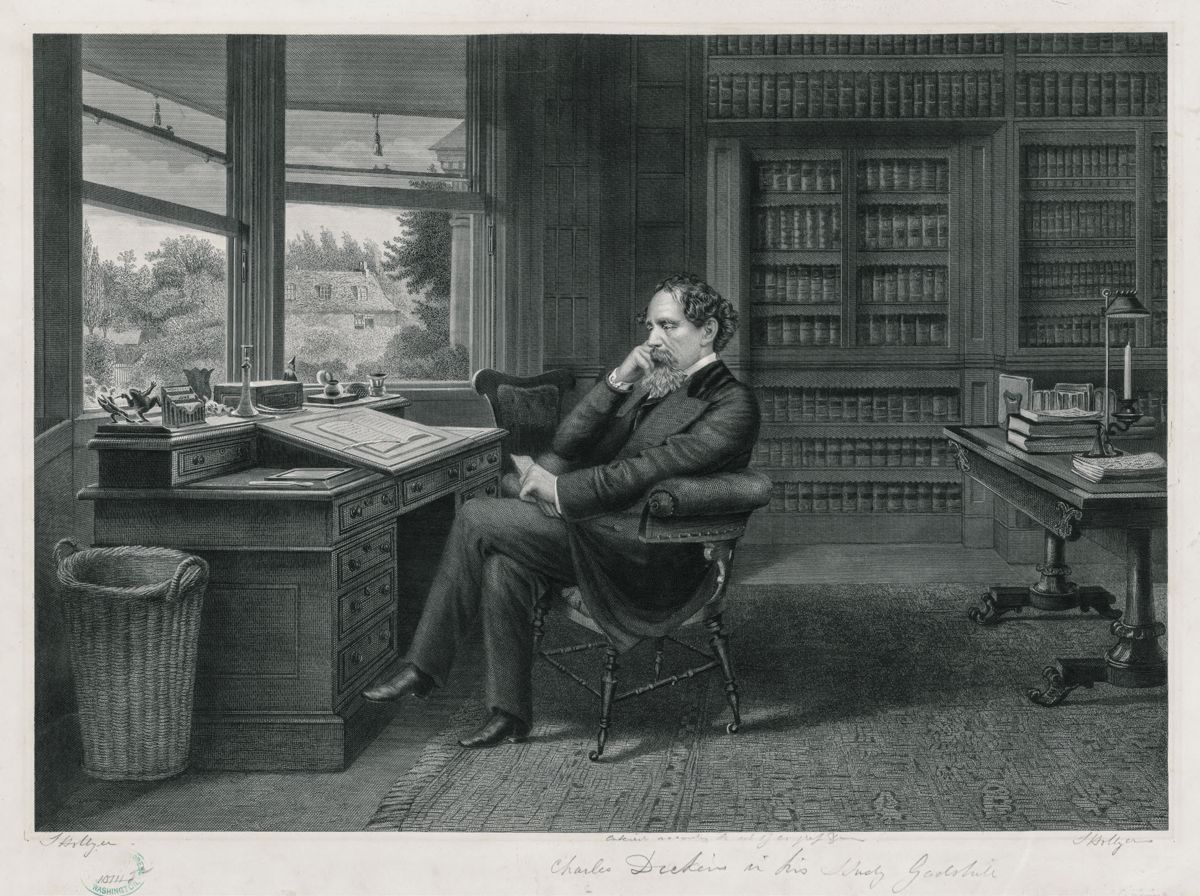
“The Northern onslaught upon slavery is no more than a piece of specious humbug designed to conceal its desire for economic control of the Southern States.” Charles Dickens is often credited with this statement, or more specifically penning this particular phrase in his personal correspondence during March, 1862. It is usually cited by historians seeking a well-known (foreign) champion of the Confederate cause. If you do an Internet search of the keywords, that cite appears on hundreds of websites where this exact phrase is attributed to Charles Dickens verbatim; most also date it from 1862. Did Charles Dickens ever write those words or make that statement in 1862, if ever, and, if so, in what context and where did it appear? If not, what were some of Dickens insights on the subject of the American fraternal hostilities, and with which side did he seem to sympathize? On Dec. 28, 1861, Dickens published a lengthy article in the magazine All The Year Round, which may (or may not) have been written by him.Dickensundoubtedlyowned the magazine which first began publishing in 1859 and sometimes he collaborated with the staff writers. The article in question largely blamed the American Civil War on Northern tariffs: If it be not slavery, where lies the partition of the interests that has led at last to actual separation of the Southern from the Northern States? The case stands, and under all the passion of the parties and the cries of battle lie the two chief moving causes of the struggle. Union means so many millions a year lost to the
South; secession means the loss of the same millions to the North. The love of money is the root of this, as of many other evils. The quarrel between the North and South is, as it stands, solely a fiscal quarrel. In a letter to a Swiss friend, (William De Cerjat) on March 16, 1862, Dickens wrote: I take the facts of the American quarrel to stand thus. Slavery has in reality nothing on earth to do with it in any kind of association with any generous or chivalrous sentiment on the part of the North. But the North having gradually got to itself the makings of the laws and the settlement of the Tariffs, and having taxed the South most abominably for its own advantage began to see as the country grew that unless it advocated a geographical line behind which slavery should not extend, the South would necessarily recover its old political powers and be able to help itself in the adjustment of commercial affairs.
The anti-Northern sentiments are there but it stops well short of the “Northern assault on slavery…specious humbug” wording with which he is so widely credited. As far as the issue of slavery goes, the Emancipation Proclamation was still nine months away when the last letter was written in March 1862. Dickens is more or less stating the facts as they stood. According to Grace Moore in Dickens and the Empire: Discourses of Class, Race and Colonialism in the Works of Charles Dickens (2004) Dickens was acquainted with the philosophical debate that surrounded the issue of slavery in America, but the statements in his correspondence reflected a staunch belief in free trade rather than anything close to a pro-Confederate agenda. Throughout Victorian-era England, the condemnation of the North for the enactment of tariffs was generally more intense than their disgust with the “peculiar institution” of plantation-based slavery in the Southern states. The Prime Minister (Lord Palmerston) commented that,“We do not like slavery, but we want cotton and we dislike very much your Morrill Tariff.” The choice of words here is telling. Likewise, the London magazine Punch summarized popular English sentiments of the day with a bit of poetry as follows: Although with the North we sympathize,It must not be forgotten;That with the South we’ve stronger ties;Which are composed of Cotton In the final analysis, the terms “specious” and “humbug” are not found in any of Dickens writings on the late unpleasantness“across the pond.” The anger Dickens expressed in his writings about the American Civil War was usually directed toward Northern trade policies that directly impacted profits for the English middle class. As an island nation, England is latently provincial out of necessity. One needs look no further than the Yorkshire/ Lancashire textile mill region for a similarly negative reaction to Confederate policies that restricted exports of cotton. Attorney General Judah Benjamin noted the attitude of the English cotton textile area, that …there is only one class that continues inimical to us, the Lancashire operatives. They look upon us and through a strange confusion of ideas see slavery as the source of their present miseries. Judah Benjamin somewhat misses the point. The reason for the animosity of the Lancashire mill workers towards the Confederacy was that the shortage of Southern cotton put them all out of work more or less immediately and their livelihood in doubt. Hence, while one biographer concluded that Dickens had “no sympathy for either side,” he appears to have harbored a bit more hope for Confederate success over the Union. It appears that among Englishmen taking sides in the debate over the War, their political attitudes towards the unpleasant events depended mostly on how they were impacted economically. In Dickens case, he was strongly in favor of international copyrights. American publishers, primarily located in New York, Boston, and Philadelphia, were opposed, preferring to publish his writings without payment. However, Dickens was far from “pro-Confederate.” His book American Notes for General Circulation was “mildly uncomplimentary” of his visit to the United States in 1842. Of the institution of slavery, which he considered “a disgrace,” Dickens wrote …all those owners, breeders, users, buyers and sellers of slaves, who will, until the bloody chapter has a bloody end, own, breed, use, buy, and sell them at all hazards. He predicted there would be an upcoming “Day of Judgment” over the issue, a prophecy which he boasted about during the Civil War. Whether the Civil War was that “Day of Judgment” is a subject for another day. The fact is there is no evidence that Dickens ever wrote (or said),“the Northern onslaught upon slavery is no more than a piece of specious humbug designed to conceal its desire for economic control of the Southern States” in those precise words. In retrospect, the fact that Dickens did not write that phrase does not make it any less compelling. It just can’t be attributed to any of the actual writings of Charles Dickens.
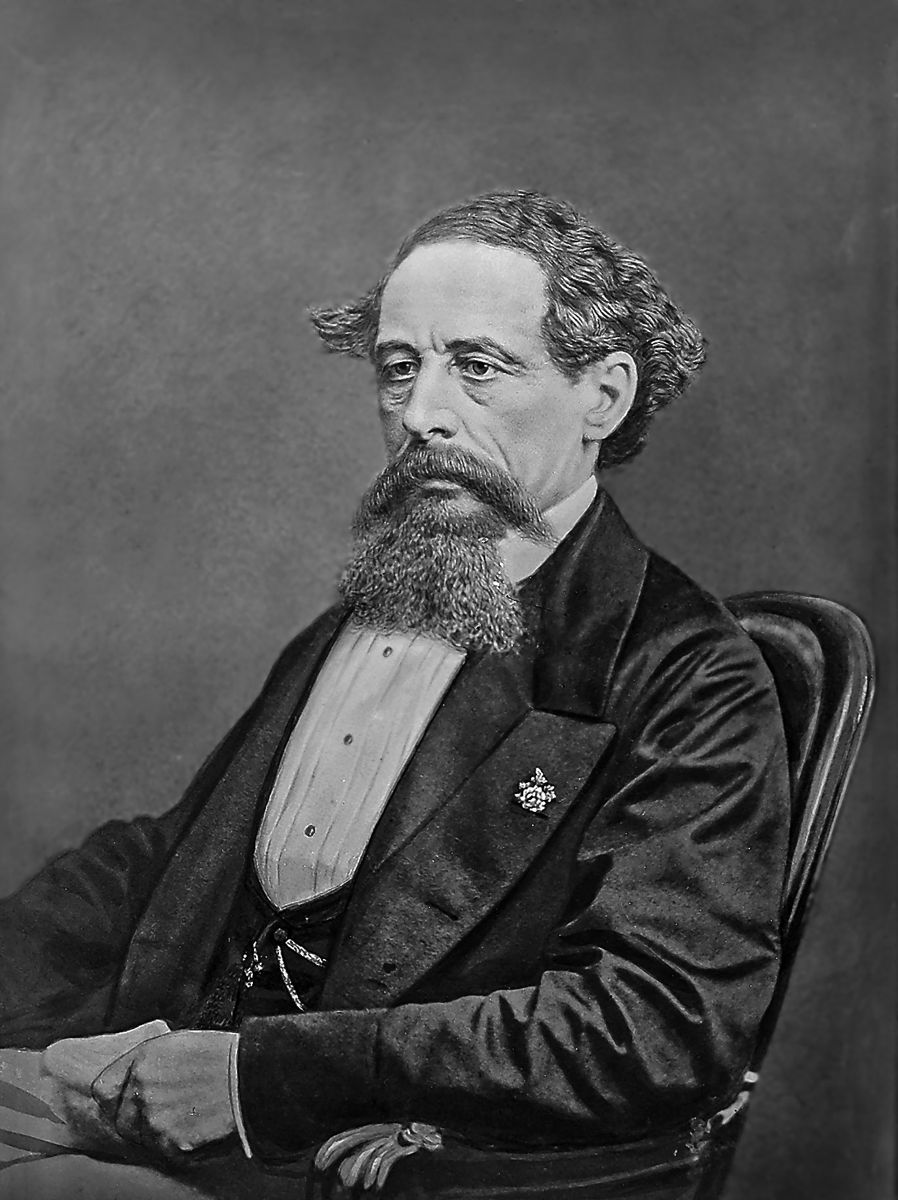
Craig L. Barry was born in Charlottesville, Va. He holds his BA and Masters degrees from the University of North Carolina (Charlotte). Craig served The Watchdog Civil War Quarterly as Associate Editor and Editor from 2003–2017. The Watchdog published books and columns on 19th-century material and donated all funds from publications to battlefield preservation. He is the author of several books including The Civil War Musket: A Handbook for Historical Accuracy (2006, 2011), The Unfinished Fight: Essays on Confederate Material Culture Vol. I and II (2012, 2013). He has also published four books in the Suppliers to the Confederacy series on English Arms & Accoutrements, Quartermaster stores and other European imports.