
A Battle of Williamsburg Trophy
By Shannon Pritchard · Originally published March 2021 · pp. 36–37
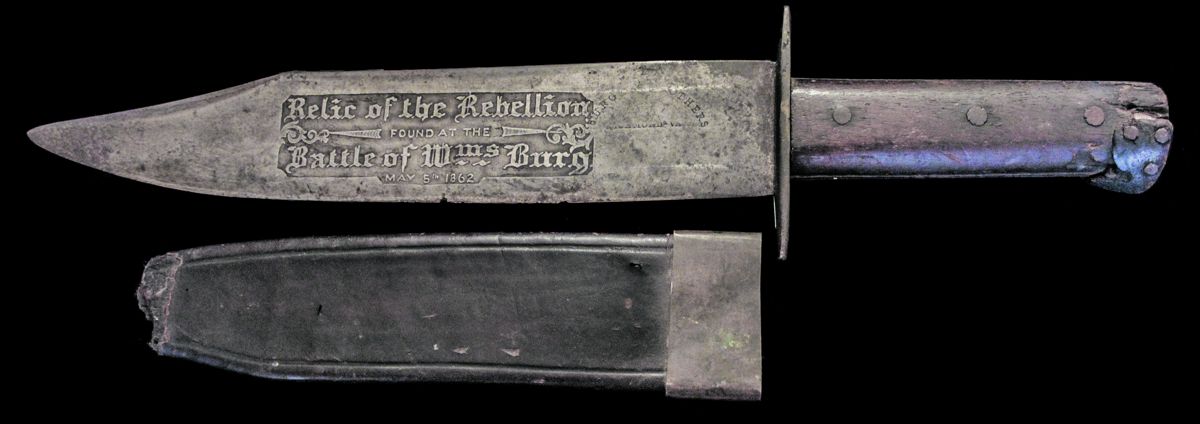
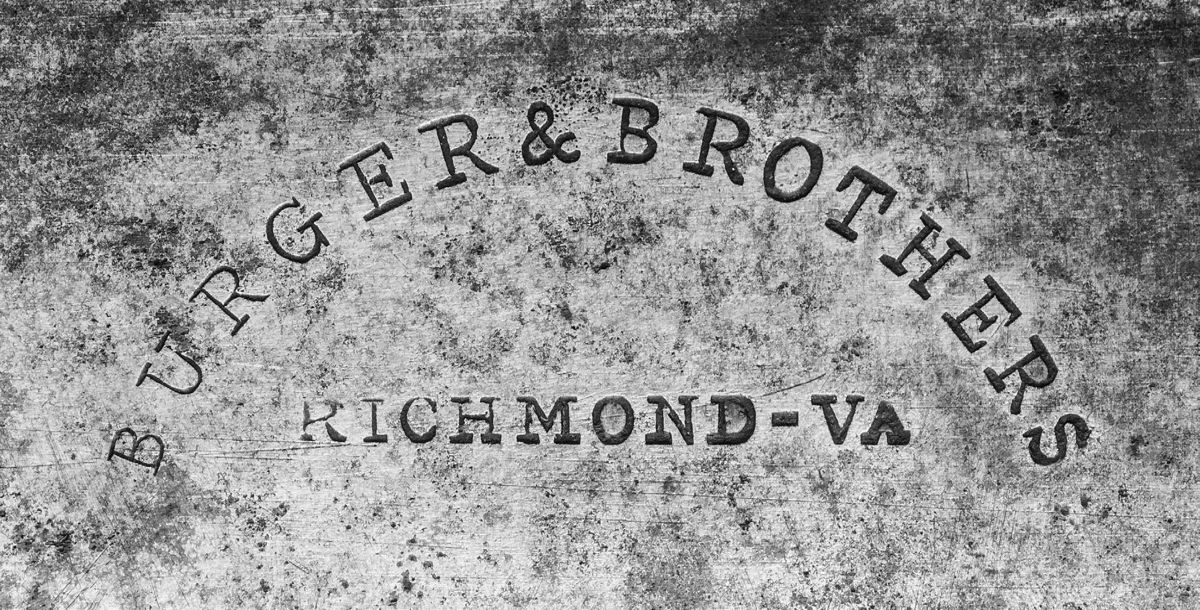
A Battle of Williamsburg Trophy by Shannon Pritchard Every soldier, North and South, needed a knife when they marched off to war and in the South it was fashionable, if not practical, to carry a large fighting knife, the bigger the better judging from war era photographs. Like the Code Duello, knife fighting was a Southern custom that was rarely engaged in by those above Mason–Dixon’s line. In truth, relatively little fighting was done with them, North or South, but there are numerous documented cases of Confederates engaging in handto-hand combat with knives. During the decade before the Civil War, Bowie knives were in fashion and were widely carried by men all over the country. It is thus impossible to categorize Bowies as Confederate unless they have a documented history of Confederate use or are one of the few that have Southern maker marks or characteristics. This beautiful Bowie has many classic Confederate hallmarks, but more importantly, it is stamped with the rare “BURGER & BROTHERS” over “RICHMOND–VA” maker’s mark, as such it is a quintessential Confederate Bowie knife. Prior to the War Between the States, Edwin Boyle and the Burger Brothers were in the saw manufacturing business. When the Northern states invaded Virginia, Mr. Boyle joined with a P. Gamble and began producing various types of edged weapons, including knives and swords for private purchase and for the Confederate Government. The Burger Brothers had a much smaller production, but they too made swords and knives.
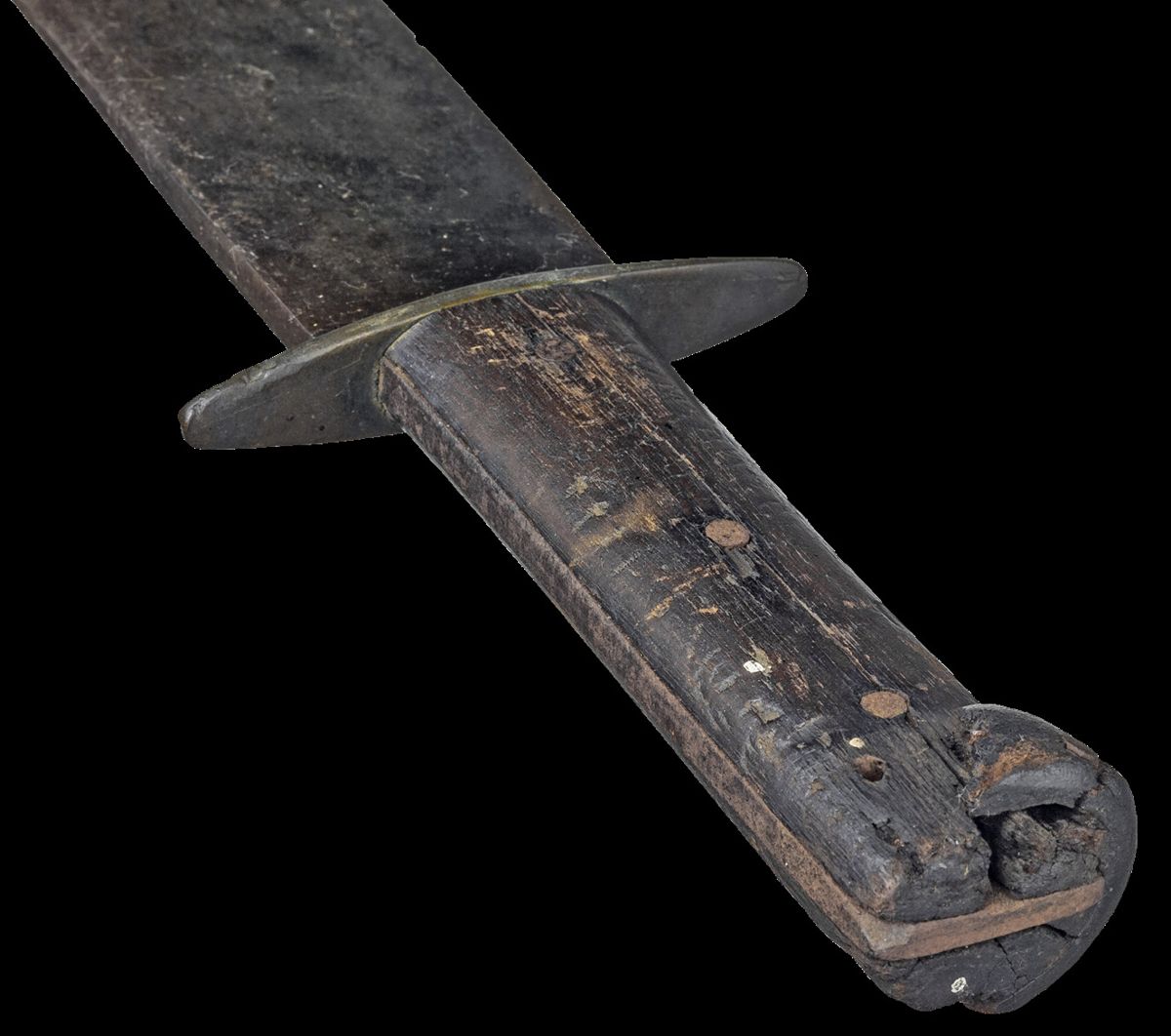
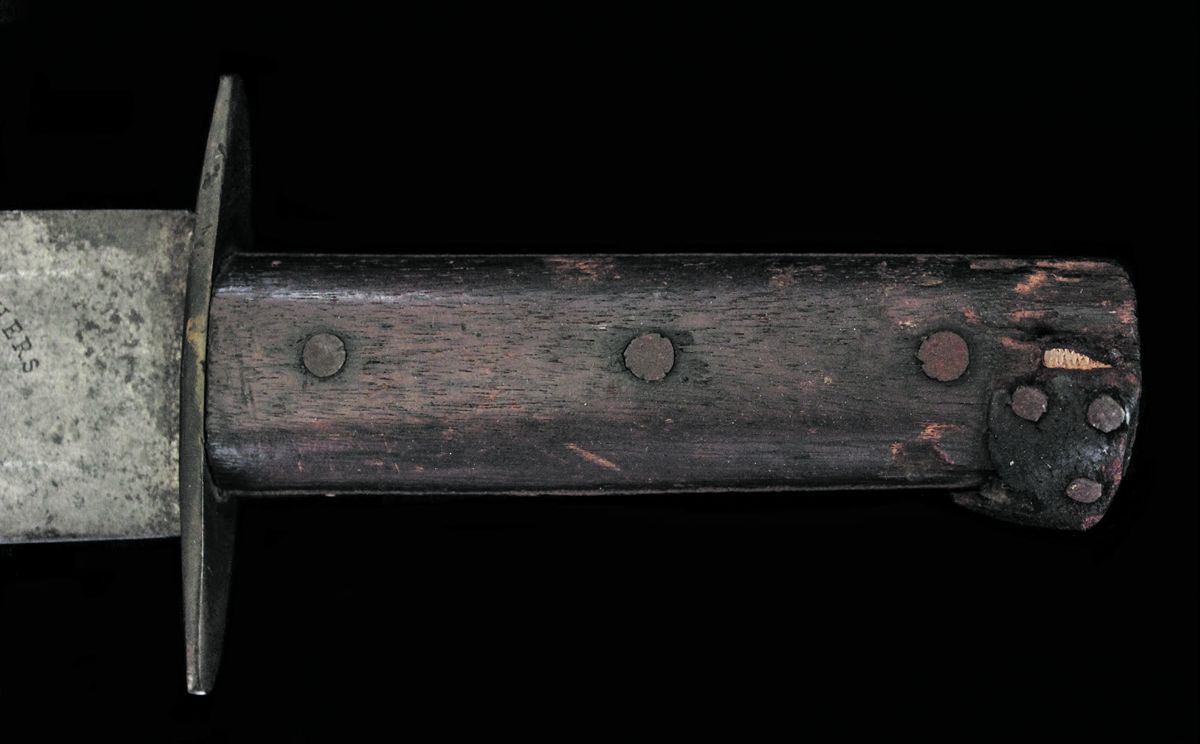
I would like to think that the Burgers and Mr. Boyle were motivated by patriotism; but I am sure, as astute businessmen they could see there was going to be a bigger demand for swords than saws. Most Burger Brothers and Boyle & Gamble products are unmarked; fortunately, they marked enough of each type of weapon for the modern collector to readily identify their unmarked products. Burger & Brother Bowies follow a distinct pattern. The blade is flat without a ridge. The clip point has a false edge; the back is beveled, the two-piece wooden slab grips are attached by three iron rivets, and the cross guard is beveled brass. While these desirable knives are encountered with variations on the above, the knife pictured here has all the desirable signature characteristics and a wonderful Burger & Brothers maker’s mark. The Bowie measures fifteenand three-quarter inches overall and is in very good condition. The leather scabbard is original to the knife and it too is strong, and, with the exception of the missing toe and belt loop, in very good condition. I have never seen another marked Burger knife in its original scabbard, though it may exist. The toe would have been like the throat, made of brass. The remains of a leather lanyard are fixed around the knife’s pommel; this served two purposes, it prevented the wielder’s hand from sliding off the knife even when wet, and if it should come out of the hand, it remained with its owner. All in all, it is a very practical addition to a Southern soldier’s gear.
The Battle of Williamsburg, also known as the Battle of Fort Magruder, took place on May 5, 1862, in York County, James City County, and Williamsburg, Va., as part of the Peninsula Campaign. It was the first battle of the Peninsula Campaign, in which nearly 41,000 Federals and 32,000 Confederates fought an inconclusive battle that ended with the Confederates continuing their withdrawal.
Close up of the carving shown below, reads: “Wmsburg May 5 62” in three lines.
Shannon Pritchard has authored numerous articles relating to the authentication, care and conservation of Confederate antiques, including several cover articles and is the author of the definitive work on Confederate collectibles, the widely acclaimed Collecting the Confederacy, Artifacts and Antiques from the War Between the States, and is co-author of Confederate Faces in Color.
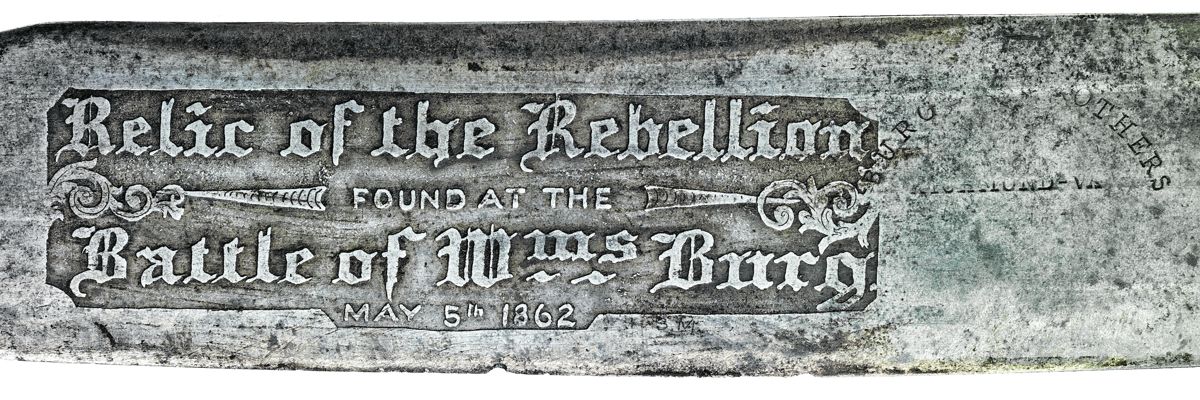
The knife’s new owner had the blade professionally etched upon
![Document reads: “$1000. Richmond Va. Nov. 11th 1861. Received of Col. Wharton J. Green of the Department North Carolina Regiment One Thousand Dollars being payment in full for one hun- -dred and seventy five Bowie Knives, belts, and scabbards for the use of his regt. [signed] Burger, & Bro” Source: Fold3.com, Confederate Citizens File, Business Name: Burger and Brothers, page 25, fold3.com/image/85287904. As a side note: Colonel Green enlisted in the Confederate service in 1861 and rose through the ranks to lieutenant colonel of the Second North Carolina Battalion.](/article-images/cwn-2021-march/cwn-2021-march-a-battle-of-williamsburg-trophy-06.jpg)
Document reads:
Source: Fold3.com, Confederate Citizens File, Business Name: Burger and Brothers, page 25, fold3.com/image/85287904. As a side note: Colonel Green enlisted in the Confederate service in 1861 and rose through the ranks to lieutenant colonel of the Second North Carolina Battalion.
“$1000. Richmond Va. Nov. 11th 1861. Received of Col. Wharton J. Green of the Department North Carolina Regiment One Thousand Dollars being payment in full for one hun-dred and seventy five Bowie Knives, belts, and scabbards for the use of his regt. [signed] Burger, & Bro”
The reverse of the knife’s scabbard.