
The Source
Researching Civil War Ancestors
By Michael K. Shaffer · Originally published June 2021 · pp. 20–21
Researching Civil War Ancestors Since the inauguration of this column in March 2016, the question most frequently posed to this writer from readers of Civil War News: “How can I research my ancestor who fought in the war?” Previous installments have explored various ways to mine period records for a snapshot of one’s ancestor, blue or gray. See past columns at www.civilwarnews. com; one will need a subscription to access the archives of CWN. Another subscription site, www.civilwardata.com ($25 annually), provides an excellent starting point in the quest to learn more about a former infantryman, cavalry trooper, sailor, or artilleryman. As holds in all research, the more details on the starting-line, the better the results. First-time users of this site can visit the ‘System Overview’ link (see top right corner of Fig. 1.) and start initial exploration. Many folks will begin at
Fig. 1. www.civilwardata.com.
Fig. 2. Personnel Directory.
‘Personnel Directory.’ (See Fig. 2.) For this exercise, let us look at one soldier involved in the Andrews Raid of 1862, William Pittenger. First, select ‘Union Army’from the dropbox shown in Fig. 2. Next, type ‘Pittenger’ into the last name field and ‘William’ in the ‘First Name’ field. You may need to experiment with various spellings if unsure; one can enter only a surname, and perhaps select a state, and then review the results. Continuing this example, after entering only the last and the first name of Pittenger, the results field appears as shown in Fig. 3. Another benefit of this site includes quick access to an overview of the unit’s assignments during the war. Selecting ‘OH 2nd Infantry’ for Pittenger netted this snapshot as shown in Fig. 4. Indeed, not a comprehensive accounting, but the information opens many trails for additional research. Please notice the helpful toolbar on the left of the screen. (See Fig.
Fig. 3. Pittenger record.
Fig. 4. Regiment Assignments.
Fig. 5. Toolbar.
Fig. 6. Casualties.
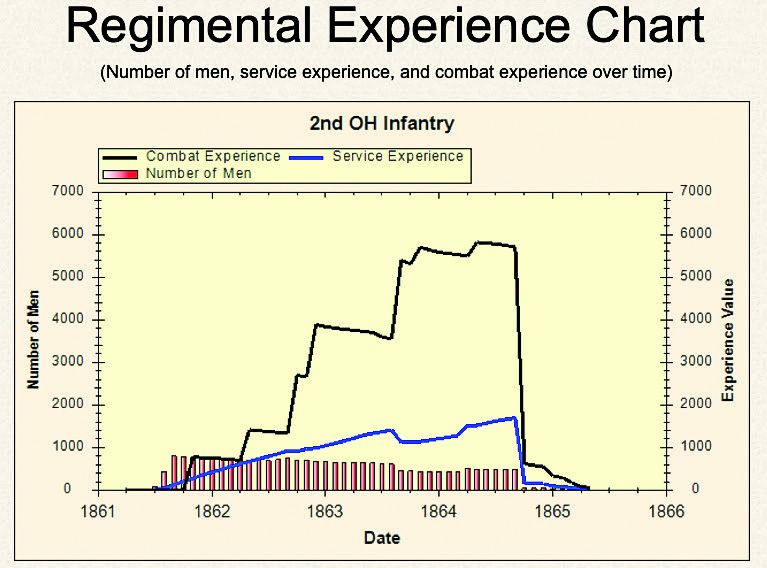
Fig. 7. Troop Strength.
5.) Select ‘Regiment Casualty Analysis’ for a view of the various affairs of the 2nd Ohio. Each of the links (blue) indicates a listing of the casualties in any particular battle (See Fig. 6). One final inspection before we bivouac for this month. Select ‘Regimental Experience’ for a handy visual, which illustrates this regiment’s troop strength at various times during the war. (See Fig. 7.) Spend some time searching various soldiers, sailors, and officers on this site. Many photographs exist, along with battle summaries and tons of other data. Untilnextmonth,continuedgood luck in researching the American Civil War! Michael K. Shaffer is a Civil War historian, author, lecturer, and instructor, who remains a member of the Society of Civil War Historians, Historians of the Civil
War Western Theater, and the Georgia Association of Historians. Readers may contact him at [email protected] or request speaking engagements via his website www.civilwarhistorian.net. Follow Michael on Facebook www.facebook.com/michael.k.shaffer, and Twitter @michaelkshaffer.