This And That
A Few Good Women
By Gould Hagler · Originally published June 2021 · pp. 10–11
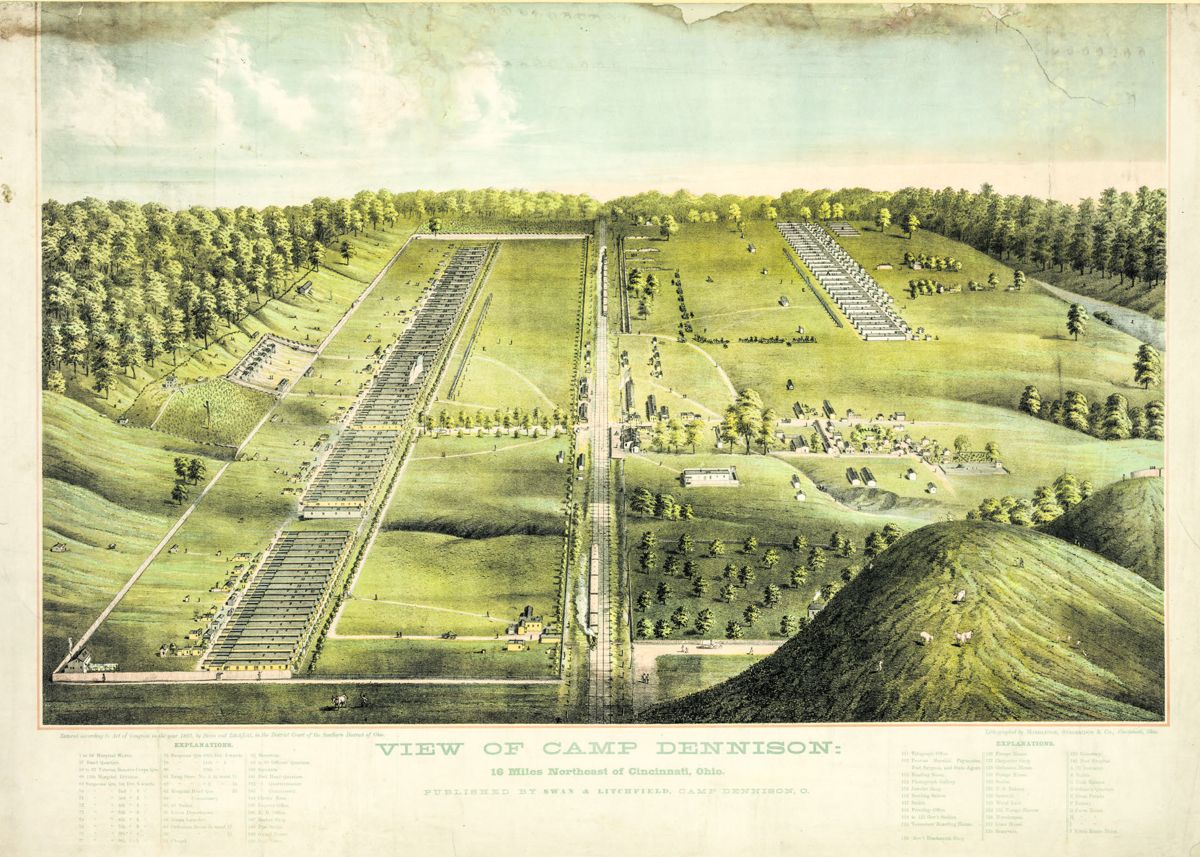
A Few Good Women “I do not believe in using women in combat, because females are too fierce.” – Margaret Mead In several previous columns I have relied on newspaper articles compiled by Vicki Betts of the University of Texas at Tyler. I return this month to see what period newspapers had to say about women who snuck into the Federal and Confederate armies. This column will examine some newspaper reports of women who joined up for the reason that was probably the most common one: love. We therefore turn to tales of women who followed their husbands and lovers off to war and see how they fared as they took up the soldier’s life. Future columns will examine other aspects of this example of man-bites-dog journalism. Just as the war started, in June 1861, the Cairo [Ill.] Weekly News reported on an incident at Ohio’s Camp Denison. A recruit asked the colonel of his regiment to be transferred from one company to another. The colonel noticed the mild demeanor of this “remarkably soft voiced young soldier.” When the perspicacious officer declared, “Young man, you are a woman!” the soldier broke into unsoldierly tears and fessed up. She said that she had joined to follow her lover. Other officers must have been less attentive than this colonel, as the now-contrite soldier“had passed surgical inspection, and was regularly sworn into service.” The newspaper account further states that the young woman had“been in camp for three weeks, performing all the duties of a soldier.” The News did not report on this woman’s fate, but one assumes she was sent home with dispatch. Nothing at all is said about her lover or whether he was in on the charade. Nor is the reader told whether he was in the company she wanted to leave or the one she wished to join. Experience leads me to suspect a bad breakup. The Cairo paper did not identify the soldier at Camp Denison, but in another case that same summer a Southern paper did not hesitate to name a Northern girlturned-soldier. This one also was motivated by love, but in her case the unveiling resulted from her capture in battle. She was taken by Confederates at Falls Church, Va., in August 1861. This “Female Hessian” was the first of her gender to be captured, according to the Richmond Dispatch. She was discovered to be one Mrs. Curtis, the wife of another member of her regiment, the 2nd New York Infantry. According to the Richmond Whig, Mrs. Curtis, who was to be lodged in a private house in Richmond, was not a mere foot soldier, but a spy. The Whig also thought her appearance and dress to be newsworthy. “She is quite young, but by no means prepossessing. The sleeves of her dress are ornamented with yellow tape chevrons, and the jocky hat which she wears is tucked upon one side with a brass bugle….” She was reported to be “quite talkative,” and as she chattered she did not “disguise her animosity against the South.” Her subsequent fate was not reported. In the second year of the war, when a North Carolina man named Blaylow was drafted, the Confederacy got two for the price of one. The draftee’s wife “cut her hair, put on men’s clothing and went with him into camps and enlisted for the war.” According to the Charlotte Democrat, this “North Carolina Amazon” had the makings of a good soldier. “She drilled with the company and was learning fast,” the newspaper reported, but soon her husband (for an unreported reason) was discharged. Without her man, military life held no attraction for Mrs. Blaylow, and “it became necessary to make her sex known in order to accompany her husband home.” We learn too that the men“were sorry to part with such a good soldier.” The Democrat said this was a novel incident, but by the summer of 1862 such incidents were becoming less and less novel.
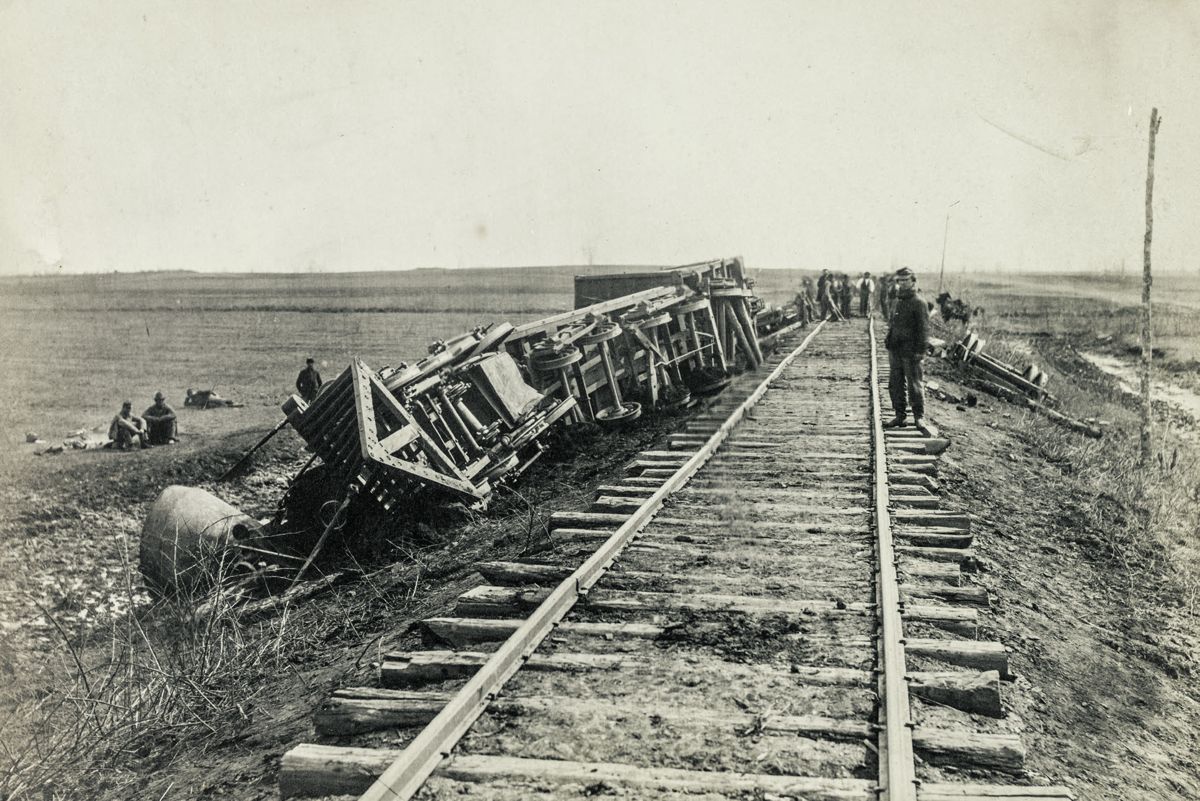
Confederate military prison Belle Isle, where Mary Jane Johnson was held until her sex was discovered. Belle Isle Prison, opened in June 1862 and closed in October 1864, was located on an island in the James River and connected by footbridge to Richmond. Library of Congress. a lieutenant in an Ohio regiment. Annie wanted merely to be near “Lieutenant W____,” and did not want her presence known to him. In this account, taken from a Chicago paper, we are told that “in camp she managed to keep her secret from all - not even the object of her attachment, who met her every day, was aware of her presence so near him.” (Perhaps the 1863 readers were more credulous than this 21st-century cynic.) The officer never knew his beloved was so near, even when she saved his life by shooting a Confederate aiming at the lieutenant. A serious wound left Annie with a disabled arm, but still she longed to be near the lieutenant. She claimed that she would be near him no matter what, and that her life would be meaningless without him. Should he die “she will take her life by her own hand.” Like I said, melodrama, if not news. The story of Mrs. Major Reynolds was told by the Dubuque Herald and the Cincinnati Times in May 1862. The he in this story was a lieutenant in the 17th Illinois. The she “had accompanied her husband through the greater part of the campaign through which the 17th has passed,” we are told. At Shiloh she “attended to the wants…of the wounded and dying soldiers” with such constancy that the governor of Illinois commissioned her a major. The Cincinnati paper anticipated some domestic awkwardness arising from the fact that the Mrs. outranked the Mr. In March 1864 the Nashville Dispatch told the story of Elizabeth Price, a disguised 21-year-old “bold looking soldier girl” who had been arrested in Louisville. Her lover had enlisted, “and the desire to follow and share his fortunes prompted her to don the attire of a soldier and leave the comforts of home.” In this case, however, the strain of military service outweighed her desire to be close to her lover. After two years’ service with an Ohio regiment, Elizabeth called it quits. “She thinks that she has seen enough of the service, and desires to return to her home in Cincinnati.” A Minnesota woman, in contrast, did not tire of service until the war took the life of her beloved. In May 1863 the Louisville Journal told her story. After enlisting in the same company as her husband, she served for 22 months. She fought at Shiloh and Stones River, the paper said, and two times suffered severe wounds. She was with her husband until his death, after which she “reported at headquarters… for transportation to Minnesota, where she resides.” The paper does not attempt to explain how this Minnesota woman managed to conceal her sex for such an extended period, during which she was twice treated for severe wounds. Our final story for this column is from the February 28, 1862, Knoxville Register and tells of a railroad accident and how the wrecked train bought to light the tale of a wrecked life. “A girl, in uniform, who was with the rest of the soldiers without revealing her sex…, was sitting on the platform of one of the cars, and had her legs so badly crushed that amputation was necessary, and both were taken off, but without avail; and death put an end to her sufferings last night. She gave her name as Lilly White, and told a sad story of woman’s wrongs. She had disguised herself in male attire, and joined this regiment with the expectation of finding her deceiver, who is in the army, and avenging her shame.” These stories of female soldiers and the lovers they followed into battle usually have a lighthearted tone, even when the characters are casualties of war. The account of Lilly White’s sad end, in contrast to some others, is characterized by unleavened pathos. However, the Register piece does conclude with an admonition: “This poor girl’s fate is another warning against the danger of sitting on the platforms of railroad cars in traveling.” Yes, that is one important lesson to be gained from this tragedy, but not the only one. Source: Betts, Vicki, “Women Soldiers, Spies, and Vivandieres: Articles from Civil War Newspapers” (2016). Special Topics. Paper 28. http://hdl.handle.net/10950/780. Gould Hagler is a retired lobbyist living in Dunwoody, Ga. He is a past president of the Atlanta Civil War Round Table and the author of Georgia’s Confederate Monuments: In Honor of a Fallen Nation, published by Mercer University Press in 2014. Hagler speaks frequently on this topic and others related to different aspects of the Civil War and has been a regular contributor to CWN since 2016. He can be reached at [email protected]. Library of Congress.
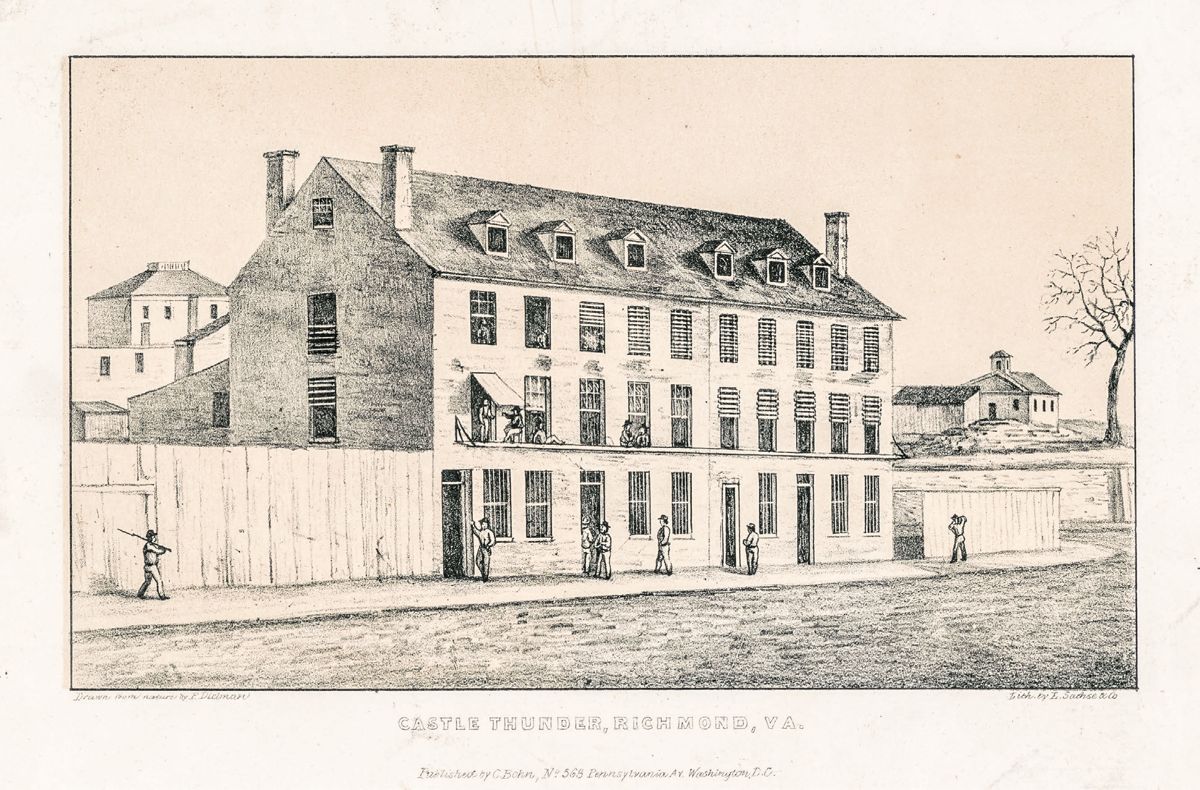
The following year a second prisoner at Belle Isle was found tobe awoman.Nineteen-year-old Mary Jane Johnson had been in prison “for some time,” according to the Richmond Examiner. “She gave as an excuse for adopting soldierly toggery, that she was following her lover to shield and protect him when in danger.” This shield proved ineffective in the extreme violence of war. Her lover was killed. The Examiner reported that she was to be transferred to Castle Thunder, and then sent home to Maine, “and now she should have no objection to return to the more peaceful sphere for which nature, by her sex, had better fitted her.” A peaceful sphere, perhaps, but without the lover she was unable to protect. The newspaper noted that Mary Jane“was considerably sunburned and toughened by the hardships she had encountered, but still retained marks of some womanly comeliness.” The Nashville Dispatch in July 1863 contained a melodramatic account of Annie Lillybridge, who joined to be near her lover,