
A Boy Sailor’s Tragic Odyssey
By Joseph F. Wilson · Originally published June 2021 · pp. 14–15
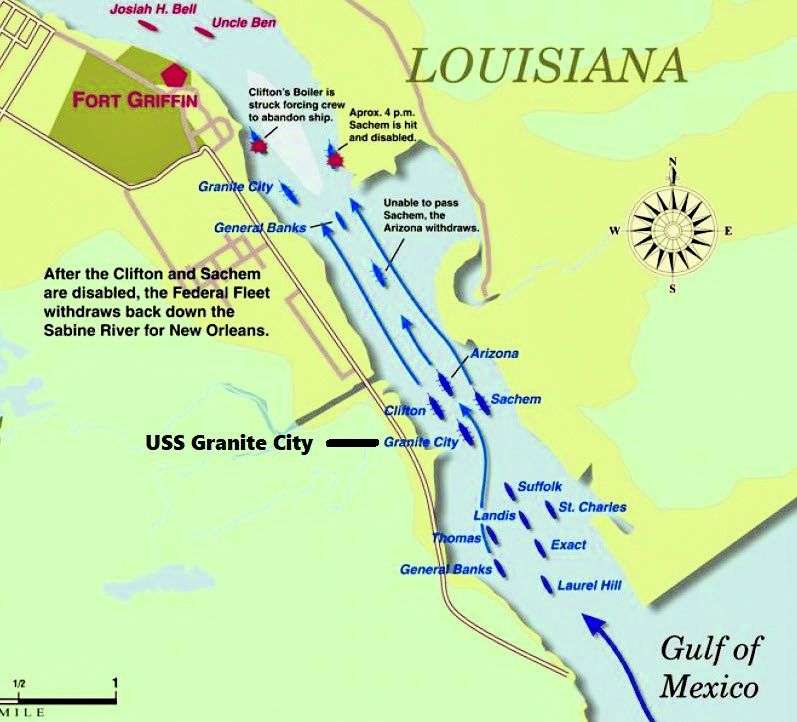
Heavy smoke drifted through the streets of New York City in July 1863 as multiple fires illuminated the night sky. Rioters roamed the streets of a city under siege. Innocent people came under attack while buildings burned to the ground after Congress authorized a draft that forced all eligible males into the Union Army. More than fifty buildings burnt to the ground in the draft riots. One shop reduced to ashes was the workplace of young Jimmy Nugent. The 16-year-old Irish boy took on the responsibility of supporting his mother and siblings after his father passed away. Being a major source of income for the family, Jimmy had to seek another prospect for earning money. While wandering the ravaged city he came across the Naval Shipyard. It was a perfect opportunity. With his mother’s permission, Jimmy eagerly signed on as a Second Class Boy in the United States Navy. Ann Nugent, an Irish immigrant, beamed with pride over her son’s new status. Standing just 5 feet 2 inches, the diminutive boy sailor looked much younger than his stated age. The pay amounted to $8 a month but could be much higher if he was assigned to a ship in the blockade. A U.S. Navy crew capturing a Confederate blockade runner shared in the generous bounty. Adventure on the high seas and potential riches attracted the boy, but he mostly wanted to make life easier for his mother. Less than a year later, a rising tide of regret washed away all thoughts of money and exciting exploits. Jimmy Nugent landed a permanent assignment on the USS Granite City. Formerly a Confederate blockade runner, the 160-foot captured blockade runner now served as a gunboat in the Western Gulf Squadron under Rear Admiral David Farragut. Boredom at sea manning the blockade gave way to excitement when the USS Granite City captured a Confederate blockade runner. Jimmy wrote home to his mother proudly proclaiming, “We have taken a prize worth $100,000 dollars and my share will be $500 dollars when confirmed.” An impressive array of six 24-pounder howitzers and one 12-pounder rifle [possibly a Dahlgren rifle] made the gunboat more suited for action than blockading. That action came early for Jimmy. After only 4 weeks at sea, the Federal gunboat left the blockading force and headed for the coast of Texas to take part in the fighting in the Sept. 8, 1863, Second Battle of Sabine Pass. The Granite City steamed up the Sabine River carrying several hundred soldiers intent on gaining a foothold in Texas. Three other gunboats and seven troop transports accompanied the Granite City. A heavy bombardment by rebel guns at Fort Griffin disabled two gunboats that were then captured by the Confederates. The USS Granite City and the USS Arizona barely made their escape. The battle was a miserable failure for the Union, but left an impression on the young boy’s mind. One sampling of the horrors of war frightened the teenage sailor and aroused doubts as to whether he made the right choice for employment. Jimmy wrote a letter to his uncle that included a message for his mother, “tell mother I won’t be so eager to leave home next time.” For the next 8 months the Granite City performed blockading duty, while occasionally supporting infantry parties landing on the shore. Jimmy was safe for now. Not until May 1864 would the Granite City once again sail into harm’s way. This time he wasn’t so lucky. On April 15, 1864, the USS Granite City, accompanied by the USS Wave, steamed up the Calcasieu River in Louisiana to take on refugees and a load of supplies gathered by local Unionists. The stores had been stolen by Union supporters from local southern farmers. The farmers didn’t take too kindly to the theft and quickly sent word to Confederate forces 30 miles away. An assembled force of 300 infantry and a four-gun battery marched immediately to meet the invading Federals. The steamers anchored in the Calcasieu River were totally unaware of the looming threat. When the sun rose on May 6, the Confederates were already dangerously close to the gunboats. A terrific barrage of artillery shells and musketry opened on the ships as the stunned Union sailors rousted from their bunks desperately tried to man their guns. The surprise attack pummeled the ships relentlessly with lead balls and hot fragments of exploding iron. Somewhere onboard was a terrified Jimmy Nugent. Several projectiles penetrated the hull of the Granite City. The Wave didn’t fare much better. On the two decks lay 36 killed or wounded sailors. Not long after the start of the lopsided battle, a white flag flapped in the breeze above both gunboats. A total of 111 sailors remaining from the two crews marched for a Confederate prison in Texas. Jimmy never suspected the enormous suffering coming from an ordeal that would last eight months. The Confederates allowed one letter to family back
Camp Groce Cemetery marker.
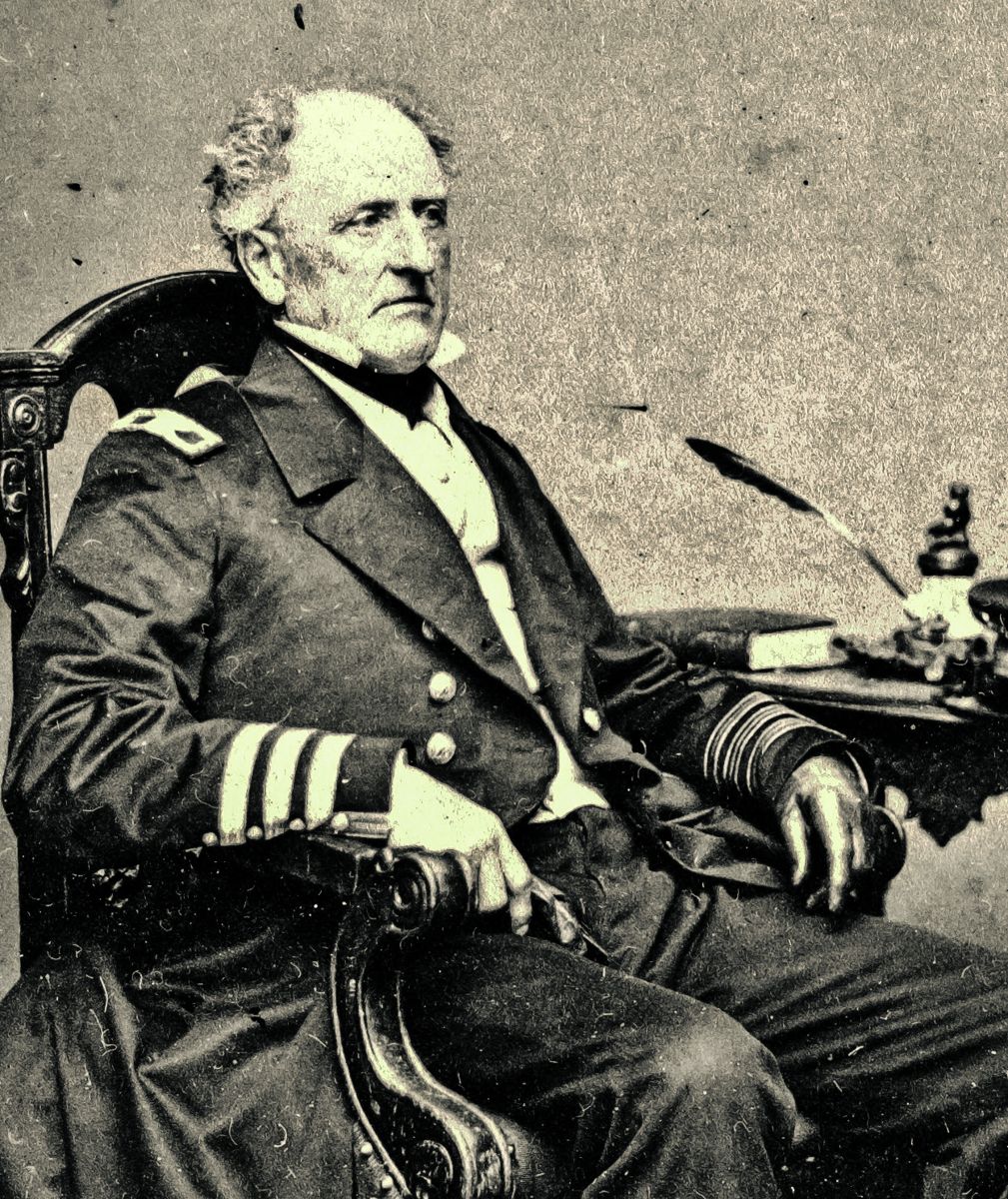
home. Jimmy wrote his mother, “Dear Mother, we had to surrender the ship or sink. I am a prisoner now but I feel just as safe here as I would on the ship. We expect to be exchanged.” The boy’s feelings of safety were unfounded, and any expectation of exchange vanished. Not far from Hempstead, Texas, a loving son only trying to support his mother entered Camp Groce. The stockade prison had previously served as a training camp for Confederate soldiers. A teenage boy, whose life experiences still hadn’t expanded beyond that of a schoolboy, soon realized the danger. The suffering and privations of a prison camp could never have been foreseen by even the veteran sailors. Talk of exchanging prisoners collapsed in 1864. In a private deal, northern officials balked at the south’s request to exchange naval prisoners. The south demanded that the North’s most prized naval prisoner, Admiral Franklin Buchanan, be included in the exchange. The Confederate admiral fell into Union hands at the Battle of Mobile Bay. Not until February 1865, would Buchanan be released. His release proved much too late for most Union sailors. By then, the wretched conditions in the prison camp had already snuffed out the life of many sailors. The last surviving prisoners of the USS Granite City went home in December 1864 after 8 months confinement. From the time of their capture in early May 1864, until finally being exchanged in
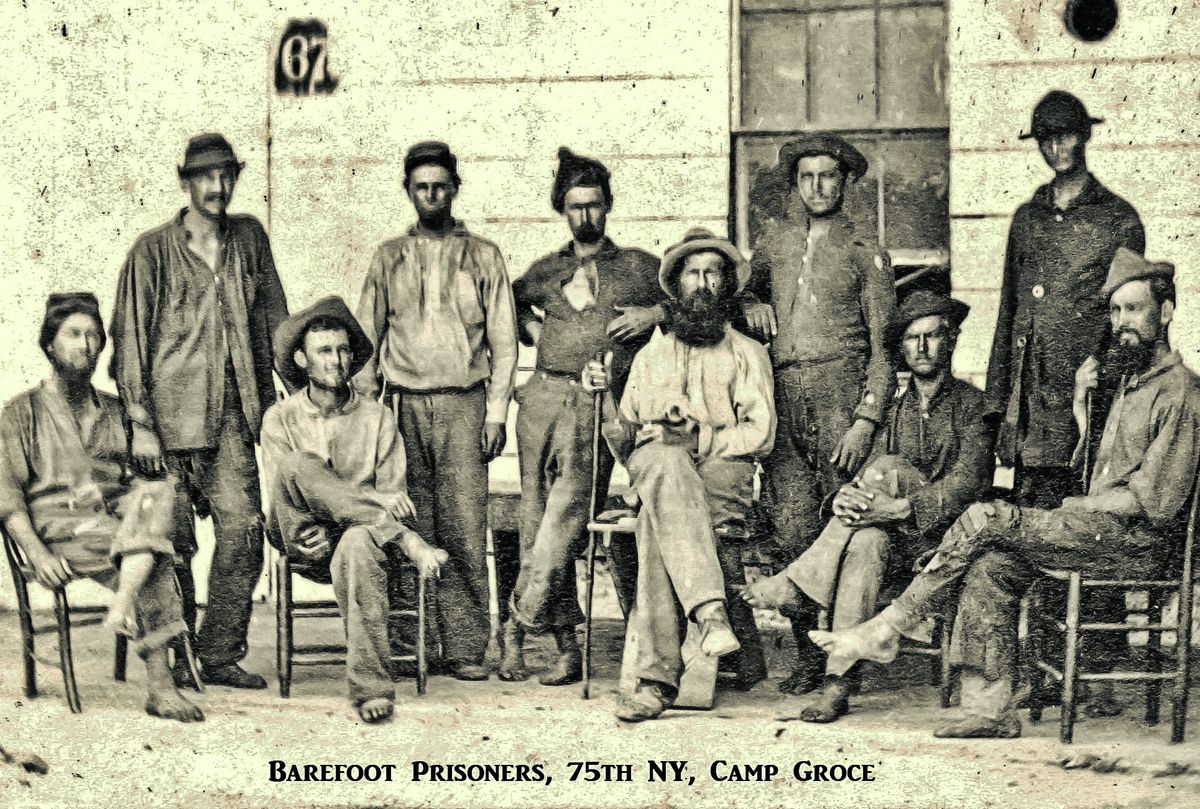
December, the sailors watched most of their comrades go out the gates of the prison feet first to a waiting grave. Included among the dead was a young 17-year-old Irish boy from New York. Even with the vitality of youth on his side, Second Class Boy Jimmy Nugent fell victim to the deplorable conditions at Camp Groce. Of the 111 sailors from the USS Granite City, and the USS Wave, who marched hale and hearty through the prison gates, only 32 saw their loved ones again. Jimmy held on longer than most. He died on November 2, 1864, only a month before his exchange. The Confederate prison at Andersonville, Ga., garners the most attention for the starvation, exposure, and disease that claimed the lives of so many Union soldiers. A lack of proper food, water, and a shortage of medicine plagued Camp Groce in Texas just as it did in Andersonville. Paymaster John Reed of the USS Granite City survived the ordeal and later wrote about the awful conditions at Camp Groce. He stated, “Many men suffered for water to cool their parched lips. The camp through the hot season was in the most filthy condition with sinks overflowing, causing the most intolerable stench. The condition of the prisoners was terrible. Men wasted to the appearance of death itself.” The description related by John Reed echoes testimony given at the trial of Confederate Captain Henry Wirz, the commandant at
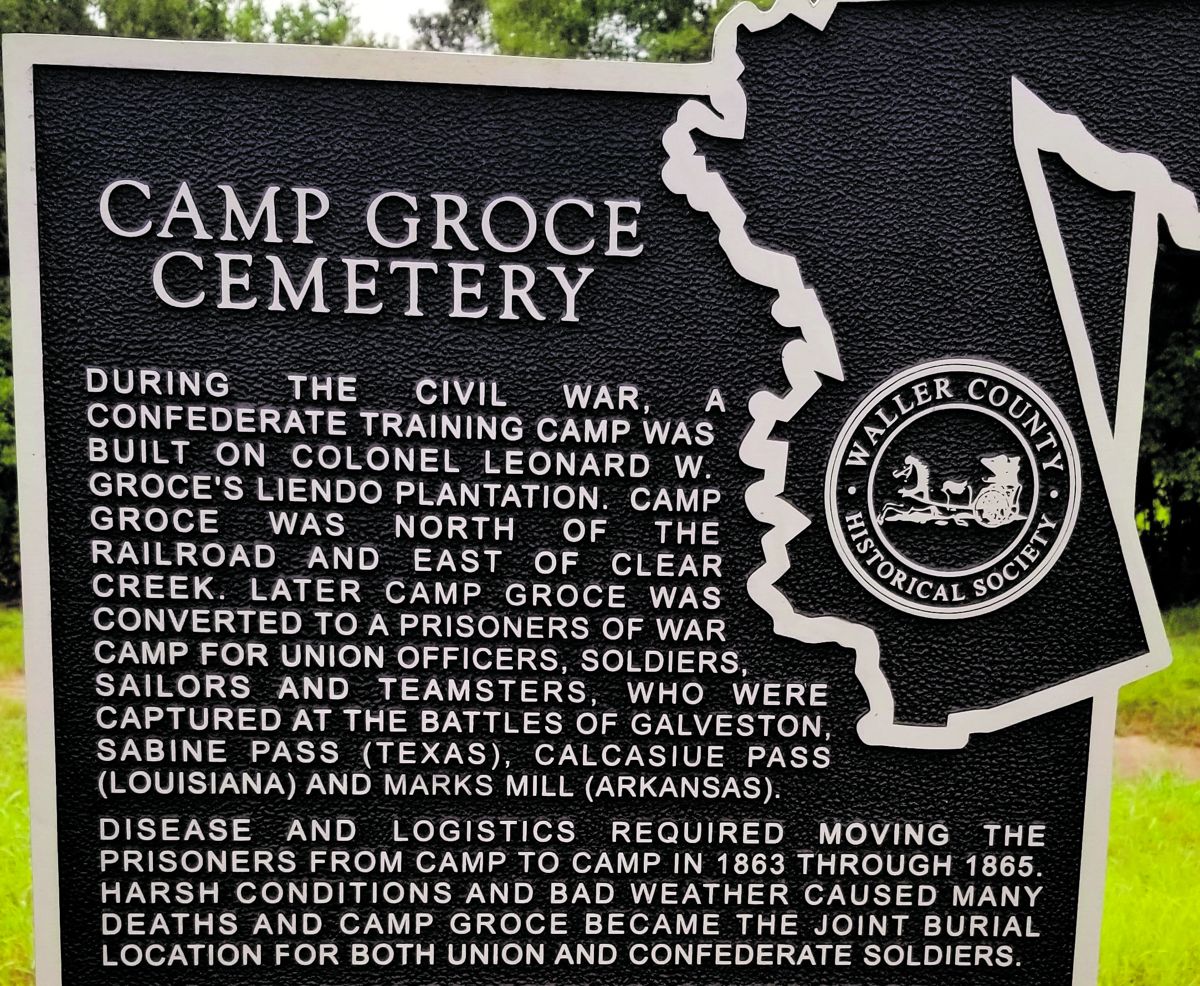
Andersonville. Wirz was found guilty after the war for the atrocities at Andersonville and hanged to avenge the dead. Officials in Washington had little concern for what happened at Camp Groce. No clamor for justice arose for the sailors of the USS Granite City. No military court convened for Jimmy Nugent. The records always state the total number of men who died in the war. It is well to remember that not all were men. Many young volunteers several years from manhood had their precious young lives robbed in a war fought by many innocent young boys like Jimmy. James Nugent’s final resting place is likely the old Union POW Cemetery near Hempstead, Texas. When buried in the pits, only a carved cedar cross marked the graves of the prisoners. By the turn of the century the markers withered away. Sometime in the 1940’s the land was cleared for a pasture, removing any sign of the prison cemetery. Instead of flowers, only cow dung marks the graves. Jimmy’s identity vanished in the fog of war as if he had never lived. Texas recently installed a marker on the cemetery grounds. A nice gesture, but too little and much too late. Ann Nugent mourned the death of her son. The Pension Bureau didn’t make it any easier for the heartbroken mother. The Bureau required she give up Jimmy’s wartime letters as proof of his experience. She reluctantly submitted the cherished letters and eventually got a pension a few decades after the war. She collected the much needed funds until she passed away in 1907. Even in death, Jimmy continued to support the mother he loved so dearly. Joseph F. Wilson is a member of the General Meade Society and the writer and producer of the documentary film “Civil War Prisons – An American Tragedy.” The film is now available on Amazon. Contact – [email protected].