
Wadsworth Memorial on Wilderness Battlefield
By Peter R. Kolakowski · Originally published January 2021 · pp. 34–35
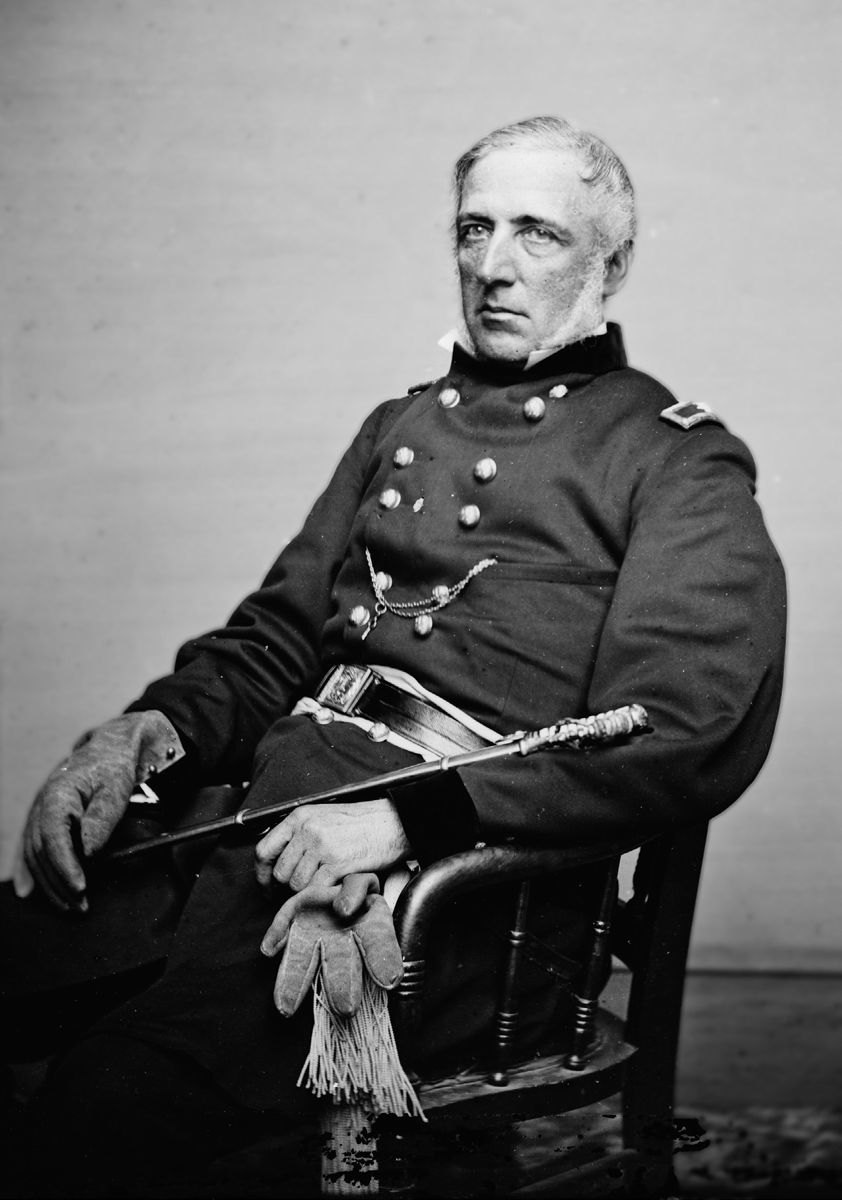
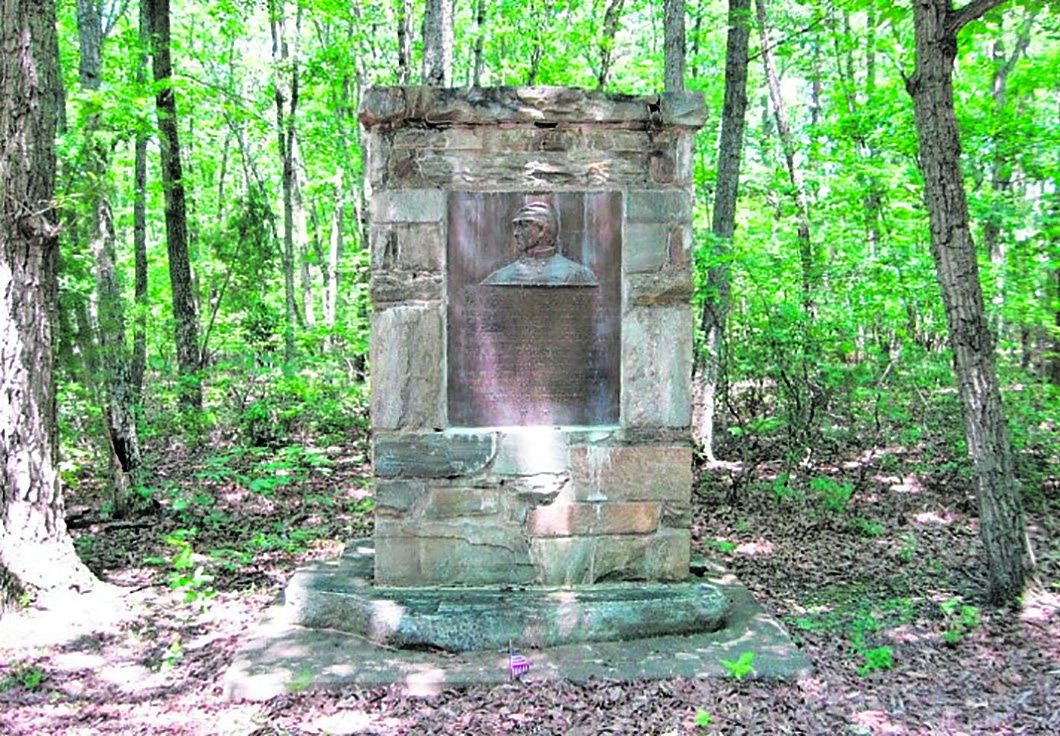
Wadsworth Memorial on Wilderness Battlefield by Peter R. Kolakowski If you’re driving along Orange Plank Road, just west of the historic Brock Road intersection during your battlefield history stops, you’ll pass the Wadsworth Memorial. It’s one of eight monuments within the National Park Service protected lands of the Wilderness Battlefield. General James Wadsworth was the highest-ranking officer to be mortally wounded and lose his life in the battle that opened the Overland Campaign through central Virginia. The memorial’s words and west-facing profile offer only a small reminder of the general’s life and a starting point to explore more of this officer’s story. Born on October 30, 1807, to wealthy parents in Geneseo, New York, James Wadsworth’s youthful years focused on preparing him for responsibilities. He attended and studied law at both Harvard and Yale and was admitted to the bar. Wadsworth spent his prewar years managing his family’s estate, supporting philanthropic efforts, and entering politics. In the 1860 presidential election, Wadsworth served as a presidential elector for Abraham Lincoln. In 1861, he attended the Washington peace conference, but after war became inevitable, Wadsworth considered it his duty to volunteer. Despite his complete lack of military experience at the outbreak of the War, Wadsworth was commissioned as a major general in the New York State Militia in May 1861. He served as a civilian volunteer aide-de-camp to Maj. Gen. Irvin McDowell at the First Battle of Bull Run. McDowell recommended him for command and, on August 9, Wadsworth was commissioned as a brigadier general of volunteers. On October 3 he took command of the 2nd Brigade, 3rd Division, I Corps, a position he held until March 17, 1862.
James S. Wadsworth Brigadier General and Brevet Major General United States Volunteers commanding the 4th Division V Corps Army of the Potomac was mortally wounded near this spot May 6, 1864 and died two days later in the field hospital of Hill’s Confederate Corps. He fell attempting desperately to resist a Confederate advance which threatened the strategic PlankBrock Road intersection.
From March 17 to Sept. 7, 1862, Wadsworth commanded the Military District of Washington. As General McClellan prepared for the Peninsula Campaign, Wadsworth complained to President Lincoln that there would be insufficient troops to defend the capital. Lincoln countermanded McClellan’s plan and restored a full corps to the Washington defenses generating ill feelings between McClellan and Wadsworth. Seeing no prospects for serving in McClellan’s army, Wadsworth allowed his name to be put into nomination for governor of New York, but declining to leave active duty to campaign, he lost the election. After McClellan left the Army of the Potomac and following the Union defeat at the Battle of Fredericksburg,
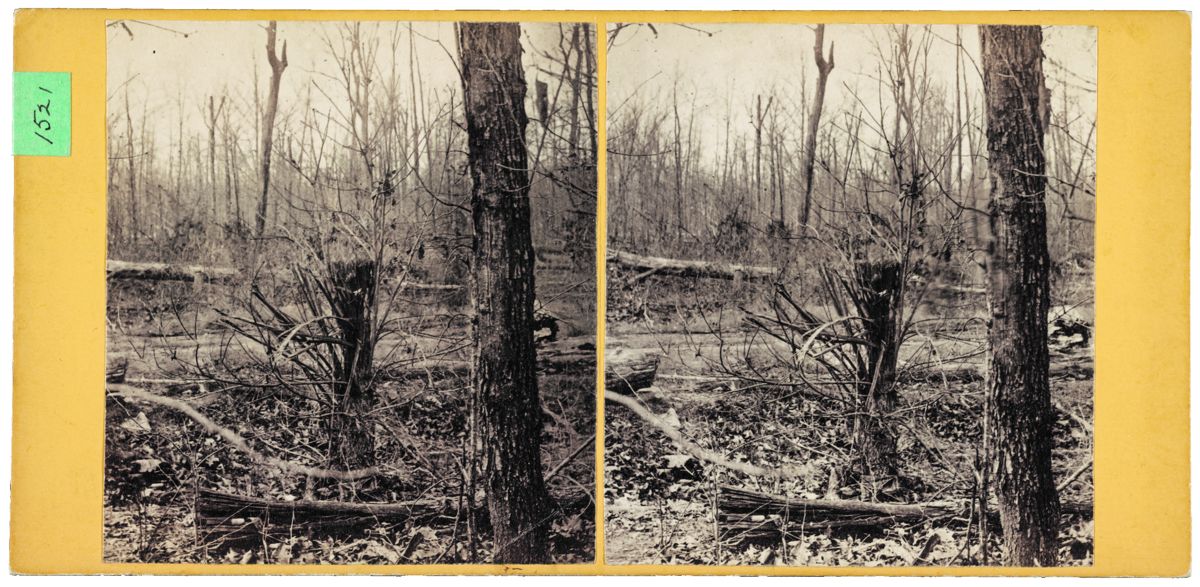
Wadsworth was appointed commander of the 1st Division, I Corps on Dec. 27, 1862. The Battle of Chancellorsville put Wadsworth’s skills to a test in combat. His division crossed the Rappahannock River below Fredericksburg along Tidewater Trail on May 1, 1863, and was only engaged lightly in the resulting fight. Wadsworth’s actions at the Battle of Gettysburg were more substantial. Arriving as the vanguard of Maj. Gen. John F. Reynolds’s I Corps on July 1, 1863, Wadsworth’s division bore the brunt of Confederate attacks that morning and afternoon from both the west and north. This ferocious fighting bought time to bring up sufficient forces to hold the high ground General Wadsworth’s death; the tree in foreground was shattered by the shell that killed his horse. Library of Congress. south of town that became one key to the Union victory. Despite significant casualties on July 1, Wadsworth’s Division reinforced Brig. Gen. George S. Greene’s Brigade on Culp’s Hill. When the Army of the Potomac reorganized in March 1864, Wadsworth took command of the Fourth Division of Maj. Gen. Gouverneur K. Warren’s V Corps. This command was composed a number of regiments from his old division that had been consolidated and reassigned when the I Corps was deactivated. As the new campaign opened, at age 56 Wadsworth ranked as the Army of the Potomac’s oldest division commander and probably it’s wealthiest, as well. The Battle of the Wilderness started on May 5, 1864; Wadsworth received orders to help defend the Union left, south of the Orange Turnpike. He lost direction in the dense Wilderness underbrush and drifted north, exposing the left of his division to a harsh Confederate counterattack. During the long day and night, Wadsworth’s division took losses as it was pushed back. After the first day’s fighting, Lt. Gen. U.S. Grant ordered an attack for early the next morning toward and along the Orange Plank Road. Wadsworth’s division made an assault to flank Confederate Lt. Gen. A.P. Hill’s Third Corps on the Orange Plank Road at 5 a.m. on May 6. The dense forest and underground broke up battlelines, and Wadsworth’s brigades co-mingled with other Federal units. The Confederate counterattack by units from Lt. Gen. James Longstreet’s First Corps smashed into the mixed
Union lines. About 12:45 p.m. Wordsworth was rallying his troops when he was shot in the back of his head. Wadsworth fell mortally wounded from his horse, was reported dead, and left on the field. Not yet dead, the agony of Wadsworth’s last two days had just begun. At the end of the day, the Confederates held the field where Wadsworth lay. They found him “alive” and unconscious, and they rifled his pockets, taking his billfold, watch, silver spurs, field glasses, and map. Wadsworth’s buttons and insignia were taken from his uniform. His captors then carried him to a Confederate Third Corps field hospital along the Orange Plank Road near Parker’s Store. On May 7, Pat McCracken, a farmer along the Orange Plank Road, heard that Wadsworth lay in the military hospital and wanted to leave him milk and other sustenance. Two years earlier Pat McCracken had been arrested for spying for the Confederacy in Washington in 1862; Wadsworth had released McCracken who promised to return to his home in Spotsylvania County. The southerner appeared in Wadsworth’s final hours, trying to show kindness to the fallen general. When Wadsworth died on May 8, 1864, McCracken took his body and buried it on his farm. Six days later, Union representatives retrieved Wadsworth’s body and took his remains to his wife and family. The general is buried in the family plot at Temple Hill Cemetery, not far from his home, Hartford House, which is now a National Historic Landmark estate. As early as 1888, veterans of the I Corps, Wadsworth’s first command, proposed a monument for the general. The veterans suggested putting the monument at one of three places: Washington, D.C., Gettysburg, or the Wilderness; none of these plans were accomplished. Instead, the general’s grandson and namesake erected the Wadsworth Memorial on Orange Plank Road. Working with the National Park Service, Congressman Wadsworth re-identified the site of the general’s fall just north of the Plank Road, approximately 200 to 440 yards east of the Hill-Ewell Drive intersection, and outside the park boundary. He raised the current monument marker in 1936 where it stands today. Eventually, a land transfer was completed, and the land and monument were officially deeded to Fredericksburg and Spotsylvania County National Military Park on April 28, 1941, by Congressman Wadsworth’s sister, Harriet. Facing west, the direction of the Confederate attacks, Wadsworth’s memorial offers a reminder and research starting point to re-discover the lives, service, and final sacrifices of the soldiers who fought in the Wilderness and across central Virginia during the Civil War.
Peter R. Kolakowski serves on Central Virginia Battlefields