
The Language of Life
By Richard Blumberg · Originally published January 2021 · pp. 14–15
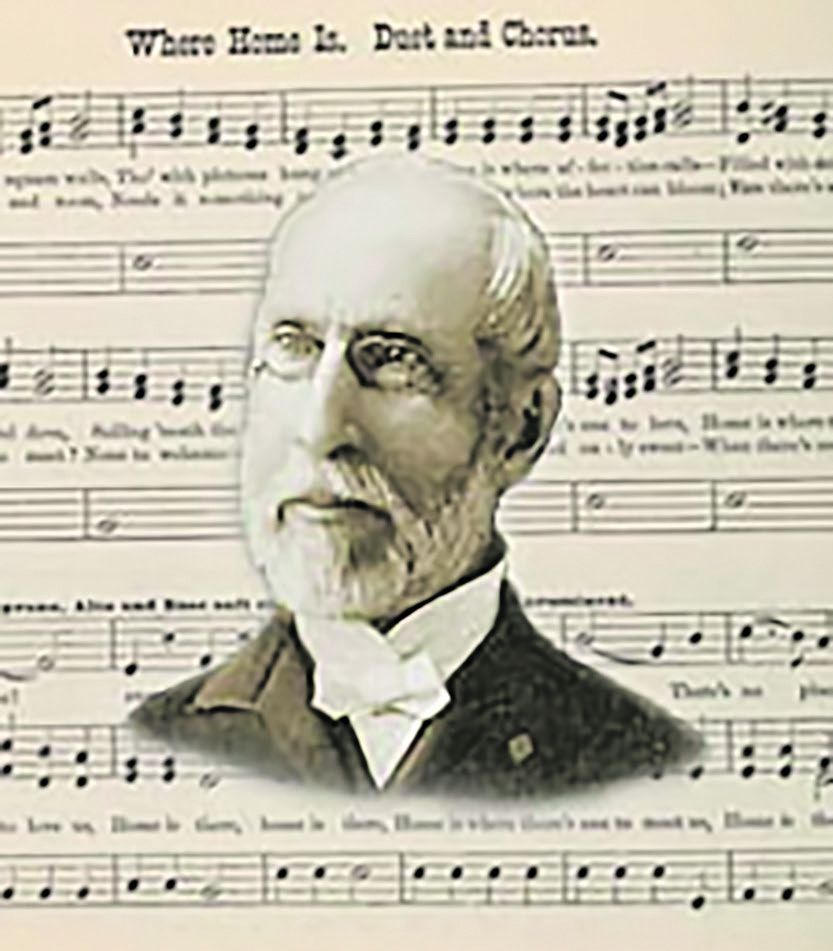
The Language of Life by Richard Blumberg Did music play a role in the American Civil War? John Stewart of the Kingston Trio and Cumberland Three replies, “Music was their newspaper, reflecting their bravery, their sorrow and their hope.” Paul Glass writes in Singing Soldiers, “This is exactly the music I want the troops to hear” (attributed to Abraham Lincoln). “Without Music we couldn’t have an Army” (attributed to Robert E. Lee). Near the end of the war, Union General Phil Sheridan stated, “Music has done its share and more than its share of winning this war.”1 The ability to sing and play music was extremely important. In fact, it was the language of their lives. The Civil War hit the core of almost every American value. Music was an easy way to express emotional responses to a variety of situations individuals experienced. A lesser known benefit was its economic influence. Written forms of music became widely available in the nineteenth century. Civil War songs fueled the economy of both the North and the South. Richard B. Harwell found at least 648 pieces of sheet music published in the Confederacy alone. During this time the piano became a popular and affordable instrument for many middle-income homes. If a family could not afford a piano, many music companies offered cheaper instruments like guitars and small keyed instruments called melodeons.2 As a result, the sheet music industry began. The boom in sheet music resulted from an increased demand for portable and inexpensive methods of obtaining popular songs. Numerous publishing firms flourished during this time. Two of the most famous were Ebenezer T. Root and Chauncey M. Cady of Chicago (Root and Cady) and the Blackmar Brothers of New Orleans, La., and Augusta, Ga. Ebenezer Root’s brother, George Frederick, served as the firm’s music collaborator and also edited a professional music journal, The Song Messenger of the Northwest. George, along with another Root and Cady employee named Henry Clay Work, are perhaps the most prolific composers of Civil War songs. Armand E. Blackmar and his brother Henry, although born and raised in the North became the most successful publishers of Confederate music. According to Steven Cornelius’ Music of the Civil War Era, about half the Confederate songs officially released, were published by the Blackmar Brothers. Most were published in Augusta, Ga., where they lived after the 1862 fall of New Orleans. “Maryland My Maryland” and “The Bonnie Blue Flag” were among their more famous works. Publishing companies originally used “broadsides” to create and distribute their music. These were one-page lyric sheets without music that could be published quickly.3 When sheet music was actually produced, it usually consisted of a four to sixpage booklet where engravers used special punches to create notes, clefs, and key signatures.4 Since the North and South were regarded as totally separate countries, publishing laws once adhered to by everyone were no longer enforced. As a result, many Southern publishing companies simply republished songs previously published in the North.5
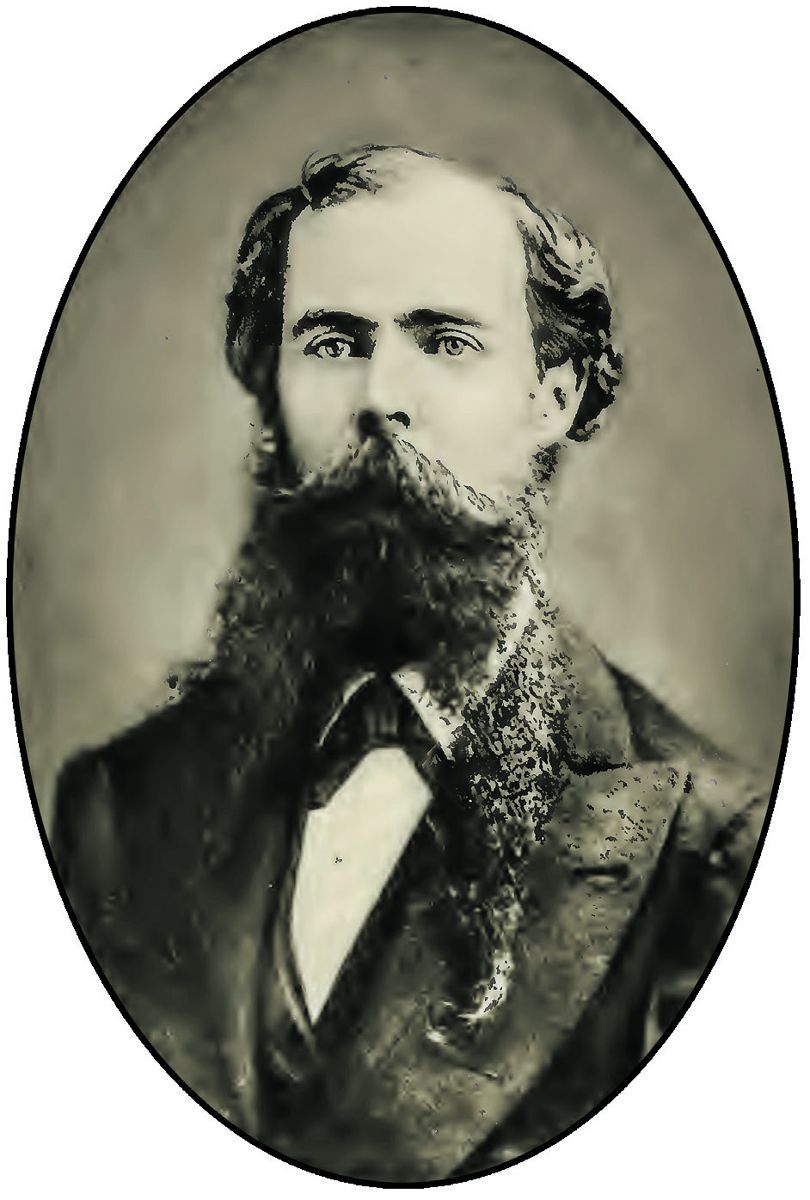
Songs were an easy and safe outlet for emoHenry Clay Work. tional responses. This allowed soldiers and com- the African slave trade originatposers to write music about ed. African influenced songs every imaginable topic. Some frequently depicted the deep of the more popular topics in- emotional responses to the cluded: politics, culture, love, forced movements of these and death. Many of their mel- people. “Go Down Moses” and odies have roots in poems, “Follow the Drinking Gourd,” church hymns, classical mu- are two famous spirituals about sic, or famous people. Many the Underground Railroad. After tunes commonly thought of as the emancipation of the slaves, American were actually derived many more African spirituals from English, Irish, German, and appeared as individuals tried African influences. European tunes usually originated as old hymns, drinking songs, or ballads. The Army Bean is sung to the popular hymn “In the Sweet By and By.” African music gave us work songs and spirituals, as well as many rhythmic patterns still used in music today. Many Civil War work songs, ballads, and spirituals were influenced by the cultures of western Africa’s coastal regions. This geographic area is where the majority of
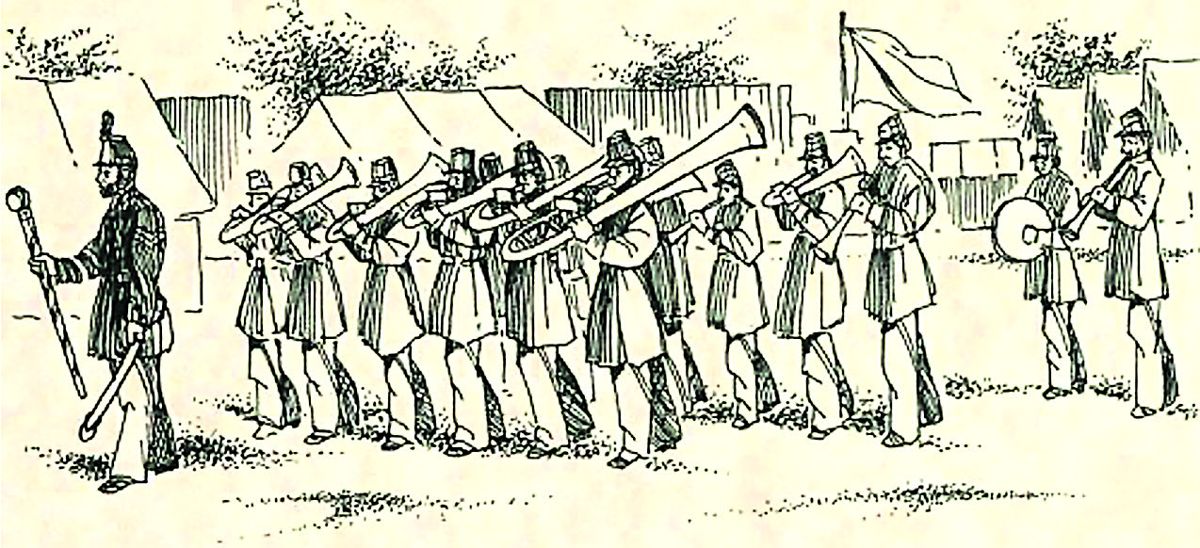
Baltimore Riot 1861. Courtesy of Stephen Currie, Music in the to understand their new found freedoms. The beauty of Civil War music is that many songs used an already existing melody and simply created new lyrics to fit the current situation. Maryland My Maryland is a good example. John Randall’s poem was his response to the well-known Baltimore Riot of 1861. His poem is set to the music of O Tannenbaum, otherwise known as O Christmas Tree. A second song with this same tune is called John Harollson. This piece tells the story of how citizens’ urine was collected to help make nitre, a component of gunpowder. It can be found on the CD set of Homespun Songs of the Civil War, that balladeer Bobby Horton created. Political songs were created for many reasons. One of the most popular reasons was to make fun of politicians. Jeff in Petticoats satirizes Jefferson Davis’ attempt at the end of the War to escape by dressing up as a woman. Political venues included camp meetings, recruitment rallies, presidential elections, and secession conventions. All these media made excellent topics for various tunes and great venues for singing songs. Henry Clay Work’s Grafted Into the Army focuses on the fact that the Civil War, like Drummers’ and Fifers’ Guide. many wars was a rich man’s war, but a poor man’s fight. According to the American Battlefield Trust, “Eatin Goober Peas” was a favorite among Confederate soldiers. As a cultural song, it demonstrates how soldiers made up songs to poke fun at themselves or their situation. When rations were scarce many Southern soldiers survived on the Georgia peanut, also known as a goober pea. This song finally published by P. Nutt in 1866, is also a good example of how the publishing process worked. Soldiers made up a song, and if it was popular, publishing firms would pick it up later and make money from it. Aura Lee and Lorena are very familiar love songs of the Civil War. Elvis Presley revived the tune of Aura Lee in his famous Love Me Tender. It is fortunate for us that Civil War soldiers in many cases were educated and articulated their feelings so clearly, helping us better understand their world. The middle and later years of the Civil War marked a period when death songs became more abundant. By this time, both sides had experienced significant losses. Two wellknown songs about death are All’s Quiet Along the Potomac Tonight, and The Vacant Chair. All’s Quiet Along the Potomac Tonight was written by the famous Confederate balladeer, John Hill Hewitt. The Vacant Chair was written by George F. Root. In addition to the many songs created, different uses and styles of music also evolved. Individual soldiers played for their own solace and comfort, especially those confined in prisons. Fife and drum corps played a variety of signals for military drills and routine soldier life. Military bands played for their unit, cheering them on in battle, or in some cases to confuse the enemy about what might be next. A unique feature of the era’s military brass bands was that the bells of the instruments faced backwards for ease of marching. Many brigade or larger sized units had their own band assigned. This was especially true of Northern units where money, instruments, and other resources were more abundant. Opportunities were open to anyone who could sing or play any kind of instrument, including bones and spoons. Many musicians signed up, because they were not supposed to be in the thick of the fight. However, many of these same soldiers served as stretcher bearers and other assistants in the medical field when not playing their instruments.6 Regardless of whether one was a member of a group of regimental musicians or of a large brass band, these soldiers could expect to play twelve to fifteen times a day. If they were not playing their instruments, many would give haircuts in their spare time.7 According to the Essential Civil War Curriculum for History Teachers website, brass and concert bands were more plentiful in the North than the South because resources like money to purchase instruments, etc., were more plentiful. Various types of choral societies, minstrel shows, and operas were created and existed during the War. These venues were used to provide entertainment and a diversion for the general public. Some proceeds also fueled the military machines. Choral societies and minstrel shows were the most popular.8 Since the birth of this nation, Americans relied on music as their language of life. The four years of conflict during the Civil War became a ripe field of life experiences to draw from. The boom of sheet music that erupted during this time, still continues today. The only major difference is how they were distributed. Today, many forms of sheet music are created in a digital format. Like most wars that America has fought, music has been an integral part of the human experience. It still remains a medium to express the entire range of human emotions. Civil War soldiers did not know the impact their music had on this country. Soldiers of modern conflicts continue to write this legacy for our future historians. Only time will tell the story of how music remains the language of life.
Endnotes: 1.
Stephen Currie, Music in the Civil War (Cincinnati: Betterway Books, 1992): 17 Christian McWhirter, Battle Hymns: The Power and Popularity of Music in the Civil War. (Chapel Hill: UNC Press, 2012): 14 Stephen Currie, Music in the Civil War (Cincinnati: Betterway Books, 1992): 32 Ibid. 31 Ibid. 32 Ibid. 62 Ibid. 63 Clement Eaton, A History of the Southern Confederacy, (New York: Free Press, 1954): 220
Websites: • www.sheetmusicplus.com/ title/the-civil-war-sheet-music • memory.loc.gov/ammem/cwmhtml/cwmhome.html (Band Music from the Civil War Era) • https://www.battlefields.org/learn/primary-sources/civilwar-music-eatin-goober-peas (American Battlefield Trust) • https://www.americancivilwar.com/Civil_War_Music/song_lyrics/confederate_ song_lyrics_lorena.html (www.Americancivilwar.com) • https://www.essentialcivilwarcurriculum.com (Civil War Lesson Plans for History Teachers). Secondary Sources: Abel, E. Lawrence. Confederate Sheet Music. (Jefferson, NC: McFarland & Company, Inc., 2004.) • Abel, E. Lawrence. Singing the New Nation. Mechanicsburg, PA: Stackpole Books, 2000. • Bieniarz, John F. A Compendium of Civil War Brass Bands from New England: Massachusetts. Edited by Steven Stearns. (South China, ME: Sam Teddy Publishing, 2012.) • Cornelius, Steven. Music of the Civil War Era. (American History Through Music Series. David Brinkman Series Editor). (Westport, CT: Greenwood
•
•
•
•
•
•
•
•
•
•
Publishing Group, 2004.) Cornelius, Steven. Essential Civil War Curriculum: Civil War Music. Virginia Center for Civil War Studies: Virginia Tech University, Blacksburg. Pp. 1-14. 2019. Currie, Stephen H. Music in the Civil War. (Cincinnati, OH: Betterway Books, 1992.) Eaton, Clement. A History of the Southern Confederacy. (New York: Free Press, 1954.) Epstein, Dena J. Sinful Tunes and Spirituals: Black Folk Music to the Civil War. Urbana and Chicago, IL: University of Illinois Press, 2003. Forcucci, Samuel L. Folk Song History of America: America Through Its Songs. (Englewood Cliffs, NJ: Prentice-Hall, Inc., 1984.) Glass, Paul and Louis C. Singer. Singing Soldiers: A History of the Civil War in Song. (New York: Da Capo Press, Inc., 1964.) Humphreys, Henry S. Songs of the Confederacy. (Cincinnati, OH: The Willis Music Company, 1961.) McWhirter, Christian. Battle Hymns: The Power and Popularity of Music in the Civil War. (Chapel Hill, NC: University of North Carolina Press, 2012.) Silverman, Jerry. Ballads & Songs of the Civil War. (Pacific,
Selected Bibliography Primary Sources: •
•
•
•
•
•
•
Allen, William Francis, Charles Pickard Ware and Lucy Kim Garrison. Slave Songs of the United States: The Classic 1867 Anthology. (Reprint of Slave Songs of the United States published by A. Simpson & Co. in 1867) New York: Dover Publications, Inc., 1995. Childs, Francis J. War-Songs for Freedmen: Dedicated to the Army of the United States. Boston: Ticknor and Fields, 1862. Crawford, Richard. The Civil War Songbook. New York: Dover Publications, Inc., 1997. Harwell, Richard B. Songs of the Confederacy. New York: Broadcast Music, Inc., 1951. Hewitt, John H. Shadows on the Wall or Glimpses of the Past. Baltimore: Turnbull Brothers, 1877. Jackson, Richard. Stephen Foster Song Book. New York: Dover Publications, Inc., 1974. Kagan, Neil and Stephen G. Hyslop. Smithsonian Civil War: Inside the National Collection. Smithsonian Institute, Washington D.C. 2013. Library of Congress and other