
Student Research at Shenandoah University’s McCormick Civil War Institute Fueled by Commitment and Donations of Letters and Images
By Jonathan A. Noyalas · Originally published January 2021 · pp. 20–21
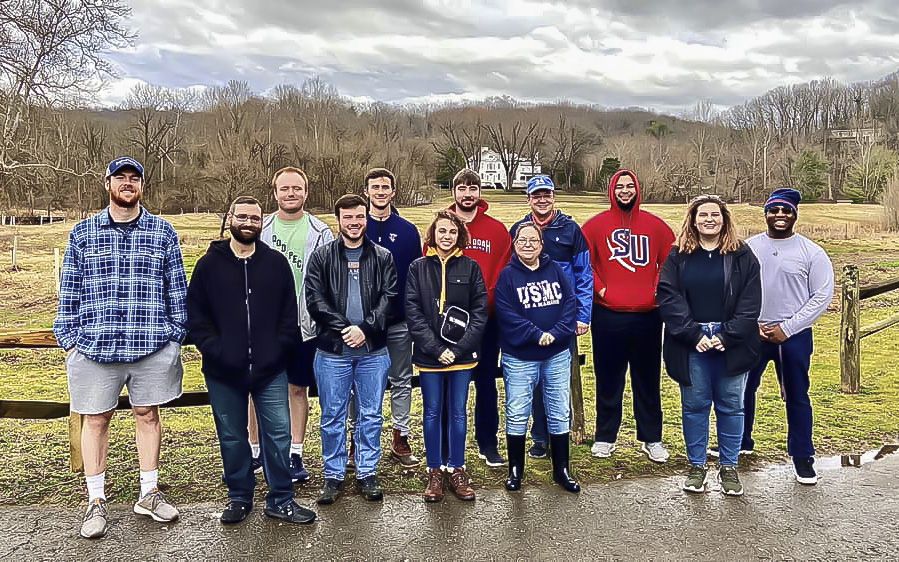
Students in Civil War Era Studies Complete Cool Spring Orientation Film Shenandoah University’s McCormick Civil War Institute (MCWI) is fortunate to be responsible for all the interpretive and educational programs at the University’s Cool Spring Battlefield Campus. Situated along the Shenandoah River banks, the 195 acres of the Cool Spring Battlefield under Shenandoah University’s care was part of an approximately 1,100 acre plantation, the Retreat, during the Civil War. The plantation’s owner, Judge Richard Parker, is perhaps bestknown as the man who presided over John Brown’s trial in the autumn of 1859. MCWI interprets the story of a lesser-known engagement, the Battle of Cool Spring. Over the past four years MCWI has created an exhibition about the battle, developed a walking tour, and held various programs at the site. While MCWI is nearing completion on virtual and augmented reality experiences at Cool Spring, MCWI recently completed a project completely driven by students in my Interpreting Civil War Sites class during the spring 2020 semester, an orientation film which focuses on Parker’s Retreat and the battle fought there on July 18, 1864. At a time when the pandemic forced things to shut down, this group of students was undaunted in developing a script, storyboarding the film, and gathering images. With technical assistance from Shenandoah University’s Center for Immersive Learning, the nine-minute orientation film, which will air in our on-site exhibition area, is also available for viewing through MCWI’s website (www.su.edu/MCWI click on “Cool Spring Battlefield,” then click “Watch Orientation Video.”
Student Research at Shenandoah University’s McCormick Civil War Institute Fueled by Commitment and Donations of Letters and Images by Jonathan A. Noyalas Director, Shenandoah University’s McCormick Civil War Institute
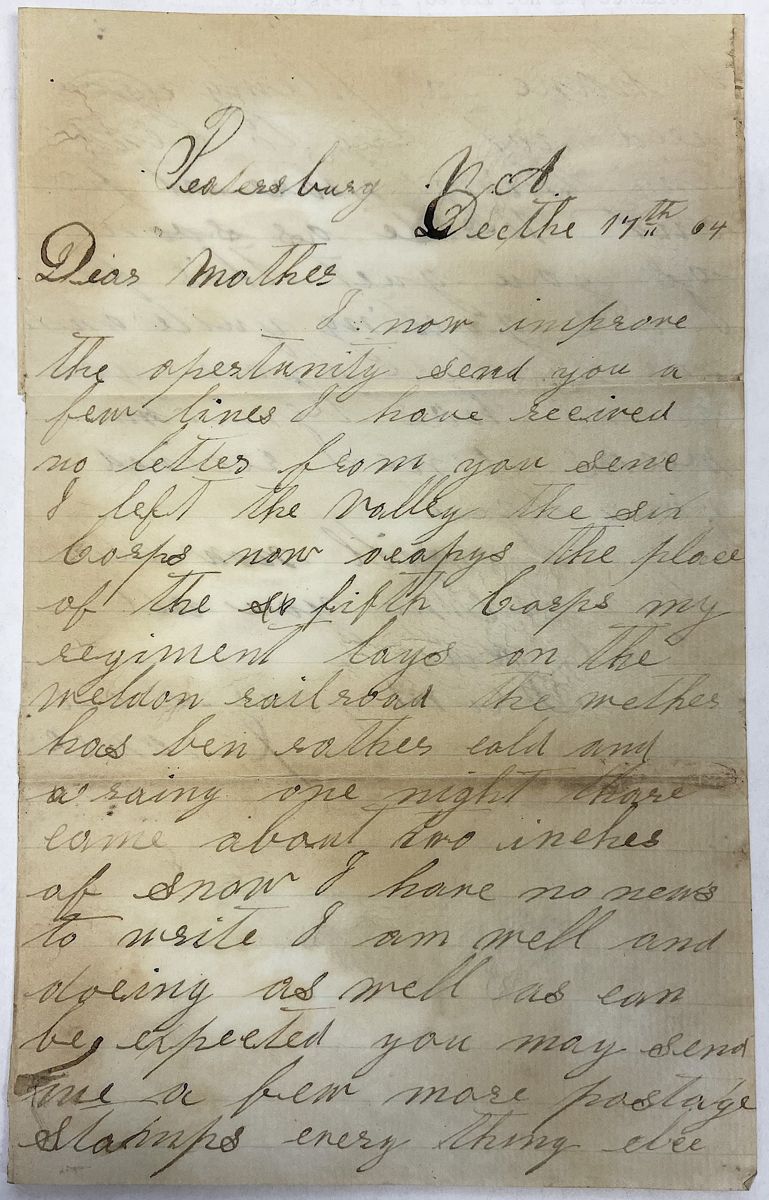
Significant Collection of Letters from Soldiers in the 9th New York Heavy Artillery Donated In spring 2019, MCWI received an amazing gift of wartime letters, photographs, and other items related to Corporal Robert Bradbury’s service in Battery D, First Pennsylvania Light Artillery. An edited collection of these letters was published by MCWI in the spring of 2020, excerpts from the letters appeared in the August 2020 issue of Civil War Times. MCWI’s archives continue to grow. One significant acquisition came during the spring of 2020 when nearly 100 items related to the service of the 9th unit’s picket line around 5:30 a.m. Gardner and his comrades were eventually taken to Crew & Pemberton’s Prison in Richmond. Although Gardner survived his prisoner-of-war experience, he drowned in the Potomac River, April 22, 1865, when the steamer Massachusetts, carrying approximately 300 Union soldiers released from Confederate prisons, collided with the Black Diamond near St. Clements Island. Ten students in Civil War Era Studies at Shenandoah University are currently transcribing these letters, which will eventually be published by the McCormick Civil War Institute.
New York Heavy Artillery were donated by a descendant of one of the regiment’s veterans and a longtime friend of MCWI, Al MacLeod. The letters, ranging in date from March 1, 1863, to June 9, 1865, are penned by ten different soldiers who served in the unit. More than half the letters were written by Lewis Foster and Jerome Gardner. While Foster, who enlisted at the age of eighteen on September 1,
1862, survived the war, Gardner was not so fortunate. Private Gardner enlisted in the 9th New York Heavy Artillery on December 16, 1863. Slightly more than one year later, New Year’s Eve, 1864, Gardner was one of approximately twenty soldiers from the unit captured at Petersburg, Va., when a contingent of “several hundred” Confederates, in the estimation of a 9th’s veteran, attacked the
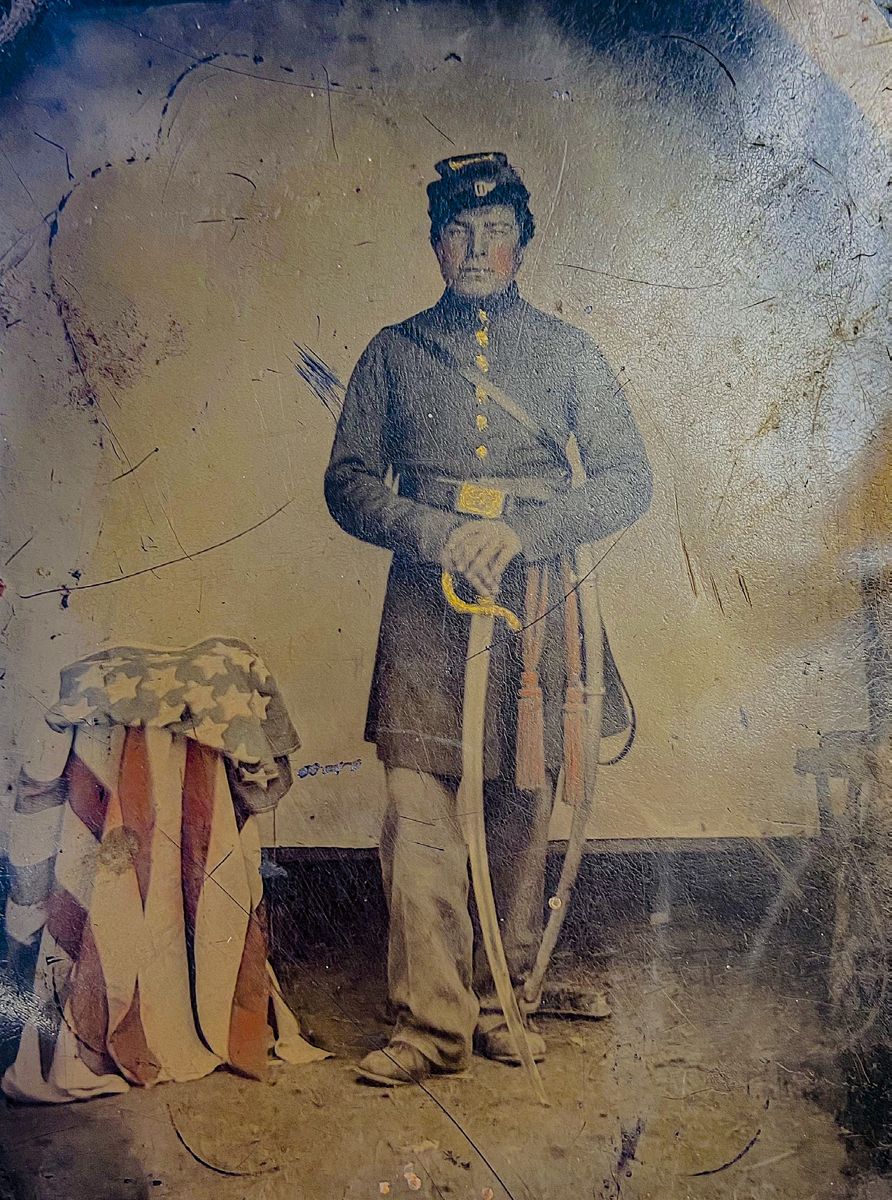
Donation of Photographs Sparks Multi-Year Research Project Since the summer of 2017 MCWI has benefited from the generosity of Dr. David and Mrs. Melanie Miles who support two undergraduate student fellows working closely with me on a special research project. In previous years the Miles’ fellows worked on projects that supported interpretive efforts at Cool Spring, including two summers researching the backgrounds of some 140 Union and Confederate soldiers killed at the Battle of Cool Spring. The biographies of these soldiers appear in volumes 3 and 4 of MCWI’s annual Journal of the Shenandoah Valley During the Civil War Era. The research topic for the summer 2020 fellows, Nicole Roland and Jay Richardson, was inspired by the gift of a wartime tintype of Private Harrison White, now part of MCWI’s Brumback Family Collection. Born in Oneida County, N.Y., about 1840, White enlisted in the 2nd New York Heavy Artillery on Nov. 1, 1861. He remained in the regiment until his three-year enlistment expired. Determined to continue to serve, White then enlisted in Company C, 1st United States Veteran Volunteer Infantry. Five years after the Civil War’s end White married Agnes Furgeson and moved to Shenandoah County, Va. He remained there the rest of his life. He died on Feb. 20, 1913, and is buried in Lebanon Church Cemetery. Receiving White’s image sparked curiosity about the number of Union veterans who were either from the Shenandoah Valley and returned after the conflict, or like White came from other places and moved to the Shenandoah Valley in the Civil War’s aftermath. The first step, in what has now become a multiyear project, was to examine the 1890 Veterans Census and identify those Union veterans. Transcription of the census records identified 576 Union veterans living in the Valley in 1890. Perhaps not surprisingly, the bulk resided in the Valley’s northern reaches, particularly Berkeley and Jefferson counties in West Virginia, and Frederick County in Virginia. While it will take years for future fellows to research the backgrounds of all these veterans, a preliminary sampling revealed that 28% of those veterans were native to the Shenandoah Valley, 50% were born in northern states, and the remaining 22% were born outside the United States. There is no doubt these figures will change as the biographical data becomes more complete, so stay tuned. Samuel E. Murray was among the Valley’s Union veterans. He was born in Frederick County, Va., on June 12, 1843. At the war’s outset, Murray worked as a laborer and blacksmith. He mustered into the 3rd West Virginia Cavalry in January 1864. Within a year following his enlistment Murray was promoted to sergeant. He mustered out on June 30, 1865. After the conflict Murray lived in Frederick County’s Stonewall District. He remained there with his wife Hannah Harriett Miller and their children until about 1880 when the family moved to Clarke County. Murray died in 1895 and is buried in Winchester’s Mount
Hebron Cemetery. The findings of this research project will eventually be published on MCWI’s website, www.su.edu/MCWI. To learn more about the project and listen to a discussion of some preliminary findings please visit Emerging Civil War’s podcast “Union Veterans & the Postwar Shenandoah Valley” at the website https://www.patreon.com/posts/42799153. Jonathan A. Noyalas is director of Shenandoah University’s McCormick Civil War Institute in Winchester, Virginia, a professor in Civil War Era Studies at Shenandoah University, and founding editor of Journal of the Shenandoah Valley During the