
Lincoln Forum Hosts Online Conference
By Leon Reed · Originally published January 2021 · pp. 1–5
Special to Civil War News Like many other organizations sponsoring conferences, tours, festivals, parades, and other in-person activities, the Lincoln Forum was profoundly affected this year by the pandemic and the travel restrictions that went along with it. One year after holding their largest and most successful conference ever in Gettysburg over the 2019 Dedication Day/Remembrance Day weekend, the Forum was forced to postpone its multi-day live event until Nov. 16-18, 2021. But the Forum, led by chair Harold Holzer, director of Hunter College’s Roosevelt House Public Policy Institute and author of The Presidents vs. the Press: The Endless Battle Between the White House and the Media, and Vice Chair Dr. Jonathan White, associate professor of American Studies at
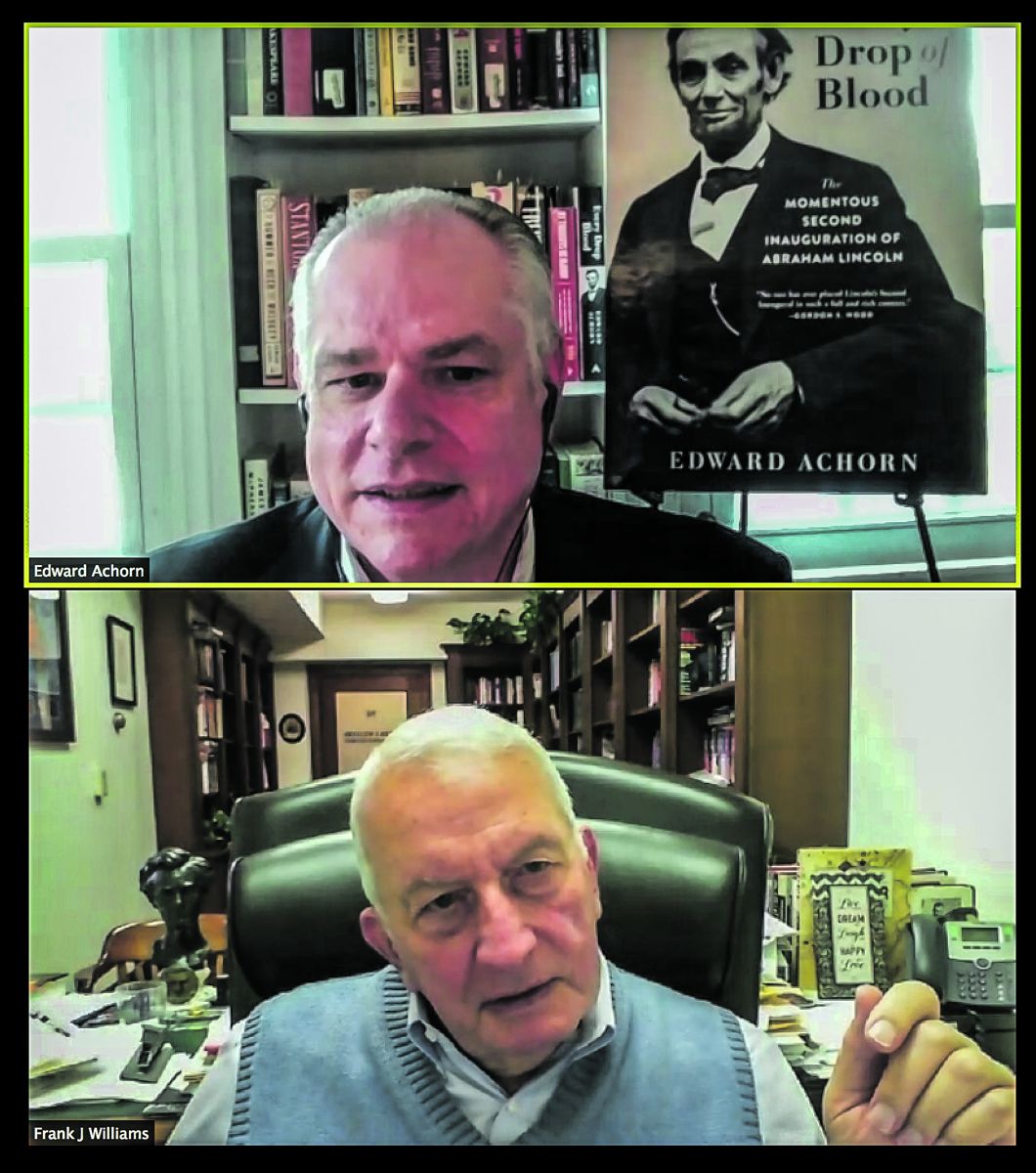
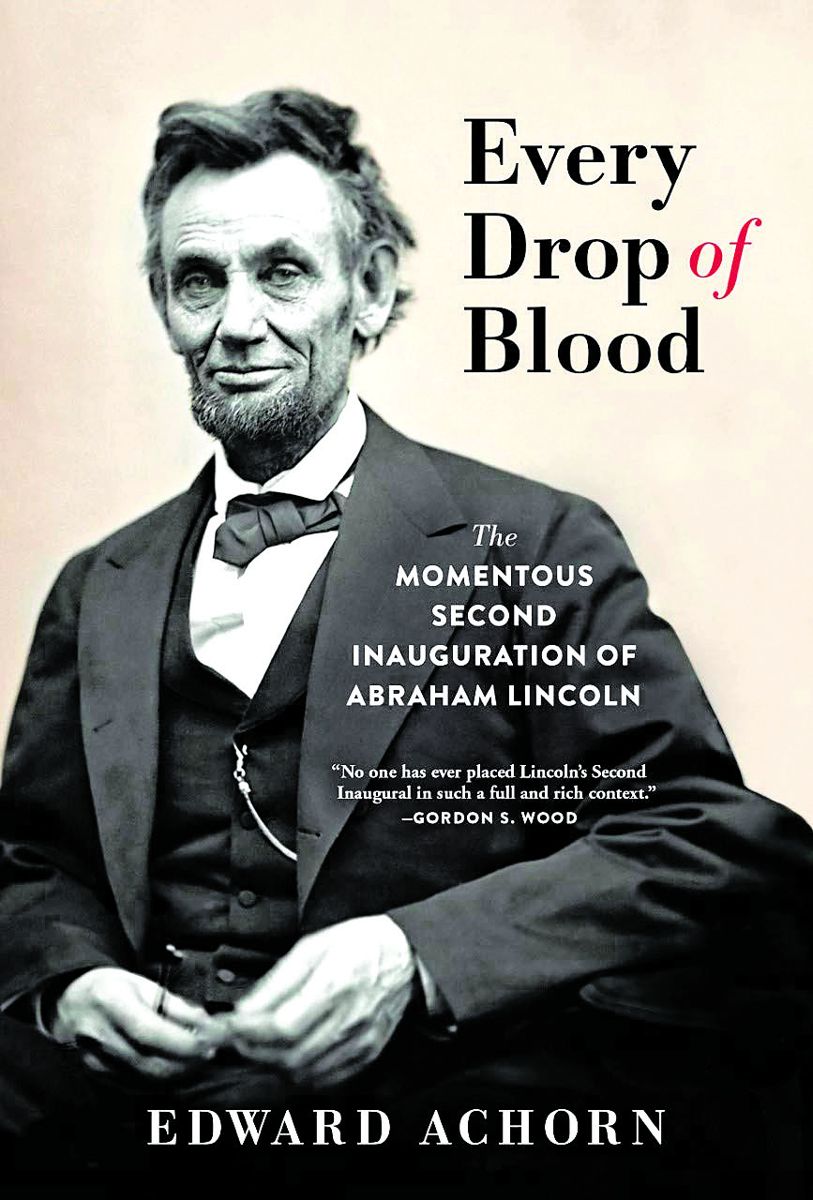
Christopher Newport University and author of Emancipation, the Union Army, and the Reelection of Abraham Lincoln, organized a one day virtual conference that brought together some of the leading historians and writers about Lincoln and broader Civil war topics. The online forum was held on Saturday, November 14. Attendance was very good, with 291 unique users, suggesting that, allowing for multiple people attending through a single sign-in, attendance undoubtedly exceeded last year’s live attendance of 325. White said the feedback received from speakers and attendees was positive: “We received a lot of emails from people who really appreciated being able to participate in the virtual Forum experience. They were grateful that we put this together so that people could have a sense of continuity and connection with one another during this time.” The Forum began with the presentation of the 2020 Lincoln Forum Book Prize to Ted Widmer for his recent book Lincoln on the Verge: Thirteen Days to Washington. Widmer is a Distinguished Lecturer at City University of New York and edited a book/collection of the New York Times series Disunion. White asked Widmer how many places linked to the journey he had visited. Widmer listed a few but said the pandemic had limited his travels. He said it’s his goal to spend about six weeks traveling to retrace the journey, see the places Lincoln stopped, and speak at some places where Lincoln spoke. He addressed the significance of the journey and the physical demands it placed on Lincoln, including frequent stops and shaking hands with thousands of people. Widmer pointed out that Lincoln’s hands and arms ached and at one point he lost his voice. Despite the grueling schedule, Widmer said, “even with no time for contemplation or writing speeches, yet we have him saying things ever more beautifully.” Widmer pointed out that Lincoln praised the influence of the Declaration of Independence and the Constitution; the train stopped in Philadelphia, and Lincoln slept near Independence Hall “and he said that he never had a political sentiment that didn’t originate with the words written here.” Conference chair Harold Holzer asked Widmer for his assessment of the seriousness of the reported plot in Baltimore that led Lincoln to take a different train and speed through the station without stopping. Widmer concluded that “the evidence was more persuasive than not.” The Forum continued with a presentation by Edward Achorn on his new book, Every Drop of Blood: The Momentous Second Inauguration of Abraham Lincoln. Achorn is the Deputy Editorial Page Editor of the Providence Journal. Achorn was interviewed by Frank Williams, retired chief justice of the Rhode Island Supreme Court and co-founder of the Lincoln Forum. Achorn noted that his book focused on the part played by several famous people who were present that day. He said it helps the reader understand war
Top left-right: Harold Holzer, Ted Widmer, and Jonathan White, below. All photos: Henry Ballone.
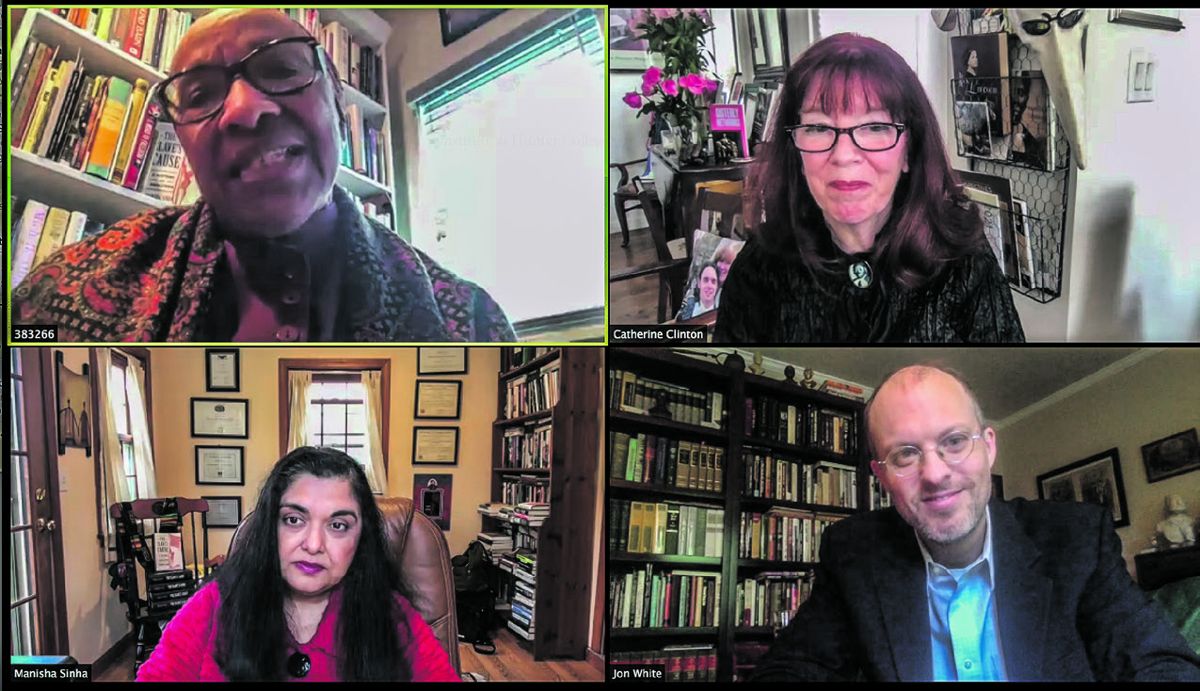
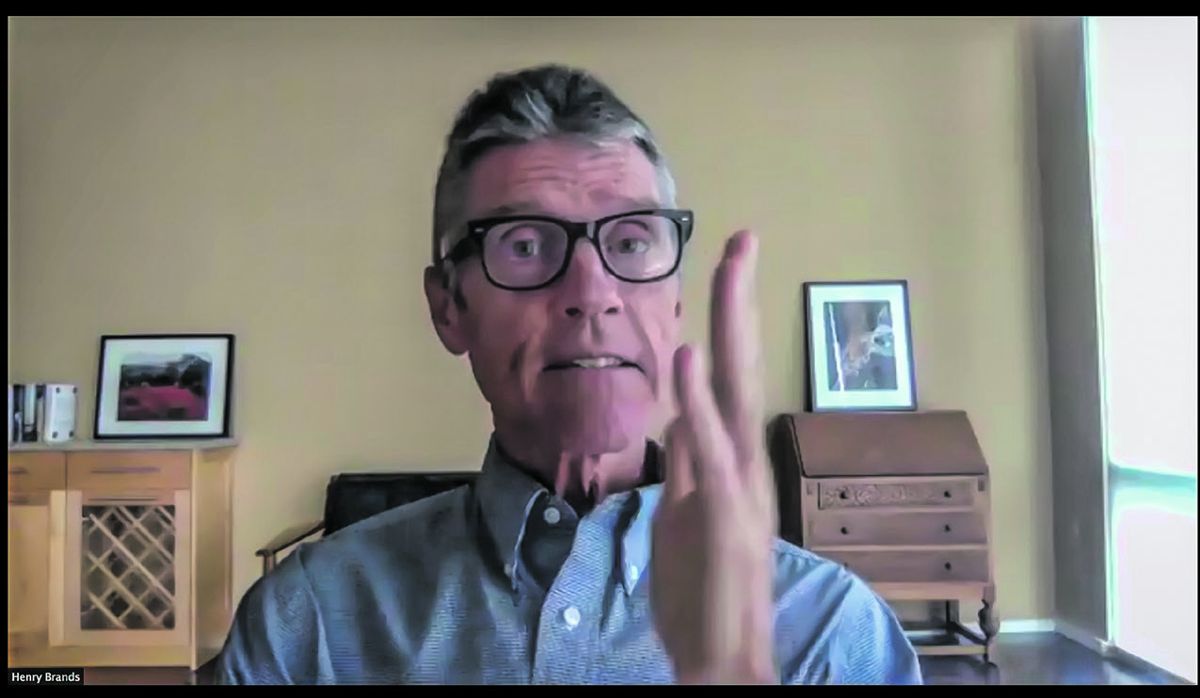
“in a really visceral way through the thoughts and emotions of those people and it also brings Lincoln down to earth.” Achorn described the importance of the speech. He pointed out that it was the second shortest inaugural address ever. He characterized it as “an astounding speech. There was no element of gloating. Instead, he said the war was a curse brought on the nation” as a punishment for slavery. He said both north and south were culpable and asked for an attitude of soul searching, not self-righteousness. Archon took note of the importance of Lincoln’s reference to God’s will. “One thing North and South had in common was a belief that God’s will is reflected in the lives of individuals. Stating that it was God’s will to eradicate slavery would have been a strong statement in both sections.” He described the reactions to the speech of many prominent people including vice president Andrew Johnson, John Wilkes Booth, Walt Whitman, and Frederick Douglass. He noted that Douglass once had been a harsh Lincoln critic but was electrified by Lincoln’s reference to God’s punishment for the sin of slavery. After a short lunch break, the conference resumed with a panel on Harriet Tubman. Kathryn Harris, recently retired head of the library division of the Abraham Lincoln Presidential Library and a longtime Tubman enactor, opened the session in character, and then moderated a discussion between Tubman biographer Catherine Clinton, Denman Endowed Professor of American History at the University of Texas-Austin, and Manisha Sinha, author of two books on slavery and abolition, and Draper Chair in American History at the University of Connecticut. Acting as Tubman, Harris gave a precis of Tubman’s life. “In 1849, I decided I was to be free with help from the abolitionist folk. In 1851, I decided I might be the kind of person who could be a conductor. I made about 13 trips on that railroad.” Clinton praised Harris’s Tubman impressions. “I have seen Kathryn perform in schools and have seen how inspirational it is.” Harris acknowledged “I am always amazed at the reception I get.” She told of once encountering a 20-something young man who recognized her and told her he remembered her coming to his 7th grade classroom. Clinton and Sinha both commented on Tubman’s importance in the abolitionist community and her relationship with John Brown. Clinton commented that Brown sought out Tubman for advice because she was so well known and respected in the abolitionist community. Sinha said Tubman respected Brown and was “one of few who missed him as a person more than a martyr.” Sinha observed, in contrast to the traditional image of a movement led by white male intellectuals from New England and Quakers, that “Freed slaves played a critical role in the abolitionist community.” While Tubman’s role in the Underground Railroad has earned her the greatest fame, Clinton and Sinha both emphasized her actions during and after the war. Manisha hailed her “extraordinary career as a woman in the Union army” and Clinton observed that she “led a very successful raid and eventually got her own pension in her own name.” They also discussed the importance of her actions after the war when she “ran a home and took in the blind and the disabled.” Next, H.W. Brands, Jack S. Blanton chair in History at the University of Texas-Austin, discussed his new book The Zealot and the Emancipator: John Brown, Abraham Lincoln, and the Struggle for American Freedom. Brand observed that his book raises the question, “What does a person convinced of the evil of slavery do about it?” Brands went back to the time of Jefferson and Washington. He noted that Jefferson, while owning and exploiting the labor of slaves, expressed a harsh attitude toward the institution. “He thought it might bring down American democracy, but didn’t know how to get rid of it.” The
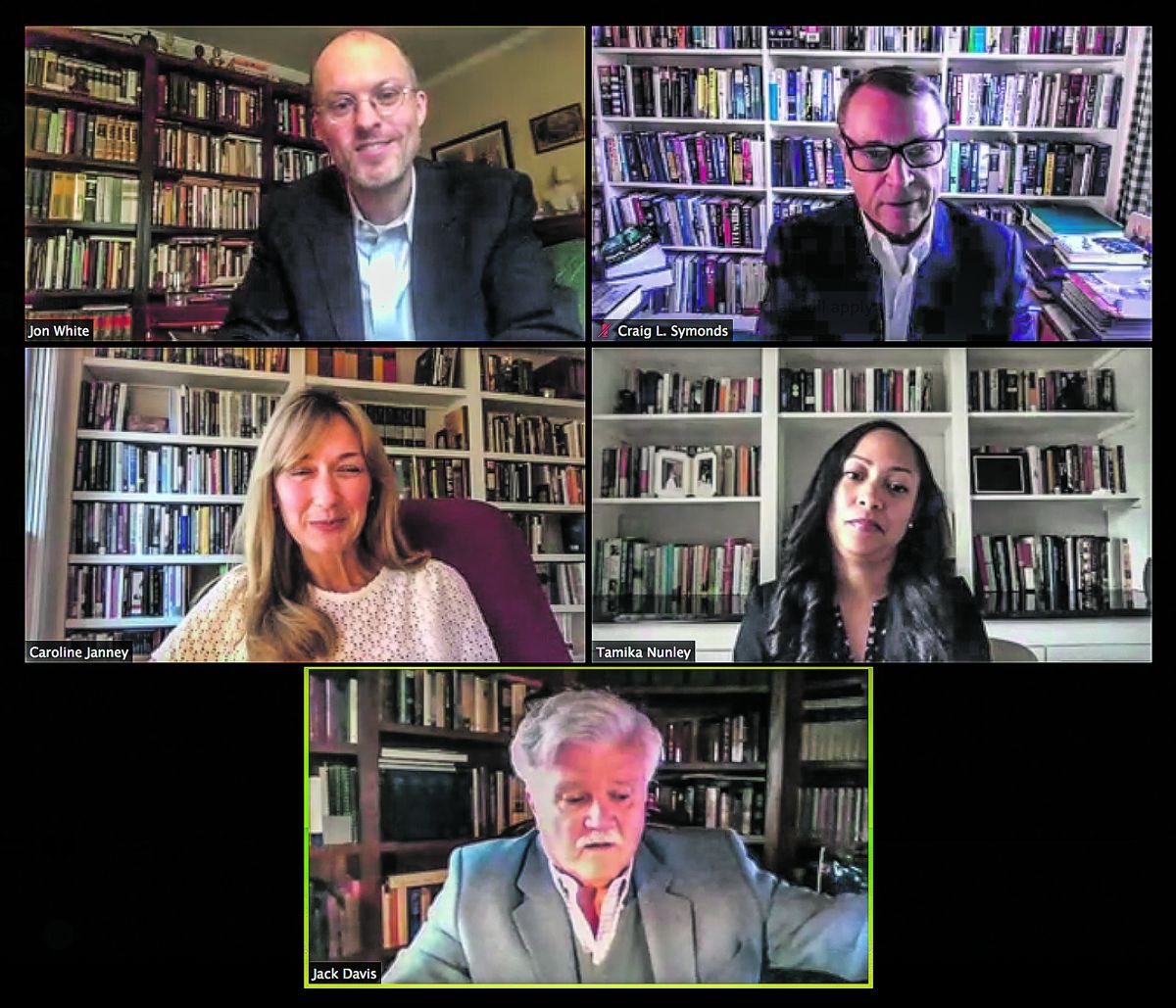
Founders “were convinced it was on the path to extinction, but didn’t foresee the cotton gin and the enormous increase in numbers and profitability.” Brands stated that, for John Brown, the critical moment came with the 1837 murder of abolitionist editor Elijah Lovejoy by a pro-slavery mob. Brown became convinced that “opposition to slavery justifies almost anything.” Throughout the 1850s, a series of decisions, including the Compromise of 1850, the Kansas Nebraska Act that brought Lincoln back into politics and impelled Brown’s move to Kansas, and the Dred Scott decision, drove the sections further apart. Brown’s Harper’s Ferry raid was a decisive event. When Brown’s actions were hailed by many Northerners, many Southerners were led to “fear they can’t be safe in the Union.” Lincoln believed the abolition of slavery must be done legally. He feared John Brown would make the situation worse. According to Brands, Lincoln “was convinced that slavery would end when the South decided it wasn’t in their interest. John Brown made this more unlikely.” The last presentation was a panel discussion on “How Should We Now Teach Lincoln and the Civil War?”, moderated by Forum vice chair Jonathan White. Participants included William C. Davis, retired editor of Civil War Times Illustrated and former professor at Virginia Tech University; Caroline E. Janney, John L. Nau professor of History at the University of Virginia and author of Remembering the Civil War: Reunion and the Limits of Reconciliation; Tamika Nunley, Assistant Professor of History at Oberlin College and author of the forthcoming At the Threshold of Liberty: Women, Slavery, and SelfMaking in Washington, DC; and Craig L. Symonds, retired professor at the U.S. Naval Academy and winner of the 2009 Lincoln Prize for his book Lincoln and His Admirals. White elicited interesting answers when he asked the panelists what inspired their interest in the Civil War: a family artifact (Davis), proximity to Civil War battlefields and car trips to see them (Janney), family tradition and an early interest in the role of black women (Nunley), and
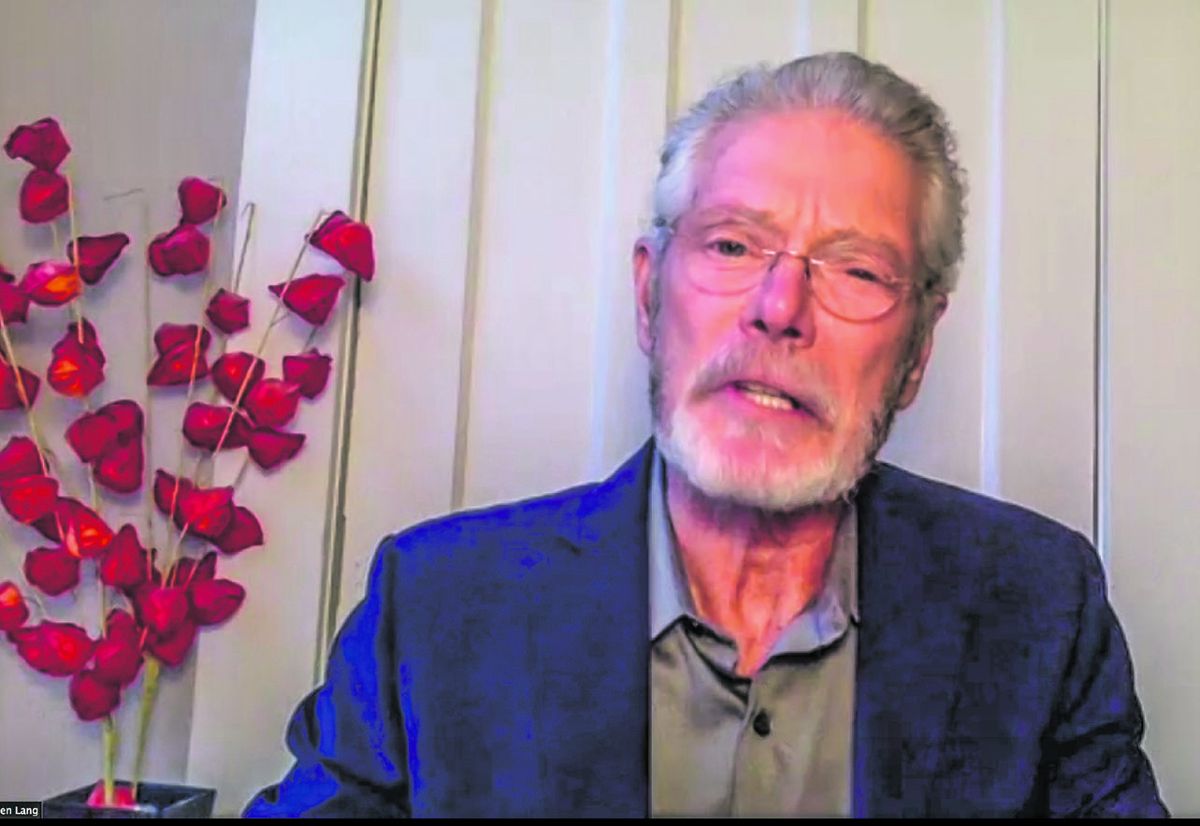
Stephen Lang. Bruce Catton and family trips to Civil War battlefields (Symonds). White asked the panelists what has changed about the students and how they teach the Civil War. Symonds said his naval academy students over the years have always been smart and motivated, but that today’s students are “bright without a depth of factual knowledge.” He observed this may be due in part, to high school advanced placement classes, which teach how to evaluate information but may not be so concerned with details. He also observed that grade inflation is now much more prevalent Janney noted that until recently she focused on teaching the 19th century, the events and personalities of the war itself and the actions and attitudes of the veterans. With recent events she now brings the class right up to the present day. “After Charlottesville,” she said, “I started covering more why the Civil War matters.” She also has included more debate in the class, addressing issues such as “Who freed the slaves?” Nunley added that there is much more interest in social history, including narratives of the lives of soldiers, women, immigrants, and enslaved people together with the more traditional focus on battles and generals. Davis concurred that the focus has changed. “Thirty years ago, it was all heroes and battles.” He also said interest levels had increased. “In the 1970s, the subject was poison,” made toxic by reactions to the Vietnam War, whereas interest levels are much higher now.
The final event was a reading of Lincoln’s Gettysburg Address by actor Stephen Lang, who played Major General George Pickett in the movie Gettysburg. As the event was concluding, Forum chair Harold Holzer was pleased with the result. “Much as we missed seeing old friends in person, and celebrating the Forum’s 25th anniversary at Gettysburg, we are enormously pleased that so many members tuned into, and enjoyed, our online symposium. The speakers were excellent, the panels remarkable, and the Q and A showed that our audience was fully engaged. I’m grateful to Ted Widmer, Ed Achorn, H.W. Brands, all our scholar-participants, and all the members who spent the day with us.” Moderator Jonathan White shared a similar view. “It was wonderful to see how engaged Forum members were throughout the day. Hundreds of people logged in and we received so many great questions from the audience. I know that our speakers and panelists could really sense the enthusiasm of the audience even in a virtual setting.” Despite his satisfaction with how things worked out, Holzer doesn’t hope for another online repeat next year. “Still, this was the most successful event I’ve ever helped produce that I hope we never have to produce again. Next year in Gettysburg!” White agreed. “Many [of the people emailing comments] also