
This And That
Gordon’s Flank Attack in the Wilderness
By Gould Hagler · Originally published January 2021 · pp. 12–13
In his memoirs Maj. Gen. John B. Gordon devoted a chapter to the second day of the Battle of the Wilderness. Nearly all the 19page discussion is allotted to his own May 6 flank attack against the Federal right, an attack that he proposed early in the day but was delayed until late afternoon. Gordon’s account can be summarized as follows: • During the night of May 5-6, after the first day’s fighting, Gordon’s Brigade took position on the extreme left of the Confederate line. • Gordon ordered scouts to reconnoiter and report on the Federals’ position. • The scouts reported that the Federal right, held by the VI Corps under Maj. Gen. John Sedgwick, was unprotected and that no Federal forces were present in the corps’ rear. The report was confirmed by a second scouting party and by Gordon’s personal examination. • Gordon devised a plan for a flank attack and submitted the plan to his division commander, General Early, and corps commander, General Ewell.
•
•
•
•
Ewell declined to approve the plan because of strenuous objections voiced by Early, objections based on Early’s belief that a Federal corps under Burnside was on the Federal right. This corps, Early insisted, rendered Gordon’s plan unrealistic and likely to lead to disaster. Much later in the day, General Lee appeared at Ewell’s headquarters, and asked if something could be done on the Confederate left to relieve the pressure on the right. Gordon, who was present along with Ewell and Early, spoke up and re-stated his earlier suggestion. Early repeated his objections. Lee listened in silence, then in very few words overruled Gordon’s corps and division commanders and ordered the attack suggested by their subordinate. The attack, delivered late in the day, dealt a heavy blow to the Federals, but success was limited when darkness ended the Confederate drive.
that: Gordon presented his plan to Ewell while Early was elsewhere; when Early arrived at Ewell’s headquarters he objected. His own intelligence indicated that Burnside’s Corps was in the rear of the Federal right and that another Federal force, a column of infantry, was between the Rapidan River and the Confederate left. • Later in the day, Early himself recommended the flank attack when intelligence indicated that Burnside’s IX Corps and the Federal infantry column were no longer present.
Early did not mention Lee in his account. Early’s assessment of the afternoon assault is far less positive than Gordon’s. Nightfall benefited not the Federals but the Confederates. The assault was “thrown into disorder” when it struck enemy breastworks, a disorder that the Federals would have observed and exploited had darkness not fallen.
In Lee’s Lieutenants, Douglas Southall Freeman made the following comment on Gordon’s memoirs: “Altogether charming but subject to that critique that always must be applied to ofttold stories committed to print later in life.” One can imagine the general, governor, United States senator, and commander-in-chief of the United Confederate Veterans telling of this day again and again to many audiences over several decades. Can we expect some embellishment? No, not in this case, according to Freeman, who accepted Gordon’s account. “Early’s argument,” Freeman wrote, “was based on his domineering assumption that his intelligence reports were correct and that those of Gordon were in error, though Gordon had verified brigade reports and Early had done nothing to substantiate those he had received.” Lee’s Lieutenants was published almost 80 years ago. What have other historians written since then? What do we know for sure? What judgments can we make with some degree of confidence? And what is unknown and unknowable? Gordon was right about the vulnerability of the Federal right and Early was wrong. There is no doubt that three of Burnside’s four divisions were elsewhere. (More about the other division will come later.) As Freeman and later writers have written, this was clear from Federal reports and other documentation long before Early wrote his memoirs. His lifelong insistence that conditions were not favorable for the flank attack until later in the day was disingenuous. We need to ask a question here. Why did Early think that Burnside and another Federal column were present on Grant’s right? There were reports of activity in this area, somewhat vague to
Early’s memoirs address the matter briefly, in two and a half pages, and present quite a different picture. Early’s view was
Was Gordon present when Lee met with Ewell and Early? Did Gordon speak up, despite his junior status? Did Lee listen in icy silence to the rationalizations of Gordon’s superiors, then without a word to them give their subordinate the go-ahead? These are different questions, and for these the answer is almost probably no. We have only Gordon’s word for this, in an account written long after, an account which contradicts what he himself wrote in 1868. What would have happened on May 6 if Gordon had been permitted to attack early in the day? The afternoon attack was successful while it lasted, but as Rhea wrote, “In the end, Gordon’s plan accomplished little more than to add names to the casualty lists.” Would a morning attack have done more? That is unknown and unknowable.
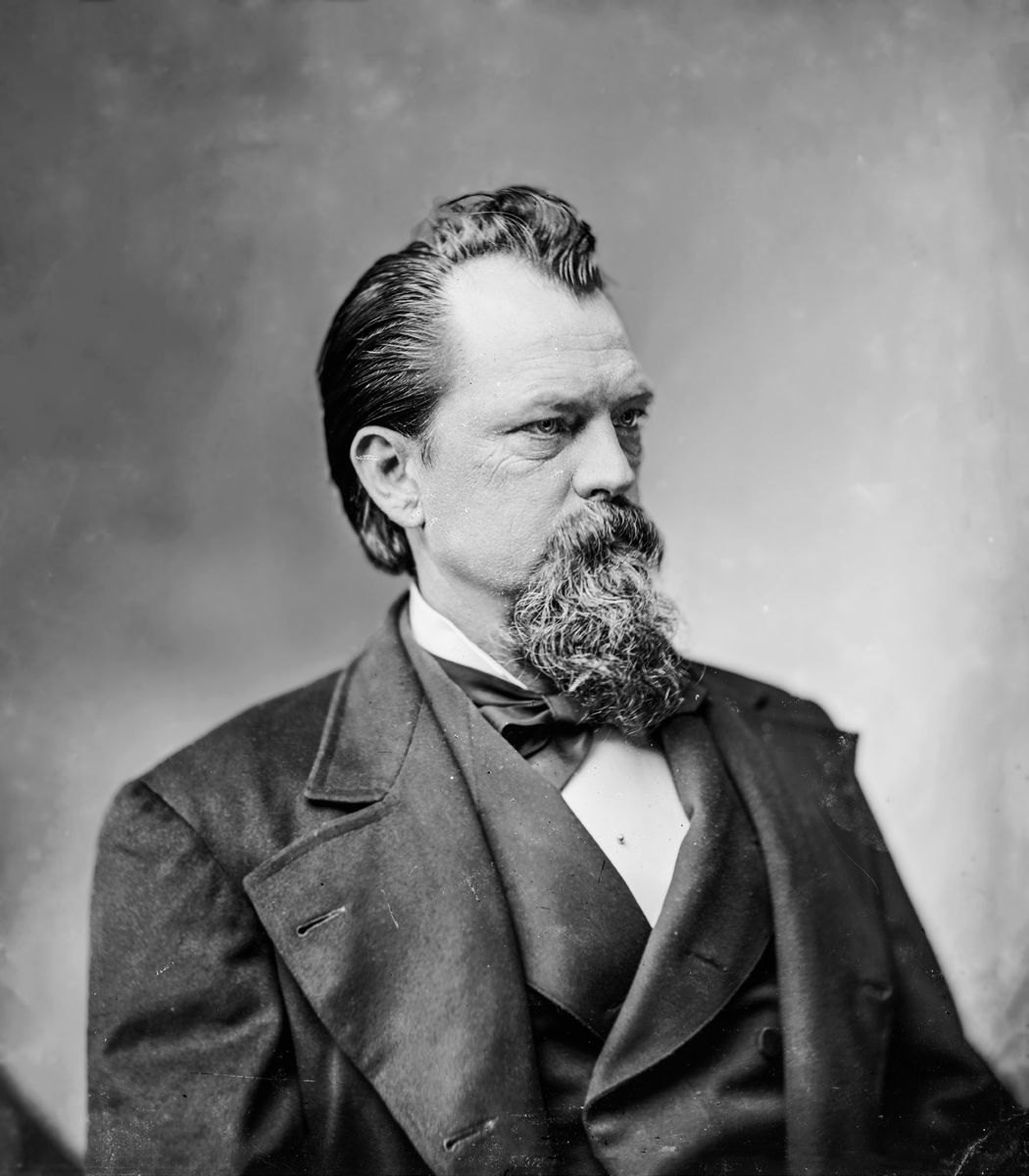
Hon. John B. Gordon, Senator from Georgia.
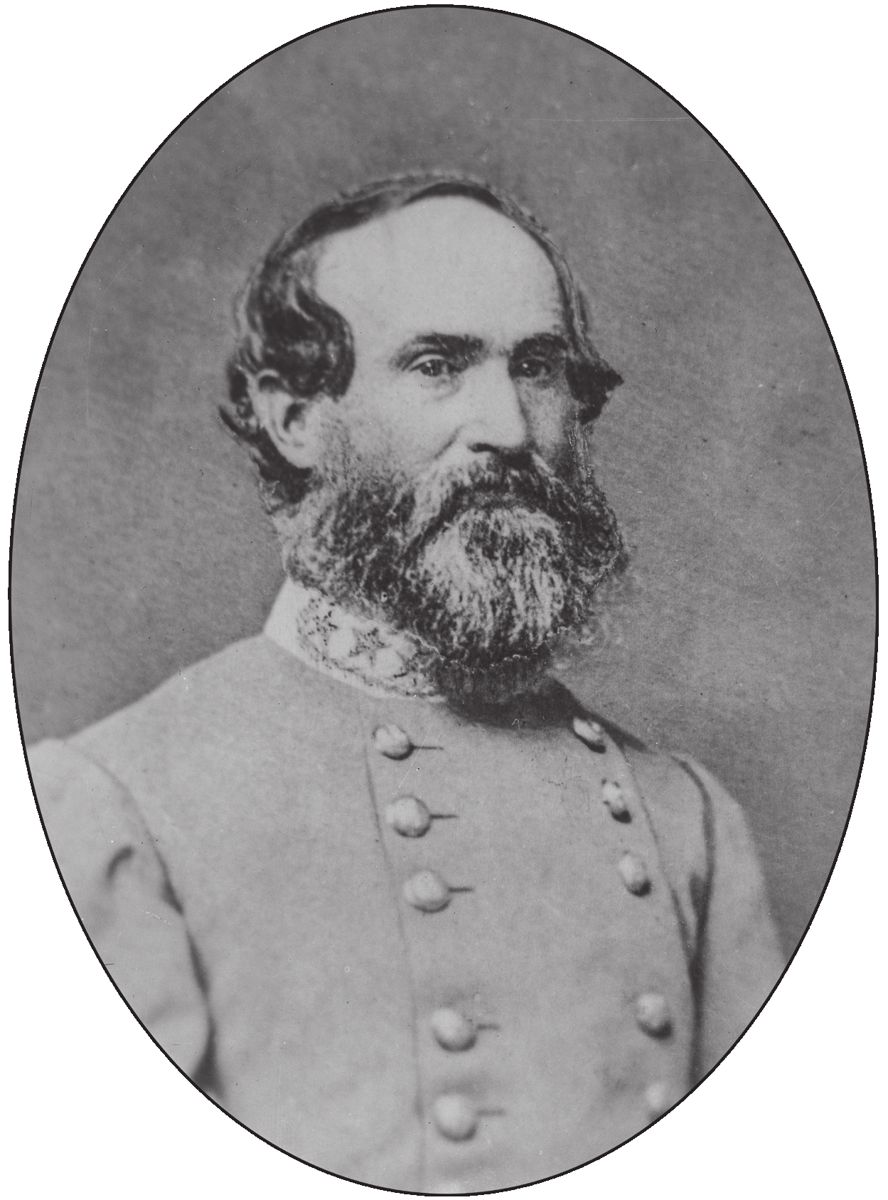
Confederate General Jubal Early.
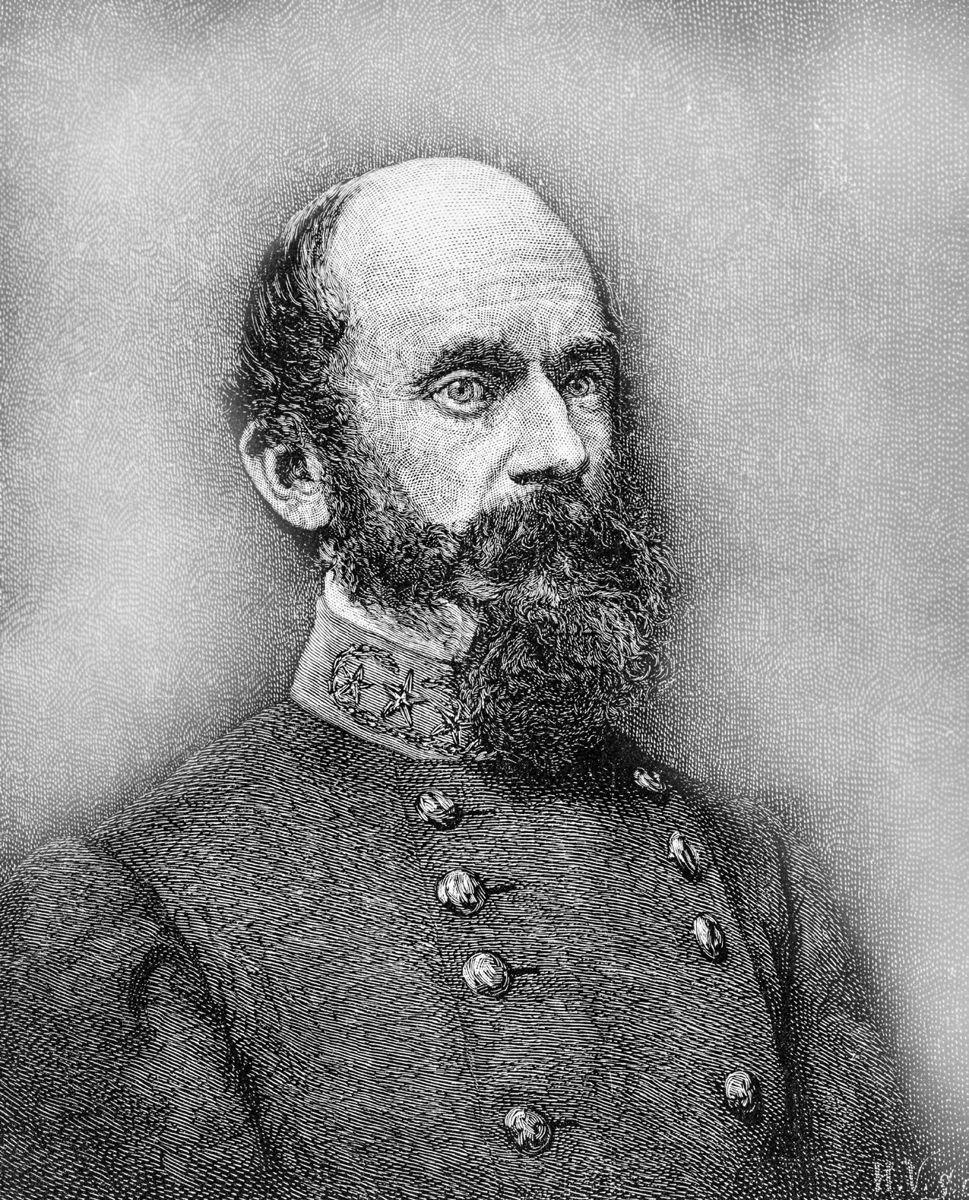
General Richard S. Ewell. be sure, but Early was not imagining things. At 8 a.m. a cavalry officer warned Gordon that a Federal force was passing to the Confederate left. “This move, if continued, flanks you about 2 miles to your left.” Gordon sent this report to Early and Ewell, with an endorsement, stating that he believed the reported movement to be a feint. This report was after Gordon’s attack plan was proposed and rejected. Another report, sent to Gordon at 2:30 p.m. by Ewell’s chief-of-staff, warned that “the enemy is withdrawing from
[Ramseur’s] right flank toward our left, and it is thought to be massing there.” This report came several hours after Gordon recommended the flank attack, but it does remind us that numerous messages would have been sent about suspected enemy movements throughout the confusing battle. Very little was known for certain. But now, what about Burnside’s 4th Division, commanded by Edward Ferraro? Where were these troops, and what were they doing? Earlier in the day, at 7 a.m.,
Ferraro was ordered by Grant to report to corps commander Sedgwick, on the Federal right. He was then ordered by Sedgwick “to attack and press the enemy with dispatch.” This order was countermanded. Ferraro’s men withdrew and spent the rest of the day and night marching hither and thither in the rear, guarding trains, a road, and Germanna Ford on the Rapidan. The division was never in battle that day, but it was close to the fray at one point and in the general vicinity throughout. Gordon Rhea wrote that this force was likely what the Confederate cavalry reported at 8 a.m. Early’s argument was not without foundation, but he erred in not ascertaining the facts in the face of conflicting reports. As Freeman said, Gordon checked; Early did not. The failure was Ewell’s as well as Early’s. Ewell’s report seems intentionally vague. Perhaps he was papering over his mistake when he wrote his report the following March, more than 10 months after the great battle. The conflicting reports, he stated, “necessitated a personal examination, which was made as other duties permitted, but in consequence of this delay and other unavoidable causes the movement was not begun until nearly sunset.” With one important exception, Gordon’s account was generally accurate in its description of events. The Federal right was vulnerable; he did propose an attack; the attack, when approved, was a success. The element in question is the dramatic role Lee played in the episode. It is not known for sure if Lee even visited the Confederate left that afternoon, and he probably did not meet Gordon if he did. In contrast to what he wrote many years later, Gordon, in an 1868 letter to Lee, stated that he did not meet with Lee on May 6. After Gordon’s memoirs were published in 1905, Ewell’s aide John Daniel wrote that Lee was never present that day. However, in the 1868 correspondence with Gordon, Lee stated that he did confer with Ewell before the attack. An officer in the 31st Georgia wrote in 1920 that he observed Gordon conferring with Lee on the battlefield just prior to the attack. Even if we ignore this account appearing in the Confederate Veteran 56 years after the battle, it is likely that Lee did ride to the left that afternoon. Lee himself said in 1868 that he met with Ewell that day. This is stronger testimony than John Daniel’s from early in the following century.
Sources and further reading: The O.R. Series 1, Volume 36, Part 1, contains the reports of Confederate and Federal officers, but there is no report written by Early. Part 2 of this volume contains some relevant correspondence. Gordon’s Reminiscences of the Civil War (1905) and The Memoirs of General Jubal A. Early [published posthumously in 1912] contain the conflicting accounts of the brigade and division commanders. Secondary works of interest include Lee’s Lieutenants, v. III by Freeman (1944); John Brown Gordon: Soldier, Southerner, Statesman by Ralph Lowell Eckert (1989); Jubal: The Life and Times of General Jubal A. Early, CSA, Defender of the Lost Cause by Charles C. Osborne (1992); The Battle of the Wilderness, May 5-6 by Gordon C. Rhea (1994); The Wilderness Campaign, edited by Gary W. Gallagher, Chapter 6 “Escaping the Shadow of Gettysburg” by Peter S. Carmichael (1997); Jubal A. Early: Robert E. Lee’s Bad Old Man by Benjamin Franklin Cooling, III (2014). Gould Hagler is a retired lobbyist living in Dunwoody, Ga. He is a past president of the Atlanta Civil War Round Table and the author of Georgia’s Confederate Monuments: In Honor of a Fallen Nation, published by Mercer