
Emerging Civil War
Emerging Civil War — January 2021
Originally published January 2021 · pp. 32–33
From the Editor I watched a flock of birds fly overheard this evening, the crescent moon setting behind them, chasing the sun toward the horizon. A jet, somewhere high above, left a small white slash against the darkening blue sky. I don’t know what kind of birds they were, but the flock has swarmed around the area for months and months. Their high-pitched calls sound like the chatter of monkeys filling the bare-branched oaks and maples of the neighborhood. The flock is so big that it took more than three minutes to pass overhead, literally a river of birds flowing onward and on. During their passage I noticed the jet and thought of the crazy juxtaposition between the flapping of tiny wings and the powerful roar of an airplane. I thought not only of the differences in size and scale but of old and new, of primitive and modern. It reminded me that there were many Civil War veterans who lived to see the beginning of manned flight. There was even a tiny handful who saw the advent of the atomic bomb. Imagine how dramatically technology changed in the course of their lifetimes. Imagine how dramatically the world changed. By the time you read this, another Thanksgiving will be behind us and another Christmas nearly upon us. We’re discovering that the holidays in this age of COVID look a little different than normal. The pandemic has kept families apart and undoubtedly disrupted many beloved holiday traditions. It has challenged us to adapt, evolve, and change. I hope you and your loved ones have been successful in finding new ways to fly. Happy holidays! Chris Mackowski, Ph.D. Editor-in-Chief
The Seventh Annual Emerging Civil War Symposium at Stevenson Ridge is still on schedule for August 5-7, 2021. Join us at Stevenson Ridge on the Spotsylvania Battlefield, as we discuss Fallen Leaders. The early bird price of $155/ ticket runs through December 31. Tickets make great stocking stuffers for the Civil War buff on your Christmas list! For more information, or to order tickets, visit our symposium page on the blog: h t t p s : / / e m e r g i n g c i v i l w a r. com/2021-symposium/.
ECW News & Notes Every year in commemoration of Thanksgiving, Sarah Kay Bierle celebrates the week with a series on the blog called “Civil War Cookin’.” In preparation this year, she has been changing up her boring pandemic menus and recreating foods mentioned in Civil War primary sources. Meg Groeling got a new kitten. She assures us she is not turning into a crazy cat lady, just “helping out an otherwise homeless little creature.” She is plugging away at First Fallen and writing up goodies for her Weekly Walt Whitman feature. She is wondering if some research on how the government finally got Mary Lincoln out of the White House would be helpful in the near future and baking gingerbread. “So much for the Left Coast,” she says (writing from California). Dwight Hughes gave a virtual presentation to the Civil War Round Table of Central New Jersey on November 2, “Unlike Anything That Ever Floated: The USS Monitor,” based on his new Emerging Civil War Series volume scheduled to be released next spring. Chris Kolakowski will be appearing on the American
Battlefield Trust’s “Zoom Goes edited by Brian Matthew Jordan the History” on December 1 and Ethan Rafuse. “Anyone lookand 3 to talk about the War ing to gain a sense of just how of Independence’s southern rich the state of scholarship on campaigns. Civil War veterans has become, Chris Mackowski has been or how exciting future scholarhitting the Zoom circuit late- ship on the subject will be, are ly. Last month, he did a pro- well served by The War Went gram on Upton’s May 10, 1864, On,” Rafuse wrote. attack at Spotsylvania for the Chambersburg Civil War ECW Bookshelf Seminar. He also did a program about the battle of North Anna Congratulations to Dave for the American Battlefield Powell on the publication of his Trust’s donor event (along latest book, Impulse of Victory: with a virtual video tour of the Ulysses S. Grant at Chattanooga. Wilderness and Spotsylvania From the book jacket: battlefields with Dan Davis for Union soldiers in the Army the Trust’s donor event). He of the Cumberland, who were Zoomed with the Brunswick trapped and facing starvation (NC) Civil War Roundtable about or surrender in the fall of 1863, Richard Ewell on the first day at saw the arrival of Major General Gettysburg; he Zoomed with Ulysses S. Grant in Tennessee as St. Bonaventure University’s an impetus to reverse the tides Jandoli Institute to talk about of war. David A. Powell’s sophisCivil War songs, statues, and ticated strategic and operationmemory; and he joined the al analysis of Grant’s command Trust’s “Zoom Goes the History” decisions and actions shows on November 20 with panelists Kris White, Carol Reardon, Bryan Cheesboro, and Garry Adelman to talk about “When War Returns.” On November 14, he joined Bert Dunkerly for a Facebook Live event at Jericho Mills on the North Anna battlefield, sponsored by Richmond National Battlefield and co-sponsored by ECW. Back on November 5, he had the chance to hang out with Tim Talbot at Pamplin Park before giving a North Anna talk to the Petersburg Civil War Roundtable. Whew! Has North Anna ever gotten so much love in a month? Kevin Pawlak and Jon-Erik David Powell’s latest book, Gilot each contributed articles Impulse of Victory. to the December issue of Civil War Times. Kevin’s article, “Calico how his determined leadership and Cake,” focuses on Mosby’s relieved the siege and shattered Second Calico Raid at Point the enemy, resulting in the creof Rocks, Md., on July 4, 1864. ation of a new strategic base of Jon-Erik’s article, “They Have Union operations and Grant’s Our Range,” profiles Treasury elevation to commander of all Department employee Elijah the Federal armies the following Hobart, whose pleasure cruise year. on the C&O canal was interruptPowell’s detailed exploraed by Mosby’s Raid, ultimately tion of the Union Army of the costing Hobart his life. Cumberland’s six-week-long Kevin and Jon-Erik also campaign for Chattanooga is worked together on a forthcom- complemented by his careful ing title for the Emerging Civil attention to the personal issues War Series focusing on John Grant faced at the time and his Brown’s Raid at Harpers Ferry. relationships with his superiors The December 2020 is- and subordinates. Though unfasue of Civil War Times also in- miliar with the tactical situation, cluded a nice review of David the army, and its officers, Grant Dixon’s Radical Warrior: August delivered another resounding Willich’s Journey from German victory. His success, explains Revolutionary to Union General. Powell, was due to his tactical Reviewer Colin Woodward flexibility, communication with called it “a rich, compelling, and his superiors, perseverance deinsightful look at a most extraor- spite setbacks, and dogged dinary figure.” determination to win the camThe issue also features a re- paign. Through attention to view by Ethan Rafuse of The War postwar accounts, Powell recWent On, an essay collection onciles the differences between what happened and the participants’ memories of the events. He focuses throughout on Grant’s controversial decisions, revealing how they were made and their impact on the campaign. As Powell shows, Grant’s choices demonstrate how he managed to be a thoughtful, deliberate commander despite the fog of war.
10 Questions … with Dwight Hughes Dwight Hughes is a member of the ECW editorial board and
Dwight Hughes has parlayed his former naval career into a career studying Civil War navies. the author of A Confederate Biography: The Cruise of the CSS Shenandoah. We first profiled him in the January 2020 newsletter: http://conta.cc/2FwDubb. You can see his full ECW biography here: https://emergingcivilwar.com/author-biographies/authors/dwight-hughes/ We’ve been putting the finishing touches on our next book. Can you give us a little preview? Unlike Anything That Ever Floated: The Monitor and Virginia and the Battle of Hampton Roads, March 8-9, 1862 will be the first dedicated naval volume in the Emerging Civil War Series. It tells the story of the revolutionary ironclads USS Monitor and CSS Virginia (ex USS Merrimack) from conception, through development to Virginia’s destruction of two major Union warships, and finally their climatic engagement. Both sides claimed victory. The narrative blends strategy, tactics, technology, personalities, and naval combat primarily through the voices of men who lived it. The story of that naval battle is so iconic. Why do you think it captures people’s imaginations like it does? Monitor became an icon of American industrial ingenuity and strength through the post-war boom and since. She redefined the relationship between men and machines in war, challenging ancient concepts of honor and valor. “There isn’t danger enough to give us any glory,” wrote one officer. But beforehand, people had never seen anything like Monitor. Many feared she would not float. Captain John L. Worden: “Here was an unknown, untried vessel…an iron coffin-like ship of which the gloomiest predictions were made.” Virginia was a paradigm of Confederate strategy and execution, the brainchild of innovative, dedicated, and courageous men, but the victim of hurried design, untested technology, poor planning, and a dearth of critical resources. Nevertheless, she challenged the entire U.S Navy, threatened the strategically vital blockade, and disrupted General McClellan’s plans to take Richmond. What’s a common misperception people have about the battle? That in one day all the world’s navies became obsolete to the amazement of all concerned. The technological trend was not new to professionals. Steam propulsion, iron armor, and advanced naval armaments had been developing for half a century. Great Britain and France had deployed powerful sea-going, steam-driven ironclads. Turret models were being tested. The genius of Monitor’s inventor, John Ericsson, was to merge various elements in a unique arrangement to meet a particular need at a specific time. The battle popularized what was already happening. But the Monitor design was not seaworthy and did not long survive this conflict. You’ve also been doing a fair number of talks lately thanks to technology. What are some of the topics you’ve been speaking on? Presentations from my first book (A Confederate Biography: The Cruise of the CSS Shenandoah), are still popular. I’ve given several on the new book, Unlike Anything That Ever Floated, and on my next project, Unvexed Waters: The Civil War on Heartland Rivers. Other presentations are available as noted on my website, https://civilwarnavyhistory.com/. What’s next for you on the writing front? I’m writing a new ECW Series volume on the western river campaigns. Strategically the war on the Mississippi and its tributaries extended the coastal blockade and reflected Winfield Scott’s Anaconda Plan. In tactics and technology, however, joint army-navy riverine warfare was an entirely new concept. Both navies, Union and Confederate, began with no experience, no shallow-water warships, no joint command structure, and no infrastructure. Nevertheless, a few outstanding teams emerged, notably General Grant and Admiral David D. Porter. This unprecedented army-navy partnership proceeded through many trials, Belmont, Forts Henry and Donelson, Shiloh, Island No. 10, Memphis, Vicksburg, Port Hudson, and Red River, until Abraham Lincoln could declare: “The father of waters again goes unvexed to the sea.” The book will provide a new perspective on these engagements from the water. Lightning Round (short answers with a one-sentence explanation) Favorite primary source? I always begin with the Navy Official Records and verify other sources by them. Favorite Civil War-related monument? The Ulysses S. Grant memorial on the mall in D.C. because of the subject and the magnificent, dynamic composition. I used to work near there and walked by it on lunch breaks. Favorite unsung hero of the Civil War era? For a naval historian, Commander James D. Bulloch, CSN, is an unknown but most interesting character for effectively running the Confederate navy and finances in Europe from Liverpool, deploying blockade runners, ironclads, and commerce raiders, and causing the Union a great deal of grief. What’s a bucket-list Civil War site you’ve not yet visited? Vicksburg battlefields and USS Cairo museum. Favorite ECWS book that’s not one of your own? All good, but I like A Want of Vigilance: The Bristow Station Campaign by Bill Backus and Robert Orrison since I live just down the road and drive by it frequently.
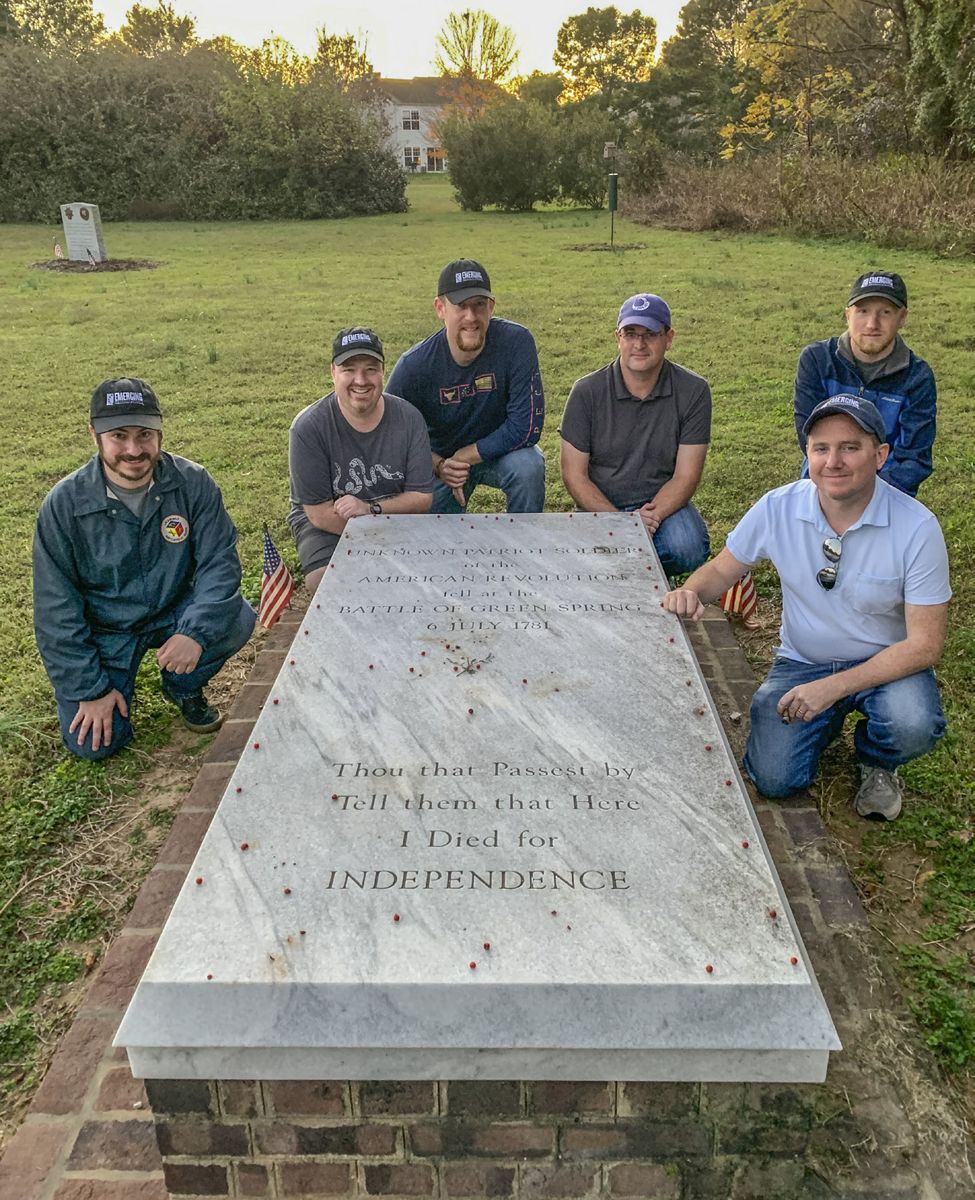
Fort Granger, Winstead Hill, the Carter House, and more, plus the lead-up to the battle at Spring Hill. Paul Ashdown and Ed Caudill did a pair of interviews on their to visit sites related to the Yorktown Campaign. Stops included the Battle of the Hook, Spencer’s Ordinary, Green Spring, Yorktown, and the American Revolution Museum at Yorktown. Live videos talking about these places are on our Facebook site. Even George Washington became a fan of ERW on this trip!
ERW also launched our own YouTube page, where all the “Rev War Revelry” videos, our Sunday night historian happy hour talks, are located. Our symposium is still on schedule for May 2021. Also, stay tuned to the blog as a follow-up
Subscribe at CivilWarNews.com new “Engaging the Civil War” Series book, Imagining Wild Bill: James Butler Hickok in War, Media, and Memory. Plus, we have all sorts of other cool stuff going on there. Be sure to subscribe to the Emerging Civil War YouTube channel to get all the latest. We also make a number of our interviews available as free podcasts on the ECW Patreon page. By Phill Greenwalt In November, Emerging Revolutionary War historians took their annual Rev War Weekend trip; this year
George Washington shows his Emerging Rev War pride. ECW Multimedia Have you been following the ECW YouTube page? Go to YouTube and search “Emerging Civil War.” In November, we’ve given special focus to exploring the battlefield in Franklin, Tenn., courtesy of our friend Greg Wade, founder of the Franklin Civil War Roundtable. More than a dozen videos show off key spots, including Carnton Plantation,