Brentmoor, Warrenton Home of the Gray Ghost, Fades Back into History
By Bob Ruegsegger · Originally published January 2021 · pp. 36–37
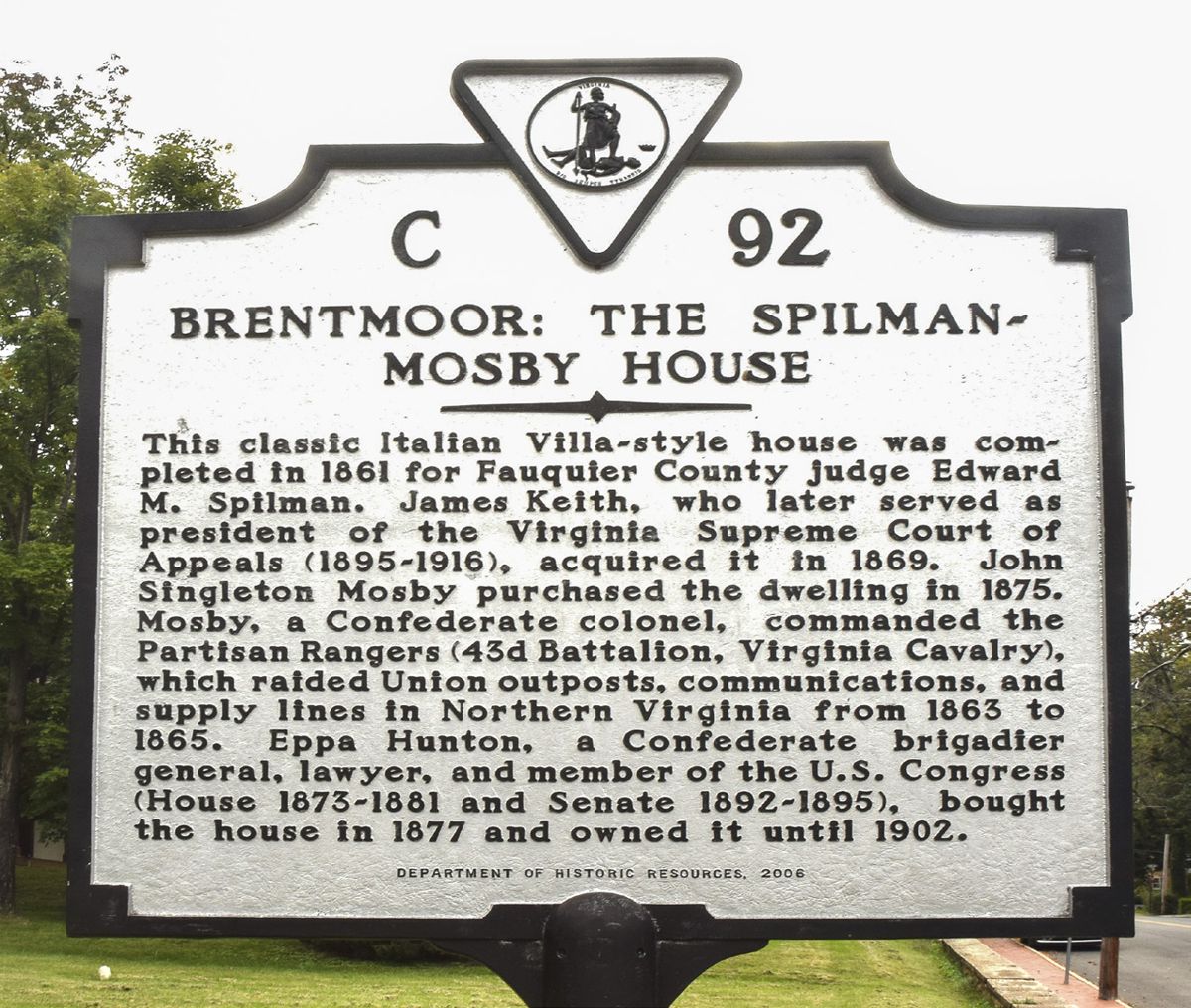
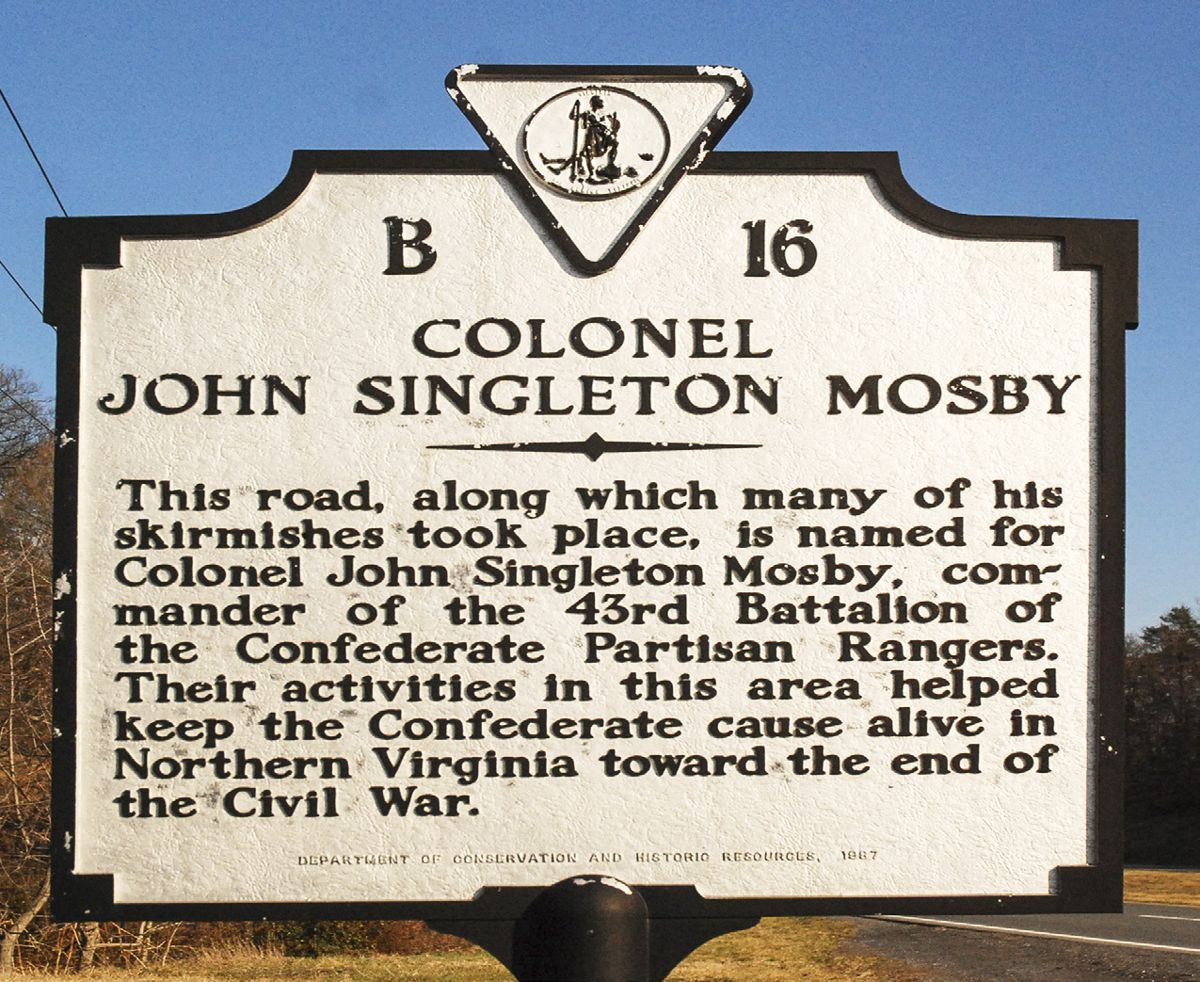
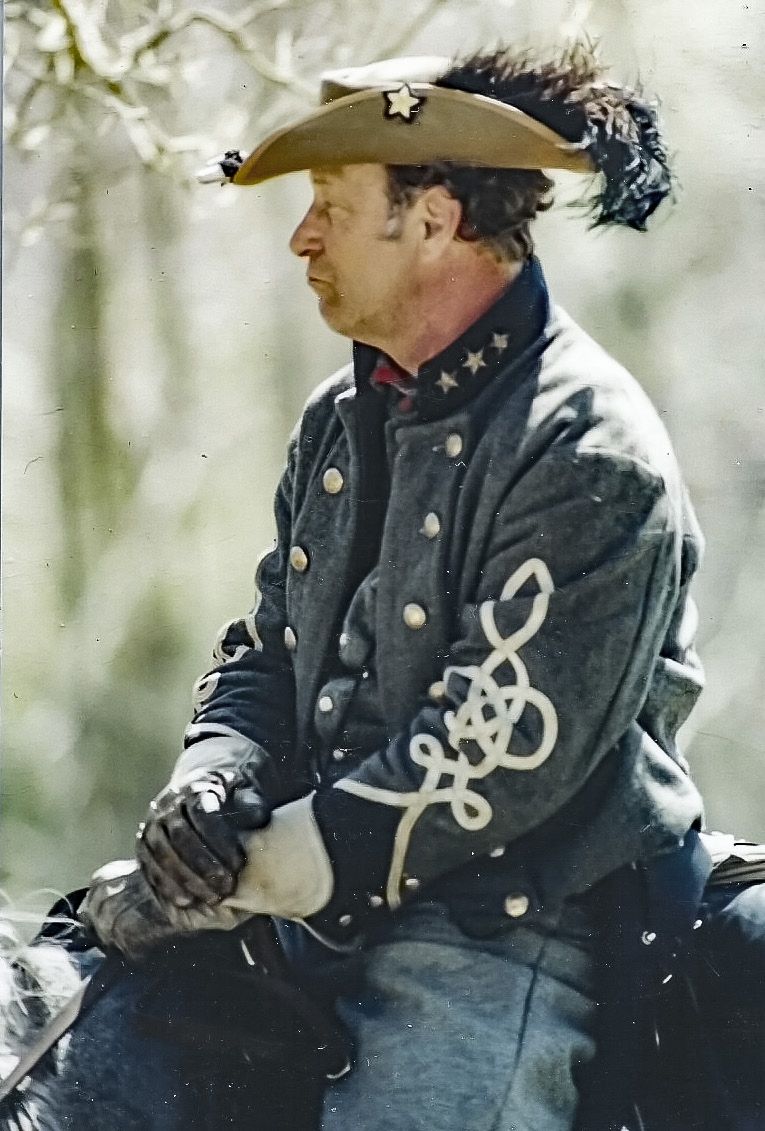
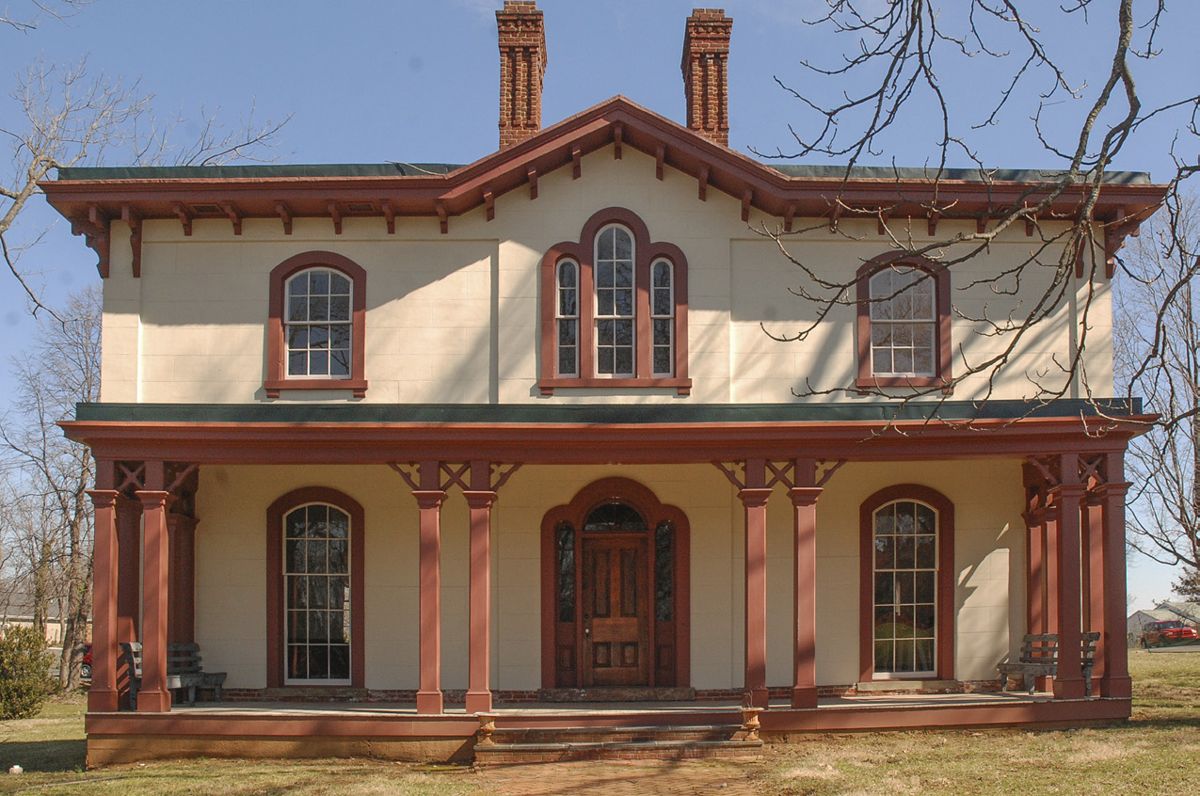
Brentmoor, Warrenton Home of the Gray Ghost, Fades Back into History by Bob Ruegsegger Brentmoor, also called the Spilman-Mosby House, was built for Judge Edward M. Spilman of Fauquier County, Va. The Italian Villa-style edifice was completed in 1861. John Singleton Mosby, the “Gray Ghost,” purchased the stately dwelling following the Civil War. It served as his residence from 1875 to 1877 when he lived on Main Street in Warrenton, Va., until he sold it to former fellow Confederate Eppa Hunton. Mosby’s former home was added to the National Register of Historic Places on January 20, 1978. More recently the SpilmanMosby House served Warrenton briefly as the John Singleton Mosby Museum until town council decided to put the historic site up for sale and, like the Gray Ghost, let the property fade back into the pages of history as an obscure family residence. Mosby attributed his success on the battlefield to his pragmatism rather than to his heroics, not dash and daring. “I fought for success and not for display. There was no man in the Confederacy who had less of the spirit of knight-errantry in him, or took a more practical view of the war than I did,” wrote Mosby in his War Reminiscences in 1887. As the commanding officer of a battalion of Partisan Rangers created by an act of the Confederate Congress, Mosby was incredibly successful. His damage to Federal operations was enormous. His military genius was of the highest order. In a word, Mosby’s partisan operations were effective—much to the consternation of Union generals and cavalry officers. “Mosby kept Union forces off balance,” noted the late historian James Robertson, Jr.
“In the last half of the war, the area west of Alexandria and east of Winchester was known as Mosby’s Confederacy.” In the four Virginia counties nearest Washington, Mosby’s attacks against Union forces were almost incessant. “I rarely rested for more than a day at a time,” said Mosby. A young John Mosby read of the exploits of Revolutionary War hero Francis Marion, the Swamp Fox, who persistently employed irregular methods of warfare against his British adversaries in South Carolina. Marion’s tactics may have inspired Mosby. Among Mosby’s most daring and successful raids was his March 8, 1863, night time visit to Fairfax Courthouse. Mosby and 29 of his Partisan Rangers took to the woods a few miles from Fairfax Courthouse to avoid Union cavalry patrols and slipped between Union encampments at Centerville and Chantilly through a gap in the picket lines. Mosby’s Rangers entered Fairfax undetected, captured guards on duty, detained the telegraph operator and severed the telegraph lines. The Rangers split up; one group headed for cavalry commander Colonel Percy Wyndham’s headquarters. Another contingent gathered cavalry horses from the stables. A third group, led by Mosby, knocked at the door of General Edwin Stoughton’s headquarters. When a staff officer responded to the knock at the door, he was told the 5th New York Cavalry had a dispatch for General Stoughton. “I took hold of his nightshirt, whispered my name in his ear, and told him to take me to General Stoughton’s room,” recalled Mosby. The officer quicky complied with Mosby’s order. Mosby found the general sleeping peacefully. He pulled down the bedclothes, lifted the general’s nightshirt, spanked him on the bare back, and ordered him to get up. Mosby asked the general if he’d heard of Mosby. General Stoughton asked if he had caught Mosby. “I am Mosby, and I have caught you,” he replied. The captured general left the town with other prisoners as well as cavalry horses. No shots were fired; no outcry was raised. Mosby’s Rangers had captured a Union general and two officers, 30 privates, and most importantly, 58 horses. Mosby and his men had been in the middle of several thousand Union troops, five Vermont infantry regiments and Colonel Wyndham’s Union cavalry brigade. The Fairfax raid was exceptionally audacious and skillfully implemented: there were no casualties. The mission’s objectives were achieved, except that Wyndham was not captured. Mosby’s foray attracted the attention of the Union’s commander-in-chief, who expressed more concern for the loss of the cavalry horses than the general’s capture. “I can make brigadier generals, but I can’t make horses,” quipped President Lincoln. Captain Mosby’s achievement at Fairfax Courthouse was noted in Major General J.E.B. Stuart’s General Order No. 7 on March 12, 1863, four days after the independent partisan operation. “Captain John S. Mosby has for a longtime attracted the attention of his generals by his boldness, skill, and success, so signally displayed in his numerous forays upon the invaders of his native State,” noted Stuart. “None know his daring enterprise and dashing heroism better than those foul invaders, though strangers themselves to such noble traits,” added the major general.
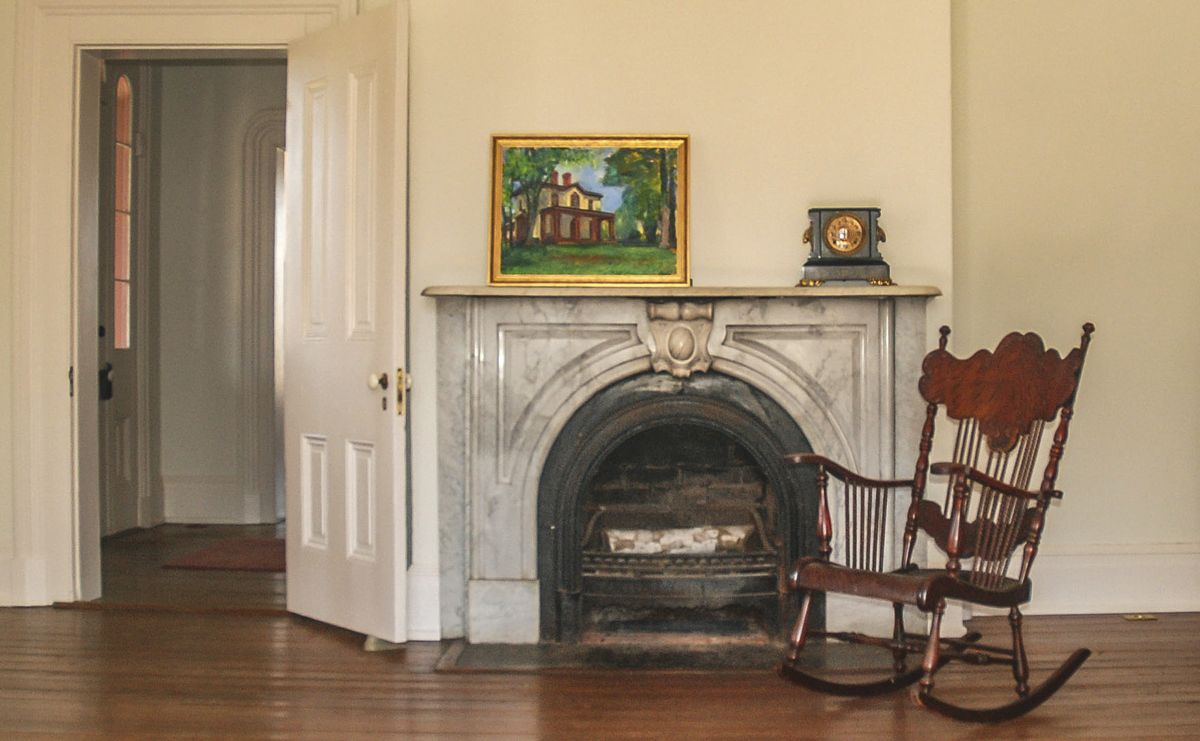
Mosby house parlor.
Brentmoor Historic Marker. “His late brilliant exploit, the capture of Brigadier General Stoughton, U.S. Army, two captains, 30 other prisoners together with arms, equipments, and 58 horses justifies his recognition in general orders,” Stuart added. “The feat, unparalleled in the war, was performed in the midst of the enemy’s troops at Fairfax Court House, without loss or injury.” On Oct. 14, 1864, at Duffield’s on the Baltimore & Ohio Railroad west of Harper’s Ferry, now Lt. Colonel Mosby’s Partisan Rangers, 43rd Battalion of Virginia Cavalry, contributed to Mosby’s legacy as the fabled Gray Ghost. Sheridan’s army was whipping the Confederates in the Shenandoah Valley and Mosby was determined to interrupt Sheridan’s vital supply link. “One of the most effective ways of impeding the march of an army is by cutting off its supplies; and this is just as legitimate as to attack in the line of battle,” observed Mosby. “The line that connects an army with its base of supplies is the Heel of Achilles—its most vital and vulnerable spot.” Mosby, accompanied by 84
Rangers, attacked a Federal train on the B & O Railroad. Using a Federal train schedule, Mosby timed his troops’ arrival to concur with the passing of a passenger express train from Baltimore carrying civilians, a few Federal soldiers, and two U.S. Army paymasters. Mosby’s Partisans loosened the rails in a railroad cut and waited for the train. The engine, Engine #27, rolled off the rails, burst its boiler, and filled the air with fiery cinders and escaping steam. Mosby’s men entered the cars and ordered the passengers out, soldiers as well as civilians. Screaming women and frightened children were plucked from the disabled train. Mosby’s men took watches, jewelry, and cash from the passengers When German settlers headed for new homes in Ohio refused to leave their seats. Mosby ordered the passenger cars set afire. Rangers tossed stacks of flaming New York Herald newspapers into the car. The Dutchmen quickly exited the burning car. Mosby’s Greenback Raid, as it came to be called, destroyed
This bronze plaque in Warrenton is affixed to the Mosby monument. a military locomotive and cars, take a share and declared that captured 20 prisoners, and 15 he was “fighting for glory, not horses. As an added bonus, for spoils.” During the last two years of the two U.S. Army paymasters were seized along with $173,000 in War, Mosby’s Rangers, the 43rd Federal funds. The Confederate Battalion Virginia Cavalry, conRangers stuffed everything of ducted continual raids behind value into sacks, tossed them enemy lines in northern Virginia, over their saddles, and rode seizing supply trains, sabotaging railroads, and disrupting away from the burning wreck. The Federal greenbacks were Federal communications. divided into equal shares among General Lee’s surrender at the Rangers. Mosby declined to Appomattox April 9, 1865, marked the end for Mosby’s Rangers. Rather than formally surrender, Mosby disbanded his troops, impeccably dressed for a final inspection, at a formation in Salem. Mosby sat silently on his horse while his brother and two battalion commanders together read his farewell address to his men: Soldiers! I have summoned you to gather for the last time. The vision we have cherished of a free and independent country has vanished, and that country is now the spoil of a conqueror. I disband your organization in preference to surrendering it to our enemies. I am no longer your commander. After an association of more than two eventful years, I part from you with a just pride in the fame of your achievements and grateful recollections of your generous kindness to myself. And now at the moment of bidding you a final adieu, accept the assurance of my unchanging confidence and regard. Farewell. Bob Ruegsegger is an American by birth and a Virginian. His assignments frequently take him to historic sites throughout Virginia, the Mid-Atlantic, and the Southeast. His favorite haunts include sites within Virginia’s Historic Triangle—Jamestown, Yorktown, and Williamsburg. Bob served briefly in the U.S. Navy. He is a retired educator and has been an active newspaper journalist for the last twenty years.