
Disgrace and Betrayal in Mississippi
By Joseph F. Wilson · Originally published February 2021 · p. 11
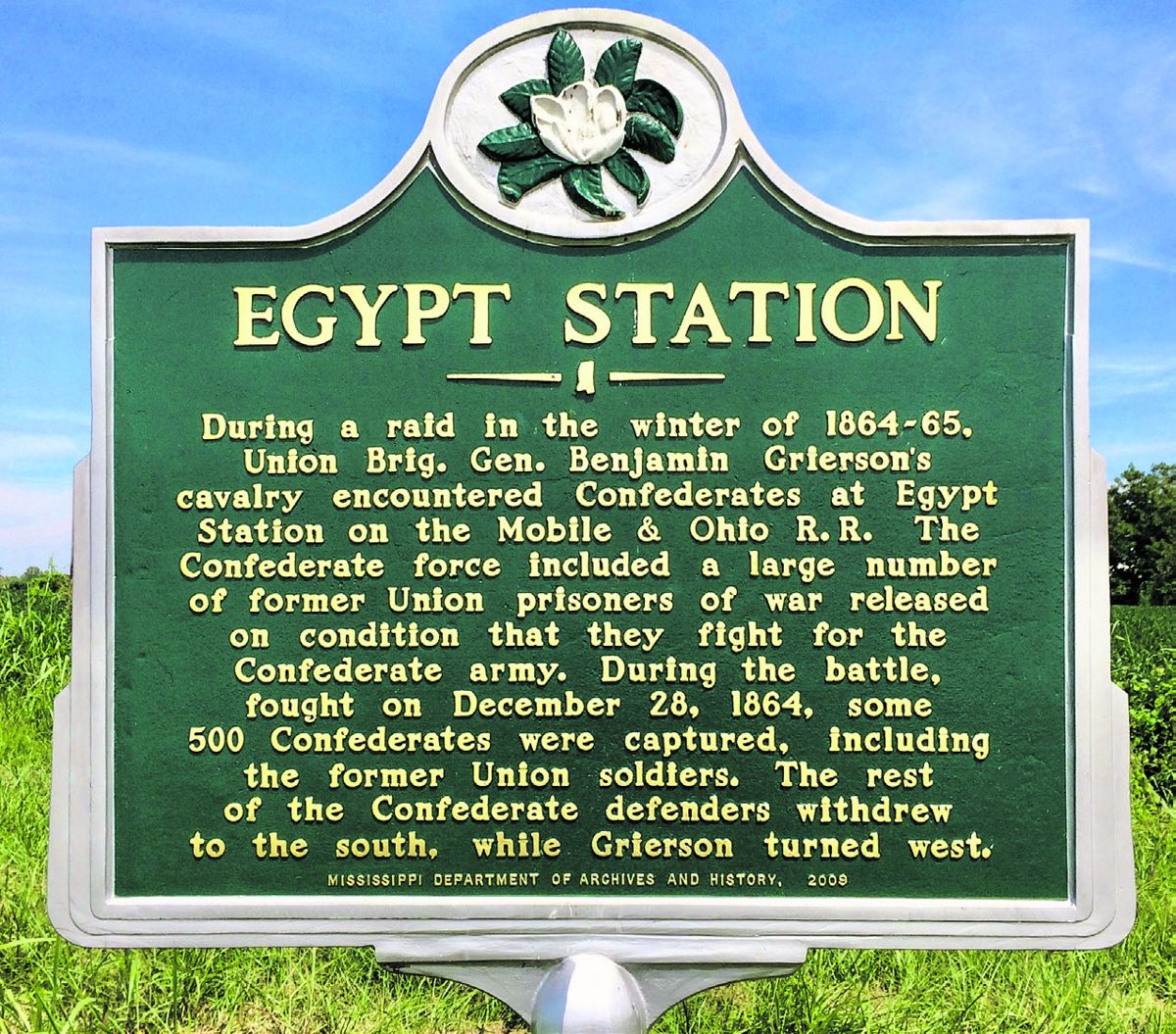
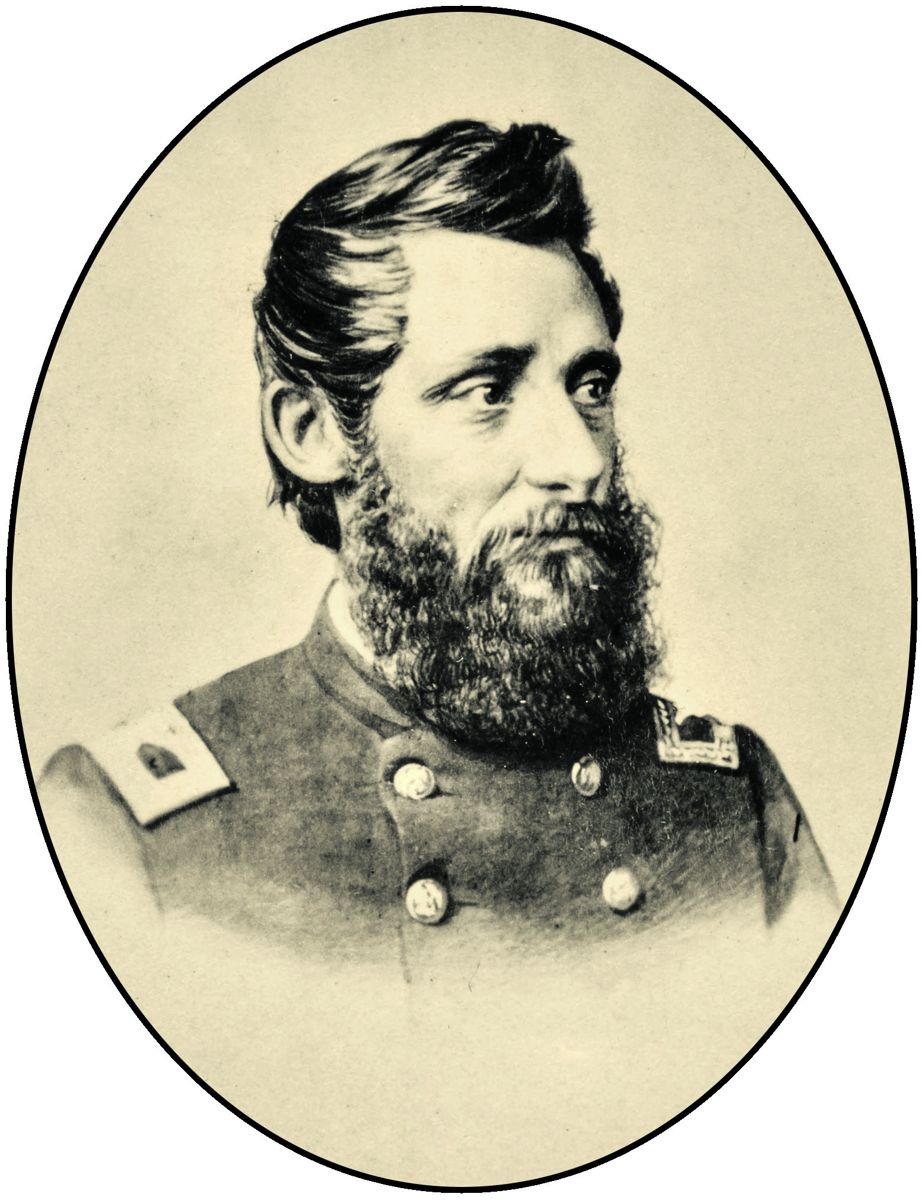
On a wintry December morning, General Benjamin Grierson led 3,500 cavalry troopers out of Memphis into Mississippi to destroy the Mobile and Ohio Railroad and cut the Confederate supply line. Confederate officials immediately detected the movement and patched together a force of 1,500 men under Brig. General Samuel Gholson to oppose Grierson. The two sides clashed on Dec. 28, 1864, near the railroad’s Egypt Station. One notable aspect of the battle featured the Confederates using artillery mounted on railcars. Besides the artillery on the flat cars, the Southerners made good use of the railroad embankment and a stockade built to defend the station. Although the battle is considered a draw, Union casualties far outnumbered the Confederate losses. The small battle had large implications for how the South had responded with unsavory methods to resupply their army. Young boys and old men were now being included in the Confederate Army. There was another more disturbing aspect of the fighting that sent shock waves throughout the North. The formidable position of the Rebels resulted in only two killed and five wounded among the Confederate ranks, but the 500 men defending the fort eventually surrendered. Grierson’s cavalrymen suffered 22 killed and 101 wounded while attacking the fortified Rebels. Most of the 123 Union casualties came from fighting at the stockade. In the stockade, the 10th Tennessee Infantry, numbering over 500 Confederate troops, commanded by Lt. Colonel Michael Burke, readied for Grierson’s assault. Sometimes called “Burke’s Battalion,” the 10th Tennessee fought valiantly inflicting heavy casualties in the brisk fight. The Second New Jersey Cavalry was given the task of taking the fort. The Jersey boys suffered dearly that day, losing 19 killed and 71 wounded before finally taking the position. Surrender only came after Burke’s men ran out of ammunition. Up to that point, the Southerners punished the 2nd New Jersey. The attack of the 2nd New Jersey accounted for nearly all Union casualties that day. The Confederate position was formidable, but the Jersey boys took the stockade and 500 10th Tennessee soldiers as prisoners. News circulating through camp regarding the prisoners infuriated the Union men. Not long after the Union guards ushered the captured Confederates behind the lines, a courier hurried to General Grierson to inform him of the unusual development. What General Grierson soon discovered had the commander bristling with anger, especially the men of the 2nd
General Benjamin Grierson.
New Jersey Cavalry. Of the 500 prisoners, 253 were former Union soldiers who betrayed the north by taking the Southern oath of allegiance to gain release from Andersonville Prison. The turncoats pleaded their case claiming they joined the Confederate Army only to escape death from disease and starvation at Andersonville. The traitors also claimed that they joined the Rebels hoping to desert to the Union lines at the first opportunity. Troopers in the 2nd New Jersey weren’t buying it. Many lost friends, either killed or maimed for life by the former Union POWs. The former Andersonville prisoners, having been captured a second time, were marched north to confinement in Alton Prison in Illinois. Union guards at the prison eyed the disloyal men with a particular hate much greater than their disdain for Southern soldiers. What to do with the men still had to be resolved. Sure death seemed to be the proper course of action. Such soldiers came to be known as galvanized Confederates. Confederate prisoners who joined the Union Army were galvanized Yankees. Thousands of soldiers on both sides changed their allegiance to escape the dreadful conditions in prisons in the North and South. In the North, the galvanized Yankees drew assignments guarding forts out west or fighting Indians. Many Union soldiers in southern prisons who enlisted to escape the prison camps north dug trenches around Richmond to avoid firing on their countrymen. Most prisoners who changed sides did so with the understanding they would not be called upon to fire on their fellow countrymen. Apparently, the Union men in the 10th Tennessee felt no such sentiment. They fired on the 2nd New Jersey with deadly accuracy. The former Union prisoners of Burke’s Battalion had no problem leveling their muskets on fellow troops in the Union Army. In fact, the potential retaliatory threat of execution, made their defense even stouter. Any argument claiming an intention by the traitors to run for the Union lines at the first chance fell on deaf ears. General William Hoffman, Commissioner of Prisoners, wanted to charge them with desertion and hang them. Few would have argued against it. Hoffman asserted that being in such a forward position afforded the men an easy escape to rejoin the Union. Others rightly
Roadside marker for Battle Egypt Station. claimed that the men could have fired their muskets high so as to not cause any harm to the attacking Union troops. But the fighting at the stockade was fierce as the Union casualties suggested the former Northerners fought hard until their ammunition ran out. Only then did they lay down their arms. The 253 former Yankees drew the ire of Northerners. All favored a firing squad or the hangman’s noose; but one Union general argued on their behalf. General Grenville Dodge, commander on the western frontier, desperately needed men to protect forts and telegraph lines. The general argued the men could be put to good use on the frontier. Meanwhile, Indian attacks mounted on settlements and outposts. General Dodge pressed hard for the men. Fortune smiled on the former Andersonville prisoners who took the Southern oath and pulled the trigger on other Union soldiers. Dodge eventually had his way. None faced a firing squad. All 253 former Union men of the 10th Tennessee joined with Galvanized Yankees enlisted from northern prisons to form new regiments. The 1st U.S. Volunteer Infantry was created along with the 2nd, 3rd, 4th, 5th, and 6th Regiments of soldiers largely comprised of former Confederate prisoners. The Northerners captured at Egypt
Station formed Co. C and D of the 5th U.S. Regiment. Nearly all the Andersonville prisoners frowned on men who passed out of the gates at the stockade to save their own skin. Most chose “Death before Dishonor” as they held their heads high and swore to stay loyal to the stars and stripes even in the face of death. Approximately 250 Union soldiers were executed for desertion during the Civil War, a small number compared to the actual number of desertions. Deserters stood before a firing squad in a supposedly honorable way for a soldier to suffer punishment. Only those committing murder suffered the indignity of a hanging. The former Union men of Burke’s Confederate Battalion, the 10th Tennessee, betrayed the Union cause they swore to uphold by joining the rebel army and killing and maiming New Jersey soldiers at Egypt Station. Desertion is one thing, shooting their former peers is another. Many Union soldiers felt the deserters should have been hung at the end of a rope until dead! Joseph F. Wilson is a member of the General Meade Society and the writer and producer of the documentary, “Civil War Prisons – An American Tragedy,” now available on Amazon pay-per-view. Joef21@ aol.com.