This And That
The Fate of a Mill and a Community
By Gould Hagler · Originally published December 2021 · pp. 16–18
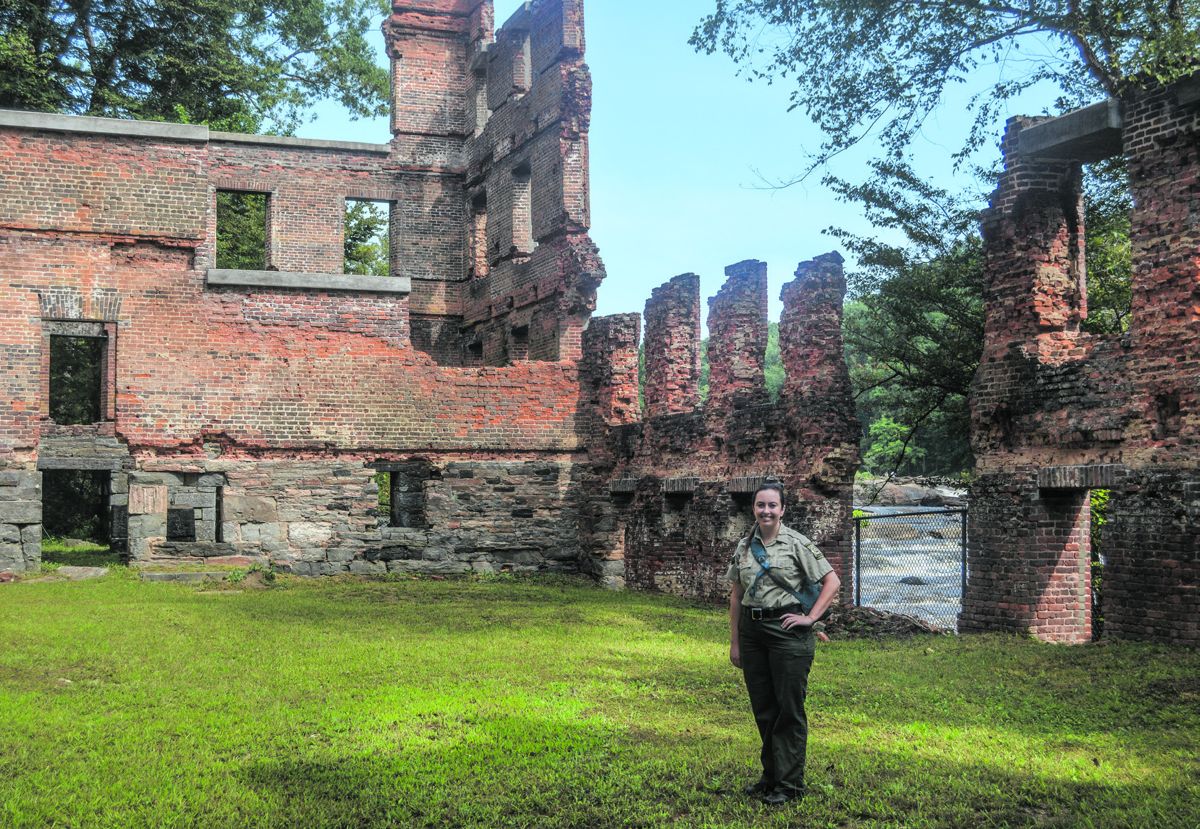
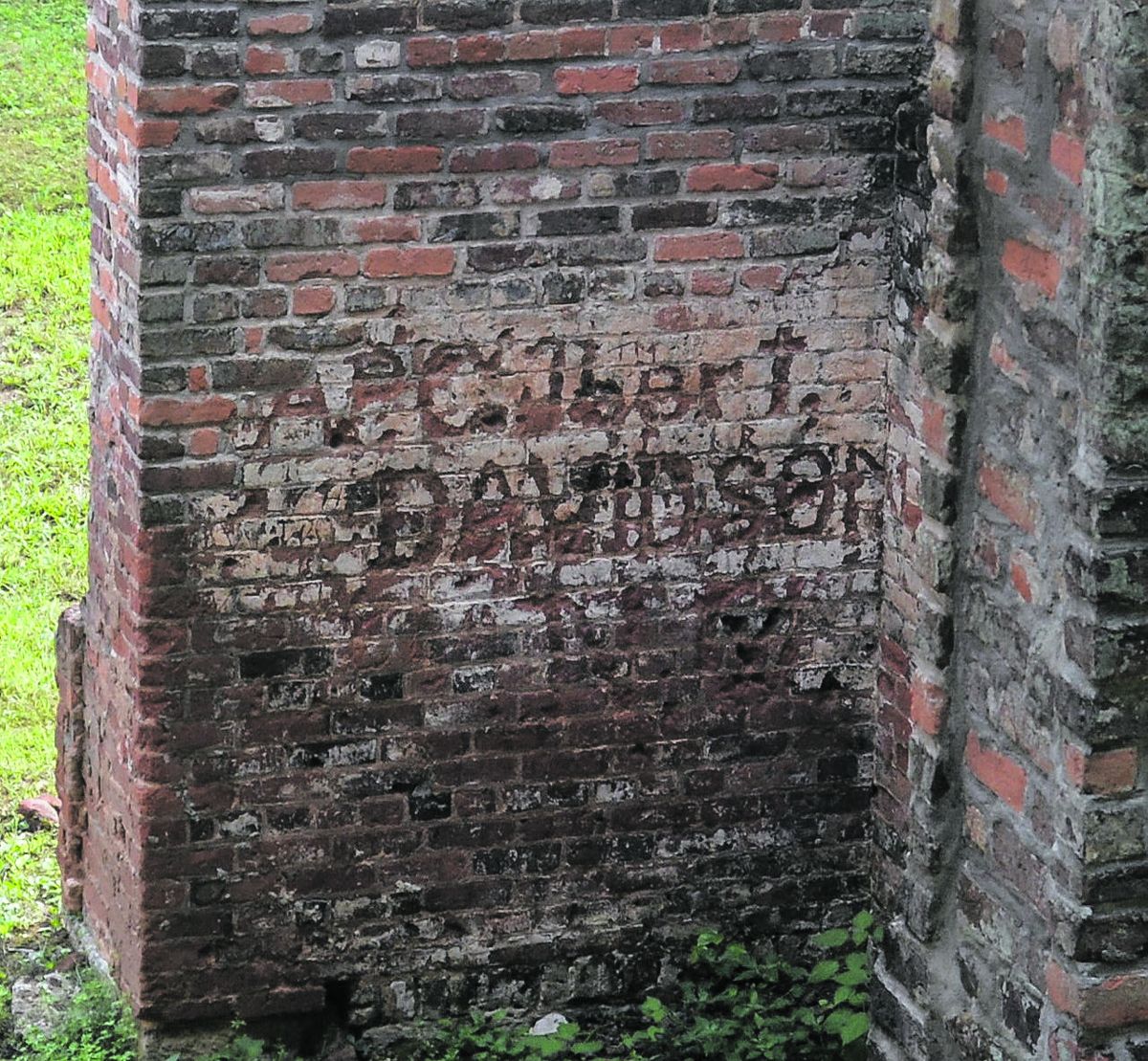
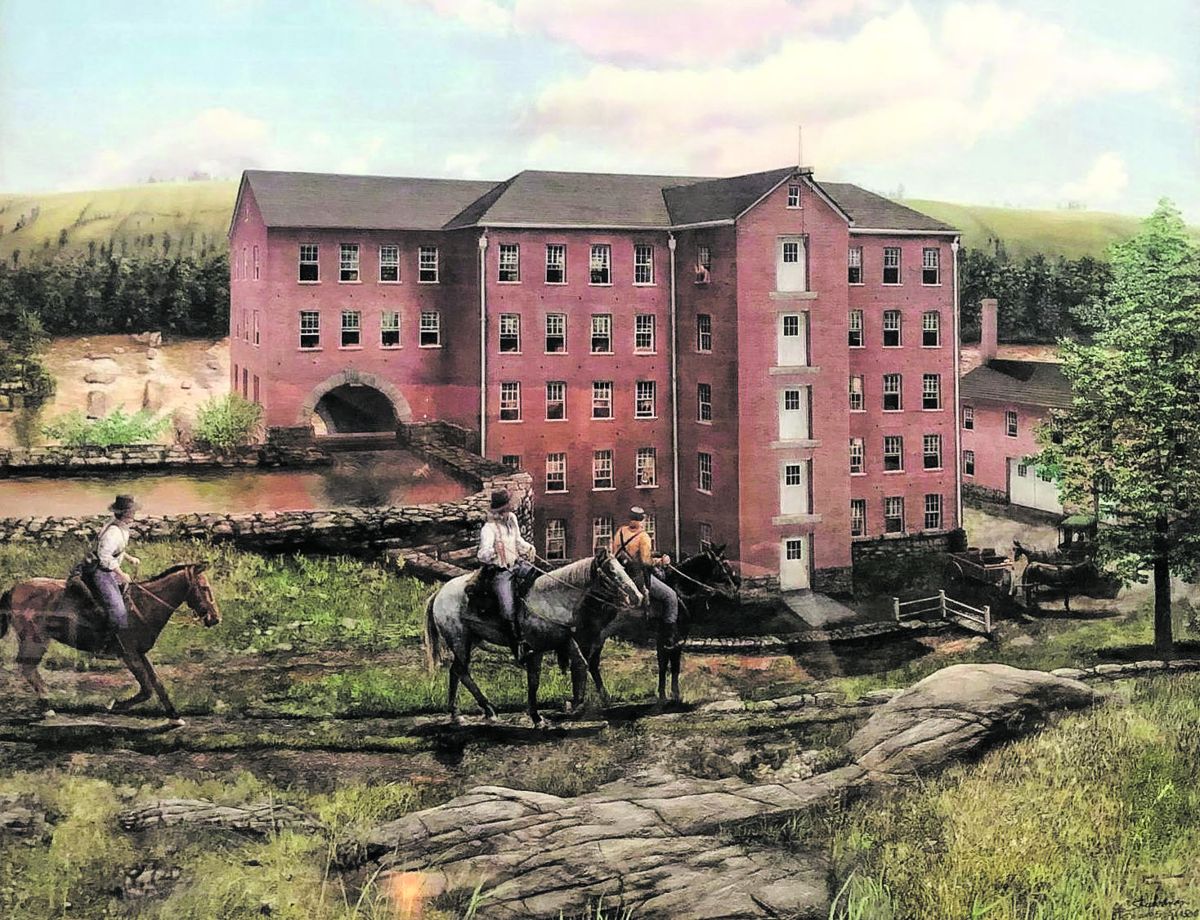
Sarah Kelehear, an Interpretive Ranger at Sweetwater Creek State Park, has degrees in biology and environmental science. Her work at Sweetwater involves teaching visitors about the wildlife and ecology in the large and popular park, which, she told me, has more day visitors than any other Georgia state park. I learned about wildlife as Sarah and I walked from the visitor center to the swift-running creek. She pointed out some cicada shells stuck on a pine tree. “These are the normal yearly ones,” she said with assurance. We stopped to watch a hornet buzzing around a root that crossed the path. “They have been hanging out at this little sap site,” Sarah said with equal certainty. Then we encountered some cicada killer wasps, which (I read later) pose no danger to humans. Building on her knowledge of wildlife, Sarah is now learning, and teaching, about the history associated with the park, where she began to work in 2020. After leaving the cicada killers, we passed a partly demolished 19th-century dam that still diverts water into a mill race. At the end of the mill race we came to the ruins of a textile mill which, during the Civil War, was owned by the New Manchester Manufacturing Company. In 1864 Federal forces burned the mill and other facilities in the small industrial settlement. The mill was never rebuilt; the town died, and the lives of scores of mill workers and others were wrecked. Built in 1849 as a spinning mill, the factory was expanded in 1860 to produce fabric as well as yarn. During the war the mill produced material for the Confederacy. It was therefore a target for Sherman’s army, as were the civilian hands. The cotton mill was not the only industry in Sweetwater. An enterprising farmer named Angus Ferguson owned a sawmill, a brickyard, and a quarry, all of which supplied building materials for the expanded mill. Ferguson also ran a grist mill. The town, known as Sweetwater or Factory Town, had a general store, owned by the Humphries brothers. The town saw enough business travelers to support an inn. Campbell County, in which the town was located, had a population of 8,301 in 1860. There were few slaves in the Sweetwater area, and many people, including Ferguson, were pro-Union.
During my visit Sarah described life in the community and its vicinity, an area dominated by small farms. “The mill workers were the children of the local farmers, so their sons and daughters were the people drawn to the mill. The farming community persisted, while the mill was going on, and throughout the war, and after the war too, after the mill was gone.” E.B. Long’s Day by Day will tell you that on July 3, 1864, there was a skirmish at Sweetwater Bridge, mentioned in the same short sentence with three other skirmishes in places most Civil War buffs have never heard of. If you read the Official Records, you will find a few references to Sweetwater Creek and Factory Town, brief mention of cavalry movements in the area, but nothing about the fate of the town and its people. The town was about 20 miles west of the railhead in Atlanta, whence the cotton was transported to the mill by wagon. Kennesaw Mountain lay about the same distance to the north. It was from this direction that the Yankee cavalry came. Though distant from fighting prior to the Atlanta Campaign, the community was very much involved in the war from the start. Many local men joined the Campbell Salt Springs Guards and the Campbell Sharpshooters, companies which, in the 30th and 41st Georgia, saw hard service in different theaters, including the Atlanta Campaign and Hood’s Tennessee Campaign. Other local men avoided service by hiding out in the surrounding woods. According to Sarah, they were “oftentimes aided by the local community in their efforts.” There was also a local defense unit, which never clashed with Yankees but rather dealt with desperate locals driven to looting by the hardships born of the War. In January 1864 a mob of men and women attacked the factory, hoping to take materials and supplies which they could use or with which they could barter. The guards managed to defend the mill without bloodshed. As Sherman’s armies drove south into Georgia, and his cavalry neared Sweetwater in the last week of June, the mill’s superintendent shipped out all the finished product then shipped out himself. “He took anything that was in the safe—money, deeds, and documents—and left,” Sarah said; he also left orders to keep working. “Did it cause any resentment when the boss left?” I asked. A naïve question, I know. “Oh, yeah. I am sure they hated him.” The operators were still at their machines, following the superintendent’s orders, when Col. Silas Adams and his troops appeared. Adams issued some orders of his own: he told the hands to take a break and told his men to disable the mill’s machinery. He and his men stuck around for a week or so, foraging for supplies, foraging “liberally,” according to the preferred euphemism. On July 9 Maj. Haviland Tompkins arrived with orders to destroy the mill and arrest the workers. The mill went up in flames. The burning of the mill was probably expected, but it seems to me that the order to arrest the workers must have been a surprise to everyone. Sherman ordered the arrest of the workers in Roswell at the same time, something the Sweetwater people could not have known about. As far as I am aware, such arrests were unprecedented in the Civil
War. Had the workers known or suspected Sherman’s intentions, it seems they would have tried to get away, to go to their family farms, or to hide out in the woods with the deserters and draft dodgers. They didn’t; instead, they listened in horror as Tomkins said “get your children and pack up, we leave in 15 minutes.” In wagons, on foot, or on horseback riding double with their captors, the prisoners trekked to the railroad in Marietta, 16 miles away. The arrested mill workers and their children were taken by train to Louisville. It was a hard journey. “Some died along the way,” Sarah said. “There was a woman who gave birth in one of the rail cars and she perished during childbirth.” Most deportees were released in southern Indiana, turned loose among strangers, without family, friends, or means of support, in an area already overburdened with refugees and few opportunities for employment. Their treatment led to harsh criticism in the Northern press. A newspaper quoted in an article in the Blue and Gray Magazine (December 1994) described children as “living skeletons, perishing for want of proper care.” A Cincinnati paper stated that “the capture was a novel one in the history of war.” A New York paper expressed dismay that a major general in the United States Army could disregard the “commonest dictates of decency and humanity” and drive these “penniless girls hundreds of miles from home and friends to seek their livelihood among strange and hostile people.” Another New York paper claimed the children were “rosycheeked” and the families’ quarters “clean and airy,” but one must wonder if the reporter saw the children or visited their rooms. In her 2007 book, The Women Will Howl, author Mary Deborah Petite offers vivid descriptions of these unfortunate women and children, destitute and desperate, poorly clothed and without proper shelter, starving and facing the harsh northern winter. According to Petite, after the war ended the following spring, a significant number of deportees returned to Sweetwater or elsewhere in Georgia. However, the fate of many is unknown. There was no record kept that would enable researchers to identify all the women and children taken or even to ascertain their numbers.
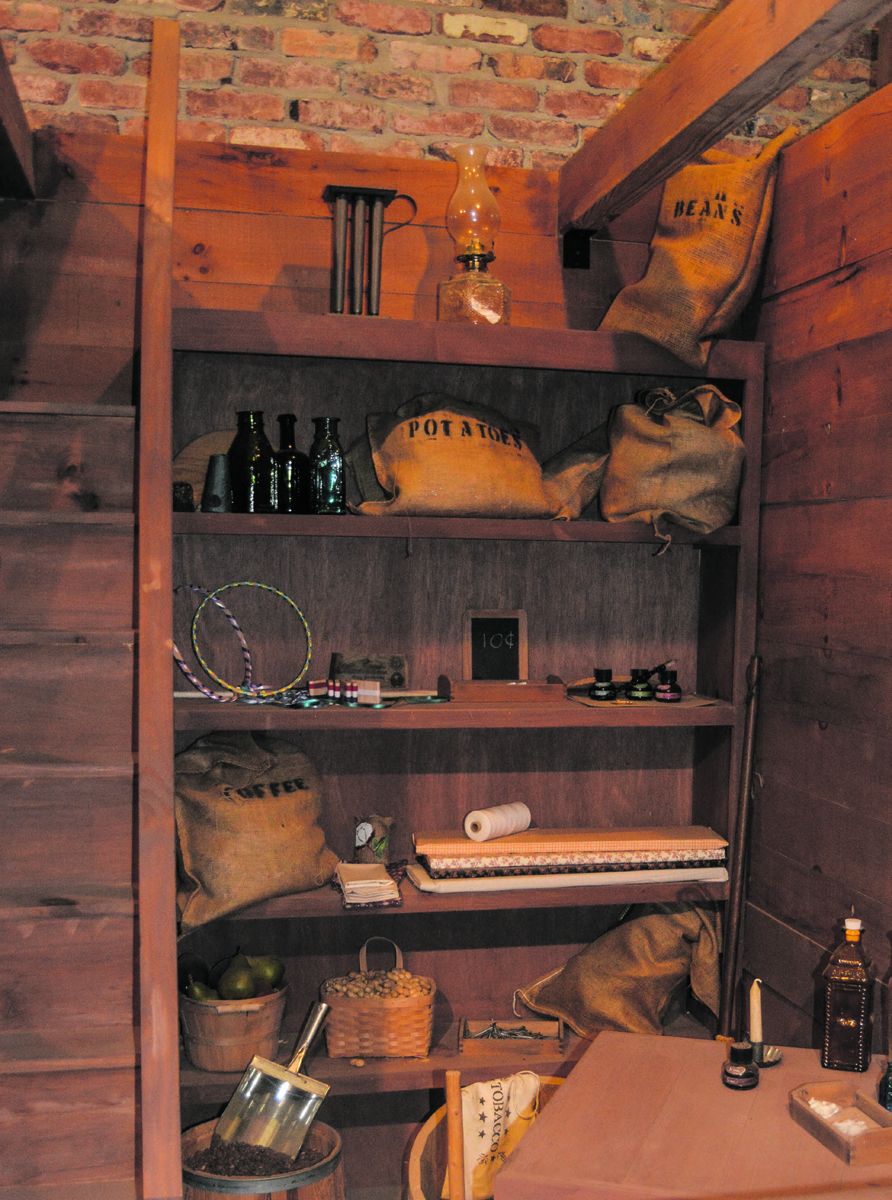
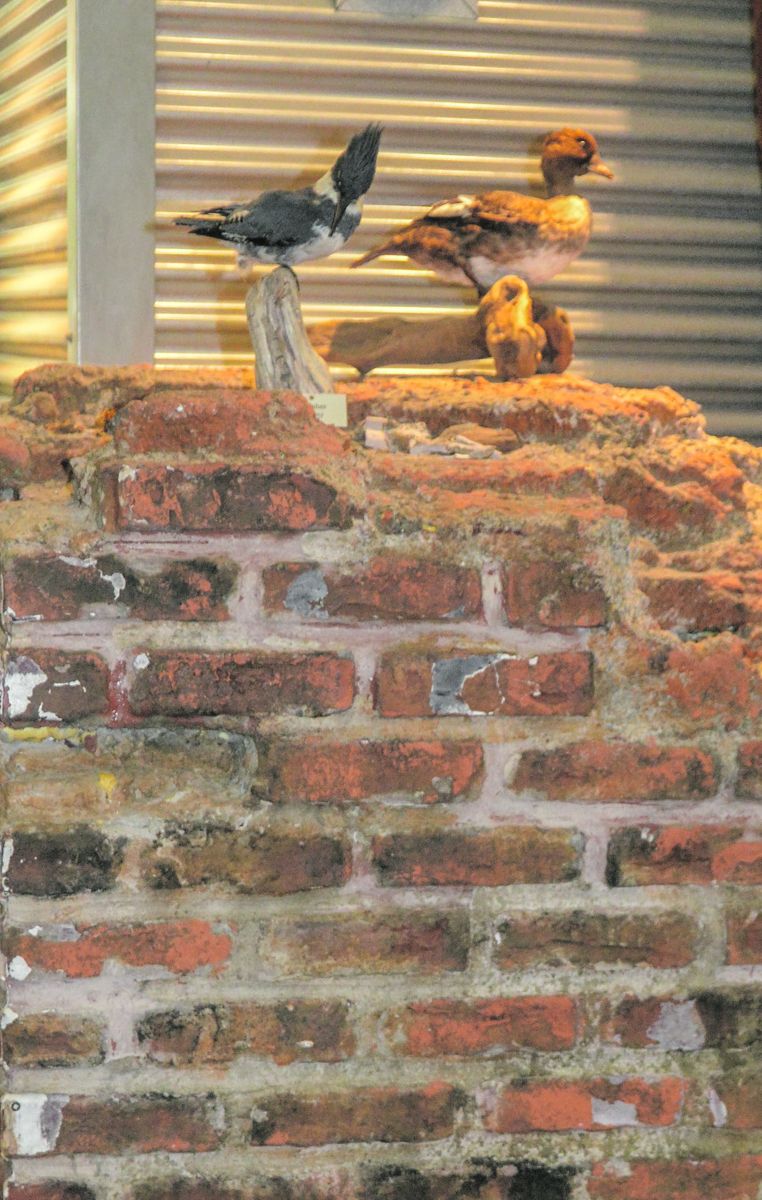
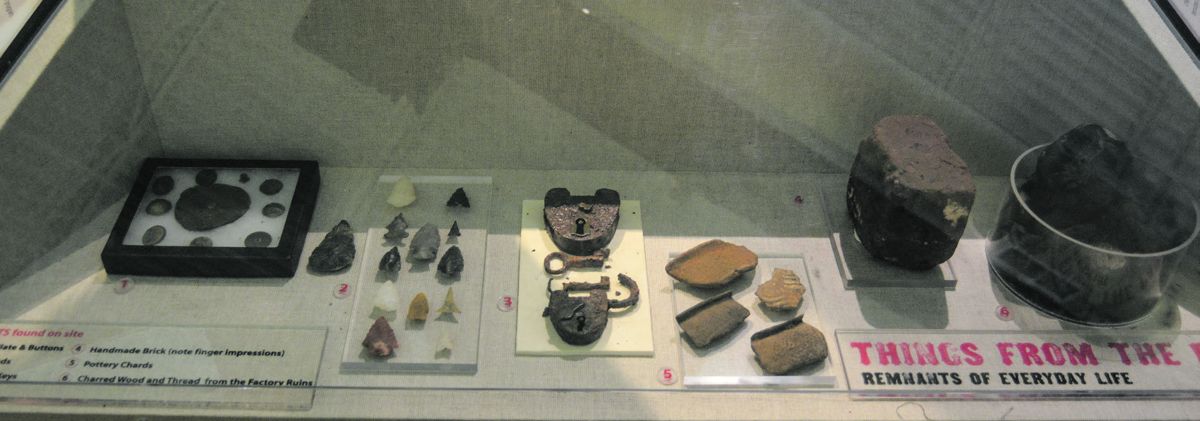
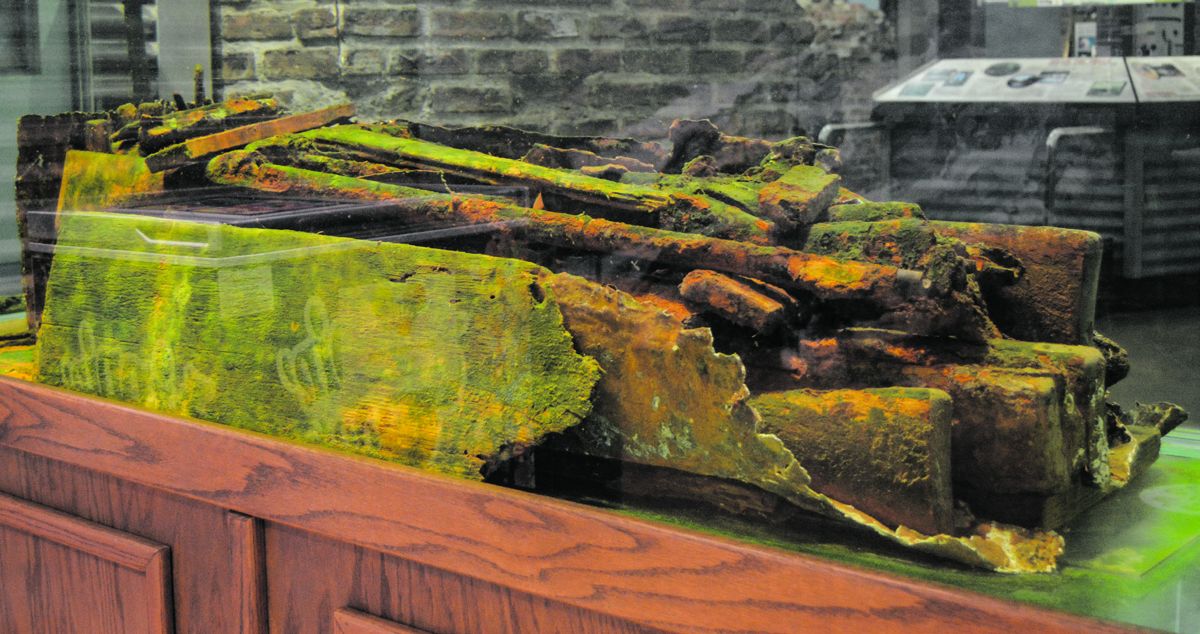
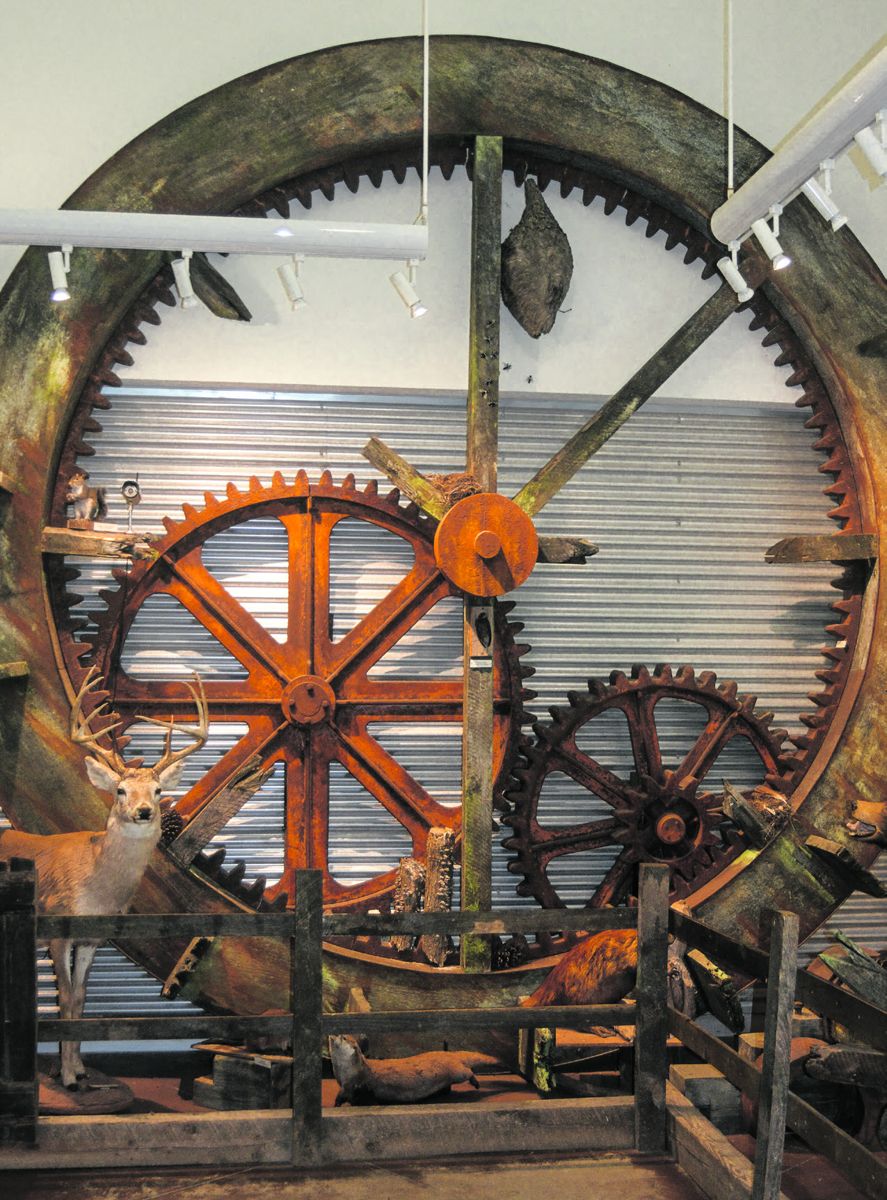
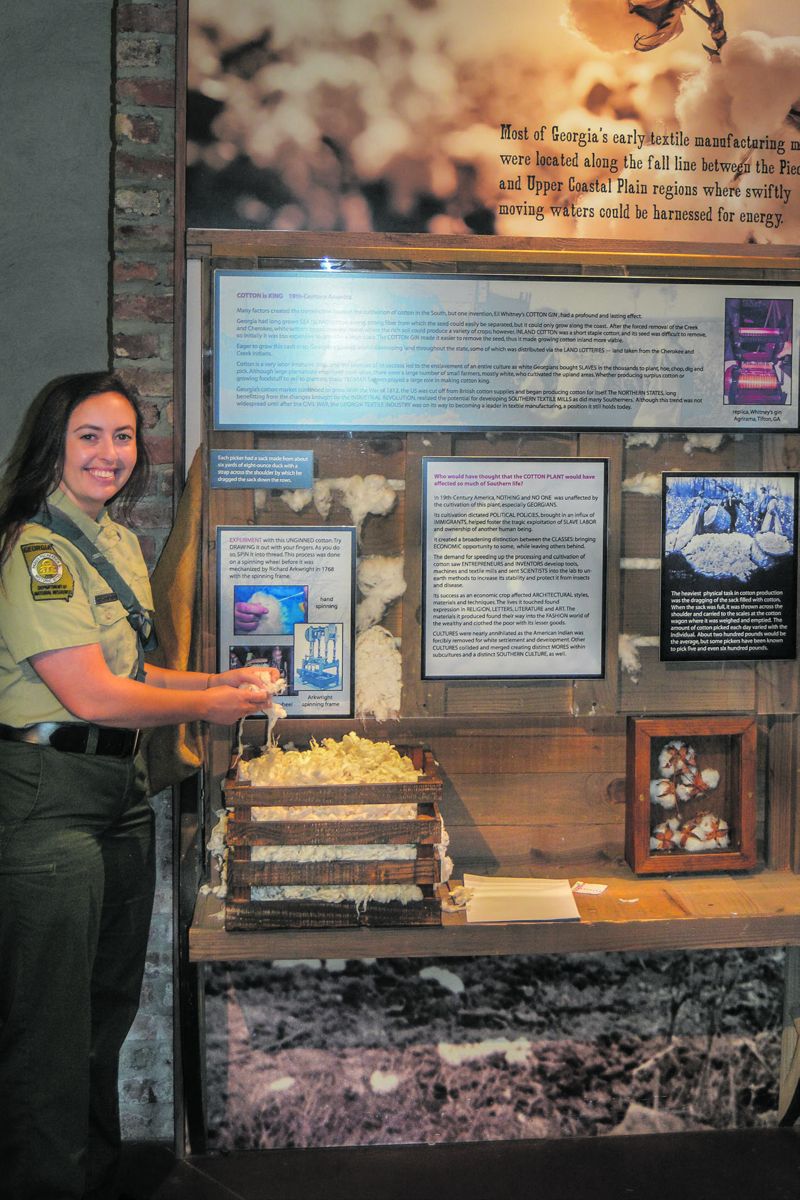
The visitor center at Sweetwater contains many interesting exhibits and artifacts related to the history of the town, the townspeople and the mill; the Civil War; the area’s wildlife; the area’s early Indian inhabitants; and even leftover props from movies and television commercials made at the park.
Petite estimates that between 150 and 200 women and children were deported. Some can be accounted for through various sources, but an unknown number of others are lost to history. Who were they? Where did they go? What did they do? Who survived the war and who didn’t? These are questions that will never be answered. For the captured men more is known. Forty-three in number, they were classified as political prisoners and were locked up in the Louisville Military Prison, where records were kept. Of these, 23 returned to the Sweetwater area. A chance encounter enabled one Sweetwater family to beat these heavy odds. Walter Stewart, who served in the Salt Springs Guards, was captured in battle near Atlanta on August 3, 1864. According to Petite, when the train carrying Walter and other prisoners stopped in Louisville, he was by chance spotted by his nine-year-old daughter Synthia and his brother-in-law, who were among the deportees. Walter was permitted to speak with his wife Charlotte Elizabeth. He told her he would be taken to Camp Chase; she took a loyalty oath and stayed in Louisville. After Walter’s release the following May, he and his family reunited and returned home.
“Walter saw his family again, which didn’t happen for a lot of these people,” Sarah Kelehear said. Synthia Stewart Boyd said the same thing, in an interview decades later. “Most were not as fortunate as we were.” Gould Hagler is a retired lobbyist living in Dunwoody, Ga. He is a past president of the Atlanta Civil War Round Table and the author of Georgia’s Confederate Monuments: In Honor of a Fallen Nation, published by Mercer University Press in 2014. Hagler speaks frequently on this topic and others related to different aspects of the Civil War and has been a regular contributor to CWN since 2016. He can be reached at gould.hagler@gmail. com.
Correction: The October 2021 “This and That” column misidentified Charlie Crawford as president of the Georgia Battlefields Association. Crawford is a past president. The current president is Dr. Joe Trahan.