Haiman Field & Staff Officer’s Sword
By Shannon Pritchard · Originally published December 2021 · pp. 32–33
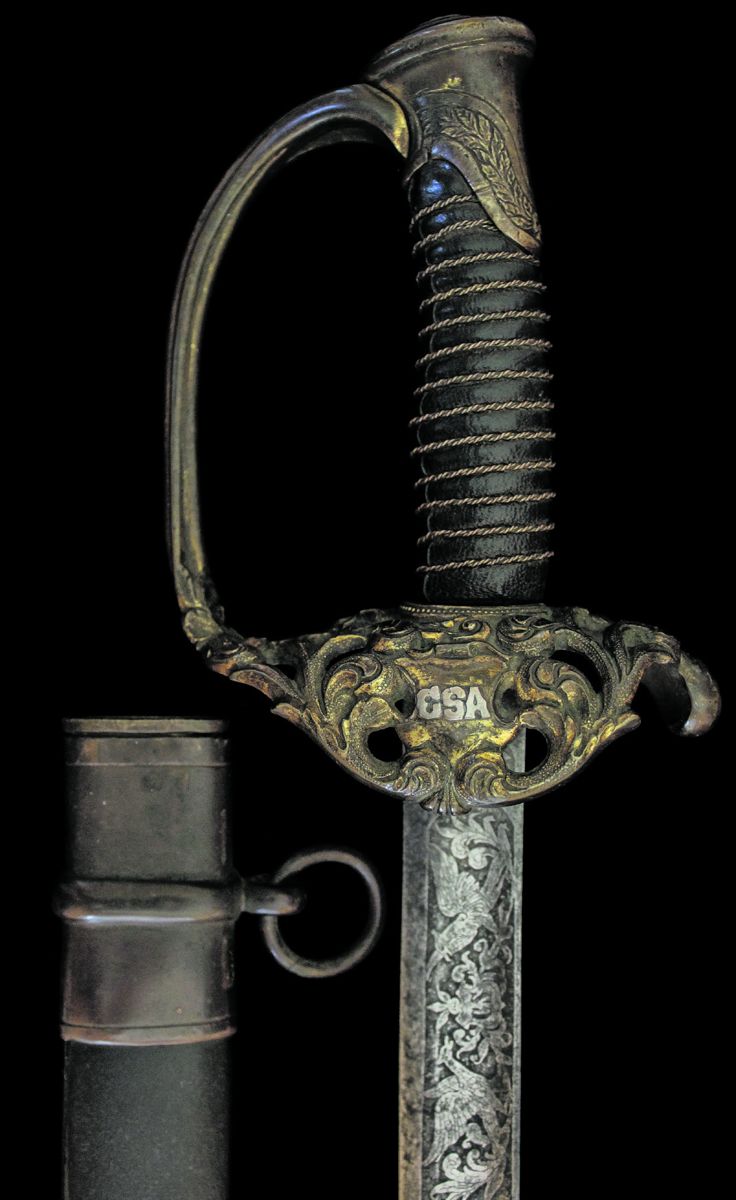
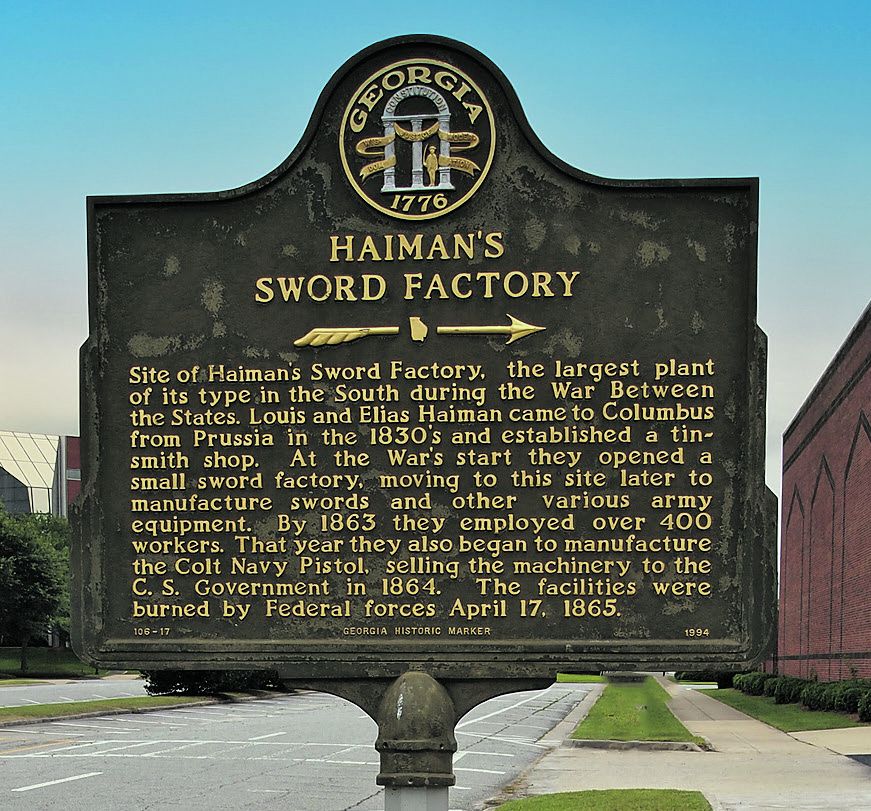
Columbus, Georgia, sword makers Louis and Elias Haiman operated the largest sword manufactory within the Southern Confederacy. They rented the top floor of a building at the corner of Thomas and Short Streets, right beside the Haiman Armory. Here they set up the Confederate States Sword Factory. They produced more cavalry swords for the Confederacy than all other manufacturers combined. They also made some of the finest officer’s swords of the Confederate era, though only a very limited number. The officer’s swords were made not for the Confederacy, but for retail to Confederate officers. They were etched by a local Columbus jeweler by the name of Spear, or a man named Kinsel. The Haiman’s sold their officer’s sword at a street level showroom on Broad Street. The company advertised “at reasonable prices for officers and sergeants, finished in the best quality for sale at the Confederate states Sword factory of Columbus, GA. We can furnish officers swords with belts for $25 or $22 if four were ordered in one lot. Our swords are tested according the rules laid down by the Manual of War.” The company also produced brass belt plates and cartridge boxes, leather bayonet mountings, camp stove parts, shotgun bayonets, rifle bayonets, wagon covers, mess plates and tin cups. Even though they had a contract for 10,000 revolvers very few were produced. With the exception of their relatively common enlisted cavalry sword, Haiman swords are extremely rare and beautiful. The artistry and quality of their etching is second to none. This field & staff officer’s pattern by Haiman is one of the most desirable of all Confederate Full length reverse side Haiman & Brother officer’s sword.
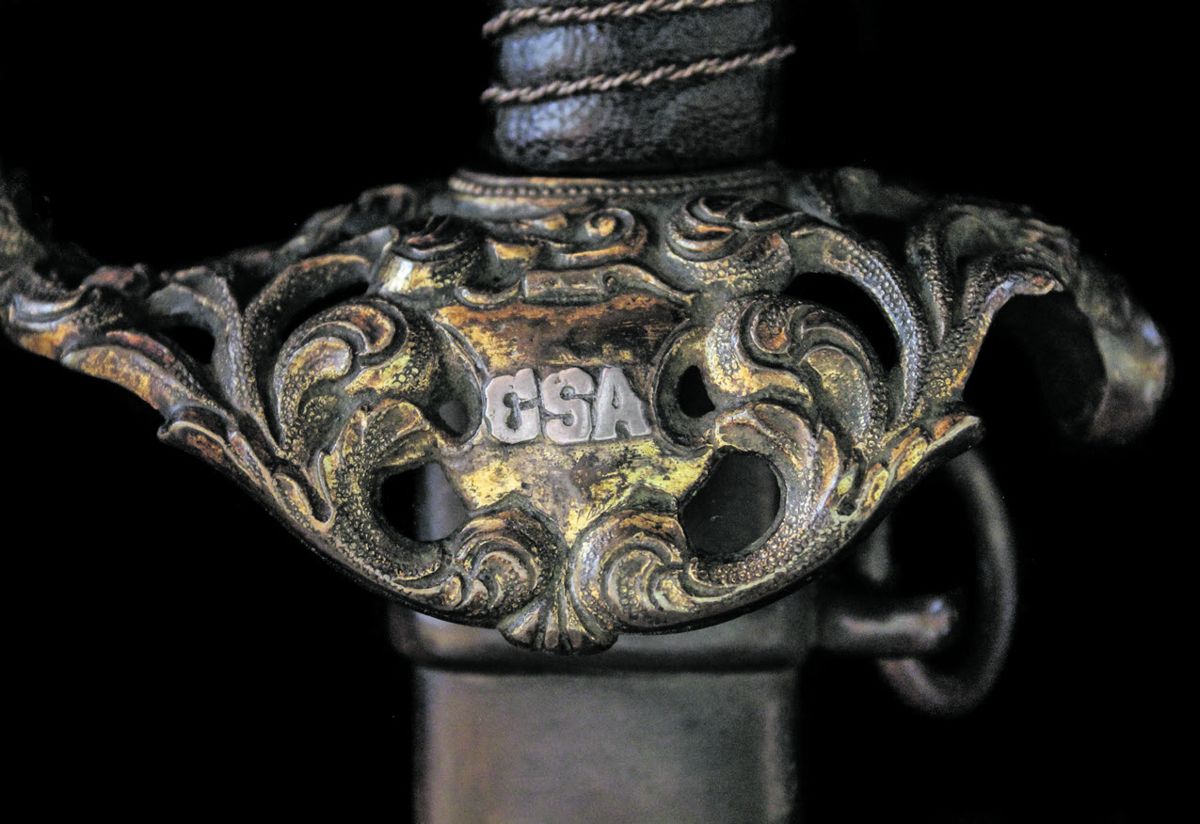
swords, both because of the prominent CSA inlaid into the counterguard, and the overall elegance of the design. This is a beautiful example of their work. The condition is stellar. The hilt remains tight, the grip wrap and doubled and triple twisted brass wire are one hundred percent complete and in beautiful condition.
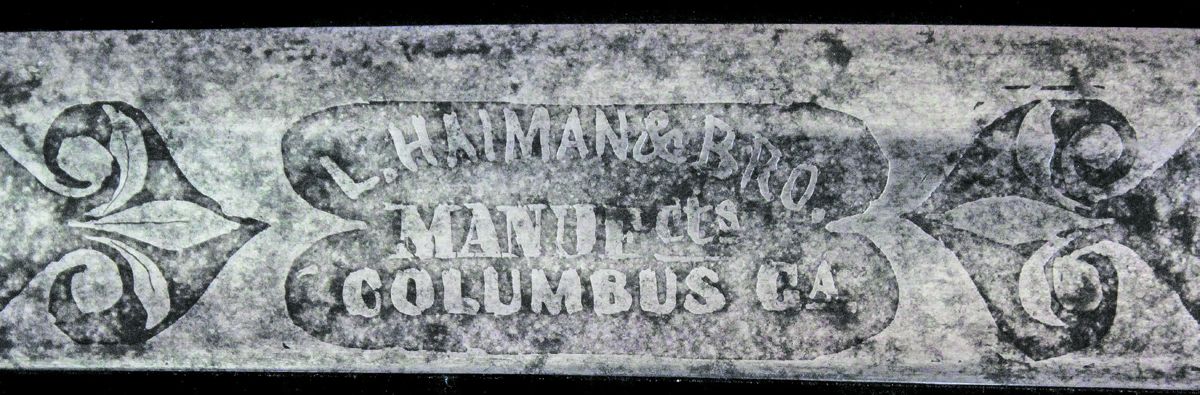
The blade has a very large etched panel that reads: “L. HAIMAN & BRO. MANUFcts COLUMBUS GA” The etching is done in deep relief; after etching, the artist did extensive chasing to highlight the detail. The etching artist decorated the blade with Greek symbolism; one panel displays the Confederate “CS” between two phoenixes.
Greek mythology decreed that the ancient mythical creature, the phoenix, a legendary bird, would live for 500 years. Near the end of its life, the phoenix would build a funeral pyre for itself, and as it began to die, it would lay down on the wood and burst into flames, consumed by the fire. Immediately the phoenix would re-emerge, renewed from the purifying ashes, more beautiful and regal than before. This symbolized the death of the United States as founded and the rebirth of the Constitution within the Confederacy, more perfect than the original. Another panel features a Gorgon. The Gorgon, according to the legend, was an ugly, terrifying monster with wings,

Shannon Pritchard has authored numerous articles relating to the authentication, care and conservation of Confederate antiques, including several cover articles and is the author of the definitive work on Confederate collectibles, the widely acclaimed Collecting the Confederacy, Artifacts and Antiques from the War Between the States, and is co-author of Confederate Faces in Color.
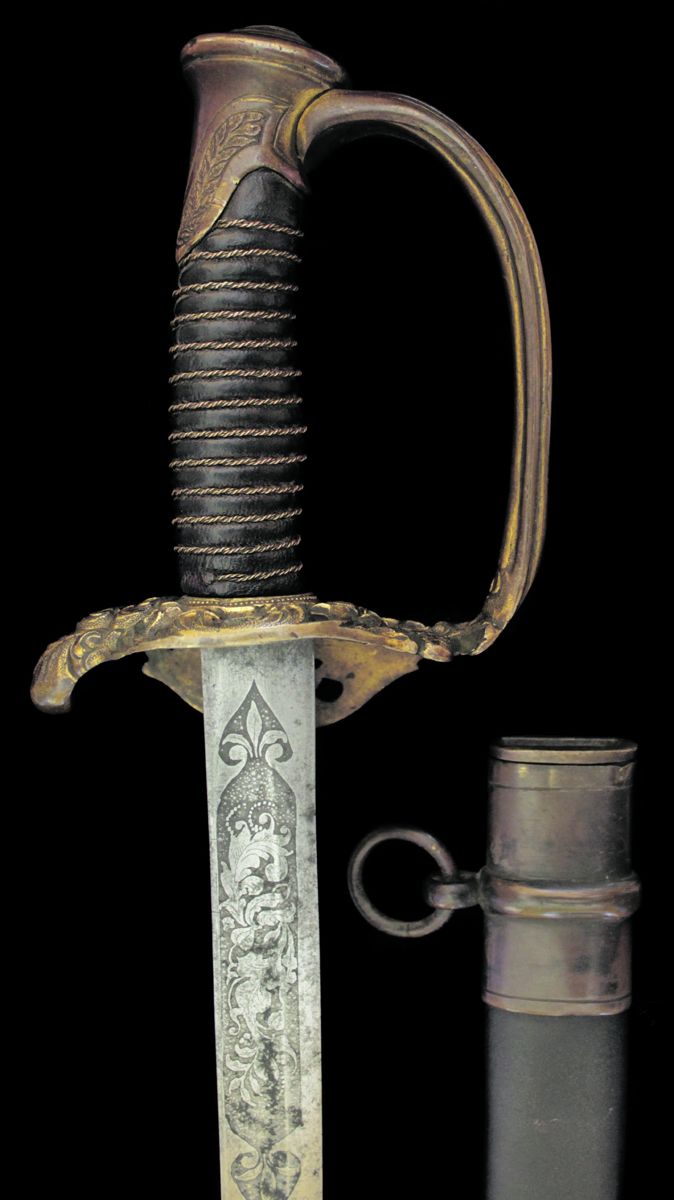
One of the smaller panels that make up the full-length panel.
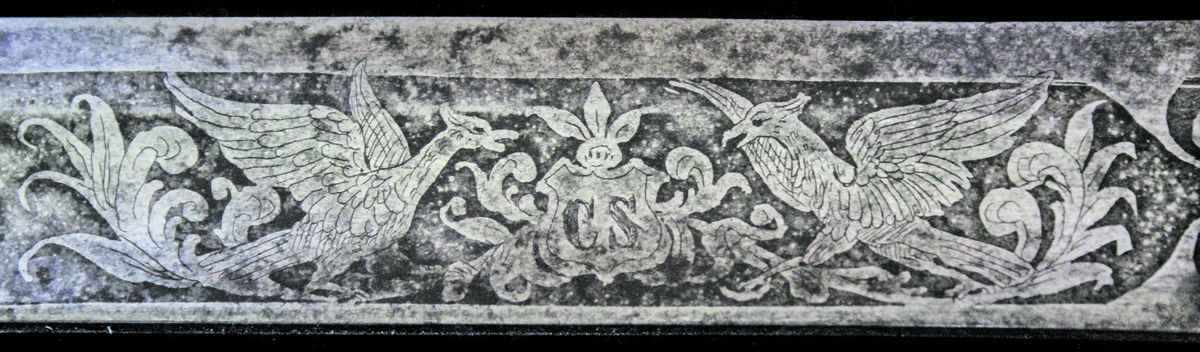
Gorgons were vicious monsters who remained undefeated, since anyone who saw their faces were instantly turned to stone. sharp claws and fangs, and a body covered with scales like a dragon. They had deadly smiles and staring eyes. Gorgons were vicious monsters who remained undefeated, since anyone who saw their faces was instantly turned to stone. Other panels feature rococo leaf and vine patterns. The brass on both the sword and scabbard has the perfectly beautiful tone so desired by collectors.
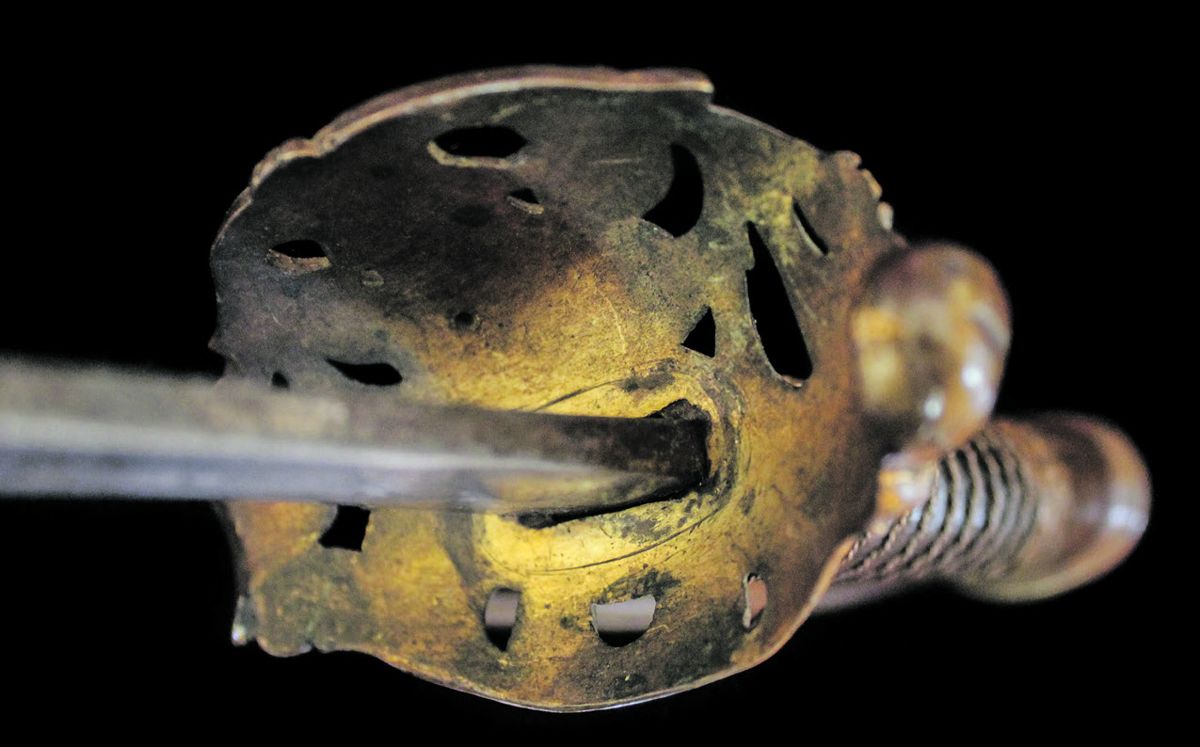
Marker at site of “Haiman’s Sword Factory, the largest plant of its type in the South during the War Between the States, Louis and Elias Haiman came to Columbus from Prussia in the 1830s and established a tinsmith shop. At the War’s start they opened a small sword factory, moving to this site later to manufacture swords and other various army equipment. By 1863 they employed over 400 workers. That year they also began to manufacture the Colt Navy Pistol, selling the machinery to the C.S. Government in 1864. The facilities were burned by Federal forces April 17, 1865.”