
The Graphic War
Civil War Santa
By Salvatore Cilella · Originally published December 2021 · pp. 28–29
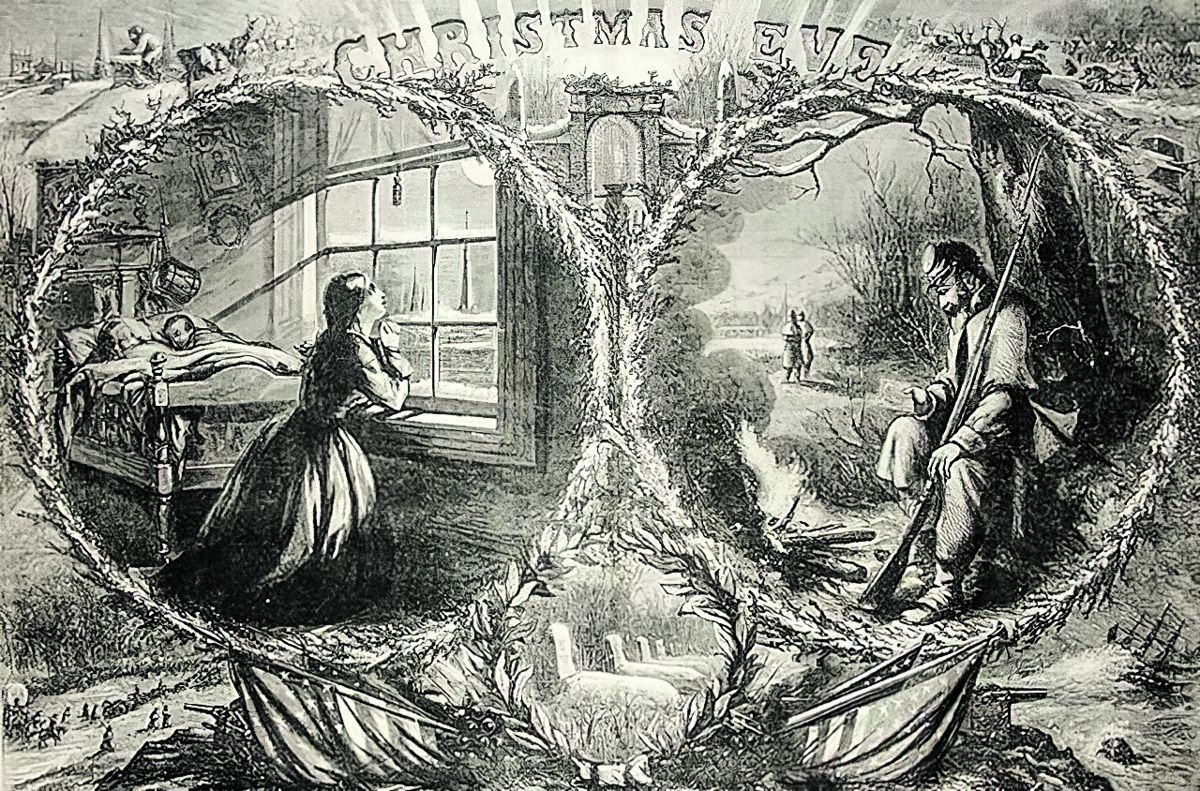
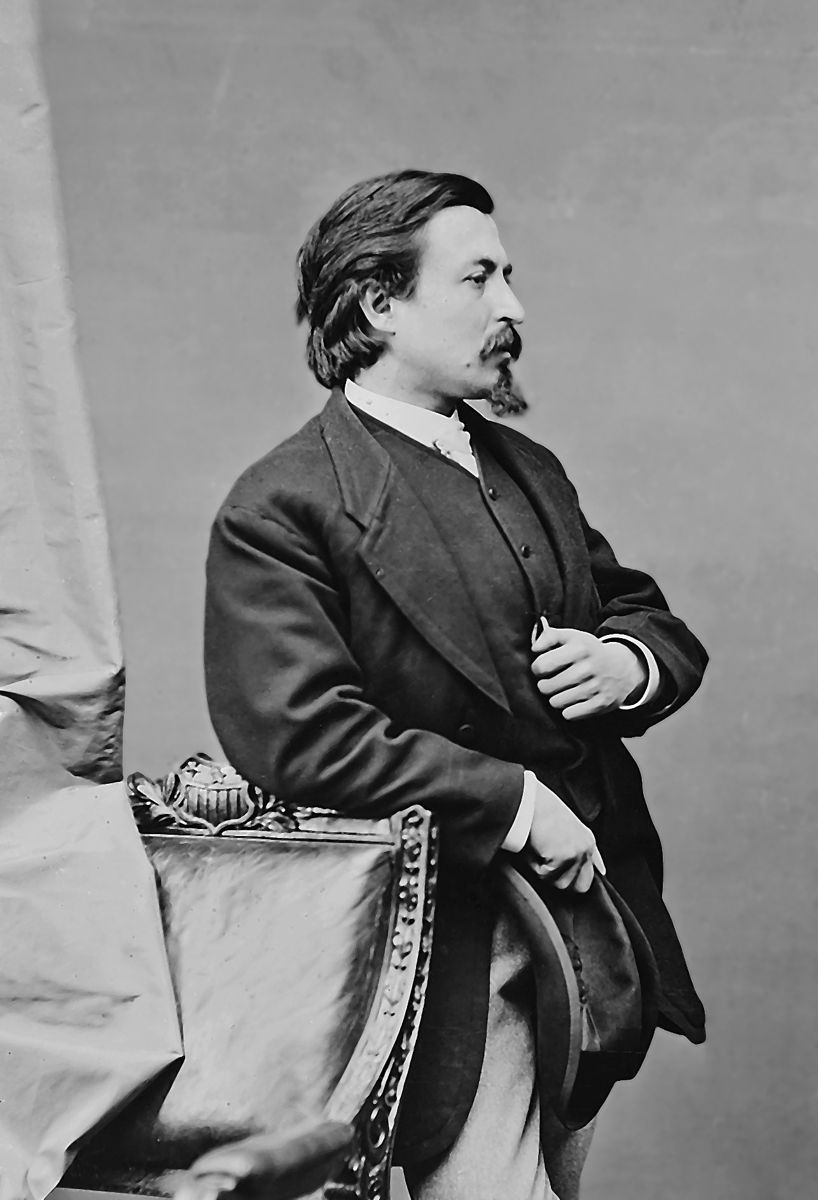
The Graphic War highlights prints and printmakers from the Civil War discussing their meaning and the print maker or artist’s goals. The Victorian and thus, our version of Santa Claus, came from the pen of Thomas Nast while working for Harper’s Weekly in the middle of the Civil War. On January 3, 1863, the magazine published two Nast cartoons that began the mythologizing of Christmas and Santa. Predictably, both treatments featured Federal soldiers in the field. Normally this column does not feature artwork produced during the 19th century by periodicals such as Harper’s Weekly, The Illustrated London News, and Frank Leslie’s Illustrated Newspaper. We have devoted our columns solely to single sheet artwork produced by lithographers and engravers, work destined to be sold to adorn the walls of the homes of the middle and upper classes. Periodical publications relied on small, wood engraved blocks that were “ganged” together to produce a complete picture. Several different engravers may have worked on one piece carefully translating the artist’s intent eventually on newsprint. Because they were considered more newsworthy than artistic, they were considered ephemeral and treated less carefully. Thomas Nast came to Harper’s in 1862, after stints with The Illustrated London News and
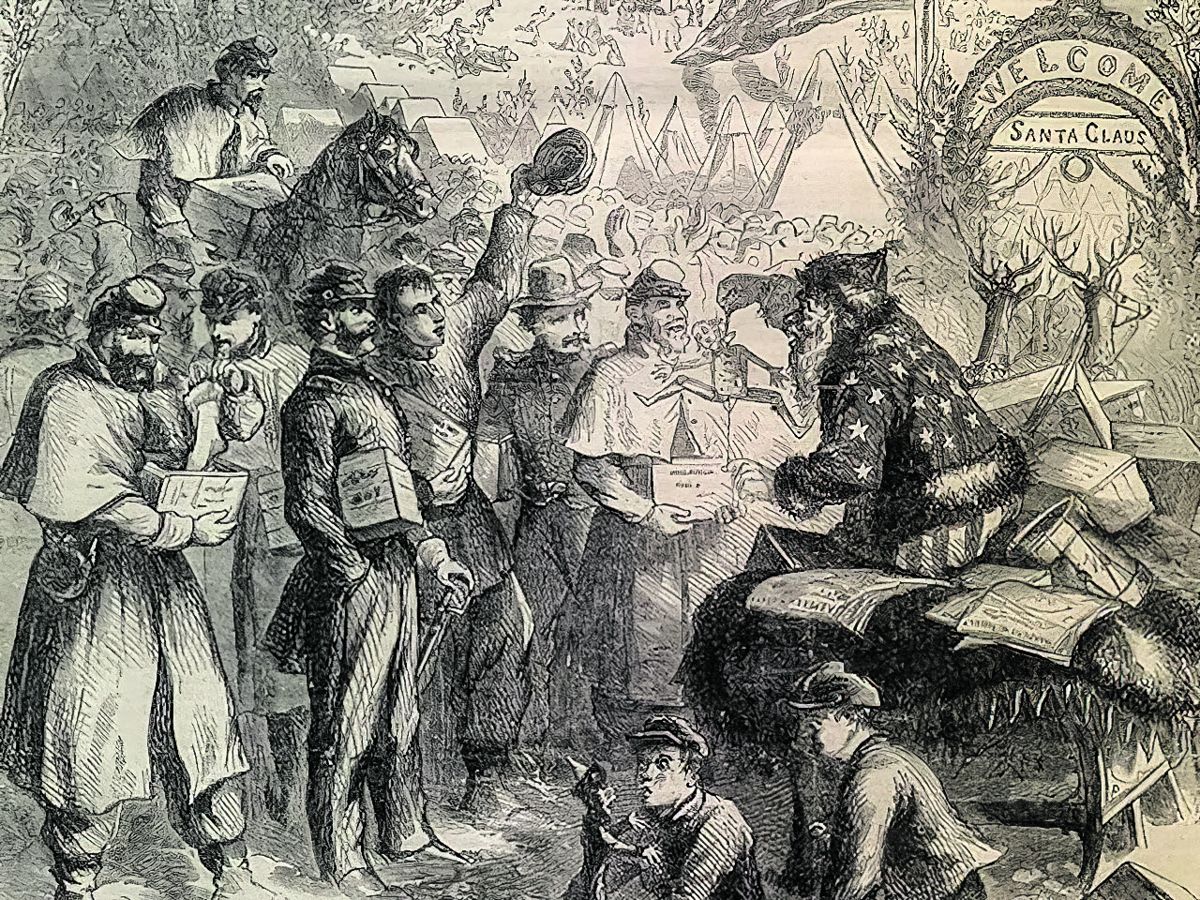
Frank Leslie’s Illustrated Newspaper. Like other artists of the period, he was an immigrant from Germany. He became an instant star on the Harper staff of illustrators. In his more than 30year career, with biting clarity in his cartoons, Nast took on the Boss Tweed gang in New York with his rendering of the Tammany Hall tiger. He was the originator of the Republican Elephant; popularized the donkey for the Democratic party; and supposedly gave life to the image of Uncle Sam. He detested Irish immigrants and spewed anti-Catholic rhetoric, but championed the rights of Chinese Americans and the American Indian. He abhorred slavery and actively campaigned against the Ku Klux Klan but was an ardent segregationist. This complicated man’s most enduring legacy was his image of Santa Claus. Santa was a joyful concoction of the Dutch “Sinterklaas,” the English Father Christmas, and Saint Nicholas. Nast introduced him in 1863 but he did not become a staple of American folklore or tradition until well into the 1880’s when he appeared almost regularly for a decade in Harper’s. As noted, Santa was born as an icon in the midst of the Civil War. He had been introduced earlier in the century in the 1823 poem “A Visit from St. Nicholas.” Harper’s produced two Santa cartoons the issue dated January 3, 1863, but like most periodicals, it arrived early the previous week for Christmas1862. The first
features Santa, not at hearth and home, but in a Federal army camp visiting the boys in blue. Harper’s saw fit to feature it on the issue’s cover and appropriately titled it “Santa Claus in Camp.” Sitting atop a sleigh filled with presents, a “Union” Santa is dressed in the stars and stripes of the American flag. Soldiers with packages stand before him as he plays with a doll that is possibly Jefferson Davis hanging by the neck. Below, two young boys/soldiers play with a pop-up doll. A large sign to the right of the scene is clearly marked “Welcome Santa Claus.” Above all, in festive holly and greens, are the initials “U” and “S.” Inside on page 6, is a more somber and realistic view of
Santa, Christmas, and the war. As was the custom in many Victorian art presentations, Nast’s second rendering of Santa is made up of several vignettes. The two largest and therefore most prominent feature a lonely soldier on picket duty on the right, juxtaposed by a dramatic view of the home front on the left. It features a woman on her knees praying at the window while two young children sleep in the adjacent bed. Above both vignettes are the words “Christmas Eve.” Both are encircled by wreathes. Between and around the central figures, Nast tucked in further scenes symbolizing hope and reality. Across the bottom, from left to right are soldiers on the move, American arms and flags, a lonely graveyard, and fighting ships at sea. On the top, upper left, Santa is on a rooftop ready to descend a chimney, an image directly in line with “The Night Before Christmas.” In the upper right corner are troops in camp enjoying the holiday. It is an enormous amount of information packed into one dramatic narrative. Nast’s final Christmas cartoon for Harper’s ran in December 1886. Four years later he published Thomas Nast’s Christmas Drawings for the
Human Race. He passed away in Peru from yellow fever in 1902 and was buried in Woodlawn Cemetery, in the Bronx. Nast would be surprised, and perhaps pleased, that his concept of Old St. Nick, born in the dark days of the Civil War, persists to this day. After 43 years in the museum field, Salvatore Cilella devotes his time collecting American prints and maps and writing. His last professional position was President and CEO of the Atlanta History Center. His most recent books are Upton’s Regulars: A History of the 121st New York Volunteers in the Civil War (U. Press Kansas, 2009). His two-volume Correspondence of Major General Emory Upton, (U. of Tennessee Press, 2017), received the 2017–2018 American Civil War Museum’s Founders Award for outstanding editing of primary source materials. His latest book “Till Death Do Us Part,” an edit of Upton’s letters to his wife 1868– 70, was published in 2020 by the Oklahoma University Press.