
Through The Lens
A Military Mystery
By Stephanie Hagiwara · Originally published December 2021 · pp. 12–13
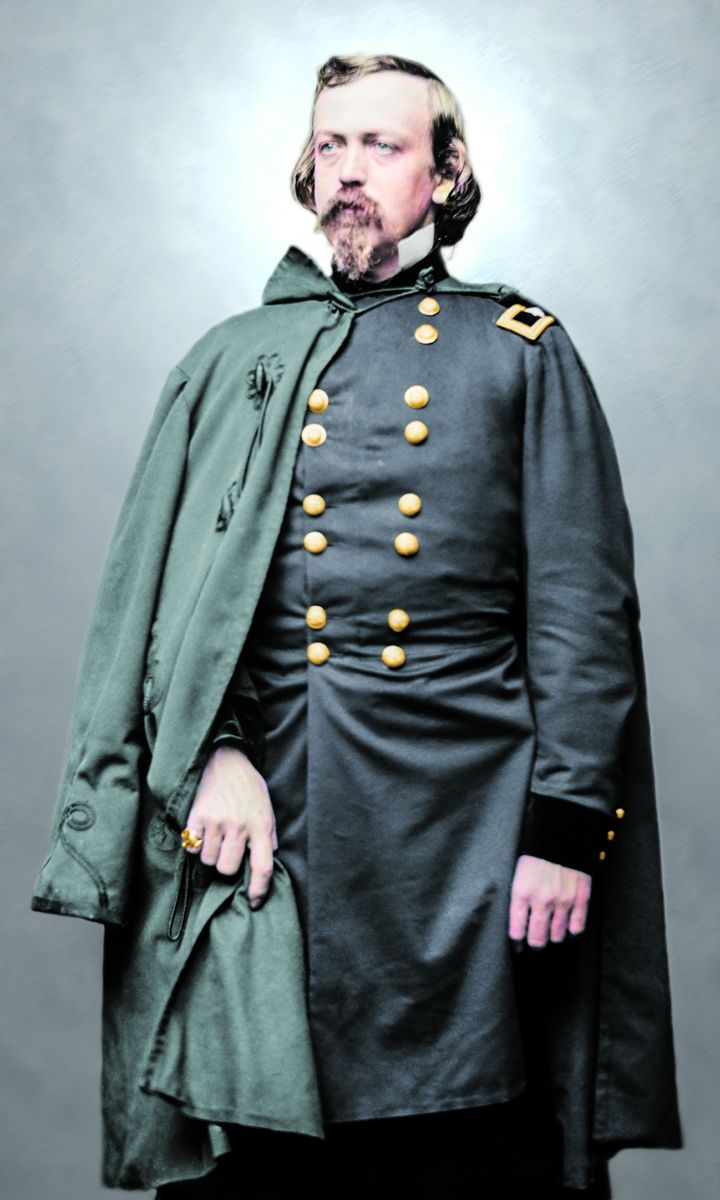
“That cursed Ball’s Bluff haunts the souls of our chiefs” – U.S. Brig. Gen. Alpheus S. Williams On Saturday evening, February 8, 1862, U.S. Gen. Charles P. Stone greeted an unexpected visitor to his home, longtime friend Gen. George Sykes. Sykes was accompanied by 18 men of Company B, 3rd U.S. Infantry. “Stone, I have now the most disagreeable duty to perform that I ever had; it is to arrest you,” Sykes said. “Arrest me!” exclaimed Stone. “For what?” Sykes did not know anything about the case, other than the arrest was by the order of generalin-chief George McClellan. “He added, ‘I may as well tell you that you are to be sent to Fort Lafayette.’ Looking back on the moment, Stone remembered his reaction as utter astonishment. ‘Why, Fort Lafayette is where they send secessionists!’” Surprise was as understandable as Sykes was “the first man mustered into service for the defense of the Capital.” On Dec. 31, 1860, Stone called on U.S. Gen. Winfield Scott to pay his respects and to ask if there was anything he could do for him. West Point graduate Stone had fought in the Mexican-American War and left the army in 1856. Scott requested that he organize and lead four militia companies as a security force for the capital and defend the government.
“These people have no rallyingpoint,” he told Stone. “Make yourself that rallying-point!” On Jan. 1, 1861, Stone was appointed colonel and inspector general for the District of Columbia. “Treason is all around and amongst us, and plots to seize the capital and usurp the government,” wrote future Sec. of State, William Seward before Lincoln’s inauguration. Loyalty was doubted everywhere, including Virginia born Scott’s. Despite organizing and recruiting a force to protect the capital and inauguration, Stone’s loyalty came into question after losing the Oct. 21, 1861, Battle of Ball’s Bluff, Va. Among the dead was Col. Edward D. Baker, a serving U.S. Senator from Oregon and family friend of the Lincolns, who had named their second son in his honor. Baker had had multiple premonitions that he would die in combat. He spent the day before the battle wrapping up his affairs including an idyllic visit with the Lincoln family at the White House. “Mr. Lincoln sat on the ground leaning against a tree. Colonel Baker was lying prone on the ground his head supported by his clasped hands,” as the pair swapped stories of days past. Undoubtedly, they discussed Baker’s pending promotion to major general with independent command of his own brigade. Baker had fought in the MexicanAmerican War and was looking forward to returning to the field. At the telegraph office Lincoln read the dispatch reporting
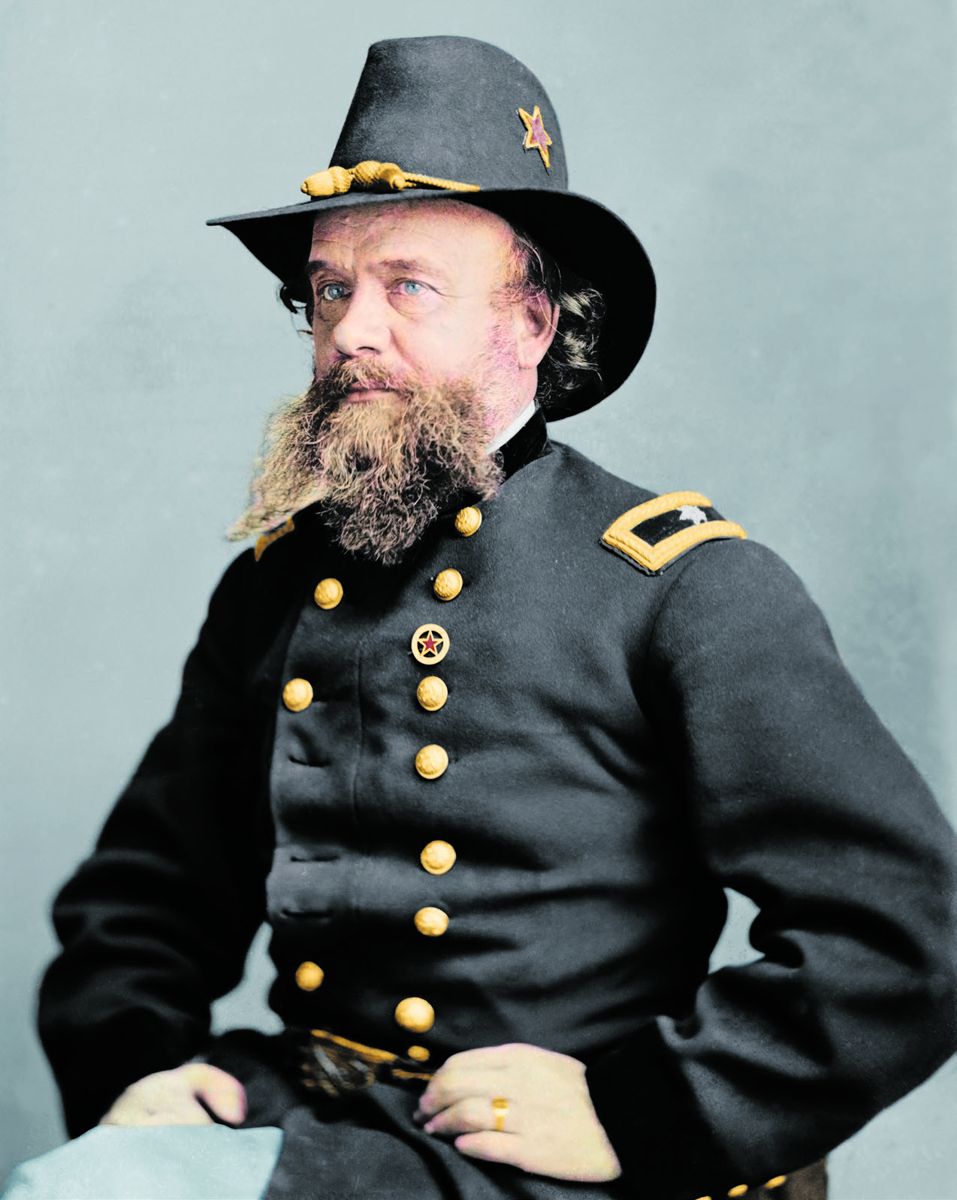
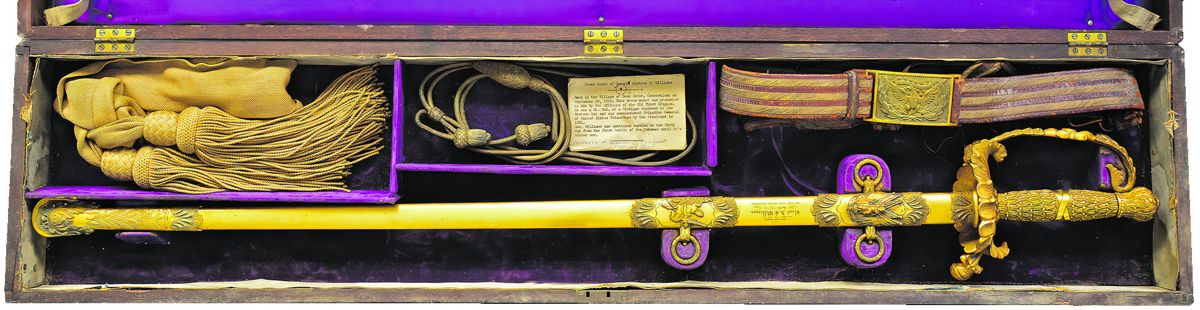
Baker’s death. “He looked stunned as he read it,” his personal Sec. John Hay wrote, and after a moment’s silence, with an “’expression of awe and grief’” he announced, “’Colonel Baker is dead.’” Lincoln later said that “the death of his beloved Baker smote upon him like a whirlwind from the desert.” In a circular to his division commanders, Gen. George McClellan wrote, “The disaster was caused by errors committed by the immediate Commander [Baker] – not Genl. Stone.” Baker had been tasked with a reconnaissance mission to determine whether to cross more troops across the rain swollen Potomac River or withdraw those already there. After visiting the site Gen. Alpheus Williams wrote, “One is filled with astonishment that any man of the least military pretentions should have crossed at such a place with such means.” Three months before the Battle of Ball’s Bluff, the Federals lost the First Battle of Manassas, Va., on July 21, 1861, and then the Battle of Wilson’s Creek, Mo., on August 10, 1861. The Northern public knew something had to be wrong and the newspapers echoed their sentiments. Frank Leslie’s Illustrated Newspaper, demanded to know who had sent Baker into the “jaws of death,” and insisted that “the ignorance or incompetence which directed the attempt is without excuse.” Adding fuel to the fire, the Confederacy announced in November 1861, that 14 P.O.W.s would be executed if Congress the U.S. Government executed 14 Confederate privateers held as pirates. Officers captured at Ball’s Bluff were on that list. In January 1862, Congress created the Joint Committee on the Conduct of the War. Headed by Ohio Senator “Bluff Ben” Wade, the Committee’s first task was to investigate Ball’s Bluff. McClellan knew they “want a victim and when they have once tasted blood, got one victim, no one can tell who will be the next victim!” It was destined to become one of the most notorious investigative committees in congressional history. Stone, a stickler for regulations, didn’t realize it was more productive to manage volunteer soldiers differently than army regulars. Massachusetts soldiers complained that Stone required them to return runaway slaves to their loyal masters as per the Fugitive Slave Law. Stone would publicly clash with Senator Charles Sumner over the matter and go as far as to write an incendiary letter to him. Other men raised suspicions by reporting that, under flags of truce, Stone would exchange packages of P.O.W. letters with the enemy. Col. George W.B. Tomkins, 2nd NY, under the shadow of charges of cowardice at Manassas, took the opportunity to testify that the men in his regiment were not willing to fight under Stone as they doubted his loyalty and ability. As Committee Chairman Wade explained it, “they were only to gather the evidence and let others decide.” The deciders were Lincoln or Sec. of War, Edwin Stanton. Stanton, a topnotch lawyer, knew there was insufficient evidence to convict Stone. “To Stanton, General Stone’s real guilt was his lack of heart for the kind of unsparing war needed to destroy the South and the slave power.” Stone had his defenders. “Why, if he is a traitor, Scott declaimed, “I am a traitor, and we are all traitors.” The requests of McClellan and Gen. Joseph Hooker to have Stone join their staffs were denied. California Senator James A. McDougall questioned the reports of Stone being a traitor. “Who says it?” McDougall asked. “Rumor says it – the great manufacturer of falsehoods.” McDougall inserted into a bill the requirement that an officer under arrest must be told the charges against him within eight days of arrest, and was entitled to trial within thirty days, including “all persons now under arrest and waiting trial.” On Aug. 16, 1862, after 189 days imprisonment, Stone was a free man. Stone would salvage his reputation by refuting the charges in February 1863. After Stanton had his rank reverted to colonel in 1864, he resigned from the army. In 1866, Stone told historian Benson Lossing, “If you can make out the reason it is more than I have ever been able to do.”
On April 12, 1863, the New York Times summed up the situation, “The whole chapter, from beginning to end, has been as impenetrable as the veil of Isis. There was something behind, but that was all that could be made out. … Gen. Stone has sustained a most flagrant wrong—a wrong which will probably stand as the very worst blot on the National side in the history of the war.”
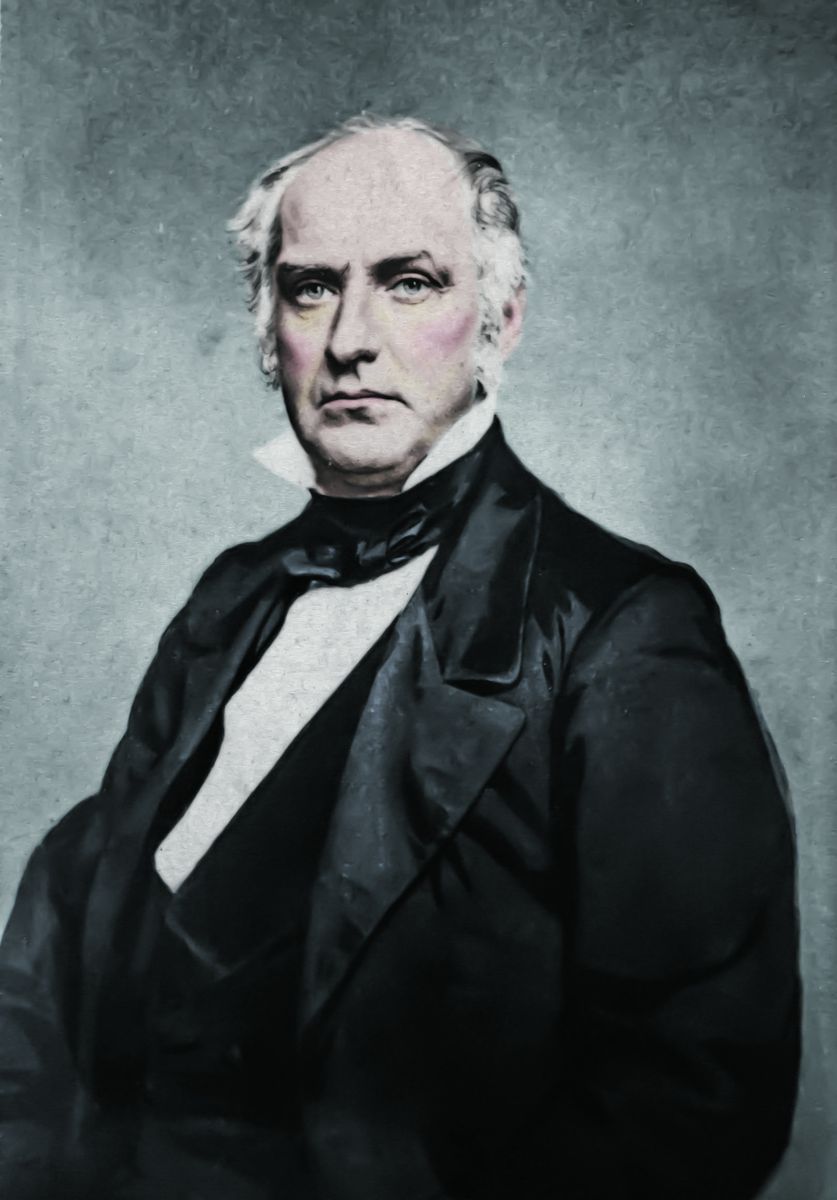
Sources: Sears, Stephen W. Lincoln’s Lieutenants: The High Command of the Army of the Potomac: Houghton Mifflin Company, 2017. Sears, Stephen W. Controversies & Commanders: Dispatches from the Army of the Potomac: Houghton Mifflin Company, 1999. Morgan III, James A. A Little

Short of Boats: The Battles of Ball’s Bluff & Edwards Ferry, October 21–22, 1861: Savas Beatie, 2011. Godwin, Doris Kearns. Team of Rivals: The Political Genius of Abraham Lincoln: Simon & Schuster Paperbacks, 2006. “The Ball’s Bluff Disaster – Gen. McClellan and Gen. Stone”. New York Times, Apr. 13, 1863.
Stephanie Hagiwara is the editor for Civil War in Color.com and Civil War in 3D.com. She also writes a weekly column for History in Full Color.com that covers stories of photographs of historical interest from the 1850’s to the present. Her articles can be found on Facebook and Pinterest.